
Here’s a nutrition fact that should get more attention than it does: over 90% of Americans don’t consume enough choline. Not borderline insufficient — substantially below the recommended adequate intake. And unlike many nutrients where “not enough” just means “suboptimal,” choline deficiency has direct, measurable consequences for your brain: impaired acetylcholine synthesis, reduced membrane integrity, disrupted methylation, and accelerated cognitive decline.
Choline is arguably the most important nutrient for brain health that most people have never heard of. It’s the precursor to acetylcholine (the neurotransmitter that underlies memory, attention, and learning), a critical component of cell membranes, and a methyl donor that influences gene expression. If you’re interested in cognitive optimization, choline should be near the top of your list.
The Short Version: 90%+ of Americans consume below the adequate intake for choline (550mg men, 425mg women). A UK Biobank study of 125,594 participants found moderate choline intake reduces dementia risk by 20%. A 2025 meta-analysis found alpha-GPC outperforms citicoline for overall cognitive and behavioral outcomes in dementia. New research shows low brain choline is linked to anxiety disorders. The form of choline you choose matters enormously — for brain health, alpha-GPC and citicoline are far superior to choline bitartrate. The TMAO concern is real but form-dependent: phosphatidylcholine produces much less TMAO than free choline salts.
The Deficiency Crisis
The numbers are stark. NHANES data shows average daily choline intake of approximately 402mg for men and 278mg for women — both well below the adequate intake of 550mg and 425mg respectively. Children and adolescents average only 256mg daily. Vegetarians consume an estimated 192mg/day, placing them at highest risk.
Current recommendations were established in 1998 based on preventing fatty liver disease. Many researchers now believe they’re too low for optimal brain function, and there are active calls to establish a proper RDA (the current values are only “adequate intake” estimates).
This matters because your body produces a small amount of choline endogenously (in the liver as phosphatidylcholine), but it’s nowhere near enough for optimal brain function. You need it from diet or supplements.
Best food sources: Beef liver (418mg/100g), egg yolks (680mg/100g), beef (95mg/100g), salmon (56-71mg/100g), soybeans (116mg/100g). Two to three eggs daily gets you roughly 300mg of highly bioavailable phosphatidylcholine — a solid foundation.
Choline and Dementia: The Large-Scale Evidence
The epidemiological case for choline and cognitive protection has strengthened dramatically with recent large-scale studies.
UK Biobank: 125,594 Participants
The largest study to date examined 125,594 UK Biobank participants (mean age 56.1 years) over a median follow-up of 11.8 years, during which 1,103 cases of dementia developed. The findings showed a U-shaped relationship: participants in the second quartile of choline intake had 20% lower dementia risk (HR 0.80) and 24% lower Alzheimer’s risk (HR 0.76) compared to the lowest quartile. The protective effect extended to specific choline forms — free choline, phosphatidylcholine, sphingomyelin, and glycerophosphocholine all independently predicted lower dementia risk.
The U-shaped pattern is important: moderate intake was protective, but the highest intakes showed some attenuation of benefit. This parallels what we see with magnesium and other nutrients — optimal is in the middle range, not at the extremes.
Chinese Cohort: Cognitive Domain Specificity
A study of 1,522 older adults found that higher choline intake reduced odds of mild cognitive impairment by 37% (OR 0.63). More granularly, different choline forms showed different cognitive effects:
- Phosphatidylcholine: Protected memory recall (OR 0.59-0.60)
- Free choline: Protected registration abilities (OR 0.55)
This domain-specific pattern suggests that different choline forms may have distinct neural targets — consistent with what we know about their different metabolic pathways.
Alpha-GPC vs. Citicoline: The 2025 Head-to-Head
This is the question I get asked most about choline supplements: should I take alpha-GPC or citicoline?
A 2025 systematic review and meta-analysis in Frontiers in Neurology (PMID 41426989) directly compared these two cholinergic precursors across three RCTs with 358 participants. The result: alpha-GPC demonstrated statistically significant superiority over citicoline on the Sandoz Clinical Assessment for Geriatric Patients (WMD: -3.92).
Alpha-GPC outperformed citicoline specifically in:
- Cognitive function (WMD: -1.80)
- Interpersonal relationships (WMD: -1.09)
- Affective disorders
- Apathy
- Somatic functioning
However, there was no significant difference in memory function as measured by word fluency and the Wechsler Memory Scale. Both compounds appear comparably effective for pure memory outcomes.
A large South Korean population-based study of 508,107 MCI patients found that alpha-GPC users had significantly lower progression rates to Alzheimer’s dementia (HR 0.899) and vascular dementia (HR 0.832), with the strongest effects in patients under 65.
Why Alpha-GPC May Be Superior
Alpha-GPC provides approximately 40% choline by weight and achieves higher mean plasma choline increases (25.8 umol/L vs. 13.1 umol/L for citicoline). It rapidly crosses the blood-brain barrier and directly feeds acetylcholine synthesis.
Citicoline breaks down into choline plus cytidine (which converts to uridine), giving it a dual mechanism: both cholinergic and uridinergic support. It also promotes phospholipid synthesis for membrane repair. The uridine component may explain why citicoline has stronger evidence for neuroprotection after brain injury.
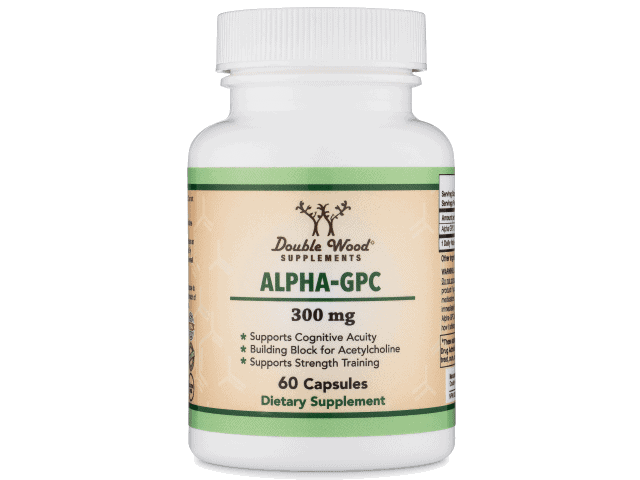
My recommendation: For general cognitive enhancement, alpha-GPC at 300-600mg daily. For neuroprotection or recovery from brain injury, citicoline at 250-500mg daily. For detailed comparisons, see our substance pages for alpha-GPC and citicoline.
Low Brain Choline and Anxiety: A New Discovery
A 2025 meta-analysis from UC Davis analyzed 25 studies comparing brain neurometabolite levels in 370 people with anxiety disorders versus 342 controls using magnetic resonance spectroscopy. The finding: choline levels were approximately 8% lower in individuals with anxiety disorders, with particularly consistent deficits in the prefrontal cortex.
This makes mechanistic sense. The prefrontal cortex exerts inhibitory control over the amygdala’s threat responses. When prefrontal choline is depleted, acetylcholine synthesis is impaired, weakening the brake on anxiety responses. The researchers proposed that the high fight-or-flight activity in anxiety disorders may actually increase brain choline demand, creating a depletion cycle.
This is preliminary — we don’t yet know if supplementing choline will reduce anxiety symptoms. But given that the vast majority of people are choline-deficient, it adds another reason to ensure adequate intake.
How Choline Becomes Acetylcholine
Recent research has clarified the precise enzymatic pathway. Phospholipase D2 (PLD2) — not PLD1 — is the primary enzyme in cholinergic neurons that hydrolyzes membrane phosphatidylcholine to generate choline for acetylcholine synthesis. When researchers reduced PLD2 expression by 30%, both intracellular choline and acetylcholine dropped proportionally.
A 2024 structural biology study published in Nature identified FLVCR2 as the blood-brain barrier choline transporter — the gateway through which dietary choline enters the brain. Mutations in this transporter gene cause severe neurodevelopmental abnormalities in animal models, underscoring how critical choline delivery to the brain is for normal cognitive function.
The TMAO Concern: Real but Manageable
If you’ve heard that choline supplements are dangerous because of TMAO (trimethylamine N-oxide), here’s the nuance: it’s form-dependent.
Gut bacteria convert free choline to TMA, which the liver oxidizes to TMAO — a compound associated with cardiovascular risk. But not all choline forms produce equal TMAO:
- Choline bitartrate (free choline): Highest TMAO production
- Phosphatidylcholine: Much lower TMAO production, because it’s absorbed in the small intestine before reaching TMAO-producing bacteria in the large intestine
- Alpha-GPC and citicoline: Also absorbed before the large intestine, with minimal TMAO production
Practical takeaway: If you’re concerned about cardiovascular risk, avoid supplementing with choline bitartrate in favor of phosphatidylcholine, alpha-GPC, or citicoline. Eat your choline from whole food sources (eggs, liver) when possible — the phosphatidylcholine form in foods has better absorption and lower TMAO risk than free choline supplements.
Choline and Prenatal Brain Development
A 2025 systematic review (PMID 40077755) examined prenatal choline supplementation across 4 RCTs and 5 observational studies. The results were mixed overall — most individual outcomes were statistically null. However, one landmark trial found that women consuming 930mg choline daily during the third trimester (vs. 480mg) had children who demonstrated enhanced attention, working memory, and executive function at age 7.
The mechanism: choline regulates microRNAs and histone methylation in neural progenitor cells, influencing whether they self-renew or differentiate into cortical neurons. Low prenatal choline reduces hippocampal neurogenesis, with effects that persist into adulthood.
Choline also intersects with DHA metabolism — through the PEMT pathway, choline-derived methyl groups drive synthesis of DHA-enriched phosphatidylcholine species. One trial found that choline + DHA supplementation during pregnancy significantly increased maternal and fetal DHA status. These two nutrients may be synergistic for fetal brain development.
Which Choline Form Is Right for You?

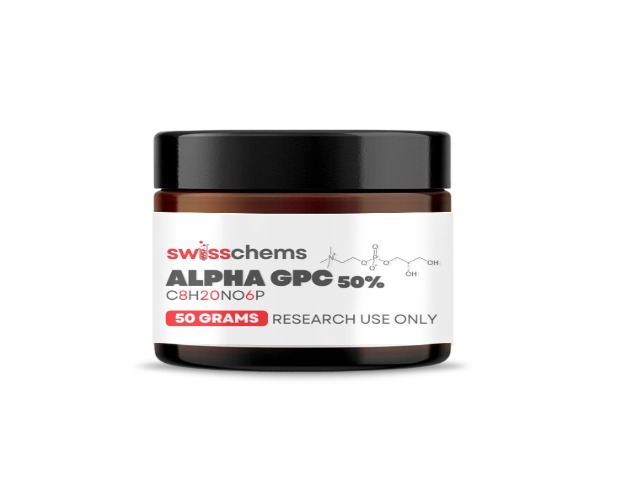
Alpha-GPC (300-1200mg/day): Best for cognitive enhancement, acetylcholine support, and dementia prevention. 40% choline by weight, rapidly crosses blood-brain barrier. Best studied for clinical cognitive outcomes.
Citicoline (250-500mg/day): Best for neuroprotection, brain injury recovery, and combined cholinergic/dopaminergic support. Provides uridine in addition to choline. Strong evidence for memory and attention in healthy adults.
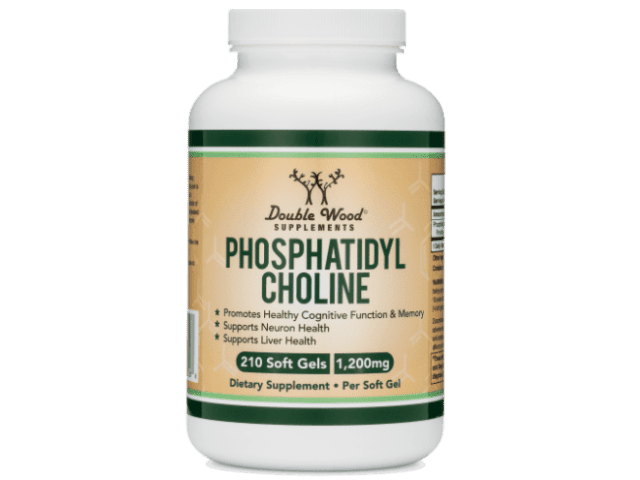
Phosphatidylcholine: Best for liver health, cell membrane support, and dietary supplementation with minimal TMAO risk. Most bioavailable food form of choline.
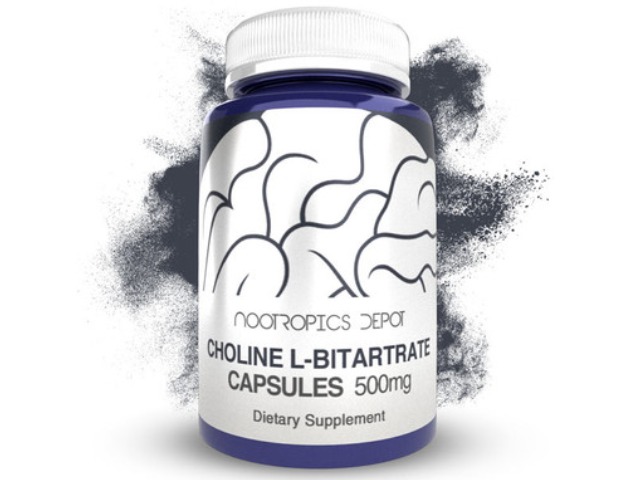
Choline bitartrate: The cheapest option, but minimal evidence for cognitive enhancement, poorest blood-brain barrier penetration, and highest TMAO production. Not recommended for brain health goals.
For full dosing, safety, and pharmacology information on each form, see our individual substance pages linked above.
My Protocol
I take 300mg alpha-GPC in the morning on days when I need sharp mental performance — it pairs well with my L-theanine + caffeine stack. I eat 2-3 eggs daily for baseline phosphatidylcholine. On weekends or lighter days, I don’t supplement — the dietary choline is sufficient.
If you’re not supplementing choline and don’t eat eggs or liver regularly, you’re almost certainly not getting enough. Given the cognitive stakes — from acetylcholine synthesis to dementia risk to anxiety — this is one of the easiest nutritional gaps to close.