
Magnesium is probably the most important supplement most people aren’t taking — or are taking in the wrong form. I’ve spent years testing different magnesium formulations, and the differences between them are genuinely significant. Choosing magnesium glycinate versus magnesium oxide versus magnesium L-threonate isn’t like choosing between brands of the same thing. They’re functionally different supplements targeting different outcomes, and the research supports making that distinction.
Here’s the uncomfortable truth: somewhere between 45-60% of Americans don’t get enough magnesium from their diet. And because only 0.3% of your body’s magnesium is in the blood, standard blood tests frequently miss deficiency entirely. You can test “normal” while your brain and muscles are running on empty.
The Short Version: Magnesium is a cofactor in 300+ enzymatic reactions, with critical roles in brain function including NMDA receptor gating, synaptic plasticity, and sleep regulation. Most people are deficient. The form you choose matters enormously: magnesium L-threonate for cognitive enhancement, magnesium glycinate for sleep and anxiety, magnesium malate for energy, magnesium taurate for cardiovascular support. Avoid magnesium oxide for anything except constipation. Typical supplemental doses range from 200-400mg elemental magnesium per day.
Why Magnesium Matters for Your Brain
Magnesium’s role in general health is well-known — bone density, muscle function, blood sugar regulation. But its role in brain function specifically is what makes it relevant to anyone reading this site, and it’s more profound than most people realize.
The central mechanism involves the NMDA receptor, one of the most important receptor types in your brain for learning and memory. NMDA receptors are glutamate-activated ion channels that control synaptic plasticity — the process by which your brain strengthens or weakens connections based on experience. Magnesium acts as a voltage-dependent gatekeeper on these receptors: at resting potential, magnesium ions physically block the channel, preventing calcium influx. Only when the postsynaptic neuron is simultaneously depolarized (activated by other inputs) does magnesium get displaced, allowing the receptor to open. This makes the NMDA receptor a “coincidence detector” — it only fires when multiple signals arrive together, which is the molecular basis of associative learning.
A 2024 review by Collingridge in Neuroscience (PMID 39615648) details how this magnesium block is essential for long-term potentiation (LTP), the leading candidate mechanism for how memories form. When magnesium levels in the brain drop too low, this gating mechanism becomes impaired, which can degrade the precision of synaptic plasticity and contribute to cognitive decline.
Beyond NMDA receptors, magnesium also:
- Enhances GABAergic tone — activating GABA-A receptors for calming, anti-anxiety effects
- Reduces neuroinflammation — inhibiting NF-κB activation and NLRP3 inflammasome signaling
- Supports melatonin synthesis — directly involved in the conversion pathway
- Modulates cortisol — helping buffer the HPA axis stress response
- Provides antioxidant support — as a cofactor for superoxide dismutase and catalase
This is why magnesium deficiency can produce such a wide range of neurological symptoms: anxiety, insomnia, brain fog, poor memory, irritability, depression, and even migraine. It’s not one mechanism — it’s multiple converging pathways all dependent on adequate magnesium.
The Deficiency Problem
A 2018 review in Open Heart (PMID 29387426) called subclinical magnesium deficiency “a principal driver of cardiovascular disease and a public health crisis.” The same applies to brain health. Modern agricultural practices have depleted soil magnesium over the past century, processing strips it further from foods, and fluoridated water (74% of American tap water) impairs magnesium absorption through binding and formation of insoluble complexes.
The RDA is 400-420mg/day for adult men and 310-320mg/day for women. Average American intake is approximately 228mg/day for women and 323mg/day for men — consistently below recommendations. And because serum magnesium only reflects 0.3% of total body stores, “normal” blood tests can mask significant intracellular deficiency.
Higher risk groups: older adults (absorption decreases with age), people on PPIs or diuretics, those with GI conditions (Crohn’s, celiac), heavy alcohol users, type 2 diabetics, and — critically for this audience — anyone under chronic stress, which increases magnesium excretion through the kidneys.
Which Magnesium Form Is Right for You?
This is where the rubber meets the road. The form of magnesium you choose determines its bioavailability, tissue distribution, and functional effects. Here’s the evidence-based breakdown:
Magnesium L-Threonate — For Cognitive Enhancement
This is the form specifically designed for brain function, and it has the strongest evidence for cognitive enhancement of any magnesium compound.
Magnesium L-threonate (branded as Magtein) was developed at MIT by Slutsky et al. (2010, Neuron, PMID 20152124) after they discovered that standard magnesium supplements didn’t effectively raise brain magnesium levels. L-threonate — a metabolite of vitamin C — acts as a carrier that facilitates magnesium transport across the blood-brain barrier. In the original rodent study, magnesium L-threonate increased brain magnesium by 7-15% while other forms failed to do so, and treated animals showed significantly improved learning, working memory, and short- and long-term memory alongside increased synaptic density in the hippocampus.
The clinical evidence has since caught up. Lopresti and Smith (2026, Frontiers in Nutrition, PMID 41601871) published a randomized, double-blind, placebo-controlled trial in 100 adults aged 18-45 with self-reported sleep dissatisfaction. After just 6 weeks of 2g/day magnesium L-threonate, the supplement group showed significant improvement in overall cognitive performance (NIH Total Cognition Composite, p = 0.043), with particular gains in working memory and episodic memory. Most remarkably, the supplement group achieved a 7.5-year reduction in estimated brain cognitive age. They also showed reduced heart rate (p = 0.030) and increased heart rate variability (p = 0.036), indicating improved autonomic balance.
Best for: Cognitive enhancement, memory, learning, long-term brain health. My morning magnesium.
Dose: 2,000mg magnesium L-threonate daily (yields ~144mg elemental magnesium), typically split into two doses.
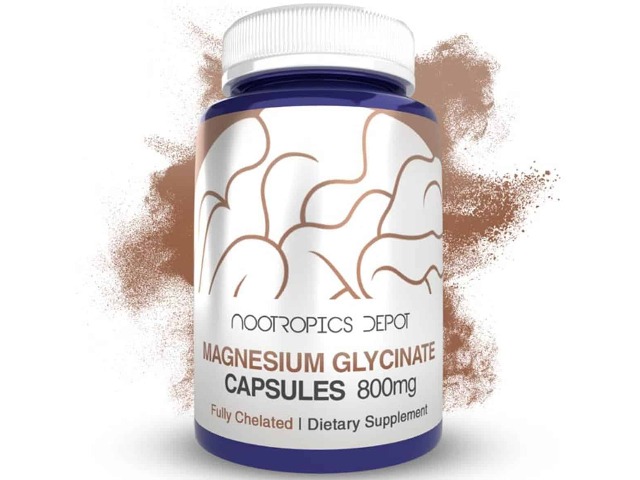
Magnesium Glycinate — For Sleep and Anxiety
Magnesium glycinate (or bisglycinate) is magnesium bound to the amino acid glycine. Both components are independently beneficial — magnesium for its neurological roles, and glycine as an inhibitory neurotransmitter with well-documented effects on sleep quality and calming neural activity.
This form is highly bioavailable and exceptionally gentle on the stomach — important because GI distress is the most common complaint with magnesium supplementation. A 2024 randomized, double-blind, placebo-controlled trial (the largest to date on magnesium and sleep) found that 250mg elemental magnesium from bisglycinate significantly improved Insomnia Severity Index scores over 4 weeks.
The dual-action mechanism makes glycinate particularly effective for nighttime use: magnesium enhances GABA receptor activation and supports melatonin synthesis, while glycine independently improves sleep quality through thermoregulation and glycine receptor activation in the brainstem.
Best for: Sleep, anxiety, stress reduction, evening relaxation. My nighttime magnesium.
Dose: 200-400mg elemental magnesium, taken 30-60 minutes before bed.
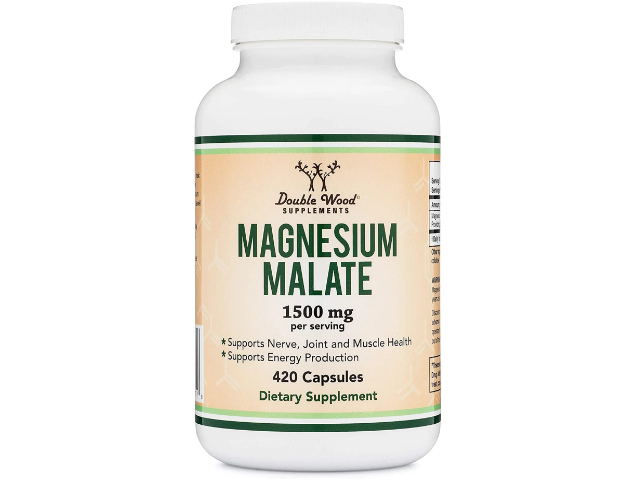
Magnesium Malate — For Energy and Fatigue
Magnesium malate combines magnesium with malic acid, a key intermediate in the Krebs cycle (cellular energy production). This makes it particularly relevant for people dealing with fatigue, low energy, or fibromyalgia — conditions where mitochondrial energy production is often compromised.
One comparative bioavailability study found that magnesium malate demonstrated limited systemic absorption at standard doses, suggesting it may work more effectively at the muscular/tissue level rather than for brain-specific effects.
Best for: Physical energy, muscle soreness, fatigue, fibromyalgia.
Dose: 200-400mg elemental magnesium, taken with breakfast or lunch.
Magnesium Taurate — For Cardiovascular and Metabolic Health
Magnesium taurate combines magnesium with the amino acid taurine, which has independent cardiovascular benefits and calming properties. This form is particularly valued for blood pressure regulation, blood sugar control, and heart rhythm support.
One comparative study found magnesium acetyl taurate demonstrated superior brain tissue penetration across tested doses, suggesting potential cognitive benefits beyond cardiovascular support.
Best for: Heart health, blood pressure, blood sugar management, calm.
Dose: 200-400mg elemental magnesium daily.
Magnesium Citrate — For General Supplementation
Magnesium citrate is one of the most bioavailable and affordable forms, making it a solid all-purpose choice. The trade-off is a mild to moderate osmotic laxative effect, which is either a benefit (if you deal with constipation) or a nuisance (if you don’t).
Comparative studies show citrate is most effective at delivering magnesium to systemic tissues at higher doses but isn’t specifically targeted to the brain.
Best for: General magnesium repletion, constipation relief.
Dose: 200-400mg elemental magnesium daily.
Magnesium Oxide — Avoid for Brain Health
Magnesium oxide has the highest elemental magnesium content by weight but the lowest bioavailability — only about 4% is absorbed. You’ll find it in cheap drugstore supplements and antacids. The vast majority passes through your GI tract unabsorbed, acting as a laxative.
Best for: Heartburn relief, constipation. Not for: Correcting deficiency, cognitive support, or any systemic health goal.
My Magnesium Protocol
After years of experimentation, I’ve settled on a two-form approach:
Morning: 1,000mg magnesium L-threonate (half the daily dose) — for cognitive support during the workday
Evening: 200mg elemental magnesium from glycinate, about 30 minutes before bed — for sleep quality and overnight recovery
Total: ~272mg elemental magnesium from supplements, plus whatever I’m getting from diet (leafy greens, nuts, dark chocolate). This keeps me well within the safe supplemental range while covering both brain-specific and systemic needs.
I’ve tried higher doses and noticed diminishing returns plus occasional GI discomfort. I’ve tried single-form approaches and found the combination works better — threonate for the brain-specific effects during the day, glycinate for the sleep and relaxation effects at night.
Magnesium and Sleep: What the Research Shows
Sleep is where many people first notice magnesium’s effects, and the evidence supports this.
A foundational double-blind, placebo-controlled trial in elderly adults with insomnia (PMID 23853635) found that magnesium supplementation significantly increased sleep time (p = 0.002), sleep efficiency (p = 0.03), and serum melatonin (p = 0.007), while significantly decreasing sleep onset latency (p = 0.02), Insomnia Severity Index scores (p = 0.006), and serum cortisol (p = 0.008).
The 2026 Lopresti trial found that magnesium L-threonate specifically improved sleep-related impairment (p = 0.043), with a subset of participants with more severe baseline sleep problems showing significant improvement in sleep disturbances (p = 0.031). The physiological data was particularly interesting: despite mixed results on subjective sleep measures, the supplement group showed significantly reduced resting heart rate and increased heart rate variability — objective markers of improved autonomic balance and stress resilience.
The mechanisms converge: magnesium enhances GABA receptor activation, supports melatonin synthesis, reduces cortisol, and dampens glutamatergic excitatory drive. If you’re someone who lies awake with a racing mind, magnesium’s combination of reduced excitatory neurotransmission and enhanced inhibitory tone directly addresses that pattern.
Magnesium and Cognitive Aging
A 2024 systematic review and meta-analysis in Advances in Nutrition (Chen et al., PMID 39009081) examined the relationship between magnesium status and cognitive outcomes across twelve cohort studies and three RCTs. The key finding was a U-shaped relationship: both low serum magnesium (below 0.75 mmol/L) and high serum magnesium (above 0.95 mmol/L) were associated with increased dementia risk. The optimal concentration for cognitive preservation was approximately 0.85 mmol/L.
This has practical implications: magnesium supplementation is beneficial for the majority of people who are deficient, but megadosing beyond what’s needed isn’t better and may actually be worse. The sweet spot is correcting deficiency and maintaining optimal levels, not maximizing intake.
NHANES data from 2011-2014 (2,466 adults aged 60+) found that higher dietary magnesium intake independently predicted higher global cognitive scores and reduced cognitive impairment. The strongest associations were with executive function and verbal fluency — prefrontal cortex-dependent functions where magnesium’s synaptic plasticity effects are most relevant.
Practical Tips
Start low, build up. Begin with 200mg elemental magnesium and increase over 1-2 weeks. Too much too fast causes loose stools — the most common side effect.
Read labels carefully. Supplement labels often list the total weight of the magnesium compound rather than the elemental magnesium content. 2,000mg of magnesium L-threonate contains only ~144mg of elemental magnesium. 400mg of magnesium glycinate chelate contains roughly 80mg of elemental magnesium. Always check the “elemental magnesium” or “as magnesium” line.
Split your doses. Intestinal absorption decreases with dose size — 65% absorption at small doses dropping to 11% at large doses. Two or three smaller doses throughout the day are more efficient than one large dose.
Take glycinate before bed. The glycine component has independent sleep-promoting effects that complement magnesium’s calming properties.
Take threonate in the morning or early afternoon. It’s not stimulating, but since its primary benefit is cognitive, aligning it with your workday makes sense.
Food sources matter. Pumpkin seeds, spinach, Swiss chard, dark chocolate (70%+), almonds, cashews, and black beans are excellent dietary sources. Supplementation works best on top of a magnesium-conscious diet, not as a replacement.
Interactions. Magnesium can reduce absorption of antibiotics (tetracyclines, fluoroquinolones) and bisphosphonates — separate by at least 2 hours. People with kidney disease should consult their doctor, as impaired kidneys can’t clear excess magnesium effectively.
Frequently Asked Questions
Can I take multiple forms of magnesium?
Yes, and many people benefit from it. Combining threonate (for brain) and glycinate (for sleep) is a common and well-tolerated approach. Just track your total elemental magnesium intake and stay within 200-400mg supplemental per day unless directed otherwise by a healthcare provider.
How long does magnesium take to work?
For sleep and muscle relaxation: often noticeable within 1-3 days. For cognitive effects (especially threonate): 2-6 weeks for full benefits, as brain magnesium levels build gradually. The 2026 Lopresti trial showed cognitive improvements at the 6-week mark.
Do I need to cycle magnesium?
No. Magnesium is an essential mineral your body uses continuously. Daily, consistent supplementation is appropriate and well-supported by long-term safety data.
What about topical magnesium (Epsom salts, magnesium oil)?
Systemic absorption through the skin is minimal and poorly documented. Epsom salt baths are relaxing but unlikely to meaningfully raise intracellular magnesium levels. Use them for the experience, not as a supplementation strategy.
Is magnesium safe with other supplements?
Generally yes. Magnesium pairs well with most nootropics and complements L-theanine (both enhance GABA tone), vitamin D (magnesium is required for vitamin D metabolism), and omega-3s. It may enhance the effects of GABA-ergic compounds, so use caution combining with prescription sedatives or anti-anxiety medications.