
- Cardiovascular health and blood pressure support
- Blood sugar regulation
- Sleep quality improvement
- Stress and anxiety reduction
- Neuroprotection
I’ll be honest — I spent my first two years in the nootropics space completely ignoring magnesium. It wasn’t flashy. Nobody was posting “magnesium changed my life” transformation stories on Reddit. I was too busy chasing racetams and exotic peptides to notice that one of the most fundamental minerals in my body was running on empty.
Then I got my RBC magnesium tested. The number was… not great. And when I finally dialed it in — specifically with magnesium taurate — the improvements in my sleep, my stress response, and my overall mental clarity were more noticeable than half the expensive nootropics gathering dust on my shelf.
That’s the unsexy truth about optimization: sometimes the biggest wins come from fixing the basics.
The Short Version: Magnesium taurate combines magnesium with taurine — two nutrients with strong independent evidence for heart health, blood sugar control, and nervous system support. No human trials exist on the combined compound, but animal studies suggest the pairing may be more effective than either alone. It’s best for people prioritizing cardiovascular health, calm energy, and sleep quality over raw cognitive horsepower.
What Is Magnesium Taurate?
Magnesium taurate is a chelated mineral supplement where elemental magnesium is bound to taurine, a conditionally essential amino acid found in high concentrations in your heart, brain, and retina. The bond isn’t just for show — chelation improves absorption and means you’re getting two bioactive compounds in one capsule.
Here’s why that matters. Roughly half of Americans don’t get enough magnesium from their diet. Magnesium is involved in over 300 enzymatic reactions in your body — everything from energy production to DNA repair to neurotransmitter synthesis. Meanwhile, taurine is quietly running the show in your cardiovascular system, acting as an antioxidant in your brain, and helping regulate the balance between excitatory and inhibitory neural signaling.
Put them together and you get a supplement that addresses two widespread nutritional gaps simultaneously. It’s not going to make you feel like Bradley Cooper in Limitless. But if your foundation is cracked — and statistically, it probably is — this is one of the smarter ways to shore it up.
How Does Magnesium Taurate Work?
Think of your nervous system as a volume dial. Magnesium is the hand that turns it down when things get too loud. Without enough of it, your neurons fire too easily, stress signals stay elevated, and your brain has trouble shifting from “go mode” to “rest mode.”
Here’s what’s happening at the molecular level. Magnesium acts as a natural NMDA receptor antagonist — it physically blocks calcium from flooding into neurons through these excitatory channels. This is neuroprotective. It’s also why magnesium deficiency is linked to anxiety, insomnia, muscle tension, and even migraines. Your brain is essentially stuck with the volume cranked up.
Taurine works a complementary angle. It activates GABA-A receptors and glycine receptors — the two major inhibitory systems that tell your brain to calm down. It also modulates calcium signaling in heart muscle cells, which is why cardiologists have paid attention to it for decades.
Now here’s where the combination gets interesting. A 2019 study by Uysal and colleagues tested multiple magnesium forms in rats and found that magnesium acetyl taurate achieved the highest brain tissue magnesium concentrations of any form tested — outperforming magnesium citrate, malate, and even magnesium threonate. That’s a single animal study, so take it with appropriate caution, but it suggests the taurine carrier may enhance magnesium delivery to the brain in ways other forms don’t.
In plain English: magnesium calms overexcited neurons, taurine amplifies the calming signals, and the chelated bond may help deliver more magnesium where it actually matters. It’s a one-two punch for an overstimulated nervous system.
Benefits of Magnesium Taurate
Let me be upfront about something: no human randomized controlled trials (RCTs) have been conducted on magnesium taurate as a specific compound. Every benefit claim is extrapolated from research on magnesium and taurine individually, plus a handful of animal studies on the combination. That’s not nothing — the component evidence is strong — but it’s an important distinction.
Cardiovascular Health — Strongest Evidence
This is where the data is most compelling. A meta-analysis of 34 RCTs on taurine supplementation found significant reductions in blood pressure, triglycerides, and markers of cardiovascular inflammation. Separately, large meta-analyses of 24+ magnesium RCTs confirm its role in blood pressure regulation and vascular health.
The WHO-CARDIAC epidemiological study (n=4,211 across 61 populations) found that populations with higher taurine intake had significantly lower rates of cardiovascular disease — independent of other dietary factors.
Animal studies on the specific combination are encouraging. Magnesium taurate has shown benefits for blood pressure, vascular tone, and cardiac function in several rodent models.
Blood Sugar Regulation — Strong Evidence
Both magnesium and taurine independently improve insulin sensitivity and glucose metabolism, each supported by multiple human RCTs. Magnesium deficiency is directly linked to increased insulin resistance, and taurine supplementation has been shown to improve glycemic control in diabetic populations.
Sleep Quality — Moderate Evidence
Magnesium’s role in sleep is well-established through human trials — it helps activate the parasympathetic nervous system and regulate melatonin production. Taurine’s GABA-enhancing effects add an additional calming layer. Many users (myself included) report noticeably better sleep onset and quality with magnesium taurate specifically.
Stress and Anxiety — Moderate Evidence
Multiple RCTs support magnesium supplementation for subjective anxiety, particularly in individuals with low baseline magnesium status. Taurine’s GABAergic activity provides theoretical — and some clinical — support for anxiolytic effects.
Neuroprotection — Preliminary Evidence
This is where I want to flag an important nuance. A 2025 meta-analysis of 7 taurine RCTs (n=402) found no significant cognitive benefit from taurine supplementation. A 2024 systematic review of magnesium and cognition concluded the RCT evidence was “insufficient.” So if you’re taking magnesium taurate primarily for focus and attention, temper your expectations.
That said, the neuroprotective mechanisms are real — NMDA modulation, antioxidant activity, anti-inflammatory effects. And the Singh et al. 2023 paper in Science identifying taurine deficiency as a driver of aging across multiple species is genuinely exciting research. The cognitive benefits may be more about long-term brain health maintenance than short-term performance enhancement.
Reality Check: If you’re looking for a nootropic that will sharpen your focus tomorrow morning, magnesium taurate probably isn’t your best bet. Its strengths are cardiovascular support, metabolic health, sleep, and long-term neuroprotection. The cognitive benefits are real but indirect — better sleep and lower stress lead to better thinking, but that takes weeks, not hours.
| Benefit | Evidence Quality | Source |
|---|---|---|
| Blood pressure support | Strong (multiple meta-analyses) | 34 taurine RCTs + 24 magnesium RCTs |
| Blood sugar regulation | Strong (human RCTs) | Multiple independent RCTs for each component |
| Sleep quality | Moderate (human RCTs + user reports) | Magnesium sleep trials + taurine GABA mechanism |
| Anxiety reduction | Moderate (human RCTs) | Magnesium anxiety trials, particularly in deficient individuals |
| Neuroprotection | Preliminary (animal + mechanistic) | Uysal 2019, Singh et al. 2023 (Science) |
| Focus & attention | Weak (no positive RCT data) | 2025 taurine meta-analysis found no cognitive benefit |
How to Take Magnesium Taurate
Getting the dosing right matters more than most people realize. Too little and you won’t notice anything. Too much and you’ll be spending quality time in the bathroom.
Dosage
The key number is elemental magnesium, not total capsule weight. A “2,000mg magnesium taurate” capsule might only contain 200mg of actual magnesium — the rest is taurine and the molecular bond. Always check the Supplement Facts label for elemental magnesium content.
| Goal | Elemental Magnesium | Daily Protocol | Timeline |
|---|---|---|---|
| General wellness | 200mg | Once daily with dinner | Ongoing |
| Cardiovascular support | 300–400mg | Split AM/PM | Ongoing |
| Sleep improvement | 200–300mg | 1–2 hours before bed | 2–4 weeks to assess |
| Stress/anxiety support | 300–400mg | Split AM/PM | 4–8 weeks to assess |
Timing and Practical Tips
- Evening dosing works best for most people — the calming effects support sleep
- Split dosing (AM/PM) improves absorption and maintains steadier levels if taking 300mg+
- With or without food — magnesium taurate is well-absorbed either way, unlike some other forms
- Start low — begin with 200mg elemental magnesium for the first week, then increase
Pro Tip: If you’re switching from another magnesium form, don’t stack them during the transition. Swap directly. Total elemental magnesium from all sources (food + supplements) should stay in the 300–500mg/day range for most adults unless directed otherwise by a healthcare provider.
How It Compares to Other Magnesium Forms
| Form | Best For | Brain Penetration | GI Tolerance |
|---|---|---|---|
| Magnesium Taurate | Heart, sleep, calm | High (Uysal 2019) | Excellent |
| Magnesium Threonate | Cognition, memory | High (patented for this) | Good |
| Magnesium Glycinate | Sleep, anxiety | Moderate | Excellent |
| Magnesium Citrate | Deficiency correction | Low–Moderate | Fair (laxative effect) |
| Magnesium Oxide | Budget option | Low | Poor |
Side Effects and Safety
Magnesium taurate is one of the better-tolerated magnesium forms, but it’s not completely without considerations.
Common Side Effects
- Loose stools or mild GI discomfort — the most common issue, usually dose-dependent and resolves by reducing intake
- Drowsiness — the calming effects can feel sedating, especially at higher doses or when first starting
- Mild drop in blood pressure — beneficial for most, but relevant if you run low already
Who Should Be Cautious
- People on blood pressure medications — additive hypotensive effects are possible
- People with kidney disease — impaired magnesium excretion can lead to accumulation
- People on diabetes medications — may enhance blood sugar-lowering effects; monitor glucose
- People taking antibiotics (tetracyclines, fluoroquinolones) — magnesium can reduce absorption; separate by 2+ hours
Drug Interactions to Watch
- Blood pressure medications (ACE inhibitors, ARBs, calcium channel blockers)
- Muscle relaxants (additive sedation)
- Bisphosphonates (reduced absorption)
- Certain diuretics (can affect magnesium levels in either direction)
Important: If you’re on any prescription medication — especially for heart conditions, blood pressure, or diabetes — talk to your doctor before adding magnesium taurate. The interactions aren’t dangerous for most people, but the additive effects on blood pressure and blood sugar deserve monitoring.
Stacking Magnesium Taurate
Magnesium taurate plays well with others. Its mechanisms are complementary rather than redundant with most nootropics, making it an excellent foundation for a stack.
Synergistic Combinations
- Magnesium taurate + L-Theanine (100–200mg) — Both enhance GABAergic activity through different pathways. This is my go-to stack for evening wind-down without grogginess the next morning.
- Magnesium taurate + CoQ10 (100–200mg) — A cardiovascular powerhouse combination. CoQ10 supports mitochondrial energy production in heart tissue while magnesium taurate supports vascular function.
- Magnesium taurate + Vitamin D3 (2,000–5,000 IU) — Magnesium is required for vitamin D activation. Without adequate magnesium, your D3 supplement is working at half capacity.
- Magnesium taurate + Zinc (15–30mg) — Both address common mineral deficiencies. Take zinc with food to avoid nausea, and separate from magnesium by a few hours if taking high doses of either.
What to Avoid
- Don’t stack with magnesium oxide or citrate unless intentionally correcting a severe deficiency — you’ll likely exceed your GI tolerance before hitting optimal levels
- Be cautious combining with Phenibut or other strong GABAergics — the combined calming effect can be excessive
- Separate from Calcium supplements by 2+ hours — they compete for absorption
The Foundation Stack
If I were building a minimal, evidence-based daily stack for someone new to supplementation, magnesium taurate would be in the first tier alongside vitamin D3 and omega-3s (DHA/EPA). These three address the most common nutritional gaps with the strongest evidence base. Everything else is built on top of that foundation.
My Take
Magnesium taurate isn’t the sexiest supplement in my cabinet. It’s not going to give you laser focus or make you feel like you unlocked a new gear. But after years of chasing the flashy stuff, I’ve come to respect the compounds that quietly do their job every single day.
Here’s who I think this is best for:
- Anyone with cardiovascular concerns or a family history of heart disease
- People who run anxious or have trouble unwinding at night
- Anyone whose diet is heavy in processed food (read: most of us) and likely magnesium-deficient
- People looking for a solid foundational supplement before layering on nootropics
Here’s who should probably look elsewhere:
- If your primary goal is acute cognitive enhancement, magnesium threonate has more targeted evidence for brain-specific effects
- If you’re already eating a magnesium-rich diet (dark leafy greens, nuts, seeds daily) and have confirmed adequate levels, the returns diminish
The thing I wish I’d known earlier? Get your RBC magnesium tested, not just serum magnesium. Serum levels can look normal while your tissues are depleted. It’s a cheap test that can save you months of guessing.
I take 300mg of elemental magnesium taurate most evenings. It’s been a quiet constant in my routine for over three years now — which, in a world where I’ve cycled through dozens of supplements, says something. Not everything that works has to be dramatic. Sometimes the best move is just giving your body what it’s been missing all along.
Recommended Magnesium Taurate Products
I know how frustrating it is to sort through dozens of brands making the same claims. These are the ones I've personally vetted — because quality is the difference between results and wasted money.
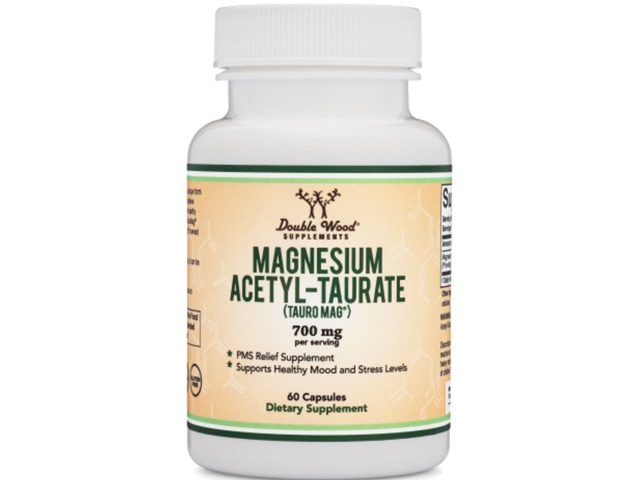
Disclosure: These are affiliate links. I earn a small commission if you purchase — at no extra cost to you. I only recommend products I personally use or have thoroughly researched.