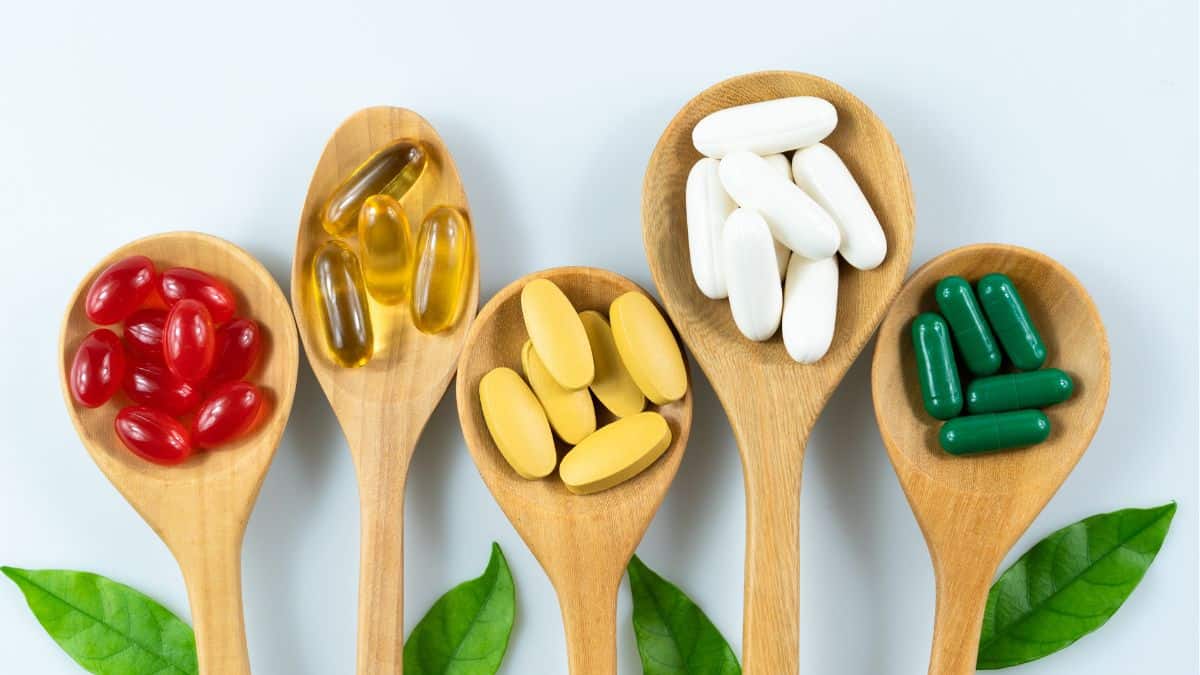
For many of us, supplementation is a daily practice. Between the stresses of modern life, depleted soil quality, and the reality that most people’s diets fall short of optimal micronutrient intake, adding targeted vitamins, minerals, and nootropics to your regimen makes sense.
But here’s the problem that few people talk about: the supplement industry is a $100 billion market, and the majority of products on shelves are filled with inactive ingredients that can be just as harmful as the active ingredients are helpful. While some companies invest in quality manufacturing, many others cut corners with cheap fillers, artificial dyes, hydrogenated oils, and other excipients that accumulate in your body over time.
I’ve spent years researching supplement quality as part of running this site, and I’ve been genuinely alarmed by what I’ve found hiding on the back labels of products marketed as “health foods.” In this guide, I’m breaking down the 11 most common toxins in vitamins and supplements, what the science says about their risks, and how to find products that actually deliver clean nutrition.
The Short Version: Every supplement contains both active ingredients (the compounds you’re taking it for) and inactive ingredients (excipients) that modify physical properties like stability, taste, and absorption. While individually these excipients may be present in small amounts, chronic daily use leads to cumulative exposure. The worst offenders include titanium dioxide (now banned as a food additive in the EU), artificial colors derived from petroleum, hydrogenated oils containing trans fats, polyethylene glycol (a hidden allergen), and silicon dioxide nanoparticles. Protecting yourself means reading labels carefully, choosing companies that follow current Good Manufacturing Practices (cGMP), looking for third-party testing, and prioritizing clean-label supplement brands.
Understanding Inactive Ingredients
Every dietary supplement contains two types of components: the active pharmaceutical ingredient (API) — the compound you’re actually taking the supplement for — and inactive ingredients, also known as excipients.
Excipients aren’t intended to deliver any nutritional or therapeutic benefit. They serve supporting roles: improving the API’s stability, color, taste, appearance, shelf life, and absorption. Think of them as the supporting cast that makes the star ingredient’s delivery possible.
The problem is that while each individual excipient may be present in amounts that seem harmless, these compounds are also found in foods, medications, cosmetics, and household products. When you’re taking multiple supplements daily — as many health-conscious people do — the cumulative exposure adds up.
Are These Ingredients Actually Regulated?
Every food additive undergoes FDA evaluation, and most excipients are classified as “Generally Recognized as Safe” (GRAS). But that designation has significant limitations:
- Some health effects go undetected in preclinical toxicology screening
- Gradual buildup from chronic exposure isn’t always captured in short-term safety studies
- Individual sensitivities and allergies to excipients are increasingly documented
- International regulatory bodies (particularly the European Food Safety Authority) have reached different conclusions than the FDA on several common excipients
The irony is real: consuming supplements for their nutritional value may inadvertently introduce compounds that undermine the very health you’re trying to protect.
The Categories of Inactive Ingredients
Before diving into specific toxins, here’s how excipients are categorized:
- Coloring agents/food dyes: Enhance visual appearance (brilliant blue, Allura red, titanium dioxide)
- Fillers: Stabilize and bulk up the supplement for easier consumption (lactose, calcium carbonate, magnesium stearate)
- Preservatives: Protect against microbial growth (parabens, citric acid, propyl gallate)
- Flow agents/glidants: Prevent powder clumping during manufacturing (silica, magnesium carbonate, talc)
- Binders: Hold ingredients together and give tablets structural integrity (cellulose derivatives, gelatin, polyethylene glycol)
- Food-based excipients: Soybean oil, corn syrup, castor oil, sesame oil
The 11 Most Concerning Toxins in Supplements
1. Polyethylene Glycol (PEG)
Derived from petroleum, PEG is a binder found across supplements, medications, cosmetics, and household products. It’s also used medically as a laxative and for colonoscopy prep.
Despite being classified as biologically inert, reported cases of allergic reactions to PEG-containing products are increasing — ranging from mild skin reactions to life-threatening anaphylaxis. Research has found that anti-PEG antibodies are present in over half the general population, earning PEG the nickname “the hidden allergen.”
Given its presence in everything from supplements to baby wipes, cumulative exposure is nearly unavoidable without deliberate label reading.
2. Silicon Dioxide
Also known as synthetic amorphous silica, silicon dioxide is used as a flow agent and anti-caking agent in supplement manufacturing. It absorbs water and reduces friction between particles to improve powder flow during tablet compression.
The concern centers on nanoparticles. Silicon dioxide comprises aggregated nano-sized particles that can be readily absorbed through the lungs, intestines, and skin. Inhalation exposure (primarily occupational) is well-established as a cause of lung inflammation, fibrosis, and cancer. But oral exposure through supplements also raises concerns:
- Research shows silicon dioxide can inhibit DNA repair, creating genome instability
- Animal studies demonstrate that silicon dioxide nanoparticles can induce neurobehavioral changes — including impaired learning and memory — by affecting gut microbial diversity
While the FDA considers silicon dioxide GRAS, the European Food Safety Authority re-evaluated it in 2018 and recommended lowering concentration limits and adding specifications for particle size distribution. In an October 2024 update, EFSA reaffirmed that amorphous silicon dioxide “does not raise a safety concern in all population groups,” including infants — noting that it dissolves partially in the digestive system and clears rapidly through the kidneys. This represents a meaningful distinction from titanium dioxide: unlike TiO2, silicon dioxide in its amorphous form appears to be genuinely low-risk at current permitted concentrations.
3. Talc/Magnesium Silicate
Talc is the hydrated form of magnesium silicate, used in supplements as an anti-caking agent and lubricant to prevent ingredients from clumping during manufacturing.
The hidden danger: talcum powder has historically been contaminated with asbestos fibers. While talc itself isn’t classified as a carcinogen, asbestos is a known carcinogen, and separating the two during mining has proven problematic. Additional concerns include:
- Occupational talc exposure correlates with increased stomach cancer risk
- Multiple cases have linked asbestos-contaminated talcum powder to ovarian cancer
- Talc miners face elevated lung cancer risk from asbestos-containing talc inhalation
4. Titanium Dioxide
This bright white mineral gives supplement tablets and pills their familiar white coating. It also absorbs UV rays, which protects supplements and their packaging from light damage.
In 2021, after years of reassessment, the European Food Safety Authority declared titanium dioxide no longer safe as a food additive. The reasons:
- Titanium dioxide nanoparticles can accumulate in the liver, spleen, kidneys, heart, lungs, and small intestine
- It has genotoxic effects, meaning it can alter DNA and increase cancer risk
- Within the gut, titanium dioxide can damage the intestinal surface and reduce nutrient absorption
- It can affect heart rate, rhythm, and blood pressure
- When deposited in the lungs, it can cause blood clots
Despite the EU ban, titanium dioxide remains permitted in US supplements. This is one of the starkest regulatory divergences between the FDA and EFSA. In August 2025, the European Commission published a Staff Working Document reaffirming that titanium dioxide will continue to be allowed in medicinal products — but only because no viable replacement exists for pharmaceutical film-coating systems. A 2024 EMA analysis confirmed this gap, finding no single excipient that can directly replace TiO2 in existing formulations. The distinction is important: the EU still considers TiO2 unsafe as a food additive, but pragmatically permits it in medications where removal would compromise drug stability. For supplements, however, the EU position remains clear: titanium dioxide should not be present.
5. Artificial Colors and Dyes
Artificial colors are among the most common excipients added to supplements for visual appeal. Their bases are derived from petroleum oil, and the research on their safety is concerning:
- Artificial colors and dyes increase children’s risk of autism spectrum disorder and ADHD. Since 2010, the EU requires warning labels on food products containing artificial colors
- Tartrazine (yellow dye) binds to white blood cell DNA and impairs DNA repair capacity
- Four food dyes (Yellow 5, Yellow 6, Blue 1, Red 40) cause hypersensitivity reactions, and three of these were found contaminated with carcinogens
- Red 3 is known to cause cancer in animal models
Major 2025 update: In January 2025, the FDA finally banned Red Dye No. 3 (erythrosine) from food and ingested drugs, citing animal carcinogenicity data under the Delaney Clause. Manufacturers have until January 2027 to remove it from food products and January 2028 for ingested drugs including supplements. This marks the first time in decades the FDA has revoked authorization for an artificial food color. A 2021 California study had previously found that Red 3 can make children vulnerable to behavioral issues including decreased attention, and concluded that federal safe intake levels may not adequately protect children’s brain health.
There is simply no reason for any supplement to contain artificial colors. Any product using them is prioritizing shelf appeal over consumer health.
6. Sodium Selenate
Sodium selenate is the sodium salt of selenium, routinely added to vitamin and mineral supplements because many people are selenium-deficient. As an excipient, it improves supplement solubility.
The concern isn’t selenium itself — it’s overexposure. Because sodium selenate appears in many supplements, multivitamins, and animal-derived foods, chronic overconsumption is a real risk. Selenium toxicity symptoms include gastric issues, fatigue, irritability, and nerve damage. Chronic overexposure can damage the liver, lungs, and kidneys.
If you’re taking multiple supplements, audit your total daily selenium intake across all sources.
7. Sodium Ascorbate
A salt form of ascorbic acid (vitamin C) used as both a preservative and antioxidant in supplements. Sodium ascorbate stabilizes color, prevents discoloration, and regulates acidic content.
Vitamin C itself has well-documented benefits for immune function and brain health. However, the sodium component may raise blood pressure in people with hypertension or heart disease. For most healthy individuals, sodium ascorbate is one of the safer excipients on this list.
8. Corn Starch/Modified Corn Starch
Corn starch serves as a disintegrating agent (helping tablets dissolve), diluent, and binder. The concerns are largely related to sourcing:
- Over 80% of corn production in the US is genetically modified. GMO corn contains a protein that can trigger allergic reactions
- Corn allergies are under-diagnosed because corn derivatives aren’t always clearly labeled
- Symptoms of corn intolerance include diarrhea, bloating, headaches, fatigue, and heart palpitations
- Modified corn starch doesn’t necessarily mean genetically modified — the modification can be chemical or physical treatment to alter the starch’s properties
For anyone with corn sensitivity or who prefers to avoid GMO ingredients, corn starch in supplements is worth watching for.
9. Maltodextrin
Maltodextrin is corn starch’s functional twin, derived from wheat, rice, tapioca, or corn. It serves the same purpose as a food enhancer and excipient but carries additional concerns:
- May contain traces of gluten (problematic for celiac disease and gluten sensitivity)
- Raises blood sugar levels more than regular table sugar, increasing diabetes risk with chronic consumption
- Alters gut bacteria composition over time
- Maltodextrin derived from GMO sources carries additional risks including potential antibiotic resistance development
10. Hydrogenated Oils
Trans fats are one of the most well-established dietary health hazards, and hydrogenated oils are a primary source. In supplements, these solid fats derived from soybean, canola, corn, or palm oil serve as fillers and tablet lubricants.
Even if you’re carefully avoiding trans fats in your diet, you may be inadvertently consuming them through your supplement regimen. The health consequences are serious:
- Increased coronary heart disease risk
- Elevated systemic inflammation
- Worsened blood sugar control and increased diabetes risk
- Growing evidence links trans fat consumption to cognitive decline, depression, and increased Alzheimer’s disease risk
Additionally, palm oil production drives deforestation, habitat loss, and climate change — an environmental concern layered on top of the health issues.
11. Artificial Sweeteners
Added to supplements to mask unpleasant tastes, artificial sweeteners are particularly prevalent in gummy vitamins, chewable tablets, and liquid supplements.
While artificial sweeteners don’t impact dental health or raise blood sugar as directly as regular sugar, the long-term effects are concerning:
- Aspartame: At high doses, alters gut microbiota, impairs cardiac function, damages kidneys, and weakens immune function. Even at doses considered “safe,” research shows effects on learning and memory
- Sucralose: The most commonly used artificial sweetener. Alters the gut microbiome by decreasing beneficial bacteria populations, impairs glucose metabolism, and may increase insulin resistance
For supplements that need to taste palatable, look for products sweetened with monk fruit, stevia, or small amounts of natural sugars instead.
Why Fish Oil Supplements Deserve Special Scrutiny
Fish oil supplements illustrate how excipient problems compound with the inherent challenges of specific supplement types.
Omega-3 fatty acids are among the most evidence-backed supplements for brain health. But fish oil has a unique vulnerability: rancidification. When omega-3 fats oxidize due to light, air, temperature, or moisture exposure, they become inflammatory and produce free radicals.
The problem is that rancidity’s unpleasant odor and taste are often masked by inactive ingredients — flavoring agents, artificial sweeteners, and enteric coatings. You may be taking a fish oil supplement that’s actively causing inflammation rather than reducing it, and you’d never know from the taste.
Add to this the heavy metal contamination issue — decades of ocean pollution have introduced mercury and other metals into fish oil supplements — and you have a category that demands particularly careful product selection. See our omega-3 guide for specific product recommendations.
How to Identify Clean Supplements
The good news: protecting yourself is straightforward once you know what to look for.
Read the Full Label
Every supplement lists all ingredients — both active and inactive — on the back label. Get in the habit of scanning the “Other Ingredients” section before purchasing. If you see titanium dioxide, artificial colors, hydrogenated oils, or multiple questionable excipients, put it back on the shelf.
Look for cGMP Compliance
Current Good Manufacturing Practices (cGMP) is the FDA’s quality assurance framework for supplement manufacturing. Companies following cGMP must meet standards for ingredient identity, purity, strength, and composition. Check the company’s website for cGMP certification.
Check for Third-Party Testing
Independent testing by organizations like NSF International or USP provides additional quality verification beyond cGMP compliance. A Certificate of Analysis (COA) on a company’s website confirms that both active and inactive ingredients in a product batch meet quality standards.
Prioritize Trusted Brands
Not all supplement companies are created equal. The brands I recommend on this site have been vetted for manufacturing quality, ingredient transparency, and minimal use of harmful excipients. Companies like Thorne, Nootropics Depot, and Momentous consistently demonstrate commitment to clean formulations.
Read Customer Reviews
Other consumers’ experiences can reveal issues that don’t show up in lab testing — digestive reactions, allergic responses, or quality inconsistencies between batches.
The Bottom Line
This article isn’t meant to scare you away from supplements. Supplementation, done right, is one of the most powerful tools available for cognitive optimization and long-term health. I take supplements every day and recommend them extensively on this site.
But not all supplements are created equal. The difference between a high-quality product and a cheap one often lies not in the active ingredients printed on the front label, but in the inactive ingredients hidden on the back. Taking the extra minute to read that full label, verify manufacturing practices, and choose clean-formulated products is one of the simplest things you can do to protect the health you’re investing in.
Your supplements should be making you healthier, not slowly introducing toxins. Hold the industry to that standard, and it will deliver.