
- Focus & Attention
- Mood Support
- Neurotransmitter Production
- Cognitive Function
Four years ago, I was throwing money at every nootropic on the market — racetams, adaptogens, expensive mushroom extracts — and getting middling results at best. My energy was inconsistent. My mood was all over the place. I’d have days where I felt sharp, then crash into brain fog for no apparent reason.
Turns out, I was missing the foundation. My body wasn’t making enough neurotransmitters in the first place, and no amount of fancy supplements was going to fix that when I was deficient in the raw materials needed to produce serotonin, dopamine, and GABA.
Enter Pyridoxal-5’-Phosphate — the unglamorous B vitamin that actually makes all those neurotransmitters possible.
The Short Version: P5P is the active form of vitamin B6 that your brain uses to manufacture serotonin, dopamine, GABA, and norepinephrine. Unlike regular B6 supplements, P5P doesn’t require liver conversion, making it more bioavailable and effective. Most people take 5-20mg daily with food for mood support, focus, and neurotransmitter optimization.
What Is Pyridoxal-5’-Phosphate? (The B Vitamin Your Brain Actually Uses)
Pyridoxal-5’-Phosphate — usually abbreviated as P5P or PLP — is the biologically active form of vitamin B6. It’s what your body converts regular pyridoxine (the form you see in most multivitamins) into before it can actually use it.
Here’s why that matters: P5P acts as a cofactor for over 140 different enzymatic reactions in your body. In the brain specifically, it’s absolutely essential for synthesizing neurotransmitters — the chemical messengers that control mood, focus, motivation, and stress response. Without adequate P5P, your brain simply can’t produce enough serotonin, dopamine, GABA, or norepinephrine, no matter how much L-Tyrosine or 5-HTP you throw at it.
The catch with standard vitamin B6 supplements is that they require a functioning liver enzyme (pyridoxal kinase) to convert pyridoxine into P5P. If you have liver issues, genetic polymorphisms, are taking certain medications, or are dealing with chronic inflammation, that conversion process can be impaired. Taking P5P directly bypasses that conversion step entirely — your cells get the active form immediately.
Think of it this way: regular B6 is like giving someone a gift card. P5P is like giving them cash. Both have value, but one requires an extra step to become usable.
How Does Pyridoxal-5’-Phosphate Work? (The Neurotransmitter Assembly Line)
P5P is basically the foreman of your neurotransmitter factory. It doesn’t generate motivation or calm on its own — instead, it enables the enzymatic reactions that convert amino acids into the brain chemicals that actually affect your mood and cognition.
Here’s the mechanism: P5P binds to specific enzymes and facilitates decarboxylation reactions — the process of removing a carbon dioxide molecule from an amino acid to transform it into a neurotransmitter. It forms what’s called a Schiff base with the substrate, which stabilizes reaction intermediates and allows the chemical transformation to occur efficiently.
Let me translate that into English.
For serotonin synthesis: P5P is the essential cofactor for aromatic L-amino acid decarboxylase, the enzyme that converts 5-hydroxytryptophan (5-HTP) into serotonin. Without adequate P5P, you can take all the 5-HTP or L-Tryptophan you want — your body just won’t be able to complete the final step to make serotonin.
For dopamine and norepinephrine: That same enzyme also converts L-DOPA into dopamine, which then serves as the precursor for norepinephrine in adrenergic neurons. P5P deficiency directly impairs catecholamine production, which shows up as low motivation, poor focus, and blunted stress response.
For GABA synthesis: P5P is the cofactor for glutamic acid decarboxylase (GAD), the enzyme that converts glutamate into GABA — your brain’s primary inhibitory neurotransmitter. This is the mechanism behind the calming, anti-anxiety effects some people report with P5P supplementation. A 2025 study in Frontiers in Neuroscience found that even moderate P5P deficiency enhanced neuronal excitability and promoted calcium dysregulation — essentially, without enough P5P, neurons fire more easily and are harder to calm down.
The practical takeaway: P5P supports mood, focus, and stress resilience not by directly acting on receptors, but by ensuring your brain has the enzymatic capacity to produce adequate levels of neurotransmitters in the first place. It’s upstream support — foundation-level biochemistry.
Benefits of Pyridoxal-5’-Phosphate (What the Research Actually Shows)
Let’s be clear about the evidence quality here: most P5P research focuses on correcting deficiency states or supporting specific metabolic disorders, not cognitive enhancement in healthy individuals. That said, the mechanisms are well-established, and there’s solid evidence for several benefits.
Focus & Attention (Moderate Evidence)
P5P’s role in dopamine and norepinephrine synthesis makes it relevant for attention and executive function. A 2004 Cochrane systematic review examining the effect of vitamin B6 on cognition found some evidence for cognitive benefits, though the review noted that more high-quality trials were needed. The mechanism is straightforward: dopamine drives motivation and task-switching ability, while norepinephrine supports sustained attention and arousal. If P5P levels are suboptimal, catecholamine production is impaired, and focus suffers.
In my experience, P5P doesn’t produce a noticeable “boost” the way caffeine or modafinil do. Instead, it raises the baseline — you notice it more by its absence. When I’m consistent with P5P, I have fewer “off” days where focus feels unreliable.
Mood Support & Emotional Stability (Moderate-to-Strong Evidence)
This is where P5P really shines. Serotonin synthesis is entirely dependent on adequate P5P availability. Multiple studies have linked low B6 status with depression and mood disorders, and supplementation with P5P (rather than pyridoxine) appears particularly effective for individuals with impaired B6 metabolism.
The GABA connection is also relevant here. By supporting GAD activity and GABA production, P5P helps maintain the balance between excitatory and inhibitory neurotransmission. That 2025 study I mentioned earlier showed that P5P deficiency increased neuronal excitability — which translates to feeling “wired,” anxious, or unable to relax.
Neurotransmitter Optimization for Stacking (Strong Mechanistic Support)
If you’re taking precursor amino acids like L-Tyrosine, L-DOPA, 5-HTP, or L-Tryptophan, P5P is non-negotiable. Those precursors are useless without the enzymatic machinery to convert them into neurotransmitters, and P5P is the rate-limiting cofactor in those reactions.
This is one of those “hidden variable” supplements that doesn’t get the attention it deserves. People spend hundreds of dollars on neurotransmitter precursors and nootropic stacks, then wonder why results are inconsistent — often it’s because they’re missing the cofactors.
Reality Check: P5P is not a nootropic in the traditional sense. It’s not going to give you a noticeable mental boost an hour after taking it. What it does is optimize the biochemical foundation that allows other interventions — whether that’s precursor supplementation, dietary protein, or endogenous neurotransmitter production — to work more effectively.
How to Take Pyridoxal-5’-Phosphate (Without Wasting Your Money)
P5P dosing is more nuanced than most people realize. The range between “effective” and “too much” is narrower than with many other supplements, and there’s a real risk of neuropathy at high doses.
| Use Case | Dosage | Timing | Notes |
|---|---|---|---|
| General support | 5-10mg | Morning with food | Start here for most people |
| Neurotransmitter optimization | 10-20mg | Morning with food | When stacking with precursors |
| Therapeutic (under guidance) | 20-50mg | Split doses with meals | Only with medical supervision |
Forms & Bioavailability
The whole point of P5P is that it’s already in the active form, so there’s no real variation in bioavailability between brands the way there is with something like magnesium. That said, quality matters — look for supplements that use pyridoxal-5’-phosphate (not pyridoxine HCl) and verify third-party testing.
Some formulas combine P5P with other B vitamins, particularly methylcobalamin (active B12) and methylfolate (active B9). This can be beneficial since these vitamins work synergistically in methylation and neurotransmitter metabolism, but it also means you’re getting a multi-nutrient product rather than isolated P5P.
Timing & Cycling
Take P5P with food to enhance absorption and reduce the (rare) risk of stomach upset. Morning dosing is generally preferred since it supports daytime neurotransmitter production, though there’s no strong evidence that timing significantly impacts efficacy.
You don’t need to cycle P5P. It’s a water-soluble vitamin, so excess is excreted rather than stored. That said, I don’t recommend chronic high-dose supplementation (above 50mg daily) without medical supervision due to the neuropathy risk.
Pro Tip: If you’re taking P5P specifically to support neurotransmitter precursor supplementation (like L-Tyrosine or 5-HTP), take them together. The cofactor and substrate need to be present simultaneously for the enzymatic reaction to occur efficiently.
Starting Protocol
Start with 5-10mg daily with breakfast for at least 2-4 weeks before assessing effects. Because P5P works at the foundational level, benefits are subtle and cumulative — you’re more likely to notice improved mood stability and fewer “low energy” days over time rather than an immediate shift.
If you’re using P5P as part of a neurotransmitter support stack, give it at least 4-6 weeks of consistent use alongside precursors before deciding if it’s working.
Side Effects & Safety (What Could Go Wrong)
P5P is generally very well-tolerated at physiological doses (5-20mg). The side effect profile is minimal compared to most nootropics.
Common side effects (rare at recommended doses):
- Mild nausea or stomach upset (usually resolves when taken with food)
- Vivid dreams (likely due to increased serotonin synthesis)
- Headache (uncommon, typically when first starting)
Serious side effects (occur with chronic high doses, usually >100mg daily for months):
- Peripheral neuropathy (numbness, tingling, burning sensations in hands and feet)
- Photosensitivity
- Skin lesions
The neuropathy risk is dose-dependent and typically reversible with discontinuation, but it’s the main reason you should NOT megadose P5P. The tolerable upper intake level for B6 is 100mg daily for adults, but I’d personally keep chronic supplementation below 50mg unless you’re working with a practitioner.
Who should avoid P5P:
- Individuals with kidney disease (impaired excretion)
- Those taking levodopa for Parkinson’s disease (P5P can reduce levodopa effectiveness)
- People on certain medications (see drug interaction table below)
| Medication/Substance | Interaction Type | Risk Level | Notes |
|---|---|---|---|
| Levodopa | Reduces efficacy | High | P5P increases peripheral conversion of levodopa to dopamine, reducing amount reaching brain |
| Phenytoin (Dilantin) | Reduces B6 levels | Moderate | Anticonvulsant depletes B6; supplementation may be beneficial but consult physician |
| Theophylline | Reduces B6 levels | Moderate | Asthma medication depletes B6 |
| Cycloserine | Reduces B6 levels | Moderate | Antibiotic increases B6 excretion |
| Alcohol | Depletes B6 | Low-Moderate | Chronic alcohol use impairs B6 metabolism |
Important: If you’re taking levodopa for Parkinson’s disease, do NOT supplement with P5P or vitamin B6 without consulting your neurologist. P5P enhances the peripheral conversion of levodopa to dopamine, which means less levodopa crosses the blood-brain barrier to be converted in the brain where you actually need it.
Pregnancy & Nursing
P5P is considered safe during pregnancy and lactation at physiological doses (5-20mg). In fact, some practitioners specifically recommend P5P (rather than pyridoxine) for morning sickness, as it may be more effective due to better bioavailability. That said, always consult your OB before adding any supplement during pregnancy.
Stacking Pyridoxal-5’-Phosphate (The Combinations That Actually Work)
P5P is one of those supplements that works best as a foundation piece in a larger stack rather than a standalone. Its primary value is enabling other compounds to work more effectively.
For Mood & Emotional Stability:
- 50-100mg 5-HTP + 10-20mg P5P + 200mg L-Theanine — Evening stack for serotonin support and relaxation. The P5P ensures efficient conversion of 5-HTP to serotonin, while L-Theanine provides additional GABAergic calming without sedation. Take 1-2 hours before bed.
For Focus & Motivation:
- 500mg L-Tyrosine + 10mg P5P + 200mg Rhodiola Rosea — Morning stack for catecholamine support. L-Tyrosine provides the dopamine precursor, P5P enables the conversion, and Rhodiola modulates stress response and prevents catecholamine depletion under pressure. Best taken on an empty stomach 30 minutes before demanding cognitive work.
For Comprehensive Neurotransmitter Support:
- 10-20mg P5P + 400mg Magnesium Glycinate + 500mcg Methylcobalamin (B12) + 400mcg Methylfolate (B9) — This is my go-to foundation stack. These four nutrients work synergistically in methylation pathways and neurotransmitter metabolism. I take this combo daily with breakfast, and it’s the baseline that makes everything else work better.
For Sleep & GABA Support:
- 10mg P5P + 500mg L-Theanine + 300mg Magnesium Threonate — Evening stack to support GABAergic tone. P5P enhances GABA synthesis, L-Theanine promotes alpha-wave brain activity and GABA receptor modulation, and magnesium threonate crosses the blood-brain barrier effectively. Take 60-90 minutes before bed.
| Stack Goal | Combination | Dosage | Timing | Expected Benefit |
|---|---|---|---|---|
| Mood | 5-HTP + P5P + L-Theanine | 50-100mg / 10-20mg / 200mg | Evening | Serotonin support, relaxation |
| Focus | L-Tyrosine + P5P + Rhodiola | 500mg / 10mg / 200mg | Morning | Dopamine synthesis, motivation |
| Foundation | P5P + Mg + B12 + Folate | 10-20mg / 400mg / 500mcg / 400mcg | Morning | Neurotransmitter optimization |
| Sleep | P5P + L-Theanine + Mg Threonate | 10mg / 500mg / 300mg | Evening | GABA support, relaxation |
What to AVOID combining:
Don’t stack P5P with high-dose pyridoxine (regular B6). There’s no benefit to taking both forms simultaneously, and you increase your total B6 load unnecessarily. If you’re taking a B-complex, check the B6 content and adjust your P5P dose accordingly to stay below 50mg total daily B6.
Be cautious combining P5P with multiple serotonergic compounds (like 5-HTP + L-Tryptophan + SSRIs). While P5P itself doesn’t cause serotonin syndrome, it enhances serotonin synthesis, and the combination of multiple serotonin-boosting interventions increases risk. If you’re on antidepressants, discuss any serotonin precursor supplementation with your prescriber first.
Insider Tip: Most people underestimate the importance of cofactors. They’ll spend $50 on a fancy nootropic blend but skip the $10 bottle of P5P that actually allows their neurotransmitter precursors to work. If you’re supplementing with any amino acid precursors (tyrosine, 5-HTP, tryptophan, DOPA), add P5P to your stack. The difference in effectiveness is significant.
My Take (Is P5P Worth It?)
P5P isn’t sexy. It’s not going to give you the immediate mental clarity of caffeine + L-Theanine, or the noticeable mood lift of Rhodiola, or the focus boost of Alpha-GPC. It works in the background, and most people won’t “feel” it.
But here’s the thing: P5P is one of those supplements that becomes obvious in its absence. If you’re deficient — and a significant portion of people are, especially if you drink alcohol regularly, take certain medications, or have digestive issues that impair nutrient absorption — you’ll notice the difference once you correct it. Mood becomes more stable. Energy is more consistent. Other supplements start working better.
Who should definitely try P5P:
- Anyone supplementing with neurotransmitter precursors (L-Tyrosine, 5-HTP, L-DOPA, L-Tryptophan) — this is non-negotiable if you want those compounds to actually work
- People with inconsistent mood or motivation who aren’t responding well to other interventions
- Those with impaired liver function or genetic polymorphisms affecting B6 metabolism
- Anyone dealing with chronic stress, which depletes B vitamins rapidly
Who should probably try something else:
- If you’re looking for an acute cognitive boost, try caffeine + L-Theanine or Rhodiola Rosea instead
- If you already take a high-quality B-complex with adequate B6 and have no specific neurotransmitter support needs, adding P5P may be redundant
- If you’re on levodopa, avoid B6 supplementation unless your doctor specifically recommends it
My honest assessment: P5P is a high-value, low-risk foundational supplement that belongs in most people’s stacks, especially if they’re working with neurotransmitter precursors or dealing with mood/motivation issues. It’s not going to change your life overnight, but it’s one of those subtle optimizations that compounds over time.
Start with 10mg daily with breakfast for 4-6 weeks. If you notice improved mood stability, fewer “off” days, or better results from other supplements, keep it in the rotation. If you don’t notice anything after 6 weeks and you’re not stacking it with precursors, it’s probably not a limiting factor for you.
The risk-to-benefit ratio is excellent at physiological doses. Just don’t megadose it, and you’ll be fine.
Recommended P5P (Active Vitamin B6) Products
I know how frustrating it is to sort through dozens of brands making the same claims. These are the ones I've personally vetted — because quality is the difference between results and wasted money.
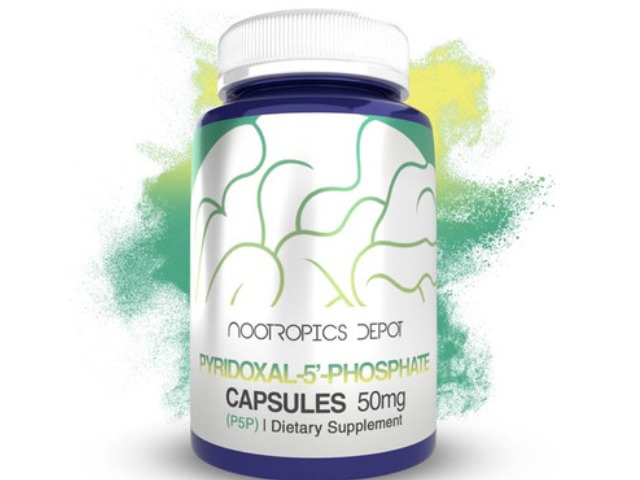
Disclosure: These are affiliate links. I earn a small commission if you purchase — at no extra cost to you. I only recommend products I personally use or have thoroughly researched.