
- Supports resting metabolic rate during calorie restriction
- May help manage cortisol through 11β-HSD1 competitive inhibition
- Enhances thermogenic enzyme activity without sex hormone conversion
- Preliminary immune-modulating properties
- Potential cognitive support through cholinergic mechanisms
I’ll be honest — I spent years recommending plain DHEA to people before I really understood the difference between DHEA and its metabolites. And the difference matters. A lot.
DHEA is the most abundant steroid hormone in your body, and it does some impressive things. But it also converts into testosterone and estrogen, which means supplementing with it can trigger acne, hair loss, mood swings, and hormonal chaos — especially if you don’t actually need more sex hormones. That’s the tradeoff nobody talks about at the supplement counter.
7-Keto DHEA sidesteps that entire problem. It’s a downstream metabolite of DHEA that your body already makes — one that delivers the metabolic and potentially neuroprotective benefits without ever touching your testosterone or estrogen levels. And it’s 2.5 times more potent at boosting thermogenesis than DHEA itself.
The Short Version: 7-Keto DHEA is a non-hormonal metabolite of DHEA that supports your resting metabolic rate, particularly during calorie restriction. It doesn’t convert to sex hormones, making it a cleaner option than parent DHEA for metabolic support. The strongest evidence is for preventing the metabolic slowdown that sabotages most diets, with promising but preliminary data on cortisol management and cognitive function.
What Is 7-Keto-Dehydroepiandrosterone?
7-Keto DHEA is a compound your body produces naturally. When DHEA — that master hormone your adrenal glands churn out in massive quantities during your twenties — gets processed by enzymes in your liver, skin, and brain, one of the things it turns into is 7-oxo-DHEA. The supplemental form is an acetylated version (3-acetyl-7-oxo-DHEA) that gets rapidly converted back to the active form once you take it orally.
The story behind this compound is actually pretty cool. Dr. Henry Lardy at the University of Wisconsin-Madison spent roughly a decade examining over 150 metabolites of DHEA, looking for the one that would give you DHEA’s benefits without the hormonal baggage. After years of painstaking work, he landed on 7-Keto — the metabolite that cannot convert into testosterone or estrogen due to structural changes at the 7-position of the steroid ring. That’s not a marketing claim. It’s chemistry.
Here’s what makes this personally relevant: your 7-Keto DHEA levels follow the same depressing trajectory as DHEA itself. By 50, you’re running on roughly half the levels you had at 20. That decline tracks uncomfortably well with age-related metabolic slowdown, increased cortisol sensitivity, and declining immune function. Correlation isn’t causation — but it’s enough to make you pay attention.
How Does 7-Keto-Dehydroepiandrosterone Work?
Think of 7-Keto DHEA as a thermostat adjuster for your metabolism. Your body has built-in mechanisms to burn calories as heat instead of storing them as fat, and 7-Keto turns that dial up.
The primary mechanism involves three thermogenic enzymes in your liver: mitochondrial glycerol-3-phosphate dehydrogenase, cytosolic malic enzyme, and fatty acyl CoA oxidase. Research by Lardy and colleagues found that 7-Keto DHEA was 2.5 times more active than parent DHEA at increasing these enzymes. What these enzymes do is essentially run a metabolically “wasteful” pathway — they shuttle electrons through an inefficient route that generates heat instead of efficiently producing ATP. It’s the same basic trick your thyroid hormone T3 uses to keep your metabolic rate humming.
In practical terms: your body burns more calories maintaining its temperature. That matters most when you’re dieting, because your body’s natural response to eating less is to slam the brakes on metabolism — the dreaded “metabolic adaptation” that makes every diet plateau eventually.
But thermogenesis isn’t the only thing going on here.
There’s a fascinating anti-cortisol mechanism that doesn’t get enough attention. Research by Muller et al. (2006) in the Journal of Steroid Biochemistry and Molecular Biology showed that 7-oxo-DHEA competes with cortisone for an enzyme called 11β-HSD1 — the enzyme responsible for converting inactive cortisone into active cortisol in your liver, skin, and brain. The kinetics actually favor 7-Keto’s metabolite (7β-hydroxy-DHEA) over cortisol production, which means it could reduce local cortisol activation right where it’s being manufactured.
Why does that matter for your brain? Chronic elevated cortisol is neurotoxic. It damages hippocampal neurons — the very cells you need for memory formation. Anything that can modulate cortisol at the tissue level without disrupting the broader HPA axis is worth paying attention to.
There’s also preliminary evidence for immune modulation. A study by Vecchione et al. (2020) in the Journal of Biomedical Science showed that 7-oxo-DHEA enhances Th1 immune responses, boosting production of IFN-γ and TNF-α — the immune signals your body uses to fight intracellular pathogens. Interesting, but still early-stage research.
And in animal models, a single dose of 7-Keto DHEA reversed scopolamine-induced memory impairment more potently than DHEA itself, likely through reducing GABAergic inhibition and increasing acetylcholine release. No human cognitive trials exist yet, but the mechanism is plausible and consistent with what we know about the cholinergic system.
Benefits of 7-Keto-Dehydroepiandrosterone
Metabolic Support & Weight Management
This is where the strongest evidence lives — and “strongest” still means “promising but limited.” A 2022 systematic review by Jeyaprakash et al. in Archives of Gynecology and Obstetrics screened 686 studies and found only 4 qualifying clinical trials. That’s a reality check right there.
What those trials showed: half found significant reductions in body weight, and two demonstrated increased resting metabolic rate. The landmark study had participants taking 200mg/day lose 6.3 pounds versus 2.1 pounds for placebo over 8 weeks, both groups following the same calorie-restricted diet and exercise program. The difference — about 4 extra pounds — came from metabolic rate preservation, not appetite suppression.
A study by Zenk et al. (2007) in the Journal of Nutritional Biochemistry put numbers on the metabolic effect: while placebo subjects saw their resting metabolic rate drop 3.9% during dieting (your body fighting back), 7-Keto alone reversed that to a 1.4% increase. When combined with green tea extract, calcium citrate, chromium, and vitamins C and D, the increase hit 3.4%.
Reality Check: We’re talking about small studies with short durations — mostly 8 weeks with limited demographic diversity. The results are genuinely interesting, but this isn’t settled science. If someone tells you 7-Keto is a “proven fat burner,” they’re overselling the data.
Cortisol Management
The 11β-HSD1 competitive inhibition mechanism is well-characterized in laboratory studies and makes strong theoretical sense. By reducing cortisol activation at the tissue level — particularly in the brain — 7-Keto could support healthier stress responses without the systemic effects of blocking cortisol entirely.
But we don’t have dedicated human trials testing this. The mechanistic data is compelling. The clinical confirmation is missing.
Cognitive Support
Animal data shows memory-protective effects that are actually more potent than parent DHEA. The cholinergic mechanism is plausible and well-understood. But there are zero human clinical trials on 7-Keto DHEA specifically for cognition. If cognitive enhancement is your primary goal, compounds like Bacopa Monnieri or Lion’s Mane have much stronger human evidence.
Immune Function
One study in HIV-TB coinfected patients showed enhanced Th1 responses in vitro. Fascinating but very preliminary. Not enough to build a recommendation on.
How to Take 7-Keto-Dehydroepiandrosterone
Dosage: 100–200mg per day, split into two doses. Most clinical trials used the full 200mg/day (100mg morning, 100mg early afternoon). If you’re new to it, start at 100mg/day for the first week to assess tolerance.
Timing: Take with food — the acetyl ester form absorbs better with dietary fat. Morning and early afternoon dosing is ideal. Avoid evening doses, as some users report mild insomnia from the thermogenic/energizing effects. The half-life is only about 2.2 hours, so twice-daily dosing maintains more consistent levels.
Forms: The standard supplemental form is 3-acetyl-7-oxo-dehydroepiandrosterone, which gets rapidly hydrolyzed to active 7-oxo-DHEA by your tissue esterases. Common capsule sizes are 25mg, 50mg, and 100mg. The acetyl ester form was specifically designed for better oral bioavailability than free 7-oxo-DHEA.
Cycling: No established protocol exists in the clinical literature, and studies have only assessed continuous use up to 8 weeks. Some practitioners suggest 8 weeks on, 4 weeks off — which is reasonable given the limited long-term data. A pharmacokinetic study by Davidson et al. (2000) confirmed the compound doesn’t accumulate with repeated dosing, which is reassuring.
Pro Tip: If you’re using 7-Keto specifically for metabolic support during a cut, time your supplementation to coincide with your calorie-restricted period. The research shows its biggest advantage is preventing the metabolic slowdown that kicks in during dieting — that’s when it earns its keep.
Side Effects & Safety
The good news: in every published clinical trial, side effects were comparable to placebo. No serious adverse events have been reported. The Davidson et al. safety study specifically confirmed no changes to testosterone, estradiol, cortisol, thyroxin, insulin, vital signs, blood chemistry, or urinalysis at doses up to 200mg/day for 28 days.
Common side effects (mild, reported occasionally):
- Gastrointestinal discomfort — nausea, heartburn
- Metallic taste
- Transient dizziness
- Mild insomnia (especially with evening dosing)
Rare reports include palpitations and anxiousness, possibly related to sympathetic activation from the thermogenic effect.
Important: 7-Keto DHEA is a WADA-prohibited substance under Section S1 (Anabolic Agents). UFC fighter Lyoto Machida received an 18-month suspension for its use. If you compete in any drug-tested sport, this is off the table. Period.
Who should avoid it:
- Pregnant or nursing women (no safety data)
- People with thyroid disorders — 7-Keto may increase T3 levels, which could complicate management if you’re on levothyroxine
- Those with hormone-sensitive conditions (despite not converting to sex hormones, its steroidal structure warrants caution)
- Anyone on systemic glucocorticoids — theoretical additive effect on cortisol suppression via 11β-HSD1
Drug interactions to watch: Thyroid medications, glucocorticoids, hormone therapies, and potentially CYP3A4/CYP2D6 substrates at high doses. If you’re on any prescription medications, talk to your doctor before adding this.
Stacking 7-Keto-Dehydroepiandrosterone
Evidence-Based Stack
The only clinically tested combination is 7-Keto with green tea extract, calcium citrate, chromium, vitamin C, and vitamin D3 — the “HUM5007” formulation from the Zenk et al. study. This combination boosted the metabolic rate increase from 1.4% (7-Keto alone) to 3.4%. If metabolic support is your goal, this is the stack with actual data behind it.
Theoretical Synergies
For cortisol management: Pair with Phosphatidylserine — it has its own evidence for blunting cortisol responses, and the mechanisms are complementary. Add an adaptogen like Rhodiola Rosea or Ashwagandha for broader stress-buffering support.
For metabolic and mitochondrial support: Acetyl-L-Carnitine pairs well conceptually — it supports fatty acid transport into mitochondria, while 7-Keto upregulates the enzymes that process them. CoQ10 also makes sense for overall mitochondrial electron transport support.
For cognitive goals: If you’re using 7-Keto partly for its anti-cortisol brain benefits, stack it with compounds that have stronger direct cognitive evidence — Lion’s Mane for neurogenesis, Bacopa Monnieri for memory consolidation.
What to Avoid
Don’t combine with exogenous thyroid hormone without medical supervision — 7-Keto’s mild T3-elevating effect could push you out of range. Avoid high-dose DHEA alongside it — the whole point of 7-Keto is avoiding the hormonal conversion that DHEA brings. Low-dose DHEA (10-25mg) with 7-Keto is a different story, but keep your doctor in the loop. And skip the combination with systemic corticosteroids unless your prescribing physician signs off.
My Take
Here’s my honest assessment: 7-Keto DHEA is a legitimately interesting compound that’s stuck in an evidence gap. The mechanistic data is solid. The safety profile is clean. The metabolic effects make biological sense and have preliminary clinical support. But we’re still working with a handful of small, short-duration trials — and that limits how confidently I can recommend it.
Where I think it genuinely shines is as a metabolic support tool during intentional calorie restriction. If you’re cutting calories and hitting a plateau — if your body is fighting back with that frustrating metabolic slowdown — 7-Keto addresses that specific problem better than most compounds I’ve seen. The data on resting metabolic rate preservation is the most convincing piece of the puzzle.
For cortisol management, the mechanism is compelling enough to warrant attention, but I’d reach for Ashwagandha or Phosphatidylserine first — they have more human data backing their anti-cortisol effects. 7-Keto could be a solid addition to that stack, not a replacement for it.
For pure cognitive enhancement? I wouldn’t start here. The animal data is interesting but there’s nothing in humans yet. You’ll get far more bang for your buck with well-studied nootropics.
One thing that genuinely concerns me is sourcing quality. 7-Keto is reportedly one of the most counterfeited supplement ingredients on the market. Stick with established brands like NOW Foods, Pure Encapsulations, or Life Extension — companies that do third-party testing and can provide a Certificate of Analysis. If you’re getting a suspiciously cheap 7-Keto product from an unknown manufacturer, you’re probably not getting 7-Keto.
Bottom line: if you’re over 35, actively dieting, and looking for metabolic support that won’t mess with your hormones, 7-Keto DHEA is worth trying. Start at 100mg/day, work up to 200mg, run it for 8 weeks during a structured cut, and see how you respond. Just don’t expect miracles — expect a modest but meaningful metabolic edge. And as always, get the foundations right first. No supplement fixes a broken diet, terrible sleep, or chronic stress.
Recommended 7-Keto-Dehydroepiandrosterone Products
I know how frustrating it is to sort through dozens of brands making the same claims. These are the ones I've personally vetted — because quality is the difference between results and wasted money.
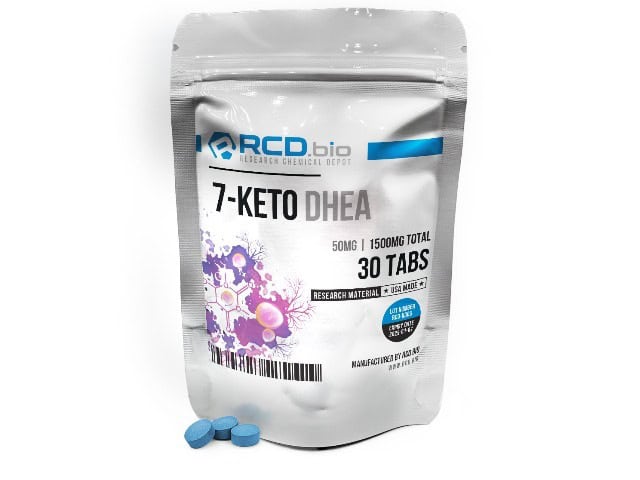
Disclosure: These are affiliate links. I earn a small commission if you purchase — at no extra cost to you. I only recommend products I personally use or have thoroughly researched.
Research & Studies
This section includes 9 peer-reviewed studies referenced in our analysis.