
- May support lean muscle development
- Favorable anabolic-to-androgenic ratio in preclinical studies
- Selective androgen receptor activity with reduced prostate effects
Let me be upfront with you: AC-262,536 is one of those compounds where the hype has massively outpaced the science. I’ve watched it gain traction in nootropic and bodybuilding circles over the past few years, with claims ranging from “mild testosterone replacement” to “Alzheimer’s cure” — and nearly all of it traces back to a single two-week study in castrated rats.
That’s not me being dismissive. That’s me saving you from spending money based on marketing dressed up as research. So let’s break down what we actually know, what we don’t, and whether this compound deserves a spot on your radar.
The Short Version: AC-262,536 is an experimental selective androgen receptor modulator (SARM) that showed promising tissue selectivity in a single animal study — strong muscle effects with minimal prostate impact. However, it has never been tested in humans, has no cognitive enhancement data despite widespread claims, and remains one of the least-studied SARMs on the market. If you’re considering a SARM, compounds like Ostarine have vastly more safety and efficacy data behind them.
What Is AC-262,536?
AC-262,536 — sometimes marketed as “Accadrine” or “Acadibol” — is a non-steroidal selective androgen receptor modulator developed by Acadia Pharmaceuticals, a San Diego-based biotech company. It was first characterized in a 2008 paper published in the Journal of Steroid Biochemistry and Molecular Biology by Piu and colleagues.
SARMs, if you’re new to the category, are synthetic compounds designed to mimic some of testosterone’s effects — primarily muscle and bone growth — while avoiding the unwanted androgenic effects like prostate enlargement, hair loss, and acne. Think of them as an attempt to get the good parts of testosterone without the baggage. Whether they actually deliver on that promise is a different conversation.
AC-262,536 belongs to the “tropanol” class of SARM derivatives. It was never advanced into human clinical trials, and Acadia Pharmaceuticals appears to have shelved the project entirely. Today, it exists solely as a research chemical sold in the gray market — not FDA-approved, not available by prescription, and explicitly prohibited by the World Anti-Doping Agency (WADA) since 2008.
Reality Check: “Research chemical” is a legal term that means “not approved for human consumption.” When you buy AC-262,536 online, you’re purchasing a compound with zero clinical safety data in humans, from vendors with variable quality control. That’s the reality, regardless of what the marketing copy says.
How Does AC-262,536 Work?
Here’s the plain-English version: AC-262,536 binds to the same receptor that testosterone uses — the androgen receptor — but it only partially activates it. Imagine testosterone as a key that turns a lock all the way. AC-262,536 is a key that fits the lock but only turns it about 70% of the way.
That partial activation is actually the point. The original Piu et al. study found that AC-262,536 binds the androgen receptor with a Ki of 5 nM — which is actually tighter than testosterone itself (29 nM). But its maximal efficacy caps out at roughly 70% of testosterone’s full activation. In pharmacology terms, it’s a high-affinity partial agonist.
The practical result in castrated rats was striking tissue selectivity. At 30 mg/kg, the compound drove levator ani muscle growth to about 66% of what testosterone would achieve, while prostate weight only increased to about 27% of testosterone’s effect. That 2.45:1 anabolic-to-androgenic ratio is what makes SARMs theoretically attractive — muscle growth without proportional prostate stimulation.
So what does this mean for you? In theory, it means a compound that could support lean muscle development without the full hormonal fallout of testosterone. In practice, we simply don’t know if these rat findings translate to humans. Animal models are a starting point, not a finish line. Plenty of promising preclinical compounds have failed spectacularly once they reached human trials.
Benefits of AC-262,536
I need to be honest about the evidence quality here, because most articles on this compound won’t be.
The entire published research base for AC-262,536 consists of:
- A single two-week study in castrated rats from 2008
- Several anti-doping detection papers focused on identifying the compound in urine and blood samples
That’s it. No human trials. No long-term animal studies. No dose-response curves in any species besides rats. No cognitive studies.
What the single preclinical study actually showed:
- Significant muscle tissue growth stimulation in castrated rats
- Suppression of elevated luteinizing hormone (LH) levels
- Minimal prostate enlargement compared to testosterone (about 14x less potent on prostate tissue)
- A favorable anabolic-to-androgenic tissue selectivity profile
What about the brain benefits?
You’ll find dozens of articles claiming AC-262,536 “reduces beta-amyloid plaques” and “improves cognition in Alzheimer’s models.” I tracked this claim to its source, and here’s what I found: the study they’re all citing (Ponnusamy et al., available via PMC3867967) actually tested ACP-105 — a completely different SARM — combined with AC-186, an estrogen receptor beta agonist. Not AC-262,536.
This is a textbook case of misattribution getting copy-pasted across the internet until it becomes “common knowledge.” There is no published study demonstrating cognitive or neuroprotective effects for AC-262,536 specifically.
Important: Claims that AC-262,536 has been shown to fight Alzheimer’s disease or improve cognitive function are based on a misattributed study that actually tested a different compound (ACP-105). Do not take AC-262,536 expecting nootropic benefits — there is zero evidence supporting that use case.
The broader SARM class does show some neuroprotective potential — RAD-140 has the most interesting data on that front — but extending those findings to AC-262,536 without specific evidence is scientifically irresponsible.
How to Take AC-262,536
Let me be clear: no clinically validated human dosing protocol exists for this compound. Everything in this section comes from anecdotal reports and crude allometric scaling from the rat data. Treat it accordingly.
Anecdotal dosage ranges:
- Starting dose: 10 mg/day orally
- Common range: 10–30 mg/day
- Upper anecdotal range: 30–50 mg/day (extrapolated from the 30 mg/kg rat dose using body surface area conversion)
Cycle length: Most users report running 6–8 week cycles with at least 4 weeks off between cycles.
Available forms: Liquid solutions (most common among research chemical vendors), capsules (typically 10 mg each), and raw powder. Liquid solutions require careful measurement; powder requires a milligram-precision scale.
What we don’t know: Half-life in humans, oral bioavailability in humans, optimal timing (morning vs. evening), food interactions, metabolism pathways in humans — basically all the pharmacokinetic data you’d want before putting something in your body.
Insider Tip: If you’re going to experiment with this compound despite the lack of human data, start at the lowest reported dose (10 mg/day), run baseline bloodwork before starting (total testosterone, free testosterone, LH, FSH, liver enzymes, lipid panel), and repeat that bloodwork at 4 weeks. Your blood markers are the only objective feedback you’ll have.
Post-cycle therapy (PCT): Some users report needing mild PCT with SERMs like tamoxifen or clomiphene after AC-262,536 cycles, though suppression is reportedly milder than with LGD-4033 or RAD-140. Whether you need PCT depends on your bloodwork — don’t guess.
Side Effects and Safety
Since there are no human trials, side effect data comes from two sources: SARM class effects documented with other compounds, and scattered anecdotal reports. Neither is a substitute for proper clinical safety data.
Expected SARM class effects:
- Testosterone suppression. AC-262,536 suppressed LH in the rat study, which strongly suggests it will suppress natural testosterone production in humans. The degree is reportedly milder than more potent SARMs, but “milder suppression” is not “no suppression.”
- Lipid disruption. Decreased HDL cholesterol and increased LDL is a well-documented class effect across SARMs. This is a cardiovascular risk factor, especially with prolonged use.
- Potential liver stress. Drug-induced liver injury has been documented across multiple SARMs in case reports and clinical trials. Over 20 reports of SARM-associated liver injury have been published since 2020, including a 2025 case involving an adolescent. All cases resolved after discontinuation. Specific liver toxicity data for AC-262,536 doesn’t exist, but the concern is real for the class.
Anecdotal reports include:
- Gynecomastia (breast tissue development), particularly in those with a history of pubertal gyno
- Temporary hair shedding (reportedly reversible)
- Insomnia
- Mild lethargy toward the end of cycles (likely from testosterone suppression)
Important: The research chemical market has documented quality control problems. Studies have repeatedly found SARM products containing different compounds or doses than labeled, undisclosed active ingredients, or contaminants. The FDA has issued multiple warnings about SARMs in supplements. You may not be taking what you think you’re taking.
Who should absolutely avoid AC-262,536:
- Women who are pregnant or nursing
- Anyone with liver disease or compromised liver function
- Competitive athletes subject to anti-doping testing (WADA-prohibited since 2008)
- Individuals under 25 whose endocrine systems are still developing
- Those with hormone-sensitive cancers
- Anyone on anticoagulant therapy or hormonal medications
Stacking AC-262,536
I want to preface this by saying: there is zero clinical evidence for any AC-262,536 combination. Stacking an unstudied compound with other compounds doesn’t give you synergy — it gives you more unknowns.
That said, here’s what the community discusses:
Commonly reported combinations:
- With MK-677 (Ibutamoren): MK-677 increases growth hormone through a completely different mechanism (ghrelin receptor agonism), so there’s a theoretical rationale for combining anabolic pathways. MK-677 is not suppressive to testosterone, which is a practical advantage.
- With GW-501516 (Cardarine): Sometimes combined for body recomposition goals, since Cardarine targets PPAR-delta rather than the androgen receptor. Different mechanisms, no overlapping suppression.
What to avoid:
- Stacking multiple suppressive SARMs (e.g., AC-262,536 + LGD-4033 + RAD-140) compounds the testosterone suppression without proportional benefits
- Combining with oral anabolic steroids or prohormones — excessive androgenic load plus doubled liver stress
- Pairing with anything hepatotoxic, including excessive alcohol
- Stacking with compounds that further damage lipid profiles
On nootropic stacking: Since there’s no evidence AC-262,536 has cognitive effects, combining it with nootropics like Alpha-GPC or Lion’s Mane for “brain synergy” has no scientific rationale. If you want cognitive enhancement, focus on compounds with actual nootropic evidence behind them.
My Take
I’ll give it to you straight: AC-262,536 is not a compound I recommend for most people.
The evidence base is paper-thin — one two-week rat study from the company that made it. Compare that to Ostarine, which has gone through Phase III clinical trials with actual human safety and efficacy data, or even RAD-140 and LGD-4033, which at least have Phase I/II human data. AC-262,536 is playing in a completely different (lower) league when it comes to evidence.
The cognitive enhancement claims floating around the internet? Based on a misattributed study. That alone should give you pause about the quality of information circulating on this compound.
If you’re specifically interested in SARMs for lean muscle support, Ostarine has a dramatically better risk-benefit profile simply because we actually know something about it in humans. If you’re interested in cognitive enhancement — which is what most of our readers are here for — you’d be much better served by compounds with real nootropic evidence: Bacopa Monnieri, Lion’s Mane, or Citicoline, to name a few.
The one scenario where AC-262,536 might make sense is if you’ve already explored better-studied SARMs, understand the risks, can afford proper bloodwork monitoring, and have access to third-party tested product. Even then, you’re essentially volunteering as a test subject for a compound that a pharmaceutical company decided wasn’t worth developing further.
That’s not necessarily a dealbreaker — pharma companies abandon compounds for business reasons, not just scientific ones. But it does mean you’re flying without instruments. Make sure you’re okay with that before you buy.
Pro Tip: Before spending money on AC-262,536, invest in comprehensive bloodwork and address your foundations — sleep, nutrition, stress management, and gut health. I know it’s not the exciting answer, but those fundamentals will do more for your performance and cognition than any research chemical. And unlike AC-262,536, the evidence actually backs them up.
Recommended AC-262,536 Products
I know how frustrating it is to sort through dozens of brands making the same claims. These are the ones I've personally vetted — because quality is the difference between results and wasted money.
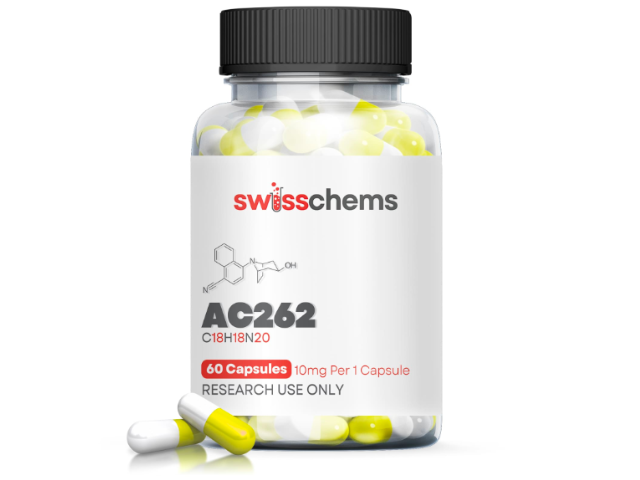
Disclosure: These are affiliate links. I earn a small commission if you purchase — at no extra cost to you. I only recommend products I personally use or have thoroughly researched.
Research & Studies
This section includes 2 peer-reviewed studies referenced in our analysis.