
- Dramatic improvement in lipid profiles (HDL, LDL, triglycerides)
- Enhanced endurance and fatty acid oxidation
- Reduced body fat through metabolic switching
- Anti-inflammatory activity
- Improved insulin sensitivity
I’m going to be straight with you on this one — GW-501516 is probably the most controversial compound I’ve ever written about for this site.
On one hand, the short-term human data is genuinely impressive. We’re talking about a single molecule that improved virtually every marker of cardiovascular and metabolic health in clinical trials. On the other hand, GlaxoSmithKline — a company that stood to make billions — walked away from it entirely because of what they saw in animal cancer studies.
That tension is the whole story of Cardarine. And if you’re going to make an informed decision about it, you need to understand both sides. Not the bro-science version. Not the fear-mongering version. The actual evidence.
The Short Version: GW-501516 (Cardarine) is a PPARδ agonist — not a SARM — that dramatically improves lipid profiles, enhances endurance by shifting your body’s fuel preference toward fat, and reduces metabolic syndrome markers. Short-term human trials showed striking results. However, development was permanently halted after animal studies revealed multi-organ cancer at high doses. It is not FDA-approved, is banned by WADA, and carries serious unresolved safety questions that make long-term use a genuine gamble.
What Is GW-501516?
First things first: GW-501516 is not a SARM. I know it gets shelved next to Ostarine and RAD-140 on every research chemical site out there, but it operates through a completely different mechanism. It doesn’t touch your androgen receptors. It doesn’t suppress testosterone. Calling it a SARM is like calling a bicycle a motorcycle because they both have two wheels.
GW-501516 is a PPARδ agonist — it activates a specific nuclear receptor called Peroxisome Proliferator-Activated Receptor Delta. That receptor controls how your body processes fat, glucose, and energy at the most fundamental level. Think of PPARδ as a master switch that tells your cells, “Hey, start burning fat for fuel instead of sugar.”
The compound was developed in the 1990s through a collaboration between Ligand Pharmaceuticals and GlaxoSmithKline. The original goal was treating metabolic syndrome, dyslipidemia, and cardiovascular disease — massive markets with massive potential. Early human trials were genuinely exciting. Then in 2007, GSK’s standard two-year rodent toxicology studies came back showing rapid tumor development in multiple organs — liver, thyroid, stomach, skin, bladder, and more.
GSK shut everything down. The compound never made it past Phase II trials.
But here’s where the story gets weird. That same year, a landmark publication showed that GW-501516 doubled running endurance in mice. The internet got hold of it, and suddenly “Cardarine” was being sold on every research chemical site as a fat-burning, endurance-boosting miracle. WADA banned it in 2009 and took the unusual step of issuing a direct public health warning to athletes — something they almost never do.
Reality Check: GW-501516 exists in a regulatory gray zone. It’s not approved for human use anywhere in the world. It was abandoned by its own developer. It’s sold exclusively as a “research chemical.” None of this means it doesn’t work — the clinical data says it clearly does something. But it means you’re taking on risk that hasn’t been fully characterized, and no one is ensuring the quality of what you’re buying.
How Does GW-501516 Work?
Here’s the simplified version: your muscles can burn two types of fuel — glucose (sugar) and fatty acids (fat). Most of the time, especially during moderate activity, your body uses a mix of both. GW-501516 flips a metabolic switch that tells your muscles, “Prioritize fat. Burn fat first, burn more of it, and keep burning it longer.”
That single shift cascades into almost everything else the compound does.
At the molecular level, GW-501516 binds to the PPARδ receptor with extremely high selectivity — about 1,000 times more affinity for PPARδ than for its cousins PPARα and PPARγ. Once activated, this receptor recruits a coactivator called PGC-1α and upregulates a whole suite of genes involved in fatty acid oxidation. The big ones include CPT1b (which shuttles fatty acids into mitochondria for burning), CD36 (which transports fatty acids into cells), and PDK4 (which suppresses glucose oxidation, forcing more fat burning).
The practical result? Your body becomes dramatically more efficient at using fat for fuel. This is why users report being able to do cardio for significantly longer — your muscles aren’t hitting the glycogen wall as fast because they’re pulling energy from a much deeper fuel tank (stored fat).
But there’s more going on than just fat burning. Research published in the Journal of Biological Chemistry found that GW-501516 also activates AMPK — the same energy-sensing pathway that gets switched on during exercise — through a mechanism that’s actually independent of PPARδ. This increases glucose uptake in muscle cells, which partly explains the insulin sensitivity improvements seen in human trials.
In plain English: GW-501516 makes your metabolism behave as if you’re exercising, even when you’re not. It’s the closest thing to an “exercise in a pill” that’s ever been developed — which is exactly why it attracted so much attention, and exactly why WADA considers it such a serious threat to fair competition.
Benefits of GW-501516
Lipid Profile Improvements — The Strongest Evidence
This is where GW-501516 shines the brightest, and where the human data is actually quite robust.
In a 12-week randomized, double-blind, placebo-controlled trial with 268 participants, 10mg daily of GW-501516 delivered results that most cardiologists would find remarkable: HDL cholesterol went up 16.9%, LDL dropped 7.3%, triglycerides fell 16.9%, and it shifted LDL particles from the small, dense, artery-clogging type to larger, less dangerous forms. These numbers rival or exceed what many prescription medications achieve.
A separate two-week trial in moderately obese men showed even more dramatic short-term effects: triglycerides dropped 30%, LDL fell 23%, fasting insulin decreased 11%, and liver fat content dropped 20%. They also measured a 30% reduction in urinary isoprostanes — a marker of oxidative stress — suggesting system-wide anti-inflammatory effects.
Endurance Enhancement — Impressive but Animal-Only
Here’s where I need to be honest about what we know and what we’re extrapolating. The endurance data that made Cardarine famous — mice roughly doubling their running capacity — comes from animal studies. There are no published human trials measuring endurance performance with GW-501516.
That said, the mechanism is well-characterized and the user reports are remarkably consistent. The compound promotes conversion toward Type I (slow-twitch, oxidative) muscle fibers, which are more fatigue-resistant. Combined with the metabolic shift toward fat oxidation, the theoretical basis for endurance enhancement is solid.
Metabolic and Anti-Inflammatory Effects
Beyond the headline numbers, GW-501516 demonstrates meaningful anti-inflammatory activity. It decreases IFN-γ-induced TNF-α and iNOS expression, and animal models have shown it alleviates neuroinflammation in Parkinson’s disease models by suppressing NLRP3-mediated pathways. There’s also preclinical evidence suggesting it may reduce amyloid-β production relevant to Alzheimer’s by decreasing BACE1 expression.
Important: The neuroprotective benefits are entirely preclinical — meaning they come from animal models and cell studies. No human trials have evaluated GW-501516 for brain health outcomes. Treat these findings as scientifically interesting but far from proven in humans.
Fat Loss
Users consistently report gradual, steady fat loss — particularly abdominal fat — especially when combined with a caloric deficit and exercise. This aligns perfectly with the mechanism: if your body is preferentially burning fat for fuel, and you’re maintaining a deficit, the math works in your favor. But this hasn’t been the primary endpoint of any human trial, so the evidence is more mechanistic and anecdotal than clinical.
How to Take GW-501516
Standard disclaimer: GW-501516 is not approved for human use. These ranges come from clinical trial data and widely reported user protocols — not established medical guidelines.
Dosage: Clinical trials used 2.5mg, 5mg, and 10mg daily, with 10mg producing the most robust lipid improvements. Most users report taking 10-20mg daily.
Timing: Once daily, with or without food — bioavailability isn’t meaningfully affected by meals. The half-life is approximately 16-24 hours, so timing isn’t critical as long as you’re consistent.
Forms: Available as liquid solutions (most common), capsules, and raw powder. Liquid solutions from reputable vendors tend to have the most reliable dosing.
Cycling: Users typically run 8-12 week cycles followed by 4-8 weeks off. Some tolerance development has been reported after 12-16 weeks of continuous use.
Starting protocol: If you choose to use this compound despite the safety concerns, starting at 10mg daily for the first 2-3 weeks to assess tolerance before considering any increase is the approach most frequently recommended in user communities.
Pro Tip: Because GW-501516 doesn’t suppress testosterone or affect the hypothalamic-pituitary axis, no post-cycle therapy (PCT) is needed. This is one reason it’s popular as an addition during or between hormonal cycles — it provides fat-loss and endurance support without adding another variable to hormonal recovery.
Side Effects & Safety
The Cancer Question — You Need to Read This
This is the elephant in the room, and I’m not going to sugarcoat it.
In GSK’s standard two-year rodent toxicology studies, GW-501516 caused rapid tumor development across multiple organs — liver, thyroid, tongue, stomach, skin, bladder, and testes. This wasn’t a borderline finding. It was severe enough that one of the world’s largest pharmaceutical companies walked away from a potentially billion-dollar drug.
You’ll hear people argue that the doses were extreme — reportedly 10-100x human equivalent doses — and that the duration was equivalent to decades of human exposure. Both of those things are true. You’ll also hear people point out that lower-dose primate studies showed lipid benefits without cancer. That’s also true.
But here’s what’s also true: high-dose, long-duration animal studies are exactly how we screen for carcinogenic potential. That’s the entire point. The mechanism — PPARδ driving cellular proliferation — isn’t inherently dose-dependent. And without long-term human data (which doesn’t exist and arguably can’t ethically be generated), the cancer risk in humans cannot be confirmed or ruled out.
Interestingly, the science isn’t entirely one-directional. Some research has found that GW-501516 actually inhibited cell proliferation and induced apoptosis in certain nasopharyngeal carcinoma cells. A 2013 review in Life Sciences called for re-evaluation given the “dual molecular functions” of PPARδ — suggesting the relationship between this receptor and cancer is more complex than a simple on/off switch. A 2019 University of Michigan study added another wrinkle by linking high-fat diets combined with PPARδ agonists to pancreatic cancer risk specifically.
The bottom line: the cancer question is unresolved. Not dismissed, not confirmed — unresolved. And that uncertainty is the core risk you’re accepting.
Important: GW-501516 is absolutely contraindicated for anyone with current or prior cancer, liver disease, or who is pregnant or nursing. If you have a family history of cancer, the risk-benefit calculus shifts significantly. This is not a compound to take casually.
Other Side Effects
Beyond the cancer concern, reported side effects are relatively mild:
- Headaches — occasional, typically mild and transient
- GI disturbances — nausea and stomach upset, uncommon
- Potential liver stress — particularly concerning when stacked with hepatotoxic compounds like oral steroids or certain SARMs
Drug Interactions
Formal drug interaction data is extremely limited because development was discontinued. The main known concern is combining GW-501516 with hepatotoxic compounds, which may amplify both liver stress and proliferative risk.
Stacking GW-501516
Because GW-501516 operates through a completely different pathway than SARMs or hormonal compounds, it’s frequently used as an add-on rather than a standalone.
Common combinations:
- GW-501516 + Ostarine (MK-2866): The most commonly reported cutting stack — Cardarine handles fat oxidation and endurance while Ostarine preserves muscle during a caloric deficit
- GW-501516 + MK-677 (Ibutamoren): Pairs the metabolic effects with growth hormone secretion for recovery and body composition
- During PCT: Because it doesn’t affect testosterone, GW-501516 is frequently used during post-cycle therapy to maintain endurance and fat loss while hormones recover
What to avoid:
- Hepatotoxic oral compounds — methylated steroids and certain SARMs already stress the liver; adding a compound with proliferative properties to an already-stressed organ is asking for trouble
- Other PPARδ activators — stacking compounds with overlapping mechanisms and unknown interaction profiles adds risk without clear additional benefit
Endurance-focused stack: Some users combine GW-501516 with SR-9009 (Stenabolic), which works through the REV-ERBα pathway. The logic is complementary metabolic mechanisms, though SR-9009’s notoriously poor oral bioavailability (~2%) limits its practical utility in oral form.
My Take
I’ve gone back and forth on this one more than almost any other compound I’ve covered. The pharmacology is genuinely fascinating — a molecule that essentially mimics exercise at the metabolic level, produces lipid improvements that rival prescription drugs in weeks, and enhances endurance through a completely novel pathway. From a pure science standpoint, GW-501516 is remarkable.
But I can’t ignore the cancer data, and neither should you.
Here’s how I think about it: if the cancer risk were clearly dose-dependent and limited to extreme doses, I’d feel different. But the mechanism — PPARδ driving cellular proliferation — doesn’t have a clean dose-response cutoff that we can point to and say “below this, you’re safe.” The absence of long-term human data isn’t reassuring; it’s a gap that prevents us from knowing either way.
Who might consider this despite the risks: Someone who fully understands the unresolved cancer question, is committed to short-cycle use, has no personal or family cancer history, and is using it for a specific, time-limited goal like contest prep or a specific athletic objective. Not someone looking for a casual addition to a daily supplement stack.
Who should look elsewhere: Anyone with cancer history or elevated risk factors. Anyone under 25. Anyone looking for a long-term daily compound. And honestly, anyone who hasn’t already optimized the basics — sleep, nutrition, stress management, and regular exercise. If you’re not already exercising consistently, a compound that enhances exercise performance is solving the wrong problem.
For endurance enhancement with a more established safety profile, I’d point people toward natural options first — Cordyceps, Rhodiola, creatine, and plain old structured cardio training. They’re not as dramatic, but they also don’t come with a question mark next to the word “cancer.”
If you’re going to use GW-501516 despite all of this, source it from a vendor with third-party HPLC testing and publicly available Certificates of Analysis, keep cycles short, and don’t stack it with anything hepatotoxic. And get regular bloodwork — it’s the bare minimum due diligence for a compound with this risk profile.
Recommended GW-501516 Products
I know how frustrating it is to sort through dozens of brands making the same claims. These are the ones I've personally vetted — because quality is the difference between results and wasted money.
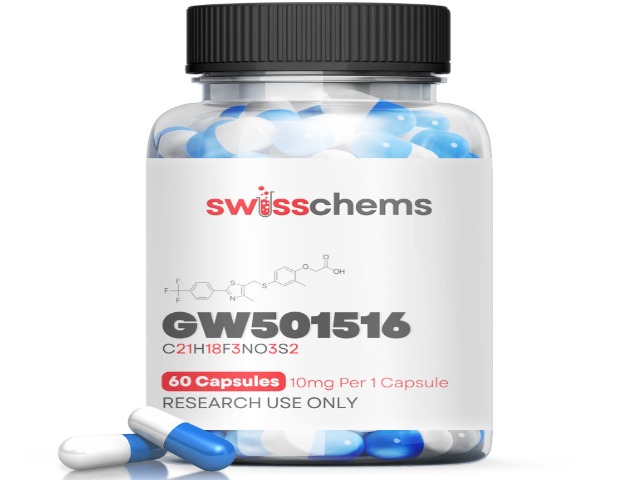
Disclosure: These are affiliate links. I earn a small commission if you purchase — at no extra cost to you. I only recommend products I personally use or have thoroughly researched.
Research & Studies
This section includes 3 peer-reviewed studies referenced in our analysis.