
- Reduces exercise fatigue during repeated high-intensity bouts
- Supports maximal strength gains when combined with training
- Promotes healthy blood flow through vasodilation
- May help maintain cognitive performance during physical stress
Your body makes roughly 40 kilograms of ATP every single day — that’s nearly your entire body weight in pure cellular energy, synthesized and recycled thousands of times over. And your brain, despite being only 2% of your body mass, hoovers up about a quarter of it.
So when I first heard you could supplement with ATP, my reaction was pretty straightforward: “Why wouldn’t I want more of the stuff that literally powers every thought I have?”
Turns out, the answer is more complicated — and more interesting — than I expected. Supplemental ATP doesn’t work the way most people think it does. But it does work. Just not as a nootropic magic bullet.
The Short Version: ATP (adenosine triphosphate) is the energy molecule that powers every cell in your body, especially your brain. Supplementing with 400mg/day of ATP disodium salt won’t directly increase your blood ATP levels, but chronic use builds your body’s capacity to produce and release ATP during exercise and stress. The strongest evidence supports reduced exercise fatigue and improved strength — cognitive benefits are preliminary at best. It’s most useful as part of a broader mitochondrial support stack, not as a standalone brain booster.
What Is Adenosine Triphosphate?
ATP is a nucleotide — a molecule built from an adenine base, a ribose sugar, and three phosphate groups. It’s not exotic. It’s not rare. It’s the most fundamental energy molecule in all of biology, and every living thing from bacteria to blue whales runs on it.
German chemist Karl Lohmann first isolated ATP from muscle tissue back in 1929. By the 1940s, Fritz Lipmann (who later won the Nobel Prize in Medicine) had established that ATP is the universal carrier of chemical energy in cells. The 1997 Nobel Prize in Chemistry went to researchers who finally figured out how ATP synthase — the enzyme that builds ATP — actually works. This molecule has been earning Nobel Prizes for nearly a century. It’s that important.
As a supplement, ATP is available as adenosine 5’-triphosphate disodium salt. The most clinically studied branded form is PEAK ATP® by TSI Group, which has been tested in 14 human clinical trials at doses ranging from 90mg to 5,000mg, with study durations from single acute doses to 2 years of continuous use.
Here’s the thing, though — and this is where the “foundations first” philosophy applies more than ever. ATP supplementation is a performance optimizer. If your sleep is wrecked, your gut is inflamed, and your stress response is in overdrive, adding supplemental ATP is like putting premium gas in a car with a blown head gasket. Fix the fundamentals first. Then consider the fine-tuning.
How Does Adenosine Triphosphate Work?
This is where things get genuinely fascinating — and where a lot of supplement marketing falls apart.
The plain-English version: You swallow an ATP capsule, your gut breaks it down into smaller pieces, those pieces get absorbed and used by your red blood cells to build up a bigger reserve of ATP. Then, when you exercise or face physical stress, those “loaded” red blood cells can release more ATP than usual, improving blood flow and reducing fatigue. It’s not instant energy. It’s a slow build that pays off over weeks.
The science: A randomized, placebo-controlled crossover trial published in the Journal of the International Society of Sports Nutrition demonstrated something that should have killed the entire ATP supplement industry — intact ATP is NOT orally bioavailable. A single dose does not increase blood or plasma ATP concentrations, whether delivered as enteric-coated pellets or administered directly to the small intestine via nasogastric tube.
So how does it work at all? Through a surprisingly elegant indirect mechanism:
- Gut degradation: Oral ATP gets rapidly broken down in the small intestine by ecto-nucleotidases into adenosine, ADP, AMP, and inorganic phosphate
- Portal absorption: These breakdown products enter the portal vein circulation, raising portal vein ATP concentration
- Erythrocyte loading: Over days and weeks, red blood cells increase their nucleoside uptake, expanding their capacity to synthesize ATP — without raising your resting blood levels
- Stress-triggered release: During exercise or physical stress, these “primed” red blood cells release more ATP, which acts as a powerful vasodilator and signaling molecule
- Purinergic signaling: The released ATP activates purinergic receptors (P2X and P2Y) throughout your body — including your brain — modulating neurotransmission, blood vessel dilation, and inflammation
For your brain specifically, ATP acts as a co-transmitter in most central nervous system nerves. Purinergic receptors regulate neural processing in the hippocampus and cortex — your memory and cognition headquarters. And ATP’s metabolite adenosine modulates long-term potentiation (LTP), which is essentially the cellular basis of learning and memory.
The practical translation: Think of it like training for a marathon. You don’t get faster by eating a big meal the morning of the race. You get faster by training consistently for months, building your body’s capacity to perform. ATP supplementation works the same way — slow, chronic loading that expands your reserves for when you actually need them.
Benefits of Adenosine Triphosphate
Let me be straight with you about what the evidence actually shows.
Physical Performance — The Strongest Case
This is where ATP supplementation earns its keep. A 2024 systematic review and meta-analysis in Sports examined oral ATP’s effects on anaerobic exercise and found significantly greater maximal strength gains versus placebo — a mean difference of 8.13 kg at the 400mg dose, regardless of supplementation duration. That’s meaningful.
A well-designed 2017 RCT with 42 men found that ATP supplementation prevented the post-exercise decline in ATP, ADP, and AMP levels that normally happens during repeated high-intensity bouts. Wingate peak power jumped +18.3% by bout 8 and +16.3% by bout 10 compared to baseline. In plain English: your later sets don’t fall off as hard.
A 2024 acute crossover study in 18 trained men showed that while a single 400mg dose didn’t improve peak muscle strength, it did reduce fatigue progression during extended exercise sets. This aligns perfectly with the chronic loading mechanism — it’s not about peak power, it’s about sustaining output.
Cognitive Performance — Honest Assessment
Here’s where I have to pump the brakes. One study showed PEAK ATP® maintained proactive reaction time and improved reactive reaction time following high-intensity sprint exercise. That’s genuinely interesting — it suggests ATP may protect your brain from the cognitive fog that follows intense physical exertion.
Reality Check: That’s one study, in an exercise context. There are currently zero published human trials examining ATP supplementation for cognitive function at rest — no focus studies, no memory trials, no attention research. If you’re looking for a standalone nootropic, the evidence isn’t there yet.
Blood Flow & Cardiovascular Support
Extracellular ATP released from red blood cells is a potent vasodilator. This means more blood flow to muscles during exercise and, potentially, better cerebral blood flow. The cardiovascular evidence is moderate and mechanistically sound, even if it’s not flashy.
Body Composition
Some studies show modest improvements in lean body mass over 12 weeks, likely driven by the anti-fatigue effects allowing harder training sessions and reduced muscle breakdown. Promising but not the primary reason to take it.
How to Take Adenosine Triphosphate
Dosage
400mg per day of ATP as disodium salt. Full stop. This is the dose used in virtually every positive clinical trial, and there’s no good evidence that more is better for most people. Doses up to 5,000mg have been tested without adverse events, but the sweet spot remains 400mg.
Timing
Take it 30 minutes before training if you’re using it for performance. For general supplementation, it can be taken with or without food at any time of day.
Forms
This matters more than most people realize. ATP disodium salt (the form in PEAK ATP®) is the only form with meaningful clinical evidence. Enteric-coated ATP actually showed less favorable bioavailability in research. Look for standard or delayed-release capsules.
Pro Tip: Don’t expect to feel anything from a single dose. The benefits of ATP supplementation build over 2+ weeks of daily use as your red blood cells gradually expand their ATP synthesis capacity. Set a 4-week evaluation window before deciding if it’s working for you.
Starting Protocol
Start at 400mg daily — there’s no need to titrate up since this is already the studied dose. Commit to at least 4 weeks of consistent daily use before evaluating. If you’re combining with exercise, time your dose 30 minutes pre-workout.
Cycling
No specific cycling protocols have been established in the literature. Most clinical trials used continuous daily supplementation for 12 weeks without any washout periods. There’s no current evidence suggesting tolerance develops.
Side Effects & Safety
ATP supplementation has earned GRAS (Generally Recognized As Safe) status. Across 14 human clinical trials with doses ranging from 90mg to 5,000mg and durations up to 2 years, researchers found no serious adverse events and no clinically significant changes in blood chemistry or hematology.
Uncommon side effects include mild nausea, stomach upset, diarrhea, and rarely, skin rash or reduced appetite.
Important: If you have heart disease or any structural heart condition, talk to your doctor before supplementing with ATP. While oral ATP is very different from intravenous ATP, cases of life-threatening ventricular arrhythmias have been documented with IV administration. The oral form is far safer, but caution is warranted. Also discontinue use 2 weeks before any scheduled surgery.
Drug interactions to know:
- Dipyridamole (Persantine): This is a MAJOR interaction. Dipyridamole decreases adenosine breakdown, and the combination can cause heart problems. Do not combine these.
- Carbamazepine (Tegretol): Moderate interaction risk — the combination may cause dangerously slow heart rate.
- Blood pressure medications: Use caution due to ATP’s vasodilatory effects, which could amplify blood pressure lowering.
Insufficient safety data exists for pregnancy. For breastfeeding, ATP has a plasma half-life shorter than 10 seconds and essentially zero oral bioavailability of intact molecule, making breast milk transfer highly unlikely — but consult your provider regardless.
Stacking Adenosine Triphosphate
ATP supplementation makes the most sense as part of a mitochondrial support stack rather than on its own. Here’s what pairs well and why.
The Core Mitochondrial Stack
Creatine Monohydrate (3–5g/day): This is the single best synergy for ATP. Creatine donates a phosphate group to regenerate ATP from ADP — it’s literally a rapid ATP recycling system. While supplemental ATP expands your total available pool, creatine ensures that pool gets refilled faster. Together, they cover both sides of the energy equation. Research on CoQ10 plus creatine combinations has shown additive neuroprotective effects, suggesting the mitochondrial stack approach has real merit.
CoQ10 (100–300mg/day): CoQ10 is an essential electron carrier in the mitochondrial ATP production chain. If ATP supplementation expands your energy reserves, CoQ10 makes sure the factory producing that energy runs smoothly.
D-Ribose (5g/day): Ribose is the five-carbon sugar that forms the literal structural backbone of ATP molecules. It accelerates de novo ATP synthesis — building brand new ATP molecules from scratch, especially valuable post-exercise when your reserves are depleted.
Complementary Partners
- PQQ: Promotes mitochondrial biogenesis — growing entirely new mitochondria — while ATP and CoQ10 optimize the ones you already have
- Acetyl-L-Carnitine: Shuttles fatty acids into mitochondria for ATP production. A strong choice for cognitive energy specifically.
- Shilajit: Research shows CoQ10 plus shilajit together improve mitochondrial function more than either compound alone
- Magnesium: ATP literally binds to Mg²⁺ in biological systems — magnesium is a required cofactor for ATP synthase. If you’re deficient (and roughly half of Americans are), your ATP production is already compromised.
Insider Tip: If you’re primarily interested in cognitive benefits, creatine has vastly more nootropic evidence than supplemental ATP — including studies showing improved working memory, reduced mental fatigue, and better performance under sleep deprivation. Start there. Add ATP if you want the exercise performance benefits on top.
Avoid Combining With
- Dipyridamole — dangerous cardiac interaction
- Carbamazepine — risk of dangerously slow heart rate
My Take
I’ll be honest — ATP supplementation is not in my daily stack for cognitive performance. For pure nootropic goals, creatine does what most people think ATP does, with 10x the research behind it.
Where I think ATP earns its place is in the specific niche of people who train hard and want to maintain both physical and cognitive performance during and after intense exercise. That study showing preserved reaction time after high-intensity sprints? That’s genuinely useful if you’re someone who needs to think clearly after a hard workout — athletes, military personnel, people who train in the morning before mentally demanding work.
ATP is best for:
- Serious exercisers doing repeated high-intensity work (CrossFit, HIIT, resistance training)
- People building a comprehensive mitochondrial support stack
- Anyone who notices significant mental fog after hard training
ATP probably isn’t your best bet if:
- You’re looking for a standalone nootropic for focus, memory, or cognition at rest
- You don’t exercise regularly (the benefits are largely exercise-dependent)
- You haven’t addressed sleep, gut health, and stress management first
The bioavailability paradox — the fact that ATP works despite not being absorbed intact — is one of the more interesting mechanisms in supplement science. It’s a compound that works honestly, just not in the way the label might imply. Take 400mg daily of PEAK ATP® for at least 4 weeks, pair it with creatine and magnesium, and see if your later training sets stop feeling like they’re running on fumes. That’s where this supplement delivers.
Recommended ATP Products
I know how frustrating it is to sort through dozens of brands making the same claims. These are the ones I've personally vetted — because quality is the difference between results and wasted money.
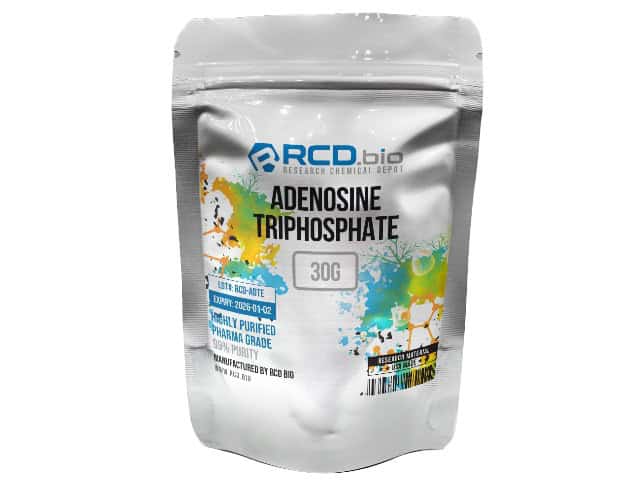
Disclosure: These are affiliate links. I earn a small commission if you purchase — at no extra cost to you. I only recommend products I personally use or have thoroughly researched.