
- Nerve fiber regeneration
- Neuropathic pain relief
- Reduced neuroinflammation
- Neuroprotection
- Metabolic support
I’ll be honest — ARA-290 isn’t the kind of peptide that shows up in flashy “unlock your brain’s potential” marketing. It’s quieter than that. It flew onto my radar through the small fiber neuropathy community, where people were reporting something unusual: not just pain relief, but actual nerve regrowth. Measurable, objective, confirmed-by-corneal-microscopy nerve regrowth. In the peptide world, that’s a big deal.
Most neuroprotective compounds mask symptoms. ARA-290 appears to fix the wiring itself.
The Short Version: ARA-290 (Cibinetide) is a synthetic peptide that selectively activates your body’s innate repair receptor to regenerate damaged nerve fibers and suppress neuroinflammation — without the dangerous blood-thickening effects of its parent molecule, erythropoietin. It’s best suited for people dealing with small fiber neuropathy, neuropathic pain, or post-inflammatory nerve damage. The evidence is moderate but genuinely promising, with multiple Phase 2 trials showing measurable nerve regeneration at 4mg/day subcutaneous injection.
What Is ARA-290?
ARA-290 is an 11-amino acid synthetic peptide engineered by Anthony Cerami and Michael Brines at Araim Pharmaceuticals. The story behind it is actually pretty elegant. Erythropoietin (EPO) — the hormone athletes get busted for using — does two very different things in your body. It ramps up red blood cell production (that’s the doping part), and it also triggers powerful tissue protection and repair (that’s the part researchers wanted to isolate).
The problem? You can’t give someone EPO for neuroprotection without also thickening their blood and raising their stroke risk. Not a great trade-off.
So Cerami and Brines mapped the 3D structure of EPO and identified the exact region — helix B — responsible for the repair signaling. They built ARA-290 to mimic only that region. The result is a peptide that tells your body to repair damaged tissue without touching your red blood cell count.
ARA-290 has received US and EU Orphan Drug Designation for sarcoidosis and US Fast Track Designation for neuropathic pain. It’s still investigational — not FDA-approved — but the clinical trial data is more substantial than most peptides in the biohacking space.
How Does ARA-290 Work?
Here’s the plain-English version: when your tissues get injured or inflamed, certain cells start displaying a special “repair needed” receptor on their surface. ARA-290 locks onto that receptor and flips a biological switch that says “stop the inflammation, start the rebuilding.”
Now the technical layer. That receptor is called the innate repair receptor (IRR) — a complex made of the erythropoietin receptor (EPOR) and beta-common receptor (CD131). What’s clever about this system is that the IRR isn’t normally present on healthy tissue. It only gets expressed when cells are under stress, injured, or inflamed. This means ARA-290 is essentially self-targeting — it concentrates its effects where the damage actually is.
Once ARA-290 binds the IRR, it triggers several downstream cascades:
- JAK2/STAT signaling kicks off anti-inflammatory gene expression
- NF-κB inhibition dials down pro-inflammatory cytokines like TNF-α, IL-1β, and IL-6
- PI3K/Akt activation promotes cell survival and blocks programmed cell death
- TRPV1 channel antagonism directly blocks pain signaling in small nerve fibers
- NLRP3 inflammasome suppression calms inflammatory activation in Schwann cells — the cells that insulate your peripheral nerves
So what does all that mean for you? ARA-290 simultaneously puts out the inflammatory fire AND activates the construction crew. It’s not choosing between symptom relief and structural repair — it does both. And despite having a plasma half-life of only about 2 minutes intravenously (around 20 minutes subcutaneously), a single dose triggers repair cascades that persist for days to weeks. Researchers describe it as a “molecular switch” — brief exposure, sustained effect.
Insider Tip: Don’t let the short half-life scare you. ARA-290’s mechanism is more like flipping a light switch than holding a button. The peptide disappears quickly, but the biological programs it activates keep running long after it’s gone.
Benefits of ARA-290
Nerve Fiber Regeneration — The Headline Finding
This is where ARA-290 genuinely stands apart. A Phase 2b randomized controlled trial (n=64) in sarcoidosis patients with small fiber neuropathy found that the 4mg/day dose significantly increased corneal nerve fiber area — an objective marker of nerve regeneration — with a placebo-corrected improvement of 697 μm² (p=0.012). Even more compelling, intraepidermal regenerating nerve fibers (GAP-43+ fibers) increased significantly in the treatment group.
Translation: this isn’t self-reported “I feel better” data. They put patients under a microscope and measured new nerve growth. That’s rare for any compound, let alone a peptide.
Neuropathic Pain Relief
Multiple Phase 2 trials showed significant improvement in neuropathic pain symptoms. Patients with moderate-to-severe pain saw clinically meaningful reductions. An earlier pilot study found significant improvements in neuropathic symptom scores, physical functioning, and vitality compared to placebo. The pain relief appears connected to actual nerve repair rather than just dampened signaling — which suggests longer-lasting benefits.
Metabolic and Diabetic Neuropathy Support
A Phase 2 trial in type 2 diabetics found that 4mg/day for 28 days improved HbA1c, lipid profiles, and neuropathic symptoms. Patients with reduced corneal nerve fiber density showed significant nerve regrowth versus placebo. This positions ARA-290 as potentially relevant for the millions of people dealing with diabetic peripheral neuropathy.
Neuroprotection (Preclinical)
Animal models show ARA-290 protects against neuronal death in ischemic stroke through suppressed inflammation and apoptosis. It also reduces microglial activation — the brain’s immune cells that, when chronically overactivated, contribute to neurodegeneration. This data is preclinical only, but the mechanisms are well-characterized.
Reality Check: ARA-290 is not a cognitive enhancer in the traditional nootropic sense. You won’t feel sharper an hour after injecting it. Its value is in structural repair and inflammation reduction — processes that unfold over weeks. If you’re looking for an acute focus boost, this isn’t it. If you’re dealing with nerve damage, chronic neuroinflammation, or small fiber neuropathy, the evidence is genuinely compelling.
Other Preclinical Benefits
Animal studies also show promise for wound healing (improved VEGF and angiogenesis in diabetic mice), bone density improvement, reduced colitis severity, and improved islet transplant graft survival. These are early-stage findings, but they reinforce the breadth of ARA-290’s tissue-protective effects.
How to Take ARA-290
Standard dose: 4mg subcutaneous injection, once daily. This was the optimal dose identified in the Phase 2b dose-ranging study that tested 1mg, 4mg, and 8mg. The 4mg dose outperformed 1mg, and 8mg offered no additional benefit — a classic inverted-U dose response.
Administration: Subcutaneous injection, typically in the abdomen or thigh. Self-administered in clinical trials. No specific timing requirements have been established — morning or evening appears equally effective.
Duration: Clinical trials used 28-day courses most commonly, with one trial running 12 weeks. Benefits persisted for at least one month after stopping the 28-day protocol.
Reconstitution: ARA-290 comes as a lyophilized (freeze-dried) powder. Reconstitute with bacteriostatic water. Store reconstituted peptide refrigerated and use within a few weeks.
What to expect timeline-wise:
- Days 1–7: Unlikely to notice anything dramatic
- Weeks 2–3: Some users report early improvements in neuropathic symptoms
- Week 4+: Measurable nerve regeneration observed in clinical trials
- Post-treatment: Benefits appear to continue building even after stopping
Pro Tip: ARA-290 is one of those peptides where patience is everything. The 28-day protocol used in most trials isn’t arbitrary — nerve regeneration is a biological process that takes time. Resist the urge to increase the dose if you don’t feel anything in the first week. The 4mg dose works. Give it time.
Storage: Keep lyophilized powder at -20°C (stable up to 36 months). Once reconstituted, refrigerate at 2–8°C and protect from light.
Side Effects and Safety
ARA-290 has one of the cleaner safety profiles I’ve seen in the peptide space. Across multiple human trials, no clinically significant changes were observed in blood chemistry, liver function, kidney function, or blood cell counts.
Common side effects (mild):
- Injection site reactions — redness, mild irritation at the injection site. This is the most frequently reported issue
- Mild headache — occasional, transient
- Mild GI discomfort — rare
- Slight heart rate increase — noted in some participants, not clinically significant
Serious side effects: None reported in any clinical trial to date.
No anti-cibinetide antibodies were detected in trial participants, which means low immunogenicity — your body doesn’t appear to mount an immune response against the peptide.
Important: Long-term safety data beyond 12 weeks essentially does not exist. Most studies lasted 28 days. If you’re considering extended use, you’re in uncharted territory. Additionally, anyone with active cancer should avoid ARA-290 — its anti-apoptotic (cell survival) properties are theoretically concerning in a malignancy context, even though no evidence of harm exists. Pregnant or nursing women should not use this peptide, as no safety data exists for those populations.
Drug interactions to watch:
- Anti-TNF-α agents (e.g., infliximab, adalimumab) — excluded from clinical trials, interaction unknown
- EPO or erythropoietin-stimulating agents — potential receptor competition and added thrombotic risk from the EPO side
- Immunoglobulin therapies — excluded from trials within 6 months of treatment
- Immunosuppressants — interestingly, low-dose tacrolimus showed synergistic benefits in animal transplant models, but exercise caution without medical supervision
Stacking ARA-290
ARA-290 occupies a unique niche — it’s activating a repair receptor system that most other neuroprotective compounds don’t touch. This makes it mechanistically complementary to several other substances rather than redundant.
Potentially complementary combinations:
-
BPC-157 — BPC-157 drives angiogenesis and broad tissue repair through different pathways. The rationale: BPC-157 improves blood supply to damaged tissue while ARA-290 activates nerve-specific repair programs. Different mechanisms, same goal.
-
Alpha-Lipoic Acid — Well-studied for diabetic neuropathy with strong antioxidant action. ARA-290 handles the inflammatory and regenerative side while ALA addresses oxidative damage. Complementary mechanisms with real clinical basis for both.
-
NAD+ precursors (NMN) — Mitochondrial energy support pairs logically with ARA-290’s repair signaling. When nerve cells are trying to regenerate, they need energy to do it. NAD+ precursors supply the fuel, ARA-290 provides the building instructions.
-
Cerebrolysin — Works through neurotrophic factor mimicry, a completely different pathway. Some preclinical stroke research suggests additive neuroprotective effects when combining neurotrophic and anti-inflammatory approaches.
What to avoid combining:
- EPO or erythropoietin-stimulating agents — potential receptor competition at the EPOR level, plus EPO’s own cardiovascular risks
- Anti-TNF-α biologics — unknown interaction, excluded from all clinical trials
- High-dose immunosuppressants without medical oversight
Insider Tip: If you’re interested in ARA-290 for neuropathy, pair it with Alpha-Lipoic Acid first. ALA has decades of human data for neuropathy and addresses a different piece of the puzzle (oxidative stress vs. inflammation/repair). It’s the most evidence-based stack partner for this use case.
My Take
I’ll give it to you straight: ARA-290 is one of the more scientifically rigorous peptides I’ve come across, but it’s also one of the most niche. If you’re a healthy person looking for a cognitive edge, this isn’t where I’d point you. Go look at Lion’s Mane, Bacopa, or Citicoline first.
But if you’re dealing with small fiber neuropathy, post-inflammatory nerve damage, diabetic neuropathy, or conditions where peripheral nerve dysfunction is driving your symptoms — burning pain, numbness, autonomic dysfunction, exercise intolerance — ARA-290 deserves serious consideration. The Phase 2 data showing objective nerve regrowth isn’t just statistically significant, it’s clinically meaningful. These are people growing new nerve fibers. That’s not something most treatments can claim.
The things that give me pause: it’s still investigational, long-term safety data is thin, and sourcing research-grade peptide requires due diligence. You need a certificate of analysis, proper cold-chain shipping, and ideally mass spectrometry confirmation of the correct sequence. This isn’t a “grab the cheapest option” situation.
Who is ARA-290 best for? Someone with documented small fiber neuropathy or neuropathic pain who has already addressed their foundations — gut health, sleep, stress management, basic nutrition — and is working with a healthcare provider who understands peptide therapy. It’s a precision tool, not a general supplement.
Who should try something else? Anyone looking for an acute cognitive boost, anyone without nerve-related symptoms, or anyone not willing to commit to at least a full 28-day protocol with proper subcutaneous injection technique.
The science here is real. The results are measurable. But this is a targeted intervention for a specific problem, not a general-purpose nootropic. Know what you’re trying to fix before you reach for it.
Recommended ARA-290 Products
I know how frustrating it is to sort through dozens of brands making the same claims. These are the ones I've personally vetted — because quality is the difference between results and wasted money.
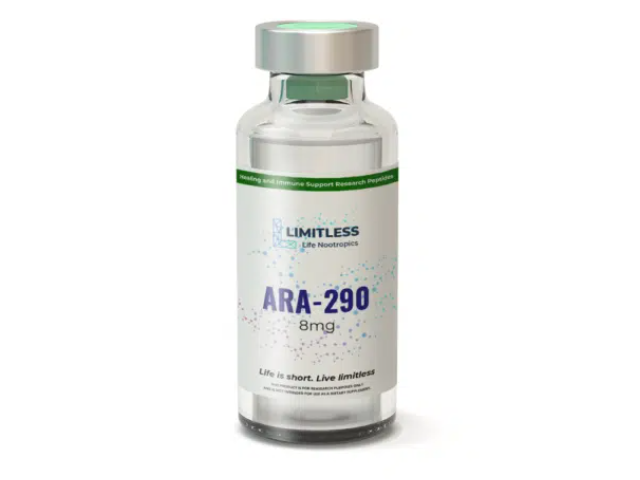
Disclosure: These are affiliate links. I earn a small commission if you purchase — at no extra cost to you. I only recommend products I personally use or have thoroughly researched.
Research & Studies
This section includes 3 peer-reviewed studies referenced in our analysis.