
- Neuroprotection via caspase-8 inhibition
- Cognitive function support
- Neuroplasticity enhancement
- Anti-inflammatory and antioxidant activity
- Post-illness cognitive recovery
I’ll be honest with you — when I first heard about Cortexin, I thought someone was pulling my leg. A drug made from baby cow brains that Russian neurologists inject into their patients by the millions? It sounded like something out of a Cold War sci-fi novel, not a legitimate pharmaceutical.
But the more I dug into it, the more interesting the story got. Cortexin has been a mainstay of Russian neurology for nearly four decades. It’s prescribed for everything from post-stroke recovery to ADHD in children. And while the Western medical establishment has largely ignored it, the mechanism of action is genuinely fascinating — a cocktail of neuropeptides that targets multiple brain pathways simultaneously.
The catch? The evidence base isn’t where I’d like it to be. And that’s something we need to talk about honestly.
The Short Version: Cortexin is a Russian-developed injectable neuropeptide complex derived from animal brain tissue, used primarily for cognitive enhancement and neuroprotection. It’s administered as a 10-day course of intramuscular injections and has a strong safety record across decades of clinical use in Russia. However, robust Western-standard clinical trials are essentially nonexistent, so you’re relying more on clinical tradition than hard RCT data. Below, I break down what the science actually shows, how it works, and whether it’s worth exploring.
What Is Cortexin?
Cortexin is a polypeptide bioregulator — a complex mixture of small brain-derived proteins extracted from the cerebral cortex of cattle or pigs under 12 months of age. It was created in 1986 at the Russian Military Medical Academy in Saint Petersburg and is manufactured exclusively by Geropharm, a Russian pharmaceutical company.
Unlike most nootropics you’ll come across, Cortexin isn’t a single molecule. It’s a soup of acidic and neutral polypeptides with molecular weights between 1,000 and 10,000 daltons, plus glycine as a stabilizer. Think of it less like a precision tool and more like a biological repair kit — dozens of small signaling molecules that your brain’s cells already recognize and respond to.
Each vial contains 10 mg of water-soluble polypeptide fractions plus 12 mg of glycine. There’s also a 5 mg pediatric formulation. The only approved route of administration is intramuscular injection — there is no oral form, no matter what some corner of the internet might tell you.
Here’s the important context: Cortexin is a registered pharmaceutical in Russia and several post-Soviet countries. It is not FDA-approved in the United States or EMA-approved in Europe. If you’re sourcing it in the West, you’re importing a foreign pharmaceutical, which comes with its own set of considerations around quality assurance and legality.
How Does Cortexin Work?
The simplest way to think about Cortexin is as a multi-channel brain support signal. Instead of hitting one receptor or one pathway — like most synthetic nootropics do — it delivers a broad spectrum of neuropeptides that influence several systems at once. It’s the shotgun approach to neuroprotection, for better or worse.
Here’s what’s happening under the hood:
Neurotransmitter balancing. Cortexin modulates the balance between excitatory and inhibitory neurotransmitters — particularly glutamate and GABA. It also influences dopamine and serotonin activity. In practical terms, this means it may help normalize brain signaling that’s been thrown off by stress, injury, or chronic inflammation.
Anti-apoptotic protection. This is probably the most compelling mechanism. Research published in Problems of Biological, Medical and Pharmaceutical Chemistry (2017) showed that Cortexin effectively inhibits caspase-8 — an enzyme that triggers programmed cell death — in brain tissue specifically. In a glutamate toxicity model (which mimics what happens during a stroke or excitotoxic injury), Cortexin protected neurons from dying. That’s not trivial.
Neuroplasticity support. The peptides in Cortexin interact with several neuron-specific proteins including β5-tubulin, creatine kinase B, and protein 14-3-3 α/β. These are involved in signal transduction, cellular energy metabolism, and structural integrity of neurons. Translation: Cortexin may help your brain maintain and build the physical infrastructure it needs to form new connections.
Antioxidant and anti-inflammatory effects. In accelerated aging rat models, Cortexin restored the balance between pro-oxidative and antioxidative activity in brain tissue. Chronic neuroinflammation is one of the most underappreciated drivers of cognitive decline, so this mechanism matters.
Epigenetic regulation. Some of the short peptides derived from Cortexin (specifically EDR and DS) may bind to histone H1.3 and influence transcription of the neuroprotective gene Fkbp1b, which is involved in calcium homeostasis in hippocampal neurons. This is frontier stuff — early research, but it suggests Cortexin’s effects may go deeper than surface-level neurotransmitter tweaking.
Pro Tip: The low molecular weight of Cortexin’s peptides means they can cross the blood-brain barrier directly. This is why injection works — the peptides reach neurons without being degraded by the digestive system, which is also why there’s no legitimate oral form.
Benefits of Cortexin
Let me be straight with you: the evidence for Cortexin is real, but it’s not what I’d call rock-solid by Western standards. Most studies are Russian, published in Russian-language journals, and many are open-label or observational rather than double-blind, placebo-controlled. A systematic review of animal-derived nootropics found only one eligible Cortexin trial with 80 participants — not enough to perform a meta-analysis. The certainty of evidence was rated low to very low.
That said, here’s what the available research shows:
Post-COVID cognitive recovery. A 2024 study of 109 patients found that Cortexin 10 mg IM for 20 days produced statistically significant improvements in concentration, executive function, and auditory-verbal memory compared to a control group. No adverse events were reported. Given how many people are still dealing with post-COVID brain fog, this is one of the more relevant findings.
Large-scale clinical programs. The CORTEX multicenter program followed 979 patients across 674 neurologists in Russia and neighboring countries. Both 10 mg and 20 mg doses showed clinical efficacy for cognitive and asthenic (fatigue-related) disorders. The higher 20 mg dose showed more pronounced anti-anxiety and antidepressant effects.
Pediatric cognitive dysfunction. A multicenter study of 635 children ages 3–7 with ADHD, speech delay, or consequences of perinatal CNS lesions showed reliable cognitive improvements after 10 injections. The best responses were in ADHD patients ages 3–4, particularly on thinking tests.
Brain ischemia. In an analysis of 500 patients screened from a pool of 50,000, 10 mg/day for 10 days showed decreased focal neurological symptoms, improved cognitive indicators, and normalized emotional status in patients with stage II brain ischemia.
Reality Check: Despite over 200 articles mentioning Cortexin on PubMed, the vast majority come from Russian journals with limited international peer review. There are essentially no large, double-blind, placebo-controlled RCTs by Western standards. This doesn’t mean it doesn’t work — it means we can’t be as confident in the results as we’d like. That’s an important distinction.
Animal studies have demonstrated that Cortexin reduces neurological deficits in rat models of both acute and chronic brain ischemia, improving motor activity and cognitive function. These are supportive, but animal results don’t always translate to humans.
How to Take Cortexin
Cortexin is only available as a lyophilized (freeze-dried) powder that must be reconstituted and injected intramuscularly. There’s no way around this — if needles are a dealbreaker, this substance isn’t for you.
Standard adult protocol:
- Dose: 10 mg IM once daily
- Duration: 10 consecutive days
- Timing: Before 3 PM (Cortexin can have stimulatory effects that interfere with sleep)
- Cycling: Repeat courses every 3–6 months as needed
Higher dose protocol (used in the CORTEX clinical program):
- 20 mg IM once daily for 10 days, particularly for post-COVID cognitive complaints or more pronounced anxiety symptoms
Pediatric dosing:
- Children ≥20 kg: 10 mg IM daily for 10 days
- Children <20 kg: 0.5 mg/kg IM daily for 10 days
Reconstitution: Dissolve the vial contents in 1–2 mL of 0.9% sodium chloride, sterile water for injection, or 0.5% procaine solution. Aim the needle at the side of the vial to prevent foaming. Use immediately after dissolving — don’t store reconstituted solution.
Insider Tip: If you’re doing the injections yourself, use procaine solution for reconstitution instead of plain water. Users consistently report that water-based injections are significantly more painful. The procaine acts as a local anesthetic and makes the experience much more tolerable across a 10-day course.
A word on intranasal use: Some nootropic communities have discussed using reconstituted Cortexin as a nasal spray. This is completely off-label, has no established bioavailability data, and at least one user report describes serious GI side effects (irritable bowel, rectal bleeding) lasting months after intranasal administration. I can’t recommend this route. Stick with IM injection as intended.
Side Effects and Safety
The safety profile of Cortexin is one of its genuine strengths. Across decades of clinical use in Russia and multiple clinical studies, serious adverse events are extremely rare.
Common (but still infrequent):
- Injection site pain, redness, or swelling
- Mild allergic reactions (rash, itching)
Uncommon:
- Headache or dizziness
- Transient agitation or increased excitability, especially at the 20 mg dose
- Mild nausea
Rare but serious:
- Anaphylactic reaction — possible with any animal-derived peptide product
Important: In pediatric epilepsy patients, seizure aggravation was reported in approximately 5% of cases. If you or your child has a seizure disorder, this is a conversation to have with a neurologist before starting Cortexin.
Contraindications:
- Known hypersensitivity to Cortexin or animal-derived products
- Pregnancy and breastfeeding (insufficient safety data)
Drug interactions: No formal drug interactions have been documented. The manufacturer states Cortexin can be used alongside other medications in combination therapy. That said, no formal interaction studies exist for most combinations, so exercise the usual caution with any new addition to a neurological medication regimen.
On prion safety: Since Cortexin is derived from animal brain tissue, prion contamination is a legitimate concern. The manufacturer states that their production techniques exclude the possibility of prion contamination. Given the millions of doses administered in Russia over nearly 40 years without a single reported case of prion disease, the practical risk appears extremely low — but it’s worth knowing about.
Stacking Cortexin
In Russian clinical practice, Cortexin is rarely used in isolation. Here are the most common and logical combinations:
Cortexin + Cerebrolysin: The classic Russian neuropeptide stack. Cerebrolysin is stronger for neuroregeneration (rebuilding damaged tissue), while Cortexin may be superior for neuroplasticity and general cognitive support. Some practitioners alternate courses rather than using both simultaneously.
Cortexin + Semax or N-Acetyl Semax: Semax upregulates BDNF and provides more immediate, focused cognitive enhancement. Combined with Cortexin’s broader neuroprotective profile, this is a well-regarded pairing for cognitive recovery and enhancement.
Cortexin + Piracetam or other racetams: Traditional in Russian nootropic practice. Piracetam modulates AMPA receptors and enhances membrane fluidity, while Cortexin provides neuroprotective and neurotrophic support. Different mechanisms, potentially complementary effects.
Cortexin + Actovegin: Another animal-derived neuroprotective studied alongside Cortexin in brain ischemia models. Both are widely used in Russian neurology, though Actovegin’s evidence base has its own limitations.
What to avoid:
- High-dose amino acid supplements taken at the same time as injection may theoretically compete with peptide uptake — though this is speculative
- Always consult a physician before combining with prescription neurological medications, particularly anticonvulsants or psychotropics
My Take
Here’s where I land on Cortexin: it’s a genuinely interesting compound with a plausible, multi-targeted mechanism and a long safety track record. But the evidence gap is real, and I can’t pretend it isn’t there.
If you’re someone dealing with post-COVID brain fog, recovering from a neurological event, or looking for neuroprotective support and you’ve already optimized the foundations — sleep, gut health, stress management, nutrition — Cortexin is worth investigating. The clinical tradition behind it is substantial, even if it hasn’t been validated by the kind of large-scale RCTs that Western evidence-based medicine demands.
If you’re looking for your first nootropic or something with a deeper evidence base, I’d point you toward Bacopa Monnieri, Lion’s Mane, or Citicoline first. These have stronger international research backing and don’t require injections.
The practical barriers are real too. You’re looking at intramuscular injections for 10 consecutive days, imported from Russian pharmacy vendors, with no regulatory oversight from the FDA or EMA. That’s not for everyone, and it shouldn’t be.
For those who are comfortable with injectable peptides and have experience navigating the Russian pharmaceutical landscape, Cortexin offers something genuinely unique — a multi-peptide neuroprotective complex that no single synthetic molecule can replicate. At roughly a fraction of the cost of Cerebrolysin, it’s also the more accessible option in this category.
Just go in with realistic expectations. This isn’t a limitless pill. It’s a course-based neuroprotective treatment with subtle, cumulative effects that many users describe as emerging over weeks rather than hitting you on day one. Patience and consistency are the name of the game.
Recommended Cortexin Products
I know how frustrating it is to sort through dozens of brands making the same claims. These are the ones I've personally vetted — because quality is the difference between results and wasted money.
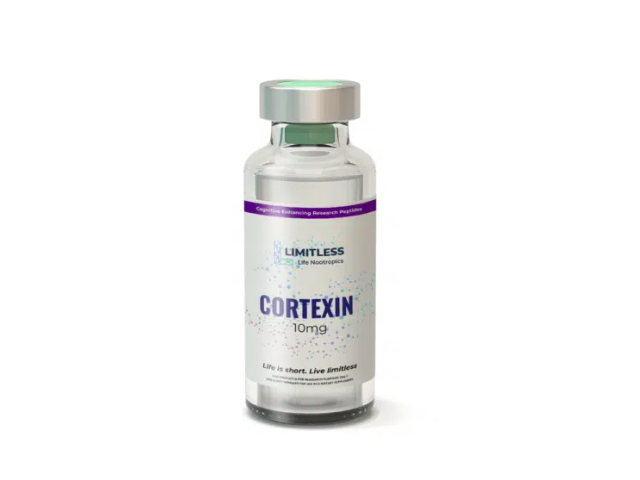
Disclosure: These are affiliate links. I earn a small commission if you purchase — at no extra cost to you. I only recommend products I personally use or have thoroughly researched.
Research & Studies
This section includes 6 peer-reviewed studies referenced in our analysis.