
- May enhance memory and learning through cholinergic support
- Users report enhanced visual perception and clarity
- May support mood and reduce anxiety symptoms
- Potential neuroprotective properties
I’ll be honest — when I first tried coluracetam, I wasn’t expecting much. I’d already been through most of the racetam family by that point, and the improvements had been… let’s call them “subtle.” But about 45 minutes after my first sublingual dose, I looked out the window and the colors in my backyard looked like someone had cranked the saturation slider up by 30%. That “HD vision” effect people talk about on Reddit? It’s real. And it got my attention.
Coluracetam is one of the most pharmacologically interesting racetams out there — not because it has the most research (it doesn’t), but because it works through a mechanism that no other widely available nootropic touches. Whether that mechanism translates into meaningful cognitive benefits for you depends on a few things I’ll break down in this guide.
The Short Version: Coluracetam (MKC-231) is a racetam nootropic that enhances your brain’s ability to absorb choline — the raw material for acetylcholine, your primary learning and memory neurotransmitter. It’s best known for producing vivid visual enhancement and subtle mood support at very low doses (5–20mg). The evidence is promising but thin: strong animal studies, one failed human clinical trial with an interesting subgroup finding, and a lot of compelling anecdotal reports. Pair it with a choline source like Alpha-GPC for best results.
What Is Coluracetam?
Coluracetam is a synthetic nootropic in the racetam family, originally developed around 1996 by Mitsubishi Tanabe Pharma Corporation in Japan under the code name MKC-231. It was designed as a potential treatment for Alzheimer’s disease — specifically targeting the cholinergic system that deteriorates as the disease progresses.
The Alzheimer’s trials didn’t hit their endpoints, though the compound showed a favorable safety profile. In 2006, a San Diego company called BrainCells, Inc. picked up the rights, renamed it BCI-540, and pivoted toward depression research. They ran a Phase IIa trial for major depressive disorder with comorbid anxiety, got some intriguing subgroup results, and then… the company appears to have quietly shut down.
So here we are. Coluracetam sits in that strange category of compounds that are pharmacologically fascinating, reasonably safe based on limited data, but essentially orphaned by the pharmaceutical pipeline. It’s unscheduled, unregulated, and sold as a research compound or nootropic supplement. That means you’re largely on your own when it comes to figuring out whether it’s worth trying — which is exactly why I wrote this guide.
Reality Check: Coluracetam has never been approved by the FDA for any condition. The human clinical data is extremely limited. If you’re dealing with serious cognitive decline, depression, or anxiety, work with a qualified practitioner first. Supplements — even interesting ones — aren’t a substitute for proper medical care.
How Does Coluracetam Work?
Here’s where coluracetam gets genuinely interesting. Most racetams — piracetam, aniracetam, oxiracetam — work downstream. They modulate glutamate receptors (AMPA and NMDA) or tweak how acetylcholine receptors respond to signals. Coluracetam works upstream, at the supply chain level.
Your brain makes acetylcholine — the neurotransmitter behind learning, memory, and attention — by pulling choline from your bloodstream into cholinergic neurons. This absorption step is called high-affinity choline uptake (HACU), and it’s the bottleneck in the whole process. No matter how much choline is floating around, your brain can only make acetylcholine as fast as it can pull choline through the door.
Coluracetam opens more doors.
Specifically, it increases the number of CHT1 choline transporters sitting at the synaptic membrane, ready to grab choline. A 2008 study by Takashina et al. in the Journal of Neural Transmission found that MKC-231 increased the maximum velocity of choline uptake by 1.6-fold and the transporter binding capacity by 1.7-fold. In plain English: neurons treated with coluracetam could absorb significantly more choline, significantly faster.
What makes this especially compelling is the persistence of the effect. Bessho et al. (2008) showed that after 8 days of repeated dosing in rats, the cognitive improvements lasted more than 24 hours after the last dose — even when the compound was no longer detectable in the brain. This suggests coluracetam doesn’t just temporarily boost choline uptake. It may actually change how the transporter system is regulated, creating lasting improvements in cholinergic function.
There’s also a neuroprotective angle. Earlier work by Akaike et al. (1998) in the Japanese Journal of Pharmacology found that MKC-231 protected cortical neurons against glutamate toxicity by suppressing nitric oxide formation. That’s a different pathway entirely from the choline uptake story, and it hints that coluracetam may have broader neuroprotective properties worth investigating.
Pro Tip: Think of it like this — most racetams make your brain’s communication system more sensitive to signals. Coluracetam increases the production of the signal itself. That’s why pairing it with a choline source is so important. You’re opening the floodgates for choline absorption, so you’d better make sure there’s actually choline available to absorb.
Benefits of Coluracetam
Let me be straight with you about the evidence landscape here. The animal research is solid and comes from reputable Japanese pharmaceutical labs. The human data is thin. Most of what I’m about to describe comes from preclinical studies and community reports. That doesn’t mean it’s useless — it means you should calibrate your expectations accordingly.
Memory and Learning Support
The original rationale for coluracetam. Bessho et al. (1996) showed that MKC-231 at 1–10 mg/kg significantly reversed learning deficits in cholinergic-lesioned rats using the Morris water maze — a well-established memory test. Notably, the comparison drug tacrine (an approved Alzheimer’s medication at the time) failed to improve deficits at all and caused tremor and salivation. Coluracetam produced no observable side effects at effective doses.
Murai et al. (1994) confirmed these findings with a different model, showing chronic MKC-231 improved working memory and reversed hippocampal acetylcholine depletion. The consistency across studies and models is encouraging, but — and this is important — these are rat studies. We don’t have RCT data in healthy humans confirming these effects.
Mood and Anxiety Support
This is where the one human trial becomes relevant. BrainCells, Inc. ran a 6-week Phase IIa trial with 101 patients who had major depressive disorder and had already failed about two prior antidepressants. The overall result? No significant difference from placebo.
But here’s the interesting part. In the subgroup of patients with comorbid generalized anxiety disorder who took 80mg three times daily, 36% responded versus 19% on placebo. Depression scores improved by 12.2 points compared to 5 points on placebo. That’s a meaningful signal — but it’s a subgroup analysis from a single trial that was never published in a peer-reviewed journal. Take it for what it is: suggestive, not conclusive.
Many users in nootropic communities do report a subtle but consistent anxiolytic effect — more “feeling at ease” than any kind of euphoria. This aligns with the cholinergic mechanism, since acetylcholine plays a role in emotional regulation.
The “HD Vision” Effect
This is coluracetam’s signature calling card, and it’s the effect that’s hardest to explain through conventional pharmacology. Users consistently describe enhanced color saturation, sharper visual contrast, and a sense of visual crispness. I experienced it myself — it’s subtle enough that you might miss it if you’re not paying attention, but once you notice it, it’s unmistakable.
A published case study in the International Journal of Cognition and Behaviour tested 20mg daily for three months in a healthy adult. Visual perception scores improved from 90 to 100, and the participant independently reported the “HD vision” phenomenon. The study wasn’t powered for statistical significance (n=1), but it documents the effect formally.
My best guess? Enhanced cholinergic signaling in the visual cortex. Acetylcholine is deeply involved in visual attention and processing. Boost the supply and you may literally see more clearly. But that’s speculation, not established science.
Insider Tip: The visual enhancement effect tends to be most noticeable in the first week or two of use. After that, it becomes your new baseline and you stop noticing it — until you stop taking coluracetam and things look slightly “flat” for a few days.
Neuroprotection
Animal data suggests coluracetam protects neurons against excitotoxicity and may have applications in conditions involving cholinergic degradation. Shirayama et al. (2007) found it counteracted PCP-induced cognitive deficits and protected cholinergic neurons in rats, pointing toward potential applications in schizophrenia research. More recently, Lin et al. (2023) found it alleviated stress-induced visceral pain in IBS model rats by upregulating CHT1 and inhibiting microglial activation — a completely different application that further validates the core HACU mechanism.
These are early-stage findings. But they paint a picture of a compound that does more than just boost acetylcholine — it may genuinely protect the cholinergic system from degradation.
How to Take Coluracetam Without Wasting Your Money
Dosage
The effective range is much lower than most racetams. While piracetam requires 1,600–4,800mg, coluracetam works at:
- Starting dose: 5–10mg to assess your response
- Standard nootropic range: 10–20mg per dose, 1–3 times daily
- Upper range: The clinical trial used 80mg three times daily (240mg/day total), but most nootropic users find this unnecessarily high and expensive
Timing and Administration
Coluracetam is fat-soluble. Take it with food or at minimum a spoonful of coconut oil, MCT oil, or another fat source. On an empty stomach, you’re leaving absorption on the table.
Effects typically kick in within 30 minutes and last 3–6 hours. Morning and early afternoon dosing works best — it’s not a stimulant, but the enhanced focus and clarity aren’t ideal right before bed.
Sublingual administration is popular for good reason. Dissolving 5–15mg under your tongue bypasses first-pass liver metabolism, potentially increasing bioavailability and speeding onset to 15–20 minutes. If you have the powder form, this is worth experimenting with.
Cycling
No formal protocols exist. The animal data showing persistent effects after 8 days of dosing (Bessho et al., 2008) suggests coluracetam may actually build on itself rather than producing tolerance. Some users cycle 5 days on, 2 off. Others take it daily without breaks. My approach: use it daily for 4–6 weeks, take a week off, and assess whether you notice a difference. If you don’t miss it, you probably don’t need it.
Pro Tip: Start sublingual at 5–10mg. The sublingual route at a low dose gives you the best signal-to-noise ratio for determining whether coluracetam works for your neurochemistry. You can always increase the dose or switch to oral capsules later.
The Side Effects Nobody Warns You About
The good news: coluracetam appears to be well tolerated. The Phase IIa trial showed a side effect profile similar to placebo, and animal studies at effective doses found no adverse effects.
The realistic news: side effects exist, even if they’re generally mild.
Headache is the most commonly reported issue, especially during the first week. This is almost certainly a choline depletion effect — coluracetam ramps up choline absorption, which can drain your available choline faster than your diet replaces it. The fix is straightforward: supplement with Alpha-GPC (300–600mg) or citicoline (250–500mg).
Mild nausea and dry mouth occasionally appear, usually dose-dependent and transient.
Daytime sleepiness — somewhat counterintuitive for a cognitive enhancer, but some users report it, particularly at higher doses.
Paradoxical anxiety or mood instability — rare, but worth mentioning. A small number of users report feeling more anxious or emotionally flat with extended use or at higher doses. If this happens, reduce the dose or discontinue.
Important: Coluracetam should be avoided during pregnancy and breastfeeding — there is zero safety data for these populations. If you’re taking anticholinergic medications (certain antipsychotics, diphenhydramine, some Parkinson’s drugs), coluracetam may work against them. Conversely, combining it with cholinesterase inhibitors like donepezil could amplify cholinergic effects excessively. Talk to your prescriber before mixing it with any medication.
Stacking Coluracetam
The Non-Negotiable Stack Partner
Alpha-GPC (300–600mg) or Citicoline (250–500mg)
This isn’t optional. Coluracetam supercharges your brain’s ability to absorb choline. Without adequate choline supply, you get headaches instead of cognitive benefits. Alpha-GPC provides the most readily available choline; citicoline adds its own neuroprotective benefits and supports phospholipid synthesis.
Synergistic Combinations
Coluracetam + Aniracetam (750–1500mg): My favorite pairing. Aniracetam adds AMPA receptor modulation and anxiolytic effects through a completely different mechanism. The result is enhanced focus plus reduced anxiety — complementary rather than redundant.
Coluracetam + Noopept (10–20mg): Both work at low doses, and users report enhanced visual clarity and memory when combined. Noopept adds NGF and BDNF support that coluracetam doesn’t provide.
Coluracetam + L-Theanine (100–200mg) + Caffeine (100mg): A clean, focused stack for productivity. The theanine smooths out caffeine’s edge while coluracetam enhances the cholinergic backdrop.
What to Avoid
Don’t stack coluracetam with other heavy cholinergic compounds like high-dose Alpha-GPC plus huperzine A plus another racetam. Too much acetylcholine feels terrible — headaches, irritability, jaw tension, brain fog. More isn’t better here.
Avoid combining with anticholinergic medications, which directly counteract what coluracetam is doing. And use caution with high-dose stimulants, as the combination can produce an unpleasant overstimulated feeling.
My Take
Coluracetam occupies a unique spot in the nootropic landscape. It’s not the most well-researched racetam — that title goes to piracetam by a mile. It’s not the strongest anxiolytic — aniracetam and fasoracetam have better cases there. And if you’re looking for bulletproof evidence from large human trials, you’re going to be disappointed.
But here’s what it does offer: a mechanism of action that nothing else replicates, an unusually favorable side-effect profile, genuine visual and mood benefits that many users (myself included) can attest to, and doses low enough that a single gram lasts weeks.
I think coluracetam is best for people who’ve already tried the more established racetams and are looking for something that hits differently — literally, through a different mechanism. It’s also a solid pick for anyone specifically interested in visual enhancement or subtle mood support without stimulation.
Who should skip it: If you’ve never tried a racetam before, start with piracetam or aniracetam. They have far more research behind them and will give you a better baseline understanding of how your brain responds to cholinergic modulation. If you’re looking for a potent, immediately noticeable cognitive boost, coluracetam’s subtlety might frustrate you.
Bottom line: Coluracetam is a thoughtful addition to an experienced nootropic user’s toolkit — not a first-line choice, but a genuinely interesting compound with a unique mechanism that deserves more research than it’s gotten. Start low, pair it with a choline source, give it a few weeks, and pay attention to your vision. You might be surprised by what you notice.
Recommended Coluracetam Products
I know how frustrating it is to sort through dozens of brands making the same claims. These are the ones I've personally vetted — because quality is the difference between results and wasted money.
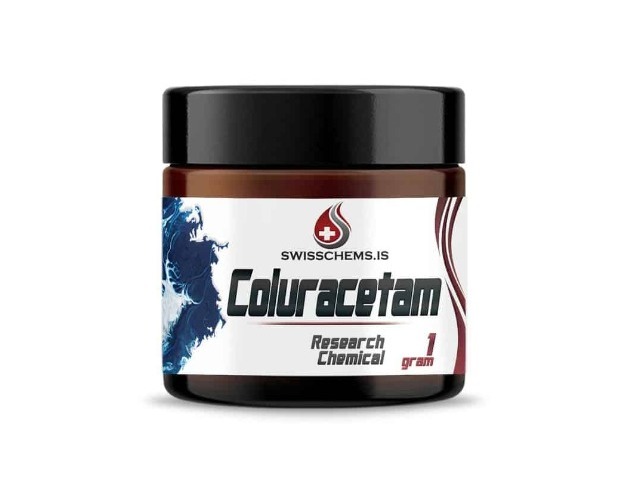
Disclosure: These are affiliate links. I earn a small commission if you purchase — at no extra cost to you. I only recommend products I personally use or have thoroughly researched.
Research & Studies
This section includes 1 peer-reviewed study referenced in our analysis.