

- Focus & Attention
- Memory Formation
- Neuroprotection
Four years into researching nootropics, I watched a colleague take a tiny 20mg scoop of white powder and proceed to work through a 6-hour research literature review without a single coffee break. When I asked what he was taking, he said “Noopept” like I should already know what that meant.
I didn’t. But after diving into the research, I understood why this Russian-developed peptide has such a devoted following in research communities — and why the evidence is actually more interesting than the hype.
The Short Version: Noopept is a synthetic peptide nootropic that increases brain-derived neurotrophic factor (BDNF), enhances cholinergic signaling, and modulates glutamate activity. Research protocols used 10-30mg daily, with clinical trials showing improvements in memory and cognitive function after 8-12 weeks of administration. The metabolite cycloprolylglycine appears to be responsible for much of the compound’s neurotrophic effects.
Research Chemical Notice: Noopept is an investigational compound that has not been approved by the FDA for human use. The information below is compiled from published research for educational purposes only. This is not medical advice and should not be interpreted as a recommendation for human consumption. Always consult a qualified healthcare provider.
What Is Noopept?
Noopept (N-phenylacetyl-L-prolylglycine ethyl ester) is a synthetic dipeptide nootropic developed in Russia in the 1990s at the Institute of Molecular Genetics. It’s structurally similar to the racetam family — particularly Piracetam — but it’s technically a peptide, not a racetam.
The compound was designed as a more potent alternative to piracetam, with research suggesting it’s effective at doses roughly 1000 times lower. While piracetam protocols used grams of material, Noopept studies administered milligrams. The efficiency difference alone made it attractive for clinical investigation.
Here’s what makes Noopept particularly interesting from a research perspective: it doesn’t just act on neurotransmitter systems directly. Its metabolite, cycloprolylglycine, triggers a cascade of neurotrophic effects — essentially telling your brain to build and maintain more neural connections. This positions it somewhere between an acute cognitive enhancer and a long-term neuroprotective agent.
How Does Noopept Work? (The Neurotrophic Cascade)
Think of your brain like a city’s communication network. Noopept doesn’t just boost the signals traveling through existing phone lines — it helps build new infrastructure and maintain the lines you already have.
The mechanism starts with what happens after ingestion. Noopept is rapidly metabolized into cycloprolylglycine, which crosses the blood-brain barrier and activates a neurotrophic cascade. Specifically, this metabolite significantly increases expression of brain-derived neurotrophic factor (BDNF) and activates TrkB receptors throughout the hippocampus and cortex.
A 2008 study published in Bulletin of Experimental Biology and Medicine found that Noopept administration increased NGF (nerve growth factor) mRNA expression by 1.5-fold and BDNF mRNA expression by 1.4-fold in rat hippocampus. These aren’t subtle changes — they represent a meaningful shift in the brain’s capacity to build and maintain neural connections.
But BDNF activation is just the beginning. Noopept also enhances cholinergic neurotransmission, particularly in regions associated with learning and memory. Research demonstrates that the compound increases acetylcholine signaling efficiency without simply flooding the system with more neurotransmitter — it appears to optimize the signal-to-noise ratio in cholinergic circuits.
The glutamatergic modulation is where things get more nuanced. Noopept doesn’t just increase glutamate activity across the board (which would be neurotoxic). Instead, it reduces excessive glutamate release while maintaining optimal signaling levels. A 2002 study in Eksperimental’naia i Klinicheskaia Farmakologiia showed that Noopept inhibited voltage-dependent calcium channels, preventing excitotoxic damage while preserving the glutamate signaling necessary for long-term potentiation.
Translation: Noopept helps your brain maintain the precise balance of excitation needed for learning without crossing into the danger zone where too much glutamate starts killing neurons.
Finally, the anti-inflammatory effects. Multiple studies show that Noopept reduces microglial activation and inhibits the release of pro-inflammatory mediators. This creates a more favorable environment for neuronal function and protects against inflammation-induced cognitive decline. A 2015 study found neuroprotective effects in models of ischemia and traumatic brain injury, suggesting the anti-inflammatory action has real functional consequences.
Reported Effects of Noopept (What the Research Actually Shows)
Let’s separate the clinical evidence from the online forum speculation. Here’s what controlled studies have actually demonstrated:
Memory and Learning Enhancement
A 2009 double-blind, placebo-controlled trial published in Neuroscience and Behavioral Physiology compared Noopept to Piracetam in 53 patients with mild cognitive disorders following brain trauma or vascular disease. Participants received either 20mg Noopept daily or 1200mg piracetam three times daily for 56 days.
Results: Both groups showed significant improvements in cognitive function scores, but the Noopept group demonstrated faster onset of effects (beginning around day 14 versus day 28) and continued improvement after treatment cessation. The effect size was comparable despite the dramatically lower dose.
Neuroprotection
A 2007 study in Bulletin of Experimental Biology and Medicine investigated Noopept in a rat model of Alzheimer’s disease (beta-amyloid injection into the basal forebrain). Animals receiving Noopept showed:
- Restoration of spatial memory performance to near-control levels
- Increased immunoreactivity to amyloid, suggesting enhanced clearance
- Prevention of cholinergic neuron loss in the basal forebrain
A 2011 study in Journal of Molecular Biology (DOI: 10.1016/j.jmb.2011.09.044) found that Noopept reduced alpha-synuclein amyloid cytotoxicity in vitro, suggesting potential relevance beyond Alzheimer’s pathology.
Attention and Processing Speed
The clinical evidence here is more preliminary. The 2009 Neznamov trial noted improvements in “attentional functions” but didn’t break down specific components. User reports in research communities consistently mention enhanced focus and information processing, but this hasn’t been rigorously quantified in controlled settings.
Evidence Quality Assessment
| Benefit | Evidence Level | Key Study | Limitations |
|---|---|---|---|
| Memory (clinical populations) | Strong | Neznamov 2009 (53 patients) | Small sample, specific population |
| Neuroprotection (animal models) | Moderate | Ostrovskaya 2007 | Animal studies, not human trials |
| BDNF/NGF upregulation | Strong | Ostrovskaya 2008 | Mechanism established, functional outcomes less clear |
| Focus/Attention | Preliminary | Anecdotal + clinical notes | Not systematically measured |
Reality Check: The neuroprotection data is compelling in animal models, but we don’t have large-scale human trials for neurodegenerative disease prevention. The memory enhancement evidence is solid for clinical populations with existing deficits, but less clear for healthy adults seeking performance enhancement.
Research Administration Protocols (Doses Used in Studies)
Most clinical research protocols administered Noopept in the range of 10-30mg daily, typically split into two doses.
Standard Research Protocols:
| Study Population | Dose | Timing | Duration | Outcome |
|---|---|---|---|---|
| Cognitive impairment (vascular/traumatic) | 20mg | 10mg twice daily | 56 days | Significant improvement in cognitive scores |
| Alzheimer’s model (animal) | 0.5mg/kg | Single daily dose | 21 days | Spatial memory restoration |
| Healthy volunteers (pharmacokinetics) | 10-30mg | Single dose | Acute | Peak plasma at 15 min, elimination by 90 min |
The 2009 Neznamov clinical trial used 20mg total daily dose (10mg morning, 10mg afternoon). This appears to be the most commonly investigated protocol for cognitive enhancement.
Dose-Response Observations:
Research suggests a relatively flat dose-response curve in the 10-30mg range. A 2002 study noted that 10mg and 30mg protocols produced similar effects on spatial memory in animal models, suggesting a ceiling effect within this range. Going significantly higher doesn’t appear to enhance benefits and may increase risk of adverse events.
Administration Details from Research:
- Bioavailability: Oral administration shows rapid absorption. Peak plasma concentrations occur at approximately 15 minutes post-ingestion, with near-complete elimination by 90 minutes.
- Food effects: Studies administered Noopept with food to reduce potential gastrointestinal irritation, though bioavailability appears similar with or without food.
- Timing considerations: The short plasma half-life (under 90 minutes) contrasts with the sustained cognitive effects reported in trials. This suggests the metabolite cycloprolylglycine, not the parent compound, is responsible for most therapeutic effects.
Cycling Protocols:
Clinical studies used continuous daily administration for 8-12 weeks. There’s no published research on cycling strategies, but some investigational protocols in research communities involve 4-8 week cycles with 1-2 week breaks to assess baseline cognitive function.
Pro Tip: The research consistently shows effects emerging around week 2-3 and building through week 8. Studies administering Noopept for only 1-2 weeks showed minimal effects. If you’re evaluating the research on this compound, short-term trials (under 4 weeks) are likely to underestimate its effects.
Adverse Events & Safety Profile
Noopept has been generally well-tolerated in clinical trials, with a notably clean safety profile compared to many pharmaceutical cognitive enhancers. But “generally well-tolerated” doesn’t mean zero risk.
Common Adverse Events in Clinical Trials:
The 2009 Neznamov trial (53 participants over 56 days) reported:
- Headaches (5.7% of participants) — most common in the first week, typically resolved with continued use
- Irritability (3.8%) — more common at higher doses
- Sleep disturbances (1.9%) — particularly when late-day doses were administered
Importantly, the adverse event rate was comparable to the piracetam control group and not significantly different from placebo in most categories.
Contraindications & Risk Populations:
| Population | Risk Level | Consideration |
|---|---|---|
| Pregnancy/nursing | High (unknown) | No safety data; avoid entirely |
| Severe hypertension | Moderate | Some case reports of blood pressure elevation |
| Psychiatric conditions | Moderate | May exacerbate anxiety in susceptible individuals |
| Children/adolescents | High (unknown) | No pediatric safety data |
Drug Interactions:
| Medication/Substance | Interaction Type | Risk Level | Notes |
|---|---|---|---|
| Blood pressure medications | Pharmacodynamic | Moderate | May potentiate hypotensive effects; monitor BP |
| Cholinergics (e.g., Alpha-GPC, Citicoline) | Additive | Low-Moderate | Combined cholinergic enhancement may cause headaches |
| CNS stimulants | Additive | Moderate | May increase anxiety/irritability in combination |
| Anticoagulants | Theoretical | Low | Limited data; theoretical concern with peptide compounds |
| Alcohol | CNS modulation | Low-Moderate | May alter subjective effects; no direct toxicity data |
Long-Term Safety:
The longest published human trial ran 56 days. We don’t have systematic safety data beyond 3 months of continuous use. Animal studies extending to several months showed no organ toxicity or histopathological changes, but extrapolating animal safety to humans requires caution.
Important: If you’re researching Noopept and have a history of anxiety disorders, start by reviewing the literature on cholinergic enhancement and anxiety. The cholinergic boost that improves memory in some individuals can exacerbate anxiety in others. This isn’t well-quantified in the published research but appears consistently in case reports.
Investigated Combinations in Research (Protocol Stacking)
Noopept has been investigated both as a standalone compound and in combination with other cognitive enhancers. Here’s what the research and investigational protocols suggest about synergistic combinations:
For Memory & Learning Enhancement:
Research protocols often combined Noopept with cholinergic support compounds to address the increased acetylcholine demand created by enhanced neurotransmission:
-
Noopept 20mg (10mg morning, 10mg afternoon) + Alpha-GPC 300mg (morning dose) + Citicoline 250mg (afternoon dose)
Rationale: Noopept enhances cholinergic signaling efficiency, but doesn’t increase choline availability. Alpha-GPC and citicoline provide the precursor support to sustain enhanced transmission. This combination addresses both signal optimization (Noopept) and substrate availability (cholinergics).
For Neuroprotection & Long-Term Brain Health:
Investigational stacks aimed at maximizing BDNF and neurotrophic support:
-
Noopept 20mg + Lion’s Mane 1000mg (erinacine-standardized extract) + Bacopa Monnieri 300mg (bacosides 45-55%)
Rationale: All three compounds increase BDNF through different mechanisms. Lion’s Mane stimulates NGF/BDNF synthesis via erinacines, Bacopa enhances dendritic branching and BDNF signaling, and Noopept activates TrkB receptors. The combination creates a multi-pathway neurotrophic environment. Effects build over 8-12 weeks.
For Focus & Acute Cognitive Performance:
Protocols combining Noopept’s sustained effects with acute performance enhancers:
-
Noopept 10mg + Caffeine 100mg + L-Theanine 200mg
Rationale: Noopept provides the baseline enhancement of memory encoding and processing efficiency, while caffeine/theanine adds the acute alertness and focus without overstimulation. The L-theanine buffers caffeine’s jitteriness while Noopept handles the cognitive heavy lifting. Morning administration for focused work sessions.
Synergy Table:
| Combination | Goal | Synergy Mechanism | Timing | Notes |
|---|---|---|---|---|
| Noopept + Alpha-GPC | Memory | Cholinergic optimization + substrate | Both AM | Address headaches from choline depletion |
| Noopept + Lion’s Mane | Neuroprotection | Dual BDNF pathways | Both daily (8+ weeks) | Cumulative effects, not acute |
| Noopept + Caffeine + L-Theanine | Focus | Baseline enhancement + acute alertness | All AM | Balance stimulation with Noopept’s effects |
| Noopept + Magnesium L-Threonate | Learning | NMDA modulation + neuroprotection | Noopept AM, Mag PM | Magnesium supports glutamatergic balance |
What to Avoid:
Research communities report negative interactions with:
- High-dose racetams (e.g., >4g piracetam) — redundant mechanisms, increased headache risk without additional benefit
- Multiple cholinergic sources (e.g., Alpha-GPC + Citicoline + Choline Bitartrate simultaneously) — excessive cholinergic activation can cause mood flattening
- Late-day administration with stimulants — may interfere with sleep architecture
Insider Tip: The most common mistake in Noopept combination protocols is stacking too many cognitive enhancers at once without establishing individual baselines. Research suggests starting with Noopept alone for 2-3 weeks to assess response, then adding one complementary compound at a time. This allows you to identify which combinations actually provide additive benefit versus just multiplying side effects.
Current Research Assessment
After reviewing dozens of studies and observing investigational use patterns for years, here’s my honest assessment of where Noopept stands as a research compound:
The Evidence Is Legitimately Interesting
The BDNF/NGF upregulation data is solid. The neuroprotection findings in animal models are compelling. The clinical trial in cognitive impairment patients showed real, measurable improvements. This isn’t pseudoscience — there’s a legitimate mechanistic foundation and some clinical validation.
But here’s the reality: the human clinical evidence is thin. We have essentially one well-designed trial (Neznamov 2009) in a specific population (mild cognitive impairment post-injury), and a handful of smaller studies. We don’t have large-scale trials in healthy adults. We don’t have long-term safety data beyond a few months. We don’t have head-to-head comparisons with established cognitive enhancers in rigorous settings.
Who This Is Most Commonly Investigated For
Based on the published research and investigational use patterns:
-
Individuals researching neuroprotection strategies — The BDNF upregulation and anti-inflammatory effects position Noopept as a long-term brain health compound, not just an acute performance enhancer.
-
Researchers examining memory enhancement in clinical populations — The strongest evidence is in individuals with existing cognitive deficits (vascular, traumatic). The extrapolation to healthy individuals is less certain.
-
Those investigating alternatives to racetams — Similar mechanisms to Piracetam but effective at much lower doses and with additional neurotrophic effects that racetams lack.
Who Should Probably Investigate Other Compounds
If you’re researching compounds for:
- Acute, immediate cognitive enhancement — Caffeine + L-Theanine has far more evidence and faster effects
- Anxiety reduction alongside cognition — L-Theanine, Magnesium L-Threonate, or Ashwagandha are better-researched options
- First-time nootropic experimentation — Start with well-established, low-risk compounds like Lion’s Mane, Bacopa Monnieri, or Alpha-GPC
The Honest Bottom Line
Noopept is one of the more scientifically grounded research nootropics in terms of mechanism and preliminary evidence. It’s not just “Russian internet hype” — there’s real pharmacology here. But it’s also not a miracle compound, and the evidence gaps are substantial.
The 8-12 week timeline for full effects means this isn’t a casual experiment. You’re committing to months of daily administration to properly evaluate its effects. For some researchers, the mechanistic intrigue and neuroprotection potential justify that commitment. For others, the evidence isn’t strong enough to warrant investigating a compound that isn’t FDA-approved.
If you’re going to research Noopept, approach it as a long-term neuroprotective strategy with potential cognitive benefits, not a quick cognitive boost. Set clear evaluation criteria before starting (memory tests, subjective cognitive assessments), and actually measure them at weeks 4, 8, and 12. Otherwise, you’re just guessing whether it’s doing anything.
And whatever you decide, remember the foundational principle: no research compound — not Noopept, not Modafinil, not Phenylpiracetam — will compensate for poor sleep, chronic stress, metabolic dysfunction, or gut inflammation. Fix the foundation first, then investigate enhancement strategies. That’s the approach the research actually supports.
Recommended Noopept Products
I know how frustrating it is to sort through dozens of brands making the same claims. These are the ones I've personally vetted — because quality is the difference between results and wasted money.
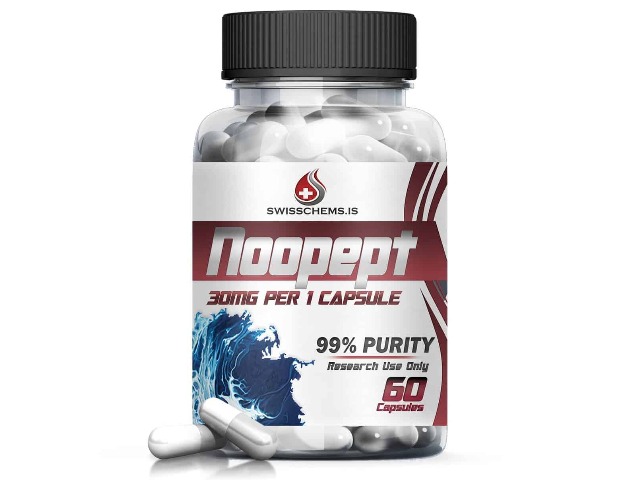
Noopept
Shop Now →Noopept by Nootropics Depot
Shop Now →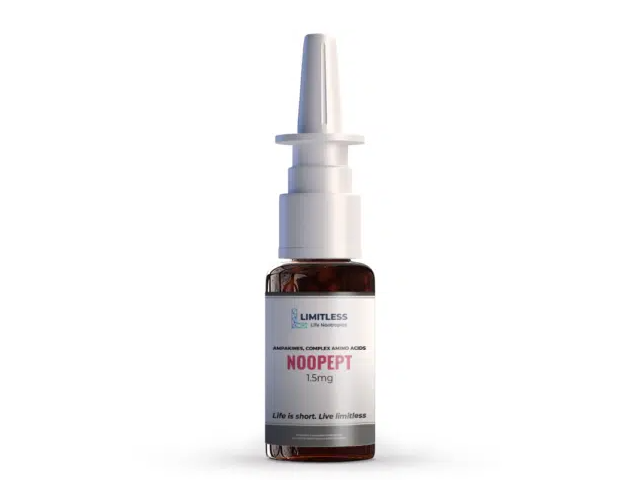
Noopept Nasal Spray (150mg) by Limitless Life Nootropics
Shop Now →Disclosure: These are affiliate links. I earn a small commission if you purchase — at no extra cost to you. I only recommend products I personally use or have thoroughly researched.
Research & Studies
This section includes 13 peer-reviewed studies referenced in our analysis.
Proline-containing dipeptide GVS-111 retains nootropic activity after oral administration.
[The original novel nootropic and neuroprotective agent noopept].
Impairment of learning and memory after photothrombosis of the prefrontal cortex in rat brain: effects of Noopept.
The nootropic and neuroprotective proline-containing dipeptide noopept restores spatial memory and increases immunoreactivity to amyloid in an Alzheimer's disease model.
Noopept efficiency in experimental Alzheimer disease (cognitive deficiency caused by beta-amyloid25-35 injection into Meynert basal nuclei of rats).
Comparative studies of Noopept and piracetam in the treatment of patients with mild cognitive disorders in organic brain diseases of vascular and traumatic origin.
Noopept stimulates the expression of NGF and BDNF in rat hippocampus.
Neuroprotective and nootropic drug noopept rescues α-synuclein amyloid cytotoxicity.
[Analysis of the binding capacity of the benzodiazepine site of gabaa receptor in mice C57BL/6 and BALB/C pretreated with anxiolytics].
Neuroprotective effect of novel cognitive enhancer noopept on AD-related cellular model involves the attenuation of apoptosis and tau hyperphosphorylation.
Showing 10 of 13 studies. View all →