
- Pain relief via opioid receptor modulation
- Anti-inflammatory through NF-κB inhibition
- Neuroprotective against neurodegeneration
- Anxiolytic and calming effects
- Antioxidant protection against oxidative stress
I’ll be honest — when I first came across myrrh as a nootropic ingredient, I almost scrolled past it. Myrrh? Isn’t that the stuff the Three Wise Men brought? What’s a biblical incense doing in a supplement capsule?
Turns out, there’s a reason humans have been reaching for this resin for over 3,000 years. Myrrh contains compounds that interact directly with your brain’s opioid receptors — the same system that pharmaceutical painkillers target — plus a separate set of molecules that shut down neuroinflammatory pathways linked to Alzheimer’s, MS, and Parkinson’s. And unlike most ancient remedies, this one actually has a proper randomized controlled trial behind it.
If you’re dealing with chronic pain, brain fog from inflammation, or you’re just curious about one of the most pharmacologically interesting plant compounds I’ve come across, keep reading.
The Short Version: Myrrh (Commiphora myrrha) is an oleo-gum resin with clinically demonstrated analgesic effects and strong preclinical evidence for neuroprotection. Its active compounds — furanodienes and guggulsterones — work through opioid receptor modulation and NF-κB/TLR4 pathway inhibition respectively. Best taken as a supercritical CO₂ extract standardized to 4% furanodienes, 200-400mg daily with food. Most useful for pain relief and anti-inflammatory support, with emerging potential for brain health maintenance.
What Is Commiphora myrrha?
Myrrh is an oleo-gum resin that oozes from the bark of Commiphora myrrha, a thorny, scrubby little tree native to Somalia, Ethiopia, Kenya, and the Arabian Peninsula. When the bark is cut or damaged, the tree bleeds this yellowish-brown resin as a defense mechanism. Humans figured out thousands of years ago that this “tree blood” was medicinally useful — the ancient Egyptians used it for embalming and wound care, Traditional Chinese Medicine pairs it with frankincense for trauma and fracture healing (they call it “mo yao”), and Ayurvedic practitioners have prescribed it as “bol” for centuries.
The resin itself is a complex mixture: roughly 30-60% water-soluble gum (polysaccharides), 25-40% alcohol-soluble resin (where the triterpenes and steroids live), and 2-8% volatile essential oil packed with sesquiterpenes. That last fraction — the sesquiterpenes, specifically the furanodienes — is where the real pharmacological magic happens. These are the compounds that give myrrh its unique analgesic properties.
Here’s what makes myrrh genuinely unusual in the supplement world: it’s one of very few plant-derived substances that directly activates opioid receptors. Not through some vague “supports healthy pain response” handwaving. Actual, naloxone-reversible opioid receptor binding. That’s a meaningful pharmacological distinction, and it’s why myrrh deserves more attention than it typically gets in nootropic circles.
How Does Commiphora myrrha Work?
Think of myrrh as a multi-tool for your nervous system. It doesn’t just work through one pathway — it hits several at once, which is probably why traditional medicine systems kept reaching for it across so many different conditions.
The Pain Switch — Opioid Receptor Modulation
The headline mechanism: furanoeudesma-1,3-diene and curzerene, two sesquiterpene compounds in myrrh’s essential oil fraction, bind directly to mu and delta opioid receptors in the brain. Researchers confirmed this by showing that furanoeudesma-1,3-diene displaced radioactive opioid ligands from brain receptors in a dose-dependent manner — and crucially, that naloxone (the opioid-reversal drug) blocked myrrh’s analgesic effects. That’s about as clean a confirmation of mechanism as you get in phytochemistry.
In plain English: myrrh contains natural molecules that flip the same pain-relief switches that morphine does, just at a much gentler intensity. You’re not going to get a euphoric high from a myrrh capsule. But the pain-dulling effect is real and measurable.
The Inflammation Brake — NF-κB and TLR4 Pathway Inhibition
The second major pathway involves guggulsterones (E and Z forms), steroidal compounds found in Commiphora resins. These suppress NF-κB activation — one of the master switches for inflammation in the body and brain. Z-Guggulsterone specifically inhibits the TLR4/NF-κB signaling cascade, which is directly implicated in Alzheimer’s disease progression. In transgenic AD mouse models, this compound reduced amyloid-β plaque burden, decreased BACE1 expression (the enzyme that creates toxic amyloid), and visibly reduced neuroinflammation.
So what does that mean practically? Chronic neuroinflammation is increasingly understood as a driver — not just a symptom — of cognitive decline. By putting the brakes on NF-κB, myrrh’s guggulsterones may help protect the brain from the kind of slow-burn inflammatory damage that erodes memory and processing speed over years.
The Neurotransmitter Rebalance — JAK/STAT Modulation
In a multiple sclerosis rat model, guggulsterone administration over 28 days didn’t just reduce inflammation — it actually shifted neurotransmitter levels in a favorable direction. Acetylcholine, dopamine, and serotonin went up. Glutamate went down. The animals showed improved spatial cognition, grip strength, and motor coordination. This suggests myrrh’s effects extend beyond simple anti-inflammation into active neurochemical rebalancing.
The Calm Signal — GABA-A Receptor Activity
Myrrh’s essential oil also appears to modulate GABA-A receptors — the same system that benzodiazepines target. When researchers administered the GABA-A antagonist flumazenil to animals, it significantly reduced myrrh oil’s anticonvulsant effects. This may explain why users often report a clear-headed calming sensation rather than sedation.
Insider Tip: Myrrh’s multiple mechanisms mean it stacks naturally with compounds that work through different pathways. But the opioid receptor and GABA-A activity also mean you need to be thoughtful about what you combine it with — more on that in the stacking section.
Benefits of Commiphora myrrha
Pain Relief — The Strongest Evidence
This is where myrrh genuinely shines with clinical data. A randomized, double-blind, placebo-controlled trial of 184 volunteers tested MyrLiq (a standardized myrrh extract) at 200mg and 400mg daily for 20 days. The results were statistically significant across multiple pain types — headaches (p<0.001), joint pain, muscle aches, lower back pain, fever-related pain, and menstrual cramps. No side effects were reported in either dosage group.
That’s not a preliminary study. That’s a properly designed RCT with a meaningful sample size and a clear outcome. For a natural analgesic, that’s about as good as the evidence gets.
Neuroprotection — Promising but Early
The animal and mechanistic data here is genuinely exciting:
- Alzheimer’s models: Z-Guggulsterone prevented learning and memory deficits while reducing amyloid-β plaques in transgenic AD mice
- Multiple sclerosis models: 28 days of guggulsterone restored behavioral deficits, elevated myelin basic protein, and normalized inflammatory markers
- Stroke models: Guggulipid reduced infarction area and improved locomotor activity after experimentally induced cerebral ischemia
- Parkinson’s models: Guggulipid suppressed neuroinflammatory markers (COX-2, iNOS, NF-κB) in an MPTP model
Reality Check: Every one of those neuroprotection studies was done in animals, not humans. The mechanisms are solid and the results are consistent across multiple disease models — that’s genuinely encouraging. But we don’t have a single human clinical trial measuring cognitive outcomes from myrrh supplementation yet. If someone tells you myrrh is “proven” to prevent Alzheimer’s, they’re getting ahead of the science. What we can say is that the pharmacological profile is neuroprotective, and the animal evidence supports continued investigation.
Anti-Inflammatory Effects
Beyond the brain, myrrh’s guggulsterones inhibit COX-1 by 79% and COX-2 by 83% at therapeutic concentrations — numbers comparable to pharmaceutical NSAIDs. Combined with the NF-κB suppression, this makes myrrh a legitimate systemic anti-inflammatory with a mechanism you can actually trace through the literature.
Anxiolytic / Calming Effects
The GABA-A modulation translates to a subtle but real calming effect reported by users. It’s not sedating in the way valerian or kava can be — it’s more of an “edge-taken-off” sensation. Useful for the kind of low-grade anxiety that makes it hard to focus.
How to Take Commiphora myrrha
Dosage
- Starting dose: 200mg once daily of standardized extract
- Full dose: 200mg twice daily (400mg total) — this is what the clinical trial found effective for more resistant pain types
- Take with food — the active terpenoid compounds are fat-soluble, so absorption improves significantly with dietary fat
Forms Matter — A Lot
This is where most people waste their money on myrrh.
Supercritical CO₂ extract (standardized to 4% furanodienes) — This is the gold standard. Here’s why: furanodienes are heat-unstable. They literally degrade during conventional extraction processes like steam distillation. A supercritical CO₂ extract preserves these compounds intact. If your myrrh supplement doesn’t specify furanodiene content, you may be getting an expensive placebo.
Alcohol tincture (1:5) — A reasonable alternative at 1-4 mL up to three times daily. Extracts the resinous fraction decently but without standardization.
Raw resin powder — Variable composition, unreliable dosing. Traditional but imprecise.
Essential oil — Contains volatile sesquiterpenes but is NOT appropriate for oral supplementation at therapeutic doses. This is for aromatherapy, not nootropic use.
Pro Tip: Give myrrh at least 2-3 weeks of consistent daily use before assessing effects. The analgesic benefits often show up within hours to days, but the anti-inflammatory and potential neuroprotective effects build over time. Don’t write it off after three days.
Cycling
No established cycling protocol exists in the literature, but given the opioid receptor activity, I’d recommend periodic breaks to prevent tolerance development. A 4-6 weeks on, 1-2 weeks off pattern seems prudent. If you’re using it primarily for anti-inflammatory purposes rather than acute pain relief, continuous use appears well-tolerated based on the available safety data.
Side Effects & Safety
The MyrLiq clinical trial reported zero side effects across 184 participants over 20 days at both 200mg and 400mg doses. That’s reassuring for short-term use. But there are some things you need to know.
Common
- GI discomfort at higher doses (usually mild, resolves with food)
- Contact dermatitis with topical application (less relevant for oral use)
Uncommon but Important
- Mood disturbances: Some users report anhedonia, depersonalization, or a “flat” emotional quality. This almost certainly relates to the opioid receptor modulation — the same mechanism that dulls pain can, in susceptible individuals, dampen emotional responsiveness. If you have a history of depression, start low and pay close attention to your mood during the first two weeks.
Important: Myrrh is contraindicated in pregnancy — it stimulates uterine contractions and can cause miscarriage. This is not a “probably avoid” situation. Do not take myrrh if you are pregnant or trying to become pregnant. Insufficient safety data also exists for breastfeeding, so avoid it then too.
Drug Interactions
- Diabetes medications: Myrrh can lower blood sugar — combined with metformin, insulin, or sulfonylureas, this creates hypoglycemia risk
- Warfarin: Myrrh induces CYP 2C9 enzyme expression, which can reduce warfarin’s effectiveness (the opposite of what most people expect from a “blood-thinning” herb)
- CYP 2C9 substrates broadly: This includes NSAIDs like diclofenac and ibuprofen, losartan, and certain diabetes drugs. If you’re on any prescription metabolized by CYP 2C9, talk to your doctor before adding myrrh
- Stop 2 weeks before surgery due to potential blood sugar effects
Stacking Commiphora myrrha
The Classic: Myrrh + Frankincense (Boswellia)
This is the combination that’s been used for literally thousands of years, and modern research validates the pairing. Combined, myrrh sesquiterpenes and boswellic acids show synergistic inhibition of neuroinflammatory markers — IL-1β, IL-6, and iNOS in LPS-stimulated microglia — through both NF-κB and TLR4 pathways. Research indicates optimal boswellic acid to myrrh sesquiterpene ratios of 10:1, 5:1, or 20:1. Novel chemical compounds actually form when the two resins interact, suggesting the whole is greater than the sum of its parts.
Practically: take Boswellia serrata (standardized to AKBA) alongside your myrrh extract. Start with standard doses of each and assess.
Myrrh + Palmitoylethanolamide (PEA)
For pain management, this is a smart combination. PEA works through endocannabinoid-adjacent pathways (PPAR-α activation, mast cell modulation), complementing myrrh’s opioid receptor activity. Different switches, additive effect.
Myrrh + Curcumin
Both suppress NF-κB, but through distinct pathways. Curcumin has stronger evidence for direct cognitive benefits, while myrrh brings the analgesic component. Good pairing for inflammatory pain with brain fog.
What NOT to Stack
- Other opioid-active substances — enhanced CNS depression risk. This includes kratom (Mitragyna speciosa) and any pharmaceutical opioids
- High-dose GABA-ergic compounds — given myrrh’s GABA-A activity, be cautious stacking with phenibut, high-dose L-theanine, or benzodiazepines
- Blood sugar-lowering supplements in high doses alongside diabetes medication — the additive effect could cause dangerous hypoglycemia
My Take
Myrrh is one of those substances that got overlooked by the nootropic community because it doesn’t fit neatly into the “cognitive enhancement” box. And honestly? That’s fair. If you’re looking for something to sharpen focus for a work presentation tomorrow, this isn’t your compound.
But if you’re dealing with chronic pain that’s eating into your cognitive bandwidth — and let me tell you, nothing tanks your ability to think clearly like persistent pain — myrrh deserves serious consideration. The clinical trial data for pain relief is solid, the mechanism is well-characterized, and the safety profile is clean at standard doses.
The neuroprotective angle is where things get genuinely interesting for the long game. The Alzheimer’s and MS animal data, the neurotransmitter rebalancing, the multi-pathway anti-inflammatory effects — this is the kind of pharmacological profile that suggests real brain-protective potential. We just need the human trials to confirm it.
In my experience, myrrh works best as part of an anti-inflammatory foundation rather than as a standalone nootropic. Paired with Boswellia, alongside good sleep and gut health fundamentals, it contributes to the kind of low-inflammation baseline that lets everything else — your racetams, your Lion’s Mane, your meditation practice — work better.
If you try it, get a supercritical CO₂ extract standardized to furanodienes. Give it three weeks. And if you have any history of mood disorders, pay attention to how you feel emotionally in the first couple of weeks — that opioid receptor activity cuts both ways.
Recommended Myrrh Products
I know how frustrating it is to sort through dozens of brands making the same claims. These are the ones I've personally vetted — because quality is the difference between results and wasted money.
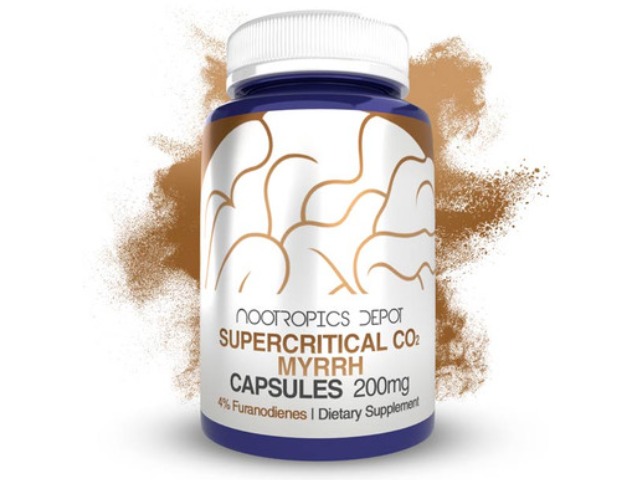
Supercritical Co2 Myrrh Extract Capsules by Nootropics Depot
Shop Now →
Stenabolic SR-9009 by Research Chemical Depot
Shop Now →
Super B12 Tablets | Quick Dissolve | Energy Metabolism by Nootropics Depot
Shop Now →Disclosure: These are affiliate links. I earn a small commission if you purchase — at no extra cost to you. I only recommend products I personally use or have thoroughly researched.