
- Stimulates hair follicle growth and dermal papilla cell proliferation
- Protects cells from apoptosis via elevated Bcl-2/Bax ratio
- Promotes VEGF production for improved blood flow to tissues
- Supports antioxidant defense through superoxide dismutase production
- May support tissue regeneration and wound healing
I’ll be honest with you — when I first came across AHK-Cu, I assumed it was just another name for GHK-Cu, the copper peptide that’s been making waves in the longevity and biohacking world for years. Turns out, I was wrong. And that confusion? It’s everywhere. Forums, vendor pages, even some “expert” guides treat these two peptides as interchangeable. They’re not.
AHK-Cu is its own compound with its own research profile — and understanding what it actually does (versus what people claim it does) is the difference between making a smart investment in your health and throwing money at marketing copy.
The Short Version: AHK-Cu (Copper Tripeptide-3) is a synthetic peptide primarily researched for hair follicle stimulation and tissue repair, not cognitive enhancement. It’s a more targeted analog of the better-known GHK-Cu, with strong in vitro evidence for promoting hair growth and protecting dermal cells from damage. If you’re here for brain benefits, I need to be upfront — that evidence doesn’t exist yet for this specific peptide.
What Is Copper Peptide AHK-Cu?
AHK-Cu stands for Alanine-Histidine-Lysine:Copper(II) — a synthetic tripeptide that binds a copper ion through its histidine residue. Think of it as a precision delivery vehicle: three amino acids locked around a copper atom, designed to shuttle that copper exactly where cells need it.
The story starts with Loren Pickart back in 1973. Pickart was studying blood plasma when he noticed something strange — liver cells from older patients started acting younger when bathed in serum from younger donors. He traced this rejuvenating effect to a tiny peptide called GHK (glycine-histidine-lysine), which naturally occurs in human blood and declines significantly with age. That discovery launched decades of copper peptide research.
AHK-Cu came later as a synthetic modification. Researchers swapped out the glycine in GHK for alanine, creating a variant that appears to have enhanced stability and more targeted activity on dermal papilla cells — the specialized cells at the base of hair follicles that control hair growth cycling. The key study establishing AHK-Cu’s unique profile was published in 2007 by Pyo and colleagues at Seoul National University, and it remains the primary research paper on this specific peptide.
Here’s what matters for you: AHK-Cu is fundamentally a hair growth and tissue repair peptide. I know some vendors market it alongside nootropics, and I understand why — copper is essential for brain enzymes, and its cousin GHK-Cu has some genuinely interesting neuroprotective data. But I’d be doing you a disservice if I let that extrapolation slide without flagging it. More on that below.
How Does Copper Peptide AHK-Cu Work?
The simplest way to think about AHK-Cu is as a smart copper shuttle with a built-in instruction set. It doesn’t just deliver copper to your cells — the peptide itself triggers specific biological responses.
At the molecular level, AHK-Cu does several things simultaneously. It ramps up production of VEGF (vascular endothelial growth factor), which is your body’s signal to build new blood vessels. More blood vessels mean more oxygen and nutrients reaching target tissues. It also dials down TGF-β1, a signaling molecule that, when overactive, tells cells to stop growing and start scarring. In the context of hair loss, DHT (the hormone behind male pattern baldness) works partly by cranking up TGF-β1 in follicle cells. AHK-Cu pushes back against that signal.
Perhaps most importantly, AHK-Cu shifts the cellular survival balance. It increases Bcl-2 (a protein that keeps cells alive) relative to Bax (a protein that triggers cell death), while simultaneously reducing caspase-3 cleavage — the molecular scissors that execute programmed cell death. In plain English: it tells cells at the base of your hair follicles to keep living and keep working instead of shutting down.
The copper itself plays its own role. Once delivered, it serves as a cofactor for superoxide dismutase (SOD), one of your body’s most powerful antioxidant enzymes. It also feeds into cytochrome c oxidase for cellular energy production and dopamine β-hydroxylase for neurotransmitter synthesis. But these are general copper biology effects — you’d get similar benefits from any well-absorbed copper source.
Reality Check: You’ll find articles claiming AHK-Cu has neuroprotective and cognitive-enhancing properties. Let me be direct — those claims are extrapolated from research on GHK-Cu (a different peptide) and from general copper biochemistry. No one has published a single study examining AHK-Cu’s effects on brain tissue, neural models, or cognitive performance. If brain health is your primary goal, GHK-Cu has a far stronger evidence base, and even that is still mostly preclinical.
Benefits of Copper Peptide AHK-Cu
Hair Follicle Stimulation — The Strong Evidence
The Pyo et al. (2007) study in Archives of Pharmacal Research is the foundational research here, and the results were genuinely impressive. At remarkably low concentrations (10⁻¹² to 10⁻⁹ M — we’re talking picomolar to nanomolar range), AHK-Cu stimulated elongation of human hair follicles in ex vivo cultures and drove proliferation of dermal papilla cells in vitro.
To put those concentrations in perspective: this peptide was effective at amounts so small they’re almost homeopathic. That suggests high potency and receptor-level activity rather than brute-force biochemistry.
The same study demonstrated the anti-apoptotic effects I mentioned — elevated Bcl-2/Bax ratios and reduced caspase-3 cleavage in dermal papilla cells specifically. This is important because hair loss isn’t just about follicles shrinking; it’s about the support cells at their base dying off. AHK-Cu appears to protect those cells.
Tissue Repair and Antioxidant Support — Moderate Evidence
Through its VEGF-boosting and copper-delivery mechanisms, AHK-Cu supports broader tissue repair processes. The antioxidant angle comes from promoting SOD production, which neutralizes superoxide radicals — one of the most damaging forms of oxidative stress.
Neuroprotection — Speculative at Best
I want to be straight with you. The neuroprotective angle for AHK-Cu specifically rests on three pillars, and none of them are solid:
- GHK-Cu research — Pickart et al. (2017) published fascinating work showing GHK modulates genes involved in nervous system function, and intranasal GHK-Cu improved cognition in Alzheimer’s mouse models. But GHK-Cu is a different compound.
- Copper biology — Copper is essential for brain enzymes. True, but not unique to this peptide.
- Vendor marketing — Not evidence.
If cognitive enhancement is what you’re after, your money and time are better spent on compounds with actual brain research behind them — Lion’s Mane, Bacopa Monnieri, or even GHK-Cu itself.
How to Take Copper Peptide AHK-Cu
Topical Application (Best-Supported Route)
This is where the actual evidence lives. For hair growth and skin applications:
- Concentration: 0.5–1% solution, with some formulations going up to 2%
- Frequency: Once or twice daily, applied directly to the scalp or target area
- Duration: Commit to a minimum of 12–24 weeks before assessing results. This isn’t caffeine — you won’t feel anything on day one
- Reconstitution: If working with lyophilized powder, dissolve in distilled water and maintain pH between 5.5–7.0. Do not heat above 104°F (40°C) — you’ll denature the peptide
- Storage: Refrigerate reconstituted solution at 2–8°C in dark glass. Use within 30 days
Injectable Protocols
Some practitioners use subcutaneous injections at 1–5mg, 2–3 times per week, or intradermal microinjections at 10mg/mL concentration directly into the scalp. These protocols are extrapolated from broader copper peptide research and patent data rather than clinical trials.
Oral Use
There is no established oral dosing protocol for AHK-Cu. The 1–5mg/day figures floating around vendor sites don’t come from clinical research. Peptides generally have poor oral bioavailability — your stomach acid breaks them down before they can do much. I wouldn’t recommend this route.
Pro Tip: Authentic AHK-Cu powder is a distinctive light blue color — that’s the copper. If what you receive is white, off-white, or colorless when reconstituted, something is wrong. A properly reconstituted solution should be clear with a light blue tint. Brown or green discoloration means degradation. Always demand a Certificate of Analysis with HPLC and mass spectrometry data.
Side Effects & Safety
What to Expect
Topical use is generally well-tolerated. The most common reports include:
- Mild tingling or warmth at the application site (especially at higher concentrations)
- Temporary redness that resolves within an hour
- Initial dryness or peeling as skin adapts
- A “purging” phase in the first 2–3 weeks where things may look slightly worse before improving
These are typically mild and self-limiting.
Important: AHK-Cu is absolutely contraindicated in anyone with Wilson’s disease or other copper metabolism disorders. If you have a known copper allergy, perform a patch test on a small area of skin and wait 48 hours before broader application. If you’re using injectable copper peptides, monitor total copper intake carefully — copper toxicity causes nausea, vomiting, and in severe cases, liver damage.
What to Avoid Combining in the Same Application
- Vitamin C serums: The low pH destabilizes the copper-peptide complex. Use them at different times of day
- AHAs and BHAs (glycolic acid, salicylic acid): Same pH conflict
- Retinoids: Apply at different times to avoid interaction
- Additional copper supplements: Watch your total copper intake to avoid overload
- Iron supplements: Copper and iron compete for absorption pathways
No safety data exists for use during pregnancy or breastfeeding. Avoid it.
Stacking Copper Peptide AHK-Cu
For Hair Growth (The Evidence-Supported Stack)
AHK-Cu pairs well with minoxidil through complementary mechanisms — AHK-Cu builds new blood vessels via VEGF while minoxidil dilates existing ones. Some combination data suggests roughly 30–35% improvement in hair regrowth outcomes versus either alone. Finasteride or dutasteride can be added to address the hormonal (DHT) component that AHK-Cu’s TGF-β1 reduction only partially counters.
Hyaluronic acid supports hydration and peptide delivery when used topically alongside AHK-Cu. Biotin provides complementary nutritional support through a completely different pathway.
For Broader Tissue Support
Combining AHK-Cu with GHK-Cu covers both targeted follicle stimulation (AHK-Cu’s strength) and broader tissue repair and anti-aging gene expression (GHK-Cu’s wheelhouse). Zinc serves as a complementary mineral cofactor for wound healing and immune function.
For the Nootropic-Curious
I’ll level with you — if you’re building a cognitive stack, AHK-Cu probably shouldn’t be in it. The peptides with actual brain data include Semax, Selank, Dihexa, and Noopept. If the copper peptide angle specifically interests you, GHK-Cu is the one with published neuroprotective research, including a study showing reduced amyloid plaque deposition in Alzheimer’s mouse models.
What NOT to Stack
Avoid layering AHK-Cu with high-strength vitamin C serums, strong chemical exfoliants, or additional copper supplements in the same regimen without careful timing separation and total copper monitoring.
My Take
Here’s where I give it to you straight.
AHK-Cu is a legitimately interesting peptide — for hair growth and tissue repair. The Pyo 2007 study showed real, measurable effects on human hair follicles at incredibly low concentrations, and the mechanistic profile (VEGF upregulation, anti-apoptotic protection, TGF-β1 reduction) makes biological sense. If you’re dealing with hair thinning and want to add a peptide-based approach to your regimen, especially alongside minoxidil, AHK-Cu is worth considering.
But I wouldn’t be Erik if I didn’t tell you what I really think about the nootropic angle: it’s a stretch. The brain benefit claims for AHK-Cu are built on borrowed evidence from GHK-Cu and basic copper biochemistry. That’s not nothing — but it’s not enough for me to recommend it as a cognitive enhancer when we have peptides with actual brain research behind them.
Who should try AHK-Cu? Someone specifically targeting hair growth or scalp health who wants a research-backed peptide option. Someone already using GHK-Cu who wants to add a more follicle-targeted companion peptide.
Who should look elsewhere? Anyone whose primary goal is cognitive enhancement, neuroprotection, or brain optimization. For that, explore GHK-Cu for copper peptide neuroprotection, Lion’s Mane for nerve growth factor support, or Semax for a peptide with genuine nootropic credentials.
The best nootropic is always the one that matches what the evidence actually shows — not what the marketing wants you to believe. In AHK-Cu’s case, the evidence says hair and tissue repair. And honestly? That’s still pretty remarkable.
Recommended Copper Peptide AHK-Cu Products
I know how frustrating it is to sort through dozens of brands making the same claims. These are the ones I've personally vetted — because quality is the difference between results and wasted money.
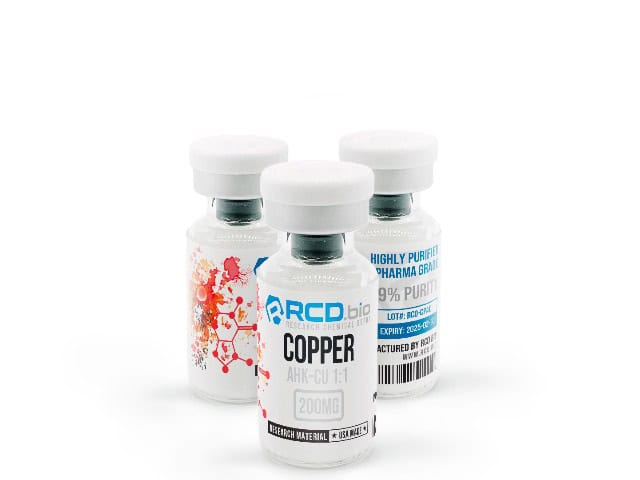
Disclosure: These are affiliate links. I earn a small commission if you purchase — at no extra cost to you. I only recommend products I personally use or have thoroughly researched.
Research & Studies
This section includes 6 peer-reviewed studies referenced in our analysis.