
- Neuroprotection and cognitive resilience
- Tissue repair and wound healing
- Anti-inflammatory gene modulation
- Skin rejuvenation and collagen synthesis
- Antioxidant defense activation
I’ll be honest — when I first heard about a copper peptide that could influence a third of the human genome, I mentally filed it in the “sounds too good to be true” drawer. That’s where I keep most of the breathless peptide claims I encounter online.
Then I actually read the research. And then I read it again.
GHK-Cu isn’t a nootropic in the traditional sense. You won’t take it and feel sharper in an hour. But what it does — quietly resetting thousands of genes toward a younger expression pattern, calming neuroinflammation, and potentially protecting against age-related cognitive decline — makes it one of the most interesting compounds I’ve come across in years.
The Short Version: GHK-Cu is a naturally occurring peptide that your body already makes — just less of it as you age. It’s best established for wound healing and skin anti-aging, but emerging animal research shows promising neuroprotective and cognitive benefits, especially via intranasal delivery. It’s best suited for people focused on long-term brain health and biological age reversal rather than acute cognitive performance.
What Is GHK-Cu?
GHK-Cu is a tripeptide — just three amino acids (glycine, histidine, and lysine) bound to a copper ion. It was discovered in 1973 by Dr. Loren Pickart, who noticed something remarkable: liver cells from older patients started behaving like younger cells when exposed to blood from younger people. By 1977, he’d identified the molecule responsible.
Your body naturally produces GHK-Cu, and it circulates in your blood, saliva, and urine. It’s also found in colostrum and gets released during the breakdown of a structural protein called SPARC. Here’s the catch — and it’s a big one. Your levels drop dramatically as you age. At 20, you’re carrying roughly 200 ng/mL in your blood. By 60, that number plummets to about 80 ng/mL. That’s a 60% decline that tracks uncomfortably well with the loss of regenerative capacity most people experience as they get older.
For decades, GHK-Cu was primarily known in dermatology circles — the go-to copper peptide in anti-aging serums and wound healing products. But more recent research has pushed it into genuinely exciting territory: neuroprotection, cognitive resilience, and even potential applications for neurodegenerative disease.
Reality Check: GHK-Cu is not a “smart drug.” It’s not going to replace your morning caffeine or give you a noticeable cognitive boost on day one. Think of it more like maintenance for the biological machinery that keeps your brain healthy over decades. The foundation stuff — sleep, nutrition, gut health, stress management — still comes first. Always.
How Does GHK-Cu Work?
Here’s where things get genuinely wild for a molecule this small. Most peptides do one or two things. GHK-Cu touches an absurdly wide range of biological pathways.
The Gene Expression Reset
The headline number: GHK-Cu influences the expression of over 4,000 human genes — roughly 31% of the genome. It upregulates the repair-and-remodel genes while turning down the volume on inflammatory and tissue-destructive ones. A 2014 analysis published in BioMed Research International described this as shifting gene expression toward a “healthier, more youthful” pattern.
In plain English, imagine your genome has a settings panel with thousands of dials. As you age, many of those dials drift in unfavorable directions — more inflammation, less repair, weaker antioxidant defenses. GHK-Cu nudges a significant number of them back.
Anti-Inflammatory Pathways
GHK-Cu suppresses NF-κB — the master switch that controls your body’s inflammatory response — along with p38 MAPK signaling. It also reduces pro-inflammatory cytokines like TNF-α and IL-6, and decreases MCP-1-mediated neuroinflammation specifically in the brain.
If chronic low-grade inflammation is the slow burn that degrades brain function over time (and the evidence strongly suggests it is), then GHK-Cu is addressing one of the root causes rather than masking symptoms.
Neurotrophic Factor Production
GHK-Cu stimulates the release of Brain-Derived Neurotrophic Factor (BDNF) — essentially fertilizer for brain cells — along with Vascular Endothelial Growth Factor (VEGF), which promotes blood vessel growth. More blood flow, more growth factors, better-supported neurons.
The Copper Shuttle
This is an underappreciated part of the story. Copper is essential for brain function but toxic in the wrong form or wrong location. Disrupted copper homeostasis is implicated in Alzheimer’s, Parkinson’s, and other neurodegenerative conditions. GHK has an extremely high affinity for copper ions and acts as a delivery system — ferrying copper to cells in a safe, bioavailable form while preventing it from causing oxidative damage.
Research has shown that GHK-based compounds can actually pull copper away from amyloid-beta complexes (the plaques associated with Alzheimer’s), keeping the copper in a redox-dormant state and preventing it from generating reactive oxygen species. Think of it as a copper chaperone that ensures the metal goes where it’s needed and doesn’t cause trouble along the way.
Epigenetic Effects
GHK-Cu also works at the epigenetic level — increasing HDAC2 labeling in brain tissue and upregulating SIRT1, the longevity-associated sirtuin. These aren’t just abstract molecular events. SIRT1 activation is one of the more consistently promising targets in aging research, and it’s the same pathway that NAD+ precursors like NMN are trying to support.
Benefits of GHK-Cu
Cognitive Protection and Brain Health
This is the emerging frontier, and I want to be straightforward about the evidence quality: it’s all from animal studies. There are zero published human clinical trials for cognitive effects. That said, the animal data is genuinely compelling.
In a 2023 study, 20-month-old mice (roughly equivalent to 60+ in human years) received intranasal GHK-Cu daily for two months. The treated mice showed significantly enhanced performance in spatial memory and learning tasks, with measurable decreases in neuroinflammatory markers and axonal damage compared to untreated controls.
Even more striking — in a separate study using 5xFAD transgenic mice (a well-established Alzheimer’s disease model), intranasal GHK-Cu administered three times weekly for three months delayed cognitive impairment, reduced amyloid plaque burden, and lowered inflammation in both the frontal cortex and hippocampus.
There’s also evidence that GHK-Cu protects against acute cognitive insults. In sleep-deprived mice, it prevented learning impairment and blocked the spike in hippocampal inflammatory markers that typically accompanies sleep loss.
Reality Check: These are animal studies, full stop. Mice are not people. The doses were high (15 mg/kg intranasally), and human-equivalent dosing hasn’t been established. I’m genuinely excited about this data, but I’m not going to pretend it’s more than what it is — promising preclinical evidence that needs human trials to validate.
Wound Healing and Tissue Repair
This is GHK-Cu’s strongest evidence base. It stimulates collagen I, III, and IV synthesis, increases elastin and glycosaminoglycans, and accelerates healing across multiple tissue types — skin, bone, stomach lining, and intestinal tissue. If you’ve seen BPC-157 discussed for gut and tissue repair, GHK-Cu works through complementary mechanisms.
Anti-Aging and Skin Rejuvenation
Multiple human studies support topical GHK-Cu for improving skin thickness, elasticity, and wrinkle reduction. This is the most commercially established use and the area where the evidence is genuinely strong.
Systemic Anti-Inflammatory Effects
Demonstrated across multiple animal and cell models, including protection against acute lung injury through NF-κB and p38 MAPK suppression. The breadth of the anti-inflammatory action is what makes GHK-Cu interesting as a systemic aging intervention rather than just a topical cosmetic.
How to Take GHK-Cu Without Wasting Your Money
The delivery method matters enormously with GHK-Cu. Get this wrong and you’re literally flushing money away.
Subcutaneous Injection
The most common route for systemic effects. Standard dosing is 1–2 mg daily or 2–5 mg administered 2–3 times per week, injected subcutaneously in the abdominal area. Most protocols run 8–12 weeks on, followed by 2–4 weeks off to prevent potential copper accumulation.
Intranasal
This is the route used in those promising cognitive studies. The animal doses (15 mg/kg) don’t translate directly to humans, and human intranasal dosing hasn’t been established. Some practitioners are experimenting with this route, but you’re in uncharted territory.
Topical
Widely available in concentrations from 0.1% to 10%. Excellent for localized skin and hair effects but won’t get you meaningful systemic or cognitive benefits — injectable forms achieve tissue concentrations 10–20x higher than topical application.
Oral
Here’s the uncomfortable truth: plain oral GHK-Cu has terrible bioavailability. Your digestive enzymes chew up peptides before they reach the bloodstream. If you insist on oral delivery, look specifically for liposomal formulations that protect the peptide through digestion. Sublingual troches from compounding pharmacies offer a middle ground.
Pro Tip: If you’re new to peptides, start with the lower end of subcutaneous dosing (1 mg daily or 2 mg 2–3x/week) and run a full 8-week cycle before assessing results. GHK-Cu isn’t a compound where you’ll feel an acute effect — it’s working at the gene expression level, and that takes time. Don’t abandon it after two weeks because you “didn’t feel anything.”
Cycling
Cycling is generally recommended — 8–12 weeks on, 2–4 weeks off. The rationale is preventing copper accumulation, though hard data on optimal cycling protocols is limited. If you’re getting periodic blood work (which you should be), monitoring copper and ceruloplasmin levels gives you an objective measure to work with.
The Side Effects Nobody Warns You About
The Good News
GHK-Cu has over four decades of study and a remarkably clean safety profile. It’s naturally occurring, active at very low nanomolar concentrations, and no serious safety concerns have emerged in published research.
What to Actually Expect
Injection site reactions are the most common complaint — stinging, redness, and localized pain. Some users report discomfort lasting up to 15 hours, which is more than the typical peptide injection. This is worth knowing in advance so you don’t panic.
Topical irritation including tingling, redness, dryness, or temporary breakouts from accelerated cell turnover. These usually resolve within the first 1–2 weeks.
Important: GHK-Cu is absolutely contraindicated if you have Wilson’s disease or any copper metabolism disorder. Also avoid it if you have hemochromatosis, known copper hypersensitivity, or active infections at treatment sites. Pregnant and breastfeeding women should avoid injectable forms due to insufficient safety data.
Drug Interactions
Not well-studied for systemic use, which is itself a caution. If you’re using topical GHK-Cu, avoid layering it with strong Vitamin C (L-ascorbic acid) serums in the same application — the acid destabilizes the copper peptide complex. Space them apart, or use them at different times of day. The same applies to strong AHAs and BHAs.
Be mindful of total copper intake if you’re taking other copper-containing supplements. Copper toxicity is rare at standard doses but possible with careless stacking.
Stacking GHK-Cu
The Regenerative Protocol
The most established combination in peptide therapy circles is GHK-Cu + BPC-157 + TB-500. The logic is genuinely elegant: GHK-Cu handles cellular reprogramming and matrix support, BPC-157 creates optimal conditions for repair (via nitric oxide signaling and angiogenesis), and TB-500 executes tissue rebuilding through cytoskeletal dynamics. All three share anti-inflammatory properties through complementary pathways.
The Longevity Stack
GHK-Cu + Epitalon — Both are peptide bioregulators targeting anti-aging through different mechanisms. Epitalon works through telomerase activation while GHK-Cu modulates gene expression patterns. Together, they address aging from two distinct angles.
The NAD+ Synergy
GHK-Cu + NAD+ precursors (NMN or NR) — GHK-Cu upregulates SIRT1, which is an NAD-dependent enzyme. Providing the substrate (NAD+) while simultaneously upregulating the enzyme that uses it is pharmacologically logical. Add PQQ or CoQ10 for complementary mitochondrial and antioxidant support.
The Skin Protocol
GHK-Cu + Hyaluronic Acid — Research shows this combination produces a synergistic effect on collagen IV synthesis. At a 1:9 ratio, it elevated collagen IV production by 25.4x in cell tests. For topical anti-aging, this is a well-supported combination.
What to Avoid
Don’t combine topical GHK-Cu with L-ascorbic acid (Vitamin C) in the same application. Don’t stack multiple copper-containing supplements without monitoring your levels. And exercise the usual caution when running multiple peptides simultaneously — more isn’t always better.
My Take
GHK-Cu sits in an interesting category for me. It’s not a nootropic I’d recommend to someone looking for a sharper workday or better exam performance. That’s not what it does.
What it does — based on the totality of evidence — is act as a systemic biological maintenance compound. It’s resetting gene expression, calming inflammation, supporting tissue repair, and potentially protecting neural architecture against age-related degradation. The cognitive studies in aging mice are some of the most interesting peptide research I’ve seen in recent years, even if we’re still waiting for human data to confirm those findings.
I think GHK-Cu is best suited for three groups:
The proactive ager — Someone in their 40s or beyond who’s thinking about long-term brain health, not next-week productivity. You’re already handling the foundations (sleep, gut health, stress, movement) and you want to add a compound that addresses aging at the gene expression level.
The peptide-experienced biohacker — You’re comfortable with subcutaneous injections, you understand cycling protocols, and you’re already running or have run other peptides like BPC-157 or Thymosin Beta-4. GHK-Cu slots naturally into a regenerative stack.
The evidence-watcher — You find the preclinical data compelling enough to start now, with the understanding that human trials for cognitive effects haven’t been published yet. You’re comfortable being early.
Who should probably skip it? Anyone looking for acute cognitive enhancement, anyone uncomfortable with injections who isn’t willing to invest in quality liposomal formulations, and anyone with copper metabolism concerns.
The regulatory reality is important too — GHK-Cu is not FDA-approved for any therapeutic indication. Injectable forms are sold for research purposes. Make sure you’re sourcing from reputable suppliers with third-party testing, verifiable CoAs, and purity above 99%.
If the intranasal cognitive research translates to humans — and the mechanistic basis suggests it might — GHK-Cu could become one of the more important neuroprotective compounds in the biohacking toolkit. For now, I consider it a strong bet on long-term brain health rather than a proven cognitive enhancer. And sometimes that’s exactly the right play.
Recommended GHK-Cu Products
I know how frustrating it is to sort through dozens of brands making the same claims. These are the ones I've personally vetted — because quality is the difference between results and wasted money.
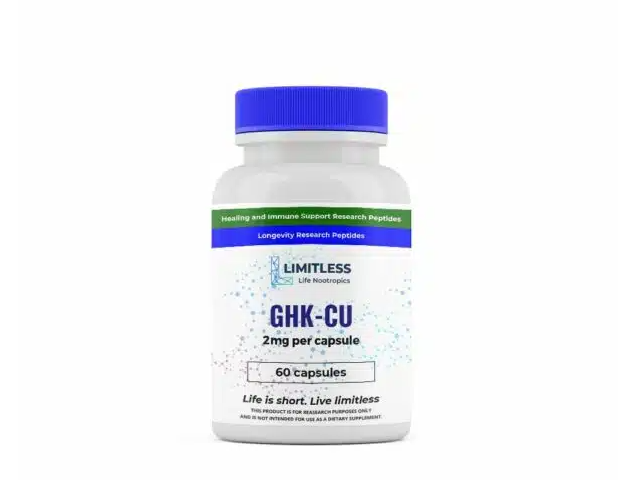
Disclosure: These are affiliate links. I earn a small commission if you purchase — at no extra cost to you. I only recommend products I personally use or have thoroughly researched.
Research & Studies
This section includes 3 peer-reviewed studies referenced in our analysis.