
- Enhanced exercise performance and aerobic capacity
- Improved energy and oxygen utilization
- Immune system modulation
- Neuroprotection and cognitive support
- Sleep quality improvement
- Kidney function support
- Potential antidepressant effects
- Testosterone and libido support
I’ll be honest — I was skeptical the first time someone told me about a fungus that grows out of dead caterpillars on the Tibetan Plateau and supposedly gives you superhuman endurance. It sounded like the setup to a bad joke. But after digging into the research and running my own experiments with it over the past few years, Cordyceps has earned a permanent spot in my daily stack. Not because it’s flashy. Because it quietly, consistently delivers.
The thing that surprised me most? It wasn’t the energy boost (though that’s real). It was how much easier it became to breathe during intense workouts — like someone had cleaned a filter I didn’t know was clogged.
The Short Version: Cordyceps sinensis is a medicinal mushroom with strong clinical evidence for improving exercise performance, aerobic capacity, and oxygen utilization. It works through adenosine receptor modulation and mitochondrial energy pathways. Best for physically active people seeking clean, sustained energy — think of it as the endurance athlete’s adaptogen. Start at 1,000mg/day of a quality extract and give it at least 4–6 weeks.
What Is Cordyceps Sinensis?
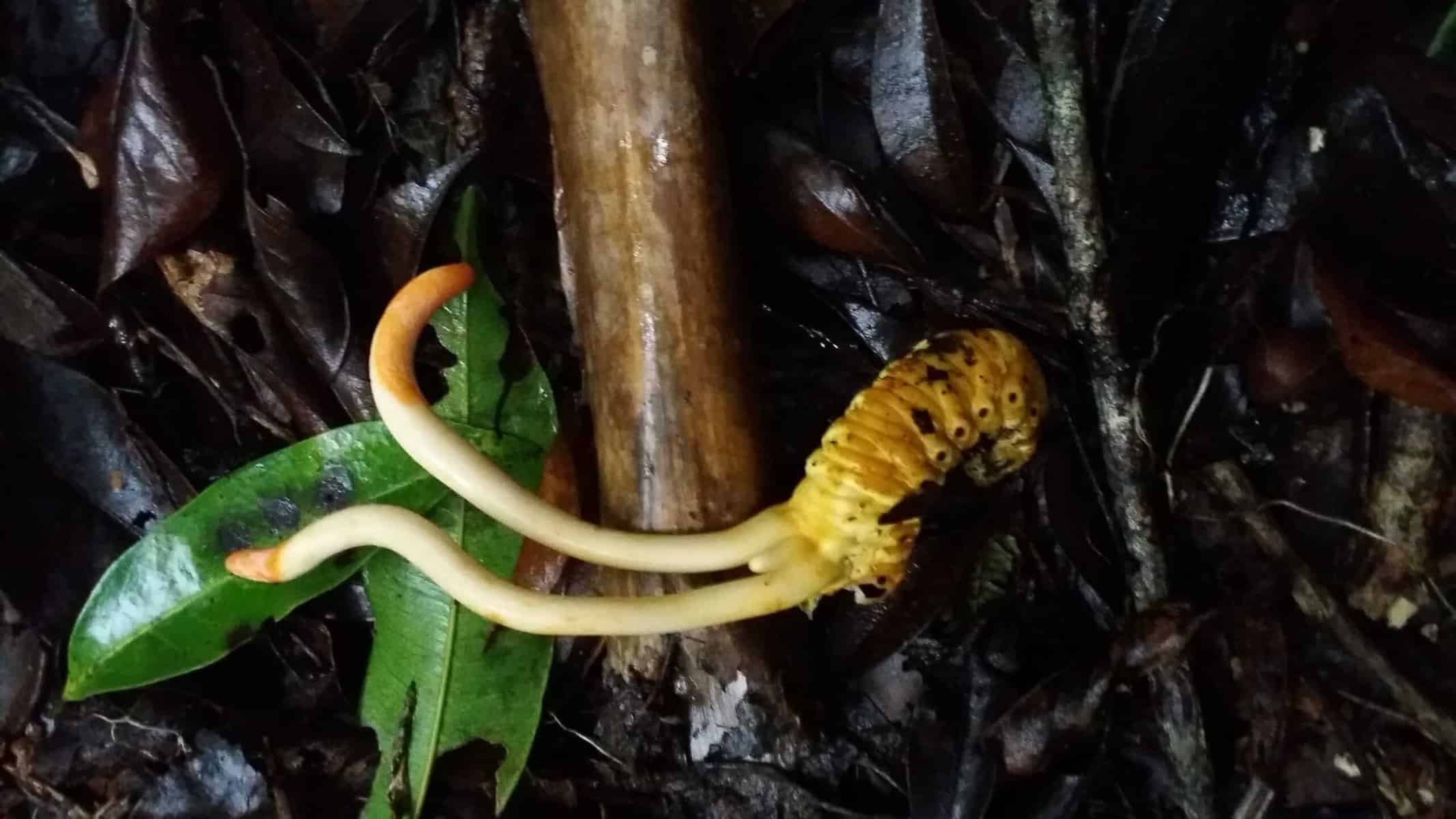
Cordyceps sinensis — now officially reclassified as Ophiocordyceps sinensis — is one of the strangest organisms in nature. A parasitic fungus that infects ghost moth larvae high on the Tibetan Plateau, it slowly consumes the caterpillar from within before sending a slender fruiting body up through the soil. The result is a half-insect, half-fungus specimen that’s been prized in traditional Chinese and Tibetan medicine for centuries.
The Chinese name says it all: Dōng Chóng Xià Cǎo — “winter worm, summer grass.” Traditional Chinese medicine considers it uniquely balanced between yin and yang because it embodies both animal and plant. Historical records trace back to Wang Ang’s Ben Cao Bei Yao in 1694, though Tibetan healers likely used it long before anyone wrote it down. It was reserved for emperors and nobility — partly because of its reputed power, partly because wild specimens grow only at 3,000–5,000 meters elevation across some of the most remote terrain on Earth.
Here’s the part that matters for your wallet: wild Cordyceps sinensis is the most expensive fungus in the world. Premium grades fetch up to $110,000 per kilogram. That’s not a typo. Fortunately, you don’t need to mortgage your house. Cultivated alternatives — particularly the Cs-4 mycelium strain and Cordyceps militaris fruiting body — deliver the same key bioactive compounds at a fraction of the cost and are what you’ll find in every legitimate supplement on the market.
The heavy hitters among those compounds are cordycepin (a powerful adenosine analogue), adenosine itself, beta-glucan polysaccharides for immune support, and cordycepic acid. These work together in ways that make Cordyceps more than the sum of its parts.
How Does Cordyceps Sinensis Work?
Think of Cordyceps as an efficiency upgrade for your cells’ power plants. Your mitochondria produce the energy currency (ATP) that fuels everything your brain and body do. Cordyceps optimizes that process — helping your cells extract more energy from the oxygen and nutrients you’re already consuming.
The primary mechanism revolves around cordycepin, which is structurally almost identical to adenosine — one of the most important signaling molecules in your brain. Adenosine is the molecule that builds up throughout the day and eventually makes you feel sleepy. It’s also involved in regulating blood flow, inflammation, and synaptic transmission. Cordycepin essentially speaks the same chemical language as adenosine, interacting with A1, A2A, and A2B adenosine receptors throughout the brain and body.
In the hippocampus — your brain’s memory center — cordycepin activates presynaptic A1 receptors, which modulates how neurons communicate with each other. Research published in Pharmacology Biochemistry and Behavior shows it also enhances AMPA receptor signaling in the prefrontal cortex. AMPA receptors are critical for forming new memories and building neural connections, which is one of the key mechanisms behind Cordyceps’ nootropic potential.
There’s a dopamine angle too. Cordycepin promotes dopamine release, which contributes to the “clean energy” and improved motivation that users consistently report. Animal studies also show improvements in BDNF (brain-derived neurotrophic factor) — the protein your brain needs for learning and neuroplasticity.
On the physical performance side, Cordyceps activates the HIF-1 (hypoxia-inducible factor) pathway, which improves how efficiently your body uses oxygen. This is the same pathway that kicks in when you train at altitude. Combine that with its anti-inflammatory action through the NF-κB and MAPK pathways, and you’ve got a compound that simultaneously boosts energy production while reducing the cellular damage that comes with intense effort.
Pro Tip: The fact that cordycepin works through adenosine receptors explains why Cordyceps feels nothing like caffeine. Caffeine blocks adenosine receptors (antagonist). Cordycepin activates them selectively (agonist). That’s why users describe the energy as “clean” — it’s working with your brain’s natural signaling, not against it.
Benefits of Cordyceps Sinensis
Exercise Performance and Aerobic Capacity
This is where the evidence is strongest. A meta-analysis of clinical trials found that Cs-4 supplementation at 2–3g/day for 6–12 weeks significantly improved endurance performance, ventilatory threshold, and VO2peak. One randomized controlled trial in healthy elderly subjects taking Cs-4 (333mg three times daily for 12 weeks) showed a 10.5% improvement in metabolic threshold and an 8.5% improvement in ventilatory threshold.
One important nuance: a 2004 study in younger, trained athletes found no significant benefit. The pattern in the research suggests Cordyceps’ performance effects are most pronounced in older adults, less-trained individuals, or those with suboptimal baseline fitness. If you’re already a competitive athlete operating at peak capacity, don’t expect dramatic gains. If you’re a desk worker trying to get more out of your morning runs, this is where Cordyceps shines.
Kidney Function Support
Multiple systematic reviews and meta-analyses — including a comprehensive 2024 analysis — confirm that Cordyceps as adjunctive therapy significantly benefits patients with chronic kidney disease. In China, Cs-4 at 3–6g/day has been used clinically for renal support for decades. This isn’t fringe medicine — it’s part of standard integrative practice in Chinese hospitals.
Sleep Quality
Here’s where it gets interesting. A 2025 randomized controlled trial of 90 patients with primary insomnia found that Cordyceps fermentation broth (150ml/day for 28 days) significantly improved sleep quality, sleep duration, time to fall asleep, sleep efficiency, and daytime function on the Pittsburgh Sleep Quality Index. This makes sense given cordycepin’s activity at adenosine receptors — the same system that regulates your sleep-wake cycle.
Immune Modulation
The beta-glucan polysaccharides in Cordyceps activate both innate and adaptive immune responses, modulating macrophage and T-cell activity. This is well-documented across in vitro and animal studies and aligns with the traditional use. Multiple users report fewer respiratory infections with consistent supplementation.
Long COVID Recovery
A 2024 randomized trial of 110 participants found that Cs-4 for 12 weeks significantly improved long COVID symptom scores, with specific improvements in fatigue, insomnia, and respiratory symptoms. Given how many people are still struggling with post-viral fatigue, this is a genuinely promising finding.
Reality Check: Cordyceps has real, well-documented benefits — but it’s not a miracle cure. The strongest evidence is for exercise performance and kidney support. Claims about testosterone, anti-aging, and cancer prevention are based mostly on animal studies and cell cultures. They’re interesting leads, not proven benefits. Anyone telling you otherwise is selling something.
Mood and Neuroprotection
Animal research shows cordycepin produces rapid antidepressant-like effects via AMPA receptor enhancement, and Cordyceps polysaccharides have shown promise in chronic stress models. In cerebral ischemia models, cordycepin protected hippocampal neurons and improved long-term potentiation. The human evidence isn’t there yet, but the mechanisms are compelling.
Testosterone and Libido
I’ll be straight with you: the testosterone claims are popular but the human evidence is, as one review put it, “scarce and all too often unconvincing.” Animal studies consistently show cordycepin stimulates testosterone production via the PKA pathway in Leydig cells and improves sexual function in diabetic rat models. Many male users do report improved libido. But if testosterone optimization is your primary goal, Tongkat Ali or Ashwagandha have stronger human data.
How to Take Cordyceps Sinensis
Dosage: 1,000–3,000mg/day of a standardized extract. The clinical trials used Cs-4 at doses ranging from 1,000mg to 3,000mg daily, so that’s the range you want to target.
Starting protocol: Begin at 500–1,000mg/day for the first week to assess tolerance. Some people experience mild GI discomfort at higher starting doses. After a week with no issues, increase to your target dose.
Timing: Morning or early afternoon. Despite cordycepin’s sleep-supportive mechanisms, the overall extract profile is energizing and may interfere with sleep if taken in the evening. I take mine with my morning coffee and a small handful of nuts — the fat appears to support absorption.
How long to expect results: Some people notice the energy effects within the first few days. Endurance improvements typically show up around weeks 2–4 with consistent use. The full adaptogenic, immune, and performance benefits need 4–12 weeks to fully manifest. Don’t give up after a week.
Cycling: No established cycling protocol exists in the literature. Some practitioners recommend 5 days on / 2 days off or 8 weeks on / 2 weeks off to prevent tolerance, but this is based on traditional practice rather than clinical data. I personally take it daily without cycling and haven’t noticed any tolerance buildup after extended use.
Insider Tip: Not all Cordyceps supplements are created equal — and this is one category where the quality gap is enormous. Here’s the hierarchy: Cordyceps militaris fruiting body extract (hot water or dual extracted) gives you the highest cordycepin content and best value. Genuine Cs-4 mycelium extract is the most clinically studied form. Mycelium on grain (MOG) is the bottom tier — it’s mostly rice or oat filler with 1–3% beta-glucans. Look for products that list beta-glucan content (>25% for militaris, >10% for Cs-4) and have third-party testing. If the label says “full spectrum mycelial biomass” but doesn’t quantify beta-glucans, you’re probably paying for expensive grain powder.
Side Effects and Safety
Cordyceps has a solid safety profile at standard doses. In clinical trials, it’s consistently well-tolerated. That said, here are the things to watch for.
Common side effects are mild and usually dose-dependent: nausea, diarrhea, stomach cramps, and dry mouth. These typically resolve by reducing the dose or taking it with food.
Blood clotting: Cordyceps may slow blood clotting. If you’re taking anticoagulants like warfarin, aspirin, or heparin, this is a real interaction — not a theoretical one. Stop Cordyceps at least two weeks before any scheduled surgery.
Drug interactions extend beyond blood thinners. Be cautious combining Cordyceps with antidiabetic medications (risk of hypoglycemia), immunosuppressants like cyclosporine or tacrolimus (Cordyceps may counteract their effects), and corticosteroids. Medscape lists moderate interactions with at least 72 drugs — if you’re on medication, talk to your doctor first.
Important: Do NOT take Cordyceps if you have an autoimmune condition like rheumatoid arthritis, lupus, or multiple sclerosis. Its immune-stimulating properties can worsen autoimmune flares. Also avoid if you have a bleeding disorder or hormone-sensitive cancer. Safety during pregnancy and nursing has not been established — skip it if either applies.
Stacking Cordyceps Sinensis
Cordyceps plays well with others — its energy and oxygenation profile complements a wide range of nootropics and adaptogens.
Cordyceps + Lion’s Mane: This is the classic mushroom nootropic stack and for good reason. Cordyceps handles the energy and oxygen utilization side while Lion’s Mane stimulates NGF and neurogenesis. Together, you get both the fuel and the wiring. This is my daily foundation.
Cordyceps + Reishi: If Cordyceps is the gas pedal, Reishi is the brake. Reishi’s calming, adaptogenic properties balance Cordyceps’ stimulating profile while providing synergistic immune support. Great for people who find Cordyceps alone too activating.
Cordyceps + Rhodiola Rosea: A powerful dual-adaptogen stack for endurance and altitude performance. Both support energy through different pathways — Rhodiola through stress hormone modulation, Cordyceps through oxygen utilization.
Cordyceps + CoQ10: Double down on mitochondrial function. Both compounds support cellular energy production from different angles. Particularly relevant for aging adults or anyone dealing with fatigue.
Cordyceps + Alpha-GPC + Lion’s Mane: The full cognitive performance stack — acetylcholine support, neurogenesis, and cellular energy all in one. This is what I recommend to people who want one nootropic stack that covers the major bases.
What NOT to combine: Avoid stacking with blood thinners or immunosuppressant medications for the reasons covered above. Use caution combining with high-dose caffeine — while the mechanisms are different, sensitive individuals may experience overstimulation. And monitor blood sugar if you’re combining with antidiabetic agents.
My Take
Cordyceps is one of those supplements that won me over slowly. I didn’t feel a thunderbolt the first time I took it. There was no “Limitless” moment. What happened was subtler and, ultimately, more valuable: over the course of a few weeks, my afternoon energy dips got smaller. My runs felt easier. I recovered faster between workouts. I stopped catching every cold my kids brought home from school.
That’s the Cordyceps experience for most people. It’s not dramatic. It’s cumulative. And it’s real.
Who this is BEST for: Physically active people over 30 who want clean, sustained energy and better endurance. People dealing with post-viral fatigue or Long COVID. Anyone looking for immune support without the stimulation of something like Panax Ginseng. And honestly, anyone who wants a single adaptogenic mushroom to add to their daily routine — this is the one I’d start with for the energy side (pair it with Lion’s Mane for the cognitive side).
Who should try something else: If you’re primarily looking for acute focus and concentration, Lion’s Mane or Bacopa Monnieri are better first choices. If anxiety is your main concern, Reishi or Ashwagandha will serve you better. Cordyceps is an energy and performance compound first.
The bottom line: Get a quality extract — either C. militaris fruiting body or genuine Cs-4 — start at 1,000mg/day, and give it a solid month before you judge. Skip the cheap mycelium-on-grain products. And remember: Cordyceps works best when the foundations are in place. All the fungus in Tibet won’t fix bad sleep, chronic stress, or a gut that’s on fire. Fix those first, then add Cordyceps, and you’ll actually feel what this remarkable organism can do.
Recommended Cordyceps Products
I know how frustrating it is to sort through dozens of brands making the same claims. These are the ones I've personally vetted — because quality is the difference between results and wasted money.
Cordyceps Extract by Real Mushrooms
Shop Now →
Cordyceps Mushroom Extract by Research Chemical Depot
Shop Now →
Cordyceps Mushroom Powder by Freshcap
Shop Now →Disclosure: These are affiliate links. I earn a small commission if you purchase — at no extra cost to you. I only recommend products I personally use or have thoroughly researched.
Research & Studies
This section includes 19 peer-reviewed studies referenced in our analysis.
Cordyceps sinensis as an immunomodulatory agent.
The scientific rediscovery of an ancient Chinese herbal medicine: Cordyceps sinensis: part I.
Protein constituent contributes to the hypotensive and vasorelaxant activities of Cordyceps sinensis.
Regulatory mechanism of Cordyceps sinensis mycelium on mouse Leydig cell steroidogenesis.
In vivo and in vitro stimulatory effects of Cordyceps sinensis on testosterone production in mouse Leydig cells.
Cordyceps Sinensis (CordyMax Cs-4) supplementation does not improve endurance exercise performance.
In vivo stimulatory effect of Cordyceps sinensis mycelium and its fractions on reproductive functions in male mouse.
The traditional Chinese medicine Cordyceps sinensis and its effects on apoptotic homeostasis.
Antiaging effect of Cordyceps sinensis extract.
Cordycepin is an immunoregulatory active ingredient of Cordyceps sinensis.
Showing 10 of 19 studies. View all →