
- Supports cognitive function after neurological events
- Enhances cellular glucose and oxygen utilization
- Provides neuroprotective and antioxidant effects
- May improve attention, memory, and mental clarity
I’ll be honest — when I first heard about Actovegin, my reaction was something along the lines of “wait, people are injecting calf blood extract for brain power?” It sounded like something out of a Victorian-era apothecary, not a modern nootropic stack. But then I started digging into the research and realized this stuff has been used clinically for over fifty years in hospitals across Europe and Russia. That doesn’t mean it’s a miracle drug — far from it — but it does mean there’s more substance here than the initial shock factor suggests.
The Short Version: Actovegin is a pharmaceutical-grade extract from calf blood that enhances how your brain cells use glucose and oxygen — essentially making your cellular engines run more efficiently. It has one solid clinical trial showing modest cognitive benefits and decades of clinical use in Eastern Europe, but it’s not FDA-approved and the evidence base is thinner than you’d want. Best suited for people dealing with cognitive recovery after neurological events, or experienced nootropic users looking for metabolic-pathway support. It’s not a first-line nootropic for most people.
What Is Actovegin?
Actovegin is a deproteinized hemoderivative — a fancy way of saying it’s calf blood that’s been filtered to remove all proteins, leaving behind a concentrated cocktail of over 200 bioactive compounds. We’re talking amino acids, oligopeptides, nucleosides, glycosphingolipids, electrolytes, and various metabolic intermediates. The ultrafiltration process also removes potential prions, which addresses the “but isn’t this how you get mad cow disease?” question that inevitably comes up.
Developed in the 1950s by Hormon-Chemie in Munich, Germany, it’s been marketed under the Actovegin brand since 1976. Today it’s manufactured by Takeda Austria GmbH (after Takeda acquired Nycomed in 2011). You might also see it sold as Solcoseryl, which is essentially the same product under a different name.
Here’s the thing that makes Actovegin unusual in the nootropic world: it’s a legitimate pharmaceutical product prescribed by actual doctors — just not in the countries most of my readers live in. It’s widely used in Russia, parts of Europe, China, and South Korea. But it’s not FDA-approved in the United States, not available in Canada or the UK, and you won’t find it at your local pharmacy. That regulatory gap is worth understanding, and I’ll get into the implications later.
Before we go further — if you’re brand new to nootropics and looking for your first cognitive enhancer, this probably isn’t where you should start. Get your magnesium levels right, make sure your sleep is dialed in, and consider well-studied options like Bacopa Monnieri or Lion’s Mane first. Actovegin is more of a specialist tool than a general-purpose brain booster.
How Does Actovegin Work?
Think of your brain cells as tiny factories. They need two things above everything else to run at full capacity: glucose (fuel) and oxygen (to burn the fuel). When either supply gets disrupted — from aging, poor circulation, a stroke, chronic stress — those factories slow down. You feel it as brain fog, poor memory, sluggish thinking.
Actovegin essentially acts as an efficiency upgrade for those cellular factories. Here’s what the research shows it does:
Enhanced glucose uptake: Actovegin increases glucose transport across cell membranes through insulin-independent pathways. Your cells can pull in more fuel even when insulin signaling isn’t optimal — which is relevant given how many people are dealing with some degree of insulin resistance. A 2020 review in the International Journal of Molecular Sciences confirmed this as one of the primary mechanisms.
Improved oxygen utilization: It stimulates how much oxygen your tissues actually consume, acting as what pharmacologists call an “antihypoxant.” This is the mechanism that’s been most consistently demonstrated across studies.
Antioxidant support: It bolsters your body’s own antioxidant defense systems rather than acting as a direct antioxidant itself.
Neuroprotection: In preclinical models, Actovegin has shown anti-apoptotic effects — it helps prevent brain cell death triggered by beta-amyloid peptides (the protein fragments implicated in Alzheimer’s disease) by dialing down caspase-3 activation.
In plain English: Actovegin helps your brain cells eat better, breathe better, and survive longer under stress. It’s not flipping any neurotransmitter switches — it’s not boosting dopamine, serotonin, or acetylcholine the way most nootropics work. It’s operating at a more fundamental, metabolic level.
Reality Check: Here’s the uncomfortable truth — nobody has actually identified which specific compound in Actovegin is responsible for these effects. It’s a complex biological mixture with over 200 components, and the scientific community has never pinpointed the active ingredient(s). That doesn’t mean it doesn’t work, but it does mean the mechanism story is less precise than we’d like.
Benefits of Actovegin
Let’s be straightforward about the evidence here, because there’s a lot of variation in quality.
The Strongest Evidence: Post-Stroke Cognitive Recovery
The ARTEMIDA trial, published in Stroke in 2017, is the gold standard for Actovegin research. This was a proper 12-month, double-blind, placebo-controlled randomized trial with 503 patients over age 60 who had cognitive impairment after a stroke.
The protocol was aggressive: 2,000 mg/day by IV infusion for up to 20 days, followed by 1,200 mg/day oral tablets for six months. At the six-month mark, the Actovegin group showed statistically significant improvement on cognitive assessment scores compared to placebo.
But — and this is important — the actual improvement was modest. The treatment group improved by 6.8 points versus 4.6 points for placebo on the ADAS-cog+ scale. Whether that 2.3-point difference translates to meaningful real-world improvement is genuinely debated among researchers. The trial also found no consistent improvements in quality of life, daily functioning, or neurological symptoms.
Moderate Evidence: Age-Related Cognitive Decline
Earlier studies in elderly patients with vascular mild cognitive impairment showed more encouraging results. One study found that after just two weeks of therapy, patients showed statistically significant improvements in attention, memory, and thinking processes. Even a single IV dose improved measurable brain function indices.
The Honest Assessment
A 2022 systematic review in PLOS ONE looked at all available evidence and concluded that “the benefits of Actovegin are uncertain and there is potential risk of harm in patients with stroke.” Only two eligible trials with 563 total participants met their inclusion criteria. That’s a remarkably thin evidence base for a drug that’s been around since the 1970s.
Most of the published research comes from Russia and Eastern Europe, with limited replication in Western clinical settings. That doesn’t automatically invalidate the findings, but it’s a pattern worth noting.
Insider Tip: If you’re considering Actovegin for general cognitive enhancement — not post-stroke recovery — understand that you’re essentially in uncharted territory. There is virtually zero clinical trial data on healthy people using it as a nootropic. The user reports from nootropic communities are encouraging but anecdotal.
How to Take Actovegin
Dosage
For oral use (the route most relevant to nootropic users):
- Starting dose: 600 mg/day (one 200 mg tablet, three times daily)
- Standard dose: 1,200 mg/day (two 200 mg tablets, three times daily)
- Treatment duration: 4–6 weeks for a standard course; up to 20 weeks for cognitive indications
Take tablets before meals, swallow whole without chewing, with a small amount of water.
What to Expect
Don’t expect a “flip-the-switch” moment. This isn’t caffeine.
- Days 1–7: Subtle, if anything. Some users report slightly improved clarity.
- Weeks 1–2: Improvements in attention and processing speed begin to emerge (supported by clinical data showing measurable changes after two weeks of therapy).
- Weeks 2–4: More noticeable effects on focus, mental stamina, and memory for most users.
- Peak effect: 2–6 hours after an oral dose.
Forms Available
- 200 mg coated tablets — Most practical for nootropic use. Usually sold in boxes of 50.
- 400 mg/10 mL injectable ampoules — Clinical use only. Requires medical supervision. This is how it’s administered in hospital settings.
- Topical formulations (cream, gel, ointment) — These are for wound healing, not cognitive use.
Cycling
There are no formal cycling guidelines in the literature. Standard prescribing practice uses 4–6 week treatment courses, which implies breaks between courses are the norm. Running it continuously for months without breaks has no supporting evidence — it’s just uncharted territory.
Pro Tip: Since Actovegin is a biological product that needs to be imported from overseas, plan ahead. Order well before you run out, factor in shipping times from Russia or Eastern Europe, and check that your package hasn’t been exposed to extreme temperatures during transit. This stuff isn’t as shelf-stable as a synthetic compound in a sealed capsule.
Side Effects and Safety
The good news: Actovegin has a generally favorable safety profile. It’s been reported as non-toxic even at doses 30–40 times the recommended amount, and no cases of overdose have been documented.
The common experience is no side effects at all. When they do occur, they’re typically:
- Allergic reactions (rare)
- Hives or flushing
- Muscle pain
- Drug-induced fever
At least one case of anaphylactic shock has been documented, so if you have a history of severe allergic reactions, proceed with extra caution.
Important: The ARTEMIDA trial flagged something concerning — there was a higher (though not statistically significant) incidence of recurrent ischemic stroke, transient ischemic attack, and brain hemorrhage in the Actovegin group compared to placebo. For stroke survivors, this is a serious consideration. For healthy nootropic users, the relevance is unclear, but it warrants mentioning.
Who should avoid Actovegin:
- Anyone with heart failure (stage II-III)
- People with pulmonary edema or fluid overload conditions
- Anyone with significantly reduced kidney function (oliguria/anuria)
- People with known hypersensitivity to hemodialysate products
- Pregnant or nursing women — the data is conflicting, so err on the side of not taking it
Drug interactions: None have been formally established, which sounds reassuring but actually just means nobody has studied them properly. If you’re on blood thinners or other cardiovascular medications, talk to your doctor before adding Actovegin.
Stacking Actovegin
Because Actovegin works through metabolic pathways rather than neurotransmitter modulation, it theoretically pairs well with nootropics that work through different mechanisms. That said, formal combination studies are essentially nonexistent — these are informed suggestions, not clinically validated protocols.
Complementary Stacks
Actovegin + Piracetam: This is probably the most logical pairing. Piracetam also enhances glucose and oxygen utilization in the brain, but through different mechanisms. This combination is commonly co-prescribed in Russian and Eastern European clinical practice. Piracetam brings the better evidence base; Actovegin brings the broader metabolic support.
Actovegin + Citicoline: Citicoline supports cell membrane integrity and acetylcholine synthesis — systems that Actovegin doesn’t directly touch. This gives you metabolic optimization (Actovegin) plus membrane repair and neurotransmitter support (Citicoline).
Actovegin + CoQ10 or Alpha-Lipoic Acid: Both are mitochondrial support compounds that complement Actovegin’s energy-metabolism-enhancing effects from slightly different angles.
Use Caution
- With blood thinners or anticoagulants: Given the ARTEMIDA signal about cerebrovascular events, medical supervision is non-negotiable here.
- With other injectable biologics like Cerebrolysin or Cortexin: Don’t stack injectable animal-derived compounds without medical guidance. Period.
My Take
Here’s where I land on Actovegin after reading through the research and listening to what the nootropic community reports: it’s a fascinating compound that’s caught between legitimacy and limited evidence.
On one hand, this isn’t some fly-by-night research chemical cooked up in someone’s garage. It’s a pharmaceutical with over fifty years of hospital use, manufactured by a major international drug company, prescribed by doctors to real patients. The metabolic mechanism — helping your brain cells utilize glucose and oxygen more efficiently — is scientifically sound and well-suited to cognitive support.
On the other hand, the evidence just isn’t as strong as I’d like. One solid RCT with modest results, a thin systematic review, and a lot of observational data from Russian journals. The active ingredient has never been identified. And the regulatory hurdle of importing it from overseas adds complexity, cost, and quality-control uncertainty.
Who this is BEST for: People recovering from neurological events who have access to medical supervision. Experienced nootropic users who’ve already optimized their foundations and want to explore metabolic-pathway support. People living in countries where it’s readily available by prescription.
Who should look elsewhere: Nootropic beginners. People who want a well-researched, widely available cognitive enhancer. Anyone uncomfortable importing pharmaceuticals from overseas.
If you’ve already tried the well-studied racetams, you’ve got your magnesium and B vitamins dialed in, your sleep is solid, and you’re looking for something that approaches cognitive enhancement from a different angle — Actovegin is worth investigating. Just go in with realistic expectations. The people reporting dramatic results are the exception, not the rule. Most users describe it as a subtle but real improvement in mental clarity and stamina.
And as always — talk to a healthcare provider before adding something like this to your regimen, especially if you’re on any medications. The lack of formal interaction data isn’t a green light; it’s a gap in our knowledge.
Recommended Actovegin Products
I know how frustrating it is to sort through dozens of brands making the same claims. These are the ones I've personally vetted — because quality is the difference between results and wasted money.
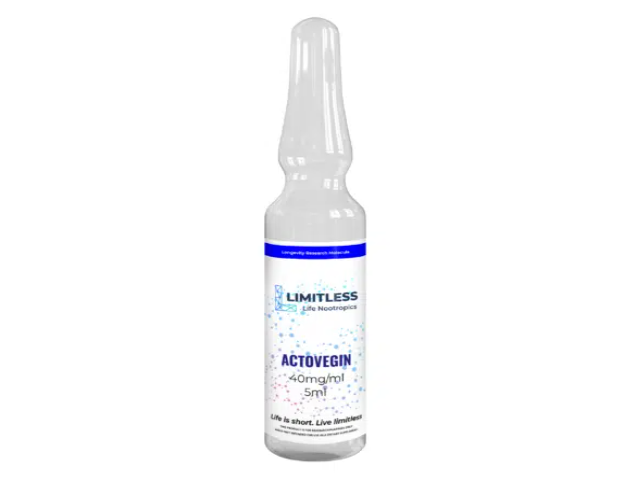
Disclosure: These are affiliate links. I earn a small commission if you purchase — at no extra cost to you. I only recommend products I personally use or have thoroughly researched.
Research & Studies
This section includes 6 peer-reviewed studies referenced in our analysis.