
- May improve depressive symptoms and mood
- Supports healthy cortisol-to-DHEA ratio
- Acts as a precursor to testosterone and estrogen
- Activates neurotrophin receptors involved in brain cell growth
- May support stress resilience and emotional regulation
Here’s a stat that keeps me honest about aging: by the time you hit 70, your body is producing roughly 80% less of its most abundant hormone than it did in your twenties. Not testosterone. Not estrogen. DHEA — the “mother hormone” that your body uses to make both of those, plus a whole lot more.
I first got my DHEA-S levels tested about five years ago after a stretch of flat mood and grinding fatigue that no amount of sleep or caffeine could touch. The number came back low for my age. Not crisis-level, but low enough that my functional medicine doc raised an eyebrow. What happened next — and what I’ve learned since — is worth sharing, because DHEA is one of those supplements where the gap between the hype and the honest science is wide enough to drive a truck through.
The Short Version: DHEA is an endogenous neurosteroid hormone that declines sharply with age and serves as a precursor to testosterone and estrogen. The strongest clinical evidence supports its use for mood and mild depression — not cognitive enhancement, despite what many supplement companies claim. It’s best suited for adults over 40 with documented low DHEA-S levels, and blood testing before supplementation is non-negotiable given its hormonal activity.
What Is Dehydroepiandrosterone?
Dehydroepiandrosterone — mercifully abbreviated to DHEA — is a steroid hormone produced primarily by your adrenal glands, with smaller amounts made in the gonads and the brain itself. First isolated from male urine in 1934 by Adolf Butenandt (who later won a Nobel Prize), DHEA sat in relative obscurity for decades until researchers noticed something striking in the 1960s: levels decline steadily and dramatically with age.
That decline is no small thing. DHEA production peaks between ages 20 and 30, then drops by roughly 2-5% per year. Unlike cortisol — your primary stress hormone, which stays stubbornly stable as you age — DHEA falls off a cliff. By your eighth decade, you’re running on 10-20% of what you had at your peak. This creates an increasingly lopsided cortisol-to-DHEA ratio that researchers now associate with frailty, immune dysfunction, and accelerated biological aging.
People reach for DHEA supplements for a wide range of reasons: mood support, energy, libido, anti-aging, even cognitive enhancement. And here’s where I need to put on my “foundations first” hat. DHEA is a hormone. A real, physiologically active hormone that converts into other hormones in your body. This isn’t L-theanine we’re talking about — something you can casually toss into your morning tea. DHEA changes your endocrine system in measurable ways, which means the difference between “helpful” and “problematic” often comes down to whether you actually need it in the first place.
How Does Dehydroepiandrosterone Work?
If most nootropics are like turning one dial in your brain, DHEA is like sitting down at a mixing board with a dozen sliders. Its mechanism of action is unusually complex — even by neurosteroid standards.
At the most basic level, DHEA serves as a precursor molecule. Your body converts it downstream into testosterone, estrogen, and other hormones through a cascade of enzymatic steps. But that’s only part of the story. In 2011, researchers made a genuinely surprising discovery: DHEA and its sulfated form (DHEA-S) directly bind to TrkA and p75NTR receptors — the same receptors used by nerve growth factor (NGF) and brain-derived neurotrophic factor (BDNF). This earned DHEA the label “steroidal microneurotrophin,” which is a fancy way of saying it mimics some of the brain-building signals that keep neurons healthy and connected.
Beyond that neurotrophin activity, DHEA hits several major neurotransmitter systems simultaneously:
Glutamate (excitatory). DHEA-S acts as a positive allosteric modulator at NMDA receptors, enhancing the excitatory signaling that underlies learning and memory formation. Think of it as gently turning up the volume on your brain’s “pay attention and remember this” system.
GABA (inhibitory). DHEA works as a negative modulator at GABA-A receptors, dialing down some of your brain’s inhibitory braking. This contributes to its mildly activating, mood-lifting quality — but also explains why some people feel wired or anxious on it.
Sigma-1 receptor. DHEA activates this neuromodulatory receptor, which influences neuroprotection, mood regulation, and the release of other neurotransmitters including acetylcholine. It’s one of the cleaner neuroprotective mechanisms DHEA has going for it.
Cortisol antagonism. DHEA functionally opposes many effects of cortisol. The cortisol-to-DHEA ratio is increasingly studied as a biomarker for biological aging and stress resilience — and restoring that ratio is one of the more compelling theoretical arguments for supplementation in older adults.
In practical terms, this multi-system activity means DHEA can feel subtly stimulating, mood-brightening, and energizing — but it also means the effects are less predictable than a single-mechanism compound. Your response depends heavily on your existing hormone levels, age, sex, and the unique way your body processes steroid hormones.
Benefits of Dehydroepiandrosterone
Let me be straight with you: DHEA’s benefit profile has a notable gap between its rich pharmacology and its actual clinical results. The mechanisms sound incredible on paper. The trial data is more modest. Here’s what we actually know.
Mood and Depression — The Strongest Evidence
This is where DHEA earns its keep. A 2020 systematic review and meta-analysis published in the Journal of Neuroscience Research, covering 14 randomized controlled trials and 742 individuals, found that DHEA significantly improved depressive symptoms compared to placebo. An earlier meta-analysis from 2018 in Current Neuropharmacology reached a similar conclusion.
Perhaps most interesting was an NIMH-funded study where 60% of participants responded to DHEA treatment after six weeks, compared to just 20% on placebo. The improvements were strongest for anhedonia — that flat, motivationless, “can’t enjoy anything” quality that makes depression so debilitating.
Reality Check: Before you rush to Amazon, know that the overall evidence quality was rated “very low” by GRADE criteria — the gold standard for evaluating research. The studies were small, used different doses, and measured different outcomes. DHEA looks promising for mild or treatment-resistant depression, but it’s not a proven antidepressant. If you’re dealing with serious depression, work with a professional.
Neuroimaging research adds some mechanistic credibility here. DHEA appears to reduce overactivity in the amygdala and hippocampus (brain regions hyperactive in depression) while enhancing connectivity in emotional regulation networks. That’s consistent with what users report — not euphoria, but a stabilization. A floor under your mood.
Cognitive Enhancement — The Honest Letdown
This is where I have to disappoint the biohacker crowd. Despite DHEA’s impressive neurotrophin receptor activity and NMDA modulation — mechanisms that should, on paper, support cognition — the clinical evidence for cognitive enhancement is remarkably thin.
A Cochrane systematic review of DHEA for cognitive function in healthy elderly people found “no current evidence for an improvement in memory or other aspects of cognitive function.” A 2023 systematic review focused on postmenopausal women reached a similarly disappointing conclusion, with only one small 4-week study showing any benefit. Two trials actually found DHEA had a negative effect on visual memory after stress.
Insider Tip: If you’re primarily looking for cognitive enhancement, your money and attention are better spent on compounds with stronger evidence — Bacopa Monnieri for memory, Lion’s Mane for neuroplasticity, or Citicoline for focus. DHEA’s value lies elsewhere.
Other Reported Benefits
Energy and well-being show up consistently in studies of people with adrenal insufficiency — a population with genuinely depleted DHEA. In healthy populations with normal levels, the results are inconsistent at best.
Sexual function has some positive findings, particularly in women with adrenal insufficiency, though this is likely downstream of hormone conversion rather than a direct DHEA effect.
Body composition shows limited evidence for modest effects at higher doses, but nothing that would justify the side effect risk for most people.
How to Take Dehydroepiandrosterone
Getting DHEA supplementation right requires more precision than most nootropics. This is a hormone — dose, timing, and form all matter significantly.
Dosage: Start low. For women, that means 10-25mg daily. For men, 25-50mg is a reasonable starting range. Most clinical trials have used 25-50mg, though depression studies have gone up to 90mg. Higher is not better here — the side effect profile scales with dose, and more DHEA doesn’t mean more benefit.
Timing: Take it in the morning with food. Your body’s natural DHEA production follows a circadian rhythm that peaks in the morning, so you’re working with your biology rather than against it. Evening dosing can cause insomnia — a mistake I made exactly once.
Form matters enormously. Oral DHEA has poor bioavailability — less than 10% actually makes it past your liver into circulation. Micronized DHEA is absorbed 3-4 times better than standard forms. This is the single most important quality factor when choosing a product. If the label doesn’t say “micronized,” you’re likely flushing most of your money.
Blood testing is non-negotiable. Get your DHEA-S levels tested before you start supplementing. If your levels are already normal, supplementation is unlikely to help and may push you into excess. Retest every 3-6 months while supplementing. DHEA-S is the standard marker because it’s more stable than DHEA itself throughout the day.
Pro Tip: If you’re over 50 and your DHEA-S comes back low, consider starting with the minimum effective dose for 8-12 weeks before retesting and adjusting. The goal isn’t to hit the DHEA levels of a 25-year-old — it’s to bring them back into a healthy range for your age. Overcorrecting creates its own problems.
Cycling: There’s no scientific consensus on cycling protocols for DHEA. Some practitioners recommend one month on, one month off. For older adults with genuinely deficient levels, continuous use may make more sense since the body can no longer produce adequate amounts. Discuss this with your healthcare provider.
Side Effects and Safety
I’ll be blunt: DHEA’s side effect profile is one of the main reasons I’m cautious about recommending it broadly. Because it converts to sex hormones, many side effects are hormonal in nature and can be genuinely unpleasant.
Common side effects include acne and oily skin (even in adults who haven’t had a pimple in decades), unwanted hair growth in women, hair loss in an androgenic pattern, mood changes including irritability and anxiety, and insomnia. These tend to be dose-dependent — another reason to start low.
More serious concerns include breast tissue growth in men, masculinizing effects in women, decreased HDL cholesterol, and — critically — the potential to feed hormone-sensitive cancers.
Important: Do NOT take DHEA if you have, or are at high risk for, hormone-sensitive cancers (breast, prostate, ovarian, uterine). Do not take it if you’re pregnant, breastfeeding, or under 18. Avoid it if you have PCOS, bipolar disorder, or high cholesterol. DHEA has 194 known drug interactions — including SSRIs, blood thinners, lithium, antipsychotics, diabetes medications, and anti-estrogen therapies like tamoxifen. If you take any prescription medication, check with your pharmacist before adding DHEA.
The polarized user reviews tell the story clearly. On Drugs.com, DHEA averages 5.7 out of 10 from 120 reviews, with 44% positive and 38% negative. That’s an unusually wide split. People who genuinely need it tend to have good experiences. People who don’t tend to experience the side effects without the benefits.
Stacking Dehydroepiandrosterone
DHEA’s hormonal nature makes stacking decisions more consequential than with most nootropics. Get this wrong and you’re compounding hormonal effects in unpredictable ways.
Works well with:
Pregnenolone is DHEA’s upstream precursor in the steroidogenic pathway. Combining a low dose of pregnenolone (5-10mg) with DHEA (25mg) is thought to provide more balanced hormone support than either alone, since pregnenolone feeds multiple downstream pathways rather than just the DHEA cascade.
Ashwagandha — specifically Shoden extract — has clinical data showing it significantly enhances DHEA-S levels on its own. The combination may provide additive stress-resilience benefits through complementary mechanisms: ashwagandha modulating cortisol, DHEA restoring the cortisol-to-DHEA ratio.
Vitamin D shares a similar age-related decline pattern and complements DHEA’s roles in immune and metabolic health without adding hormonal complexity.
Use caution with other hormonal supplements like tribulus or tongkat ali — you risk excessive hormone stimulation. DHEA’s GABA antagonism may also blunt the effects of strong GABAergic compounds like phenibut.
Do not combine with hormone replacement therapy, anti-estrogen medications, lithium, or antipsychotics without medical supervision. The interaction potential is real and clinically significant.
My Take
After five years of on-and-off DHEA use, here’s my honest assessment: it’s a legitimate tool for a specific population, and an overhyped supplement for everyone else.
When my DHEA-S levels were genuinely low, 25mg of micronized DHEA in the morning made a noticeable difference in my baseline mood and energy within about three weeks. Not dramatic — more like the floor came up. The flat, grey stretches got shorter. I felt more resilient to daily stressors. That’s consistent with what the depression research shows, and I think it’s DHEA’s real sweet spot.
What it didn’t do was make me smarter, sharper, or more focused. And that tracks with the research too. If you’re shopping for a cognitive enhancer, look elsewhere — citicoline, lion’s mane, and bacopa all have better evidence for that job.
DHEA is best for adults over 40 — especially over 50 — who have tested and confirmed low DHEA-S levels, and whose primary complaints are flat mood, low resilience, or fatigue that doesn’t resolve with sleep and stress management. If that’s you, a conservative trial of micronized DHEA at 25mg might be worth exploring with your doctor.
If you’re under 40 with normal hormone levels and you’re just looking for an edge? Skip it. Your body is making plenty of DHEA already, and adding more is more likely to give you acne and irritability than any meaningful benefit. Start with the foundations — gut health, sleep, stress management — and reach for better-studied nootropics first. DHEA will still be there if you need it later, when your body’s own production starts to wane.
Recommended DHEA Products
I know how frustrating it is to sort through dozens of brands making the same claims. These are the ones I've personally vetted — because quality is the difference between results and wasted money.
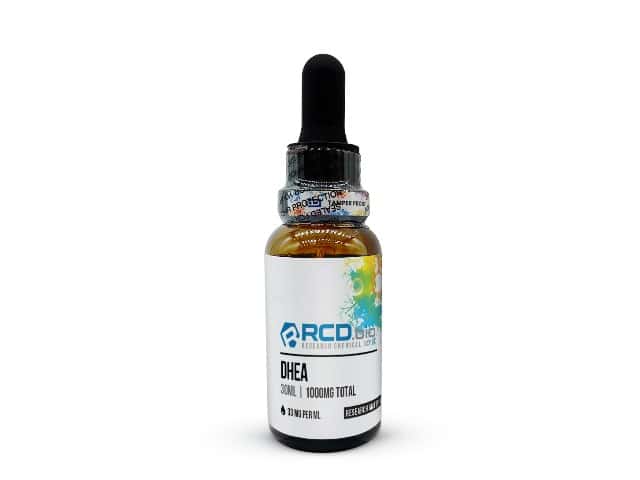
DHEA Liquid by Research Chemical Depot
Shop Now →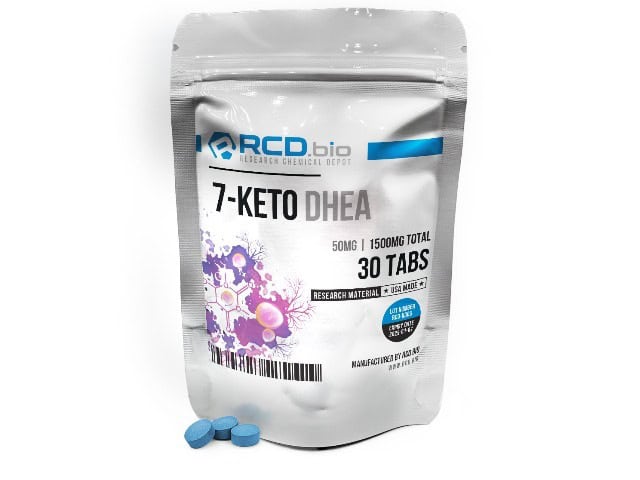
7-Keto DHEA by Research Chemical Depot
Shop Now →Disclosure: These are affiliate links. I earn a small commission if you purchase — at no extra cost to you. I only recommend products I personally use or have thoroughly researched.