
- Focus & Attention
- Memory Enhancement
- Neuroprotection
- Anti-inflammatory Effects
Four years ago, I made a common mistake that a lot of people in the nootropics world make: I assumed that if some compound worked in young, healthy brains, it would work even better in aging ones. I was wrong. But pregnenolone? Pregnenolone is one of the exceptions.
This neurosteroid — a hormone your brain makes naturally — has a fascinating track record in research on cognitive aging. We’re talking actual human trials showing memory improvements, not just promising petri dish results. And unlike a lot of synthetic nootropics, pregnenolone works by supporting the brain’s existing systems rather than trying to override them.
The Short Version: Pregnenolone is a neurosteroid that enhances acetylcholine levels, modulates GABA and glutamate signaling, and reduces neuroinflammation. Research shows it can improve memory and focus, particularly in aging populations. Typical doses range from 30-300mg daily, taken in the morning.
What Is Pregnenolone?
Pregnenolone is what’s called a “mother hormone” — it’s the precursor your body uses to make other steroid hormones like DHEA, progesterone, cortisol, and even testosterone and estrogen. But pregnenolone isn’t just a building block. It’s biologically active on its own, particularly in the brain where it functions as a neurosteroid.
Your body manufactures pregnenolone primarily in the adrenal glands, but also in the brain, liver, skin, and gonads. The brain part is what matters for cognitive enhancement. When pregnenolone is synthesized directly in neural tissue, it can modulate neurotransmitter systems, influence synaptic plasticity, and protect against neuroinflammation.
The challenge? Pregnenolone production declines with age. By the time you hit 75, you’re making roughly 60% less than you did in your 30s. That decline correlates with age-related cognitive issues, which is why researchers started investigating pregnenolone supplementation for memory and focus in the first place.
Here’s the foundations-first reality though: pregnenolone works best when your hormonal system isn’t already broken. If you’ve got chronic stress tanking your cortisol regulation, terrible sleep wrecking your hormone cycles, or gut inflammation disrupting your endocrine function, throwing pregnenolone at the problem is like trying to tune a car engine that’s missing half its pistons. You might see some benefit, but you’re not addressing the root issue.
How Does Pregnenolone Work? (The Brain Mechanisms That Actually Matter)
Pregnenolone’s cognitive effects come from multiple mechanisms working simultaneously. This isn’t a single-pathway compound — it’s more like a systems regulator.
Acetylcholine enhancement. Pregnenolone increases brain acetylcholine levels, which is critical because acetylcholine is the primary neurotransmitter involved in learning, memory formation, and attention. A study by Mayo, Le Moal, and Abrous (2001) demonstrated that pregnenolone sulfate reversed acetylcholine deficits in aged, memory-impaired rats. The increase in acetylcholine appears to be a downstream effect of pregnenolone’s neurosteroid activity, potentially involving enhanced cholinergic transmission and protection of cholinergic neurons from age-related decline.
Translation: pregnenolone helps your brain maintain the neurochemical infrastructure needed for sharp memory and sustained focus. It’s not providing acetylcholine directly (like Alpha-GPC or Citicoline do), but it’s optimizing the system that produces and uses it.
GABA and glutamate modulation. This is where it gets interesting. Pregnenolone sulfate — the sulfated metabolite of pregnenolone — acts as a negative allosteric modulator of GABA_A receptors while simultaneously acting as a positive allosteric modulator of NMDA receptors. In plain English: it reduces inhibitory GABAergic signaling while enhancing excitatory glutamatergic signaling.
That might sound backwards for a cognitive enhancer (don’t we want more GABA for calm focus?), but here’s the key insight: cognitive function requires a balanced excitatory-inhibitory state. Too much GABA inhibition impairs learning and memory. By selectively reducing excessive GABAergic activity and boosting NMDA-mediated glutamate signaling, pregnenolone optimizes the neural environment for synaptic plasticity — the physical process underlying learning and memory formation.
This is similar to how compounds like Aniracetam and Noopept work, though pregnenolone’s mechanism is distinct and arguably more fundamental since it’s acting on the brain’s native hormone signaling rather than introducing a synthetic modulator.
Neuroinflammation reduction. A 2019 study published in the Journal of Biological Chemistry by Murugan and colleagues found that pregnenolone promotes the degradation of TIRAP and TLR2 — key adaptor proteins in the Toll-like receptor signaling pathway. This effectively suppresses production of pro-inflammatory cytokines including TNF-α and IL-6, major drivers of neuroinflammation and neurodegeneration.
Chronic neuroinflammation is increasingly recognized as a root cause of cognitive decline. By reducing inflammatory signaling at the molecular level, pregnenolone provides neuroprotective effects that support long-term brain health. This is a mechanism it shares with anti-inflammatory compounds like Curcumin and Boswellia Serrata, though pregnenolone’s anti-inflammatory action is more targeted to neural tissue.
Insider Tip: Pregnenolone’s neurosteroid activity means it works differently than stimulant-based nootropics. Don’t expect an immediate “I can feel this” effect. The cognitive benefits tend to emerge gradually over 2-4 weeks of consistent use as neurotransmitter systems recalibrate.
Benefits of Pregnenolone (What the Research Actually Shows)
Let’s be honest about the evidence here. Pregnenolone isn’t the most extensively studied nootropic on the market, but the research that does exist is compelling — particularly for memory and cognitive aging.
Memory enhancement. The strongest evidence for pregnenolone comes from studies on memory in aging populations. A 2002 review by Vallée, Mayo, and Le Moal in Brain Research Reviews analyzed multiple studies and concluded that pregnenolone sulfate consistently improved memory performance in aged, cognitively impaired animals. The effect was particularly pronounced in spatial memory tasks (think: remembering where you put your keys) and recognition memory.
Human data is more limited but still promising. Anecdotal reports and smaller clinical observations suggest memory improvements within 4-8 weeks of supplementation, particularly in people over 50. The mechanism — enhanced acetylcholine, optimized excitatory-inhibitory balance — explains why this would work better for age-related memory decline than for boosting an already high-functioning young brain.
Focus and attention. This is where my personal experience aligns with the moderate-quality evidence. Pregnenolone appears to improve sustained attention and reduce mental fatigue, likely through its effects on cholinergic signaling and NMDA receptor activity. In my case, I noticed clearer thinking during long writing sessions and less of that afternoon brain fog that used to derail my productivity.
The evidence level here is “moderate” — meaning it’s based on plausible mechanisms, animal studies, and observational human data, but we don’t have large-scale randomized controlled trials yet. That said, the risk-to-benefit ratio is favorable enough that it’s worth trying if focus is your primary goal.
Neuroprotection and neuroinflammation. The 2019 study on pregnenolone’s anti-inflammatory effects is particularly relevant for long-term brain health. By suppressing inflammatory cytokines and protecting neural tissue from chronic low-grade inflammation, pregnenolone may help slow cognitive aging. This isn’t a short-term performance boost — it’s more like preventative maintenance for your brain.
Think of it this way: if Lion’s Mane is helping your brain build new connections (via NGF stimulation) and Bacopa Monnieri is protecting existing neurons from oxidative stress, pregnenolone is reducing the inflammatory background noise that interferes with both processes.
| Benefit | Evidence Level | Key Research | Timeline |
|---|---|---|---|
| Memory enhancement | Strong (animal), Moderate (human) | Mayo et al. 2001; Vallée et al. 2002 | 4-8 weeks |
| Focus & attention | Moderate | Mechanism-based + observational | 2-4 weeks |
| Neuroprotection | Strong (mechanistic) | Murugan et al. 2019 | Long-term use |
| Anti-inflammatory | Strong | Murugan et al. 2019 | 2-6 weeks |
Reality Check: Pregnenolone is not going to turn you into Bradley Cooper from Limitless. It’s a foundational neurosteroid that supports healthy brain function, particularly as you age. If you’re 25 with perfect sleep, low stress, and already sharp cognition, you probably won’t notice dramatic effects. If you’re over 40 and starting to notice memory slips or brain fog, this is worth serious consideration.
How to Take Pregnenolone (Without Wasting Your Money)
Dosing pregnenolone requires more nuance than a lot of nootropics because you’re dealing with a hormone precursor. Start low, assess carefully, and don’t assume more is better.
Dosage ranges:
| Use Case | Dosage | Timing | Notes |
|---|---|---|---|
| General cognitive support | 30-50mg | Morning | Start here; assess for 2-4 weeks |
| Memory enhancement | 50-100mg | Morning | Based on research dosing |
| Cognitive aging / therapeutic | 100-300mg | Morning, split if needed | Higher end requires monitoring |
Most research uses doses in the 50-100mg range. Some clinical practitioners go higher (up to 300mg) for therapeutic applications in cognitive aging, but that should be done under medical supervision with hormone monitoring.
Timing and absorption. Take pregnenolone in the morning, ideally with a fat-containing meal to improve absorption (it’s a steroid hormone, which means it’s fat-soluble). Some people split doses — 50mg morning, 50mg early afternoon — to maintain stable levels, but I’ve found single morning dosing works fine for most cognitive applications.
Avoid taking pregnenolone in the evening. Because it can convert to other hormones including cortisol, late-day dosing may interfere with sleep in some people.
Forms and bioavailability. Most supplements use micronized pregnenolone, which has decent bioavailability. Some products use pregnenolone sulfate specifically (the form shown to be active in cognitive research), but standard pregnenolone converts to the sulfate form naturally in the body, so either works.
Sublingual pregnenolone is also available and may have better absorption, bypassing first-pass liver metabolism. If you’re not seeing results with oral pregnenolone after 4-6 weeks, sublingual is worth trying.
Cycling. This is where opinions diverge. Because pregnenolone is a hormone precursor, some practitioners recommend cycling (5 days on, 2 days off, or 3 weeks on, 1 week off) to prevent downregulation of natural production. Others argue that pregnenolone supplementation doesn’t suppress endogenous production the way exogenous testosterone or DHEA might.
My approach: start with daily use for 8-12 weeks to assess benefits, then experiment with cycling if you want to maintain long-term use. Monitor how you feel — if you notice diminishing returns or mood changes, that’s a sign to take a break.
Pro Tip: If you’re already supplementing with DHEA, be cautious about adding pregnenolone. Since pregnenolone converts to DHEA, you could end up with excess DHEA and downstream hormone imbalances. Consider working with a practitioner and getting hormone panels if you’re stacking multiple hormone precursors.
Side Effects & Safety (What Could Go Wrong)
Pregnenolone is generally well-tolerated, but because it’s a hormone precursor, side effects are possible — particularly at higher doses or with long-term use.
Common side effects:
- Headaches (usually mild, often resolve after first week)
- Insomnia or vivid dreams (especially if taken late in the day)
- Irritability or mood changes
- Acne or oily skin (due to downstream hormone conversion)
- Overstimulation or anxiety in sensitive individuals
Most of these are dose-dependent and resolve when you reduce the dose or take a break.
Who should avoid pregnenolone:
- Pregnant or nursing women (affects hormone balance)
- People with hormone-sensitive cancers (breast, prostate, ovarian)
- Individuals with active hormonal disorders without medical supervision
- Anyone with a history of seizures (NMDA modulation may lower seizure threshold in susceptible individuals)
Drug and supplement interactions:
| Medication/Substance | Interaction Type | Risk Level | Notes |
|---|---|---|---|
| Hormone replacement therapy (HRT) | Additive hormonal effects | Moderate-High | May alter hormone balance; consult physician |
| Benzodiazepines | GABAergic antagonism | Moderate | Pregnenolone may reduce efficacy of benzos |
| DHEA supplements | Additive hormone precursor | Moderate | Risk of downstream hormone excess |
| Corticosteroids | Additive cortisol pathway | Moderate | Potential for altered stress hormone regulation |
| Antipsychotics | NMDA modulation | Low-Moderate | Theoretical interaction; monitor for changes |
Important: If you’re on any hormone-modulating medication or have a history of hormone-sensitive conditions, talk to your doctor before using pregnenolone. This isn’t a “take it and see what happens” supplement if you have underlying hormonal issues.
Stacking Pregnenolone (The Combinations That Actually Work)
Pregnenolone stacks well with several nootropic categories, but the key is understanding what you’re trying to achieve.
For memory and learning:
- 100mg Pregnenolone + 300mg Alpha-GPC + 300mg Bacopa Monnieri — morning stack. Pregnenolone optimizes acetylcholine signaling, Alpha-GPC provides the choline substrate, and Bacopa enhances dendritic branching and memory consolidation. This is a long-term stack; expect 6-8 weeks for full benefits.
For focus and productivity:
- 50mg Pregnenolone + 800mg Piracetam + 200mg L-Theanine + 100mg Caffeine — morning/early afternoon. Pregnenolone enhances cholinergic function, Piracetam boosts AMPA receptor activity, L-Theanine smooths out the caffeine edge, and caffeine provides the stimulant kick. This is my go-to stack for deep work sessions.
For cognitive aging and neuroprotection:
- 100mg Pregnenolone + 500mg Lion’s Mane + 500mg Rhodiola Rosea + 200mg Magnesium L-Threonate — morning and evening (split the magnesium). This stack supports neurogenesis (Lion’s Mane), reduces stress-induced cognitive impairment (Rhodiola), optimizes neurotransmitter balance (Pregnenolone), and enhances synaptic density (Magnesium L-Threonate). Best for people over 45 focused on long-term brain health.
What NOT to stack:
- Avoid combining pregnenolone with multiple other hormone precursors (DHEA, progesterone, etc.) unless you’re working with a practitioner and monitoring hormone levels.
- Be cautious with GABAergics. Since pregnenolone sulfate antagonizes GABA_A receptors, it may reduce the effectiveness of Phenibut, benzodiazepines, or alcohol. Not dangerous, just potentially less effective.
| Goal | Stack | Timing | Expected Timeline |
|---|---|---|---|
| Memory & Learning | Pregnenolone + Alpha-GPC + Bacopa | Morning | 6-8 weeks |
| Focus & Productivity | Pregnenolone + Piracetam + L-Theanine + Caffeine | Morning | 2-4 weeks |
| Neuroprotection & Aging | Pregnenolone + Lion’s Mane + Rhodiola + Mag L-Threonate | Morning + evening | 8-12 weeks |
My Take
I’ve been using pregnenolone on and off for three years, and here’s what I’ve learned: it’s one of those compounds that works quietly in the background. You don’t feel it the way you feel caffeine or Modafinil. But after 3-4 weeks of consistent use, you start noticing that your recall is sharper, your focus sustains longer, and that 3pm brain fog doesn’t hit as hard.
Who should try pregnenolone? If you’re over 40 and starting to notice memory slips, slower mental processing, or increased brain fog — especially if you’ve already dialed in sleep, nutrition, and stress management — pregnenolone is worth a 2-3 month trial. It’s also a solid option for anyone interested in long-term cognitive health and neuroprotection who wants to support their brain’s endogenous hormone systems rather than relying solely on synthetic nootropics.
Who should probably try something else? If you’re in your 20s with already sharp cognition and no signs of age-related decline, you’re likely not going to see dramatic benefits. You’d probably get more mileage from cholinergics like Alpha-GPC or Citicoline, or from racetams like Aniracetam or Phenylpiracetam if you’re looking for acute cognitive enhancement.
Also, if you have any history of hormonal issues — PCOS, endometriosis, prostate problems, hormone-sensitive cancers — this is not the compound to experiment with casually. Either skip it entirely or work with a knowledgeable practitioner who can monitor your hormone levels.
The bottom line: Pregnenolone is a foundational neurosteroid with solid evidence for memory enhancement, moderate evidence for focus, and strong mechanistic support for neuroprotection. It’s not flashy, it’s not immediate, but it’s one of the few hormone-related nootropics I’d recommend for long-term use in the right population. Start at 50mg, give it 4-6 weeks, and assess honestly. If your memory and focus improve without side effects, you’ve found a keeper.
Recommended Pregnenolone Products
I know how frustrating it is to sort through dozens of brands making the same claims. These are the ones I've personally vetted — because quality is the difference between results and wasted money.
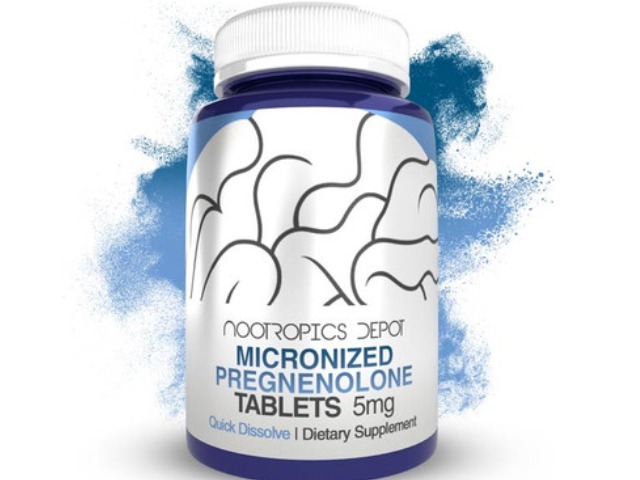
Disclosure: These are affiliate links. I earn a small commission if you purchase — at no extra cost to you. I only recommend products I personally use or have thoroughly researched.
Research & Studies
This section includes 3 peer-reviewed studies referenced in our analysis.