
- Enhanced bioavailability over standard berberine
- Supports healthy blood sugar regulation
- Promotes insulin sensitivity
- May support healthy lipid levels
- Activates AMPK metabolic pathways
- Better GI tolerance than berberine
I’ll be honest — I spent years recommending berberine to people and then watching half of them come back saying it destroyed their stomach. Cramping, bloating, running to the bathroom after every dose. The compound itself was incredible for blood sugar and metabolic health, but the delivery system was basically broken.
Then I dug into dihydroberberine, and something clicked. This wasn’t just another “enhanced absorption” marketing gimmick. This was the form your gut bacteria were already converting berberine into — the molecule your body actually wanted all along. We’d just been skipping a step.
The Short Version: Dihydroberberine (DHB) is the reduced, more absorbable form of berberine that delivers roughly 5–7x better bioavailability at a fraction of the dose — with dramatically fewer gut issues. It’s best for anyone seeking metabolic support (blood sugar, insulin sensitivity, lipids) who either couldn’t tolerate berberine or wants the same benefits from fewer capsules. Below, I break down the science, how it actually works, and exactly how to use it.
What Is Dihydroberberine?
Dihydroberberine is berberine with two extra hydrogen atoms. That’s it. That tiny molecular tweak — reducing the charged nitrogen to a neutral form — makes the compound dramatically more fat-soluble, which means it actually gets absorbed through your intestinal wall instead of sitting in your gut causing havoc.
Here’s the part most supplement companies don’t tell you: DHB isn’t some lab-created Frankenstein molecule. It occurs naturally in plants like Phellodendron bark (Huang Bai) and Coptis chinensis (goldthread). More importantly, your own gut bacteria already convert berberine into dihydroberberine every time you take a berberine supplement. DHB is the intermediary form — what your body creates to actually absorb berberine in the first place.
The landmark research came in 2008 when Turner and colleagues published a paper in Diabetes showing that DHB inhibited mitochondrial Complex I and activated AMPK — the same master metabolic switch that metformin targets. That paper put DHB on the map as a legitimate compound rather than just a metabolic stepping stone. Since then, NNB Nutrition developed GlucoVantage, the first commercially available DHB ingredient, and it’s become the industry standard.
So why does any of this matter for you? Because if you’ve been interested in berberine for blood sugar support, weight management, or metabolic health — but the GI side effects scared you off or drove you away — DHB solves that problem at the molecular level.
How Does Dihydroberberine Work?
Think of your cells like little power plants. Inside each one, mitochondria burn fuel (glucose and fat) to produce energy (ATP). DHB walks into that power plant and partially dims the lights — it inhibits Complex I in the mitochondrial respiratory chain, which temporarily reduces ATP production.
Your cells don’t like having low energy reserves. So they activate an emergency energy sensor called AMPK (AMP-activated protein kinase). AMPK is essentially your body’s metabolic master switch. When it flips on, a cascade of downstream effects follows.
Here’s where the science gets dense, but stay with me. AMPK activation triggers increased glucose uptake into muscle and fat cells (independent of insulin), enhanced fatty acid oxidation (your body starts burning more fat for fuel), inhibition of mTORC1 (which promotes autophagy — your cellular recycling program), and activation of SIRT1/FOXO3 longevity pathways. This is the same fundamental mechanism as metformin, the most widely prescribed diabetes drug on the planet. DHB just does it without a prescription.
A 2025 study added another layer: DHB directly targets glucokinase in pancreatic beta cells, promoting glucose-stimulated insulin secretion. Molecular docking confirmed DHB forms tight complexes with this enzyme, and when researchers knocked out glucokinase, DHB’s insulin-boosting effects disappeared completely. That’s a clean mechanistic finding.
On the inflammation side, DHB significantly reduces pro-inflammatory markers — IL-6, IL-1β, TNF-α, nitric oxide, and PGE₂ — while boosting anti-inflammatory IL-10, through dual modulation of the NF-κB and MAPK signaling pathways. In practical terms, it’s calming immune overactivation through two separate pathways simultaneously.
Pro Tip: DHB also influences your gut microbiome in fascinating ways. It suppresses excess serotonin production in gut enterochromaffin cells and promotes L-dopa production by gut Enterococcus species — potentially increasing dopamine availability in the brain. The gut-brain connection with this compound runs deeper than most people realize.
Benefits of Dihydroberberine
Let me be straight with you about the evidence here, because this is where most supplement sites lose all credibility. They talk about DHB like it has the same clinical backing as berberine. It doesn’t. Not yet. Here’s what we actually know.
Blood Sugar Regulation — Strong Evidence (via Berberine)
Berberine has multiple meta-analyses showing significant reductions in fasting glucose, HbA1c, and improved insulin sensitivity at 1,000–1,500 mg/day. DHB achieves comparable plasma berberine levels at roughly one-fifth the dose. The mechanistic bridge is solid — DHB converts back to berberine after absorption — but the clinical outcomes data comes from berberine studies, not DHB-specific trials.
Superior Bioavailability — Moderate Evidence
The key human study (Moon et al., 2021) found that 100 mg of DHB produced plasma berberine levels roughly 5–7 times higher than 500 mg of standard berberine. That’s a massive absorption advantage.
Reality Check: That study had only 5 participants, all male, all healthy, funded by a DHB supplement company, and measured over just 4 meals. It’s compelling directional evidence, not definitive proof. I believe the bioavailability advantage is real — the chemistry supports it, the animal data supports it, and thousands of user experiences support it — but intellectual honesty requires noting the limitations.
Lipid Management — Strong Evidence (via Berberine)
Berberine meta-analyses show roughly 23% reductions in triglycerides and 12% reductions in total cholesterol in obese subjects. Again, DHB should produce comparable effects at lower doses given the pharmacokinetic data, but this hasn’t been confirmed in a head-to-head outcomes trial.
Reduced GI Side Effects — Well-Supported
This is the benefit with the most consistent real-world support. Lower effective dose means less unabsorbed compound irritating the gut lining. Mechanistically bulletproof, and the overwhelming majority of users who switch from berberine to DHB report dramatically better GI tolerance.
Anti-Inflammatory and Immune Effects — Preliminary
Multiple animal studies show potent anti-inflammatory activity. A 2024 study found DHB promotes regulatory T cell differentiation via the Rheb/mTOR pathway, restoring immune balance. Promising, but these are preclinical findings.
Neuroprotection — Very Early
Berberine promotes L-dopa production via gut microbiota and showed benefits in a Parkinson’s mouse model. Interesting, but we’re a long way from human evidence for cognitive or neuroprotective effects. I wouldn’t take DHB specifically for brain health — but if you’re taking it for metabolic support, the potential neurological upside is a nice bonus.
How to Take Dihydroberberine Without Wasting Your Money
Dosage
- Starting dose: 100 mg once daily with your largest meal
- Standard dose: 100–200 mg per dose, 2–3 times daily with meals
- Daily range: 200–600 mg/day total
For context, 100–200 mg of DHB approximates the systemic exposure of 500 mg of berberine. If you were taking 1,500 mg of berberine daily, you’d be looking at roughly 300–600 mg of DHB split across meals.
Timing
Take DHB with meals. This serves two purposes — it enhances absorption (fat-soluble compound + dietary fat = better uptake) and it times the glucose-lowering effect to match your postprandial blood sugar spike. Splitting doses across breakfast, lunch, and dinner maintains more consistent plasma levels throughout the day.
Forms
GlucoVantage is the most validated form — patented, third-party tested, derived from Berberis aristata. Look for the GlucoVantage logo on the label. Endurance Products offers a 150 mg sustained-release formulation that some users prefer for extended coverage. Generic DHB exists but quality varies significantly.
Insider Tip: If a product claims 500+ mg of “dihydroberberine” per capsule, scrutinize the label carefully. DHB is effective at 100–200 mg. Extremely high doses either mean it’s mislabeled, contains regular berberine mixed with DHB, or is just throwing in filler. More isn’t better here.
Cycling
Not strictly necessary for short-term use. Some practitioners suggest 8 weeks on, 2 weeks off for long-term supplementation, though this is extrapolated from general berberine guidance rather than DHB-specific research. I tend to cycle most compounds that affect metabolic pathways, but that’s personal preference, not hard science.
The Side Effects Nobody Warns You About
The Good News
DHB has been formally assessed for toxicology. It’s non-mutagenic and non-clastogenic in standard safety batteries. The acute oral LD₅₀ in rats exceeds 2,000 mg/kg body weight — an enormous safety margin. The NOAEL in a 90-day study was 100 mg/kg/day, which for a 70 kg human would be 7,000 mg/day. Nobody’s taking anywhere near that.
Common Side Effects
- Mild GI discomfort (less frequent than berberine, but still possible)
- Headache during initial use in some users
- Potential hypoglycemia if taken on an empty stomach or combined with glucose-lowering medications
Who Should NOT Take DHB
Important: Do NOT take dihydroberberine if you are pregnant or nursing. Berberine has been historically associated with uterine stimulation and potential harm to newborns. Do not give to children. Discontinue at least 2 weeks before scheduled surgery. If you have liver or kidney disease, consult your physician first.
Drug Interactions
This is where DHB inherits berberine’s entire interaction profile — because it converts back to berberine in your bloodstream. The major ones:
- Metformin and other diabetes drugs: additive hypoglycemia risk. If you’re on these, work with your doctor.
- Statins: Berberine inhibits CYP3A4, potentially raising statin blood levels.
- Cyclosporine and digoxin: Berberine inhibits P-glycoprotein, increasing levels of P-gp substrates.
- Blood thinners (warfarin): May enhance anticoagulant effects.
- Any CYP3A4 or CYP2D6 substrate: Broad cytochrome interaction potential.
If you’re on prescription medications, talk to your prescriber before adding DHB. This isn’t generic supplement-site boilerplate — the enzyme inhibition is well-documented.
Stacking Dihydroberberine
Smart Combinations
DHB + Ceylon Cinnamon (200 mg): Complementary blood sugar support through completely different mechanisms. Cinnamon works via insulin-mimetic activity while DHB works via AMPK. This is one of the most common and well-tolerated metabolic stacks.
DHB + Alpha-Lipoic Acid (300–600 mg): Both activate AMPK through different upstream mechanisms. ALA adds its own insulin-sensitizing and antioxidant effects. A logical pairing with good mechanistic support.
DHB + Chromium Picolinate (200–400 mcg): Chromium supports glucose disposal through a different pathway. Low-risk, complementary addition.
DHB + Curcumin: Emerging research suggests synergistic anti-inflammatory effects, particularly for gut health. Worth exploring if inflammation is a primary concern.
What to Avoid
Don’t stack DHB with full-dose berberine unless you’re intentionally following a combined protocol — you risk excessive total berberine exposure. Avoid combining with other strong hypoglycemic agents without medical supervision. Skip the grapefruit juice (CYP3A4 inhibition compounds the interaction). And be cautious with alcohol, which competes for liver metabolism and worsens hypoglycemia risk.
My Take
Dihydroberberine is one of those rare cases where the “enhanced bioavailability” claim is actually backed by real science, not just marketing. The chemistry makes sense. The pharmacokinetics support it. And the user experience data — thousands of people reporting better tolerance and comparable results at lower doses — lines up perfectly.
That said, I want to be clear about what DHB is and isn’t. It’s not a cognitive enhancer. It’s not a nootropic in the traditional sense. It’s a metabolic optimization tool. If your blood sugar regulation is dialed in, your insulin sensitivity is great, and your lipids look good — you probably won’t feel much from DHB. This compound shines brightest for people who have metabolic issues to correct.
Who should try it? Anyone who wanted berberine’s benefits but couldn’t tolerate the GI side effects. Anyone managing blood sugar and looking for natural support alongside (not replacing) their medical treatment. Anyone interested in AMPK activation for its downstream metabolic and longevity-related effects.
Who should skip it? If you’re pregnant or nursing — hard no. If you’re on multiple medications, especially diabetes drugs or statins, get medical guidance first. And if you’re looking for a nootropic that makes you feel something in the first hour, this isn’t it.
My honest recommendation: start with 100 mg of a GlucoVantage-based product with your biggest meal. Give it two weeks. If you have a continuous glucose monitor, you’ll likely see the difference in your postprandial data within days. If you don’t have a CGM, give it 4–8 weeks and recheck your fasting glucose and lipid panel. The data will tell the story better than any subjective feeling.
DHB doesn’t get the flashy headlines. It’s not going to make you feel limitless. But for metabolic health? It’s one of the most quietly effective tools in my supplement toolkit — and the one I recommend most often to people who gave up on berberine too soon.
Recommended Dihydroberberine Products
I know how frustrating it is to sort through dozens of brands making the same claims. These are the ones I've personally vetted — because quality is the difference between results and wasted money.
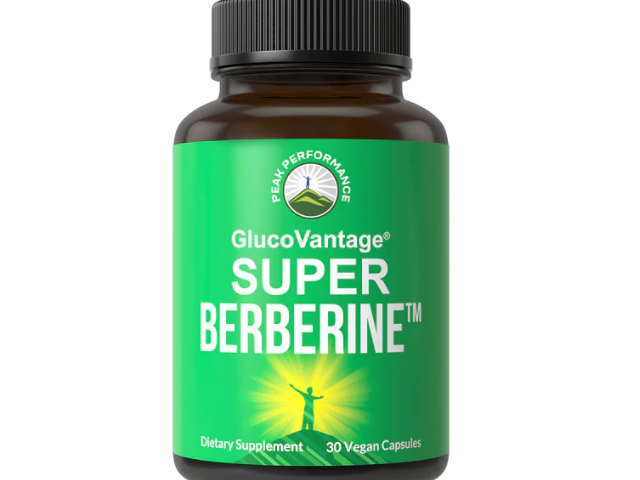
Disclosure: These are affiliate links. I earn a small commission if you purchase — at no extra cost to you. I only recommend products I personally use or have thoroughly researched.
Research & Studies
This section includes 1 peer-reviewed study referenced in our analysis.