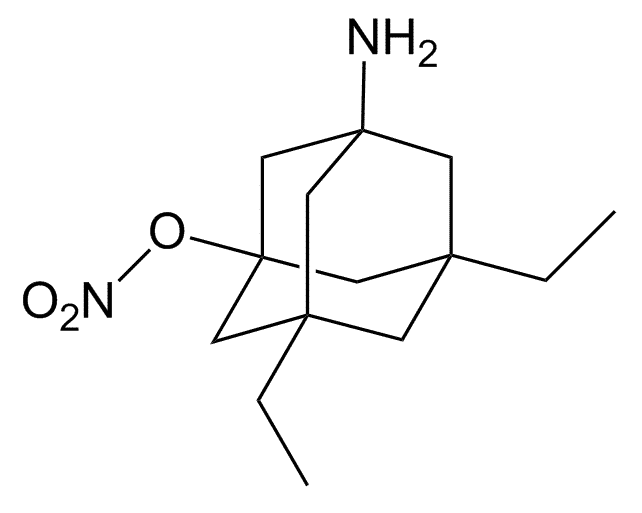

- Neuroprotection
- Cognitive preservation in neurodegeneration
- NMDA receptor modulation
- Potential OCD adjunct therapy
- Potential ADHD adjunct therapy
- Opioid and stimulant tolerance modulation
I’ll be honest — memantine wasn’t even on my radar as a nootropic for years. I thought of it as “that Alzheimer’s drug my grandmother took.” It wasn’t until I started digging into the science of glutamate excitotoxicity and tolerance mechanisms that I realized this compound might be one of the most underappreciated tools in the cognitive optimization space.
Not because it makes you smarter overnight. It doesn’t. But because of what it prevents — and that distinction matters more than most people realize.
The Short Version: Memantine is a prescription NMDA receptor antagonist that blocks excessive glutamate signaling while preserving normal brain communication. It’s FDA-approved for Alzheimer’s but used off-label for neuroprotection, tolerance prevention (particularly for stimulants and opioids), and as an adjunct for OCD and ADHD. It’s not a “feel-it-now” nootropic — it’s a long-game brain protector.
What Is Memantine?
Memantine (brand names Namenda, Ebixa, Axura) is a synthetic compound belonging to the adamantane chemical family — the same structural class as the antiviral amantadine. It was first synthesized by Eli Lilly in 1968, but it took decades for researchers to figure out what it actually did well. Germany approved it for dementia in 1989, and the FDA followed in 2003 for moderate-to-severe Alzheimer’s disease.
But here’s what makes memantine interesting beyond Alzheimer’s: it’s one of the few compounds that can selectively dampen pathological glutamate signaling — the kind that damages neurons over time — without blunting the normal glutamate activity your brain needs for learning, memory, and everyday function.
That selectivity is rare. Most NMDA antagonists (think ketamine or PCP) are blunt instruments that shut down the receptor entirely. Memantine is more like a bouncer at a nightclub — it steps in when things get out of hand but doesn’t lock the doors during normal business hours. This is why it has a remarkably clean safety profile compared to other drugs in its class.
In the nootropics community, memantine has carved out a niche as a neuroprotective agent and a tolerance modulator — particularly for people who use stimulants, racetams, or other compounds that can upregulate glutamate activity over time.
How Does Memantine Work?
Think of glutamate as your brain’s “go” signal. It’s the most abundant excitatory neurotransmitter, and you need it for basically everything — learning, memory formation, staying alert. But too much glutamate, sustained for too long, is like flooring the gas pedal until the engine burns out. Neurons get overstimulated, calcium floods into cells, and they start dying. This is called excitotoxicity, and it’s implicated in everything from Alzheimer’s to traumatic brain injury to the cognitive fatigue you feel after chronic stress.
Memantine works as an uncompetitive, voltage-dependent NMDA receptor antagonist. Let me break that down in plain English:
- NMDA receptors are one of the main “docking stations” for glutamate on your neurons. When glutamate binds, calcium flows in and the neuron fires.
- Uncompetitive means memantine doesn’t compete with glutamate for the same binding spot. Instead, it sits inside the ion channel — the tunnel that calcium flows through.
- Voltage-dependent is the critical part. During normal signaling, when a neuron fires a strong, deliberate signal, memantine gets pushed out of the channel. The signal goes through normally. But during the low-level, chronic “noise” of excitotoxicity — where the channel is slightly open and leaking calcium all the time — memantine stays put and blocks that leak.
This is why memantine doesn’t make you feel sedated or cognitively blunted the way ketamine can. It filters out the pathological background noise while letting legitimate signals pass through.
Beyond NMDA antagonism, memantine has several other mechanisms worth knowing:
- D2High receptor agonism — memantine has affinity for the high-affinity state of dopamine D2 receptors, which may explain reports of improved motivation and focus at low doses
- 5-HT3 receptor antagonism — it blocks a specific serotonin receptor subtype, which contributes to its anti-nausea effects and may play a role in its mood-related benefits
- Sigma-1 receptor activity — this is an emerging target in neuroprotection research, and memantine’s interaction here may amplify its protective effects
- Nicotinic acetylcholine receptor antagonism — a less desirable effect that can partially block acetylcholine signaling, which is why pairing it with a choline source is common practice
In practical terms: memantine turns down the volume on brain “static” that damages neurons over time, while keeping the important signals intact.
The Benefits of Memantine (And How Strong the Evidence Actually Is)
Let me be upfront — the evidence base for memantine varies wildly depending on what you’re looking at. For Alzheimer’s, it’s rock-solid. For off-label nootropic use, it ranges from “promising clinical data” to “interesting but we need more research.”
| Benefit | Evidence Level | Key Research |
|---|---|---|
| Cognitive preservation in Alzheimer’s | Strong (Phase III RCTs) | Multiple FDA registration trials |
| Neuroprotection from excitotoxicity | Strong (preclinical + clinical) | Lipton, 2006 NeuroRx |
| Stimulant tolerance modulation | Moderate (clinical trials) | Bisaga et al., 2001 Neuropsychopharmacology |
| OCD adjunct therapy | Moderate (RCTs) | Haghighi et al., 2013 Clinical Neuropharmacology |
| ADHD symptom improvement | Preliminary (open-label) | Surman et al., 2013 Journal of Clinical Psychopharmacology |
| Opioid tolerance prevention | Moderate (clinical) | Bisaga et al., 2001 |
| Migraine prevention | Preliminary | Bigal et al., 2008 Headache |
Neuroprotection
This is memantine’s strongest calling card. By blocking chronic, low-level excitotoxicity, it prevents the slow neuronal death that underlies many neurodegenerative conditions. A landmark review by Stuart Lipton in NeuroRx (2006) described memantine’s mechanism as “the quintessential example” of how a clinically tolerated NMDA antagonist should work — blocking pathology without disrupting physiology.
For healthy individuals, this translates to a potential insurance policy against age-related cognitive decline and the cumulative damage from chronic stress, poor sleep, and environmental toxins.
Tolerance Modulation
This is where memantine gets really interesting for the nootropics community. NMDA receptors play a central role in how your brain develops tolerance to stimulants, opioids, and other compounds. When you take a stimulant repeatedly, NMDA-mediated neuroplasticity actually rewires your brain to become less responsive to it.
Memantine can slow or partially prevent this process. Multiple studies have shown that NMDA antagonism reduces the development of tolerance to amphetamines and opioids. For people using modafinil, caffeine, or prescription stimulants, low-dose memantine may help maintain efficacy over time.
Reality Check: Memantine is not a license to escalate stimulant doses indefinitely. Tolerance is a complex, multi-system process, and NMDA antagonism addresses only one piece of it. If you’re relying on tolerance modulation as a crutch, it’s time to reassess your protocol — not add another compound to patch it.
OCD and Anxiety
A 2013 randomized, double-blind trial published in Clinical Neuropharmacology found that adding memantine (10mg twice daily) to fluvoxamine significantly improved OCD symptoms compared to fluvoxamine alone. The glutamatergic system is increasingly recognized as a key player in OCD, and memantine’s ability to normalize glutamate signaling may explain this benefit.
ADHD Support
An open-label study by Surman et al. (2013) in the Journal of Clinical Psychopharmacology explored memantine as a monotherapy for adult ADHD. While the results were modest, some participants showed meaningful improvements in attention and executive function. The D2High receptor agonism likely contributes here — giving a subtle dopaminergic boost without the crash-and-tolerance cycle of traditional stimulants.
How to Take Memantine
Memantine is a prescription medication in most countries. I want to be clear about that. What follows is a summary of clinical dosing protocols and commonly reported practices — not a recommendation to self-medicate.
Standard Clinical Titration
The FDA-approved protocol for Alzheimer’s starts low and builds up:
| Week | Daily Dose | Schedule | Notes |
|---|---|---|---|
| Week 1 | 5mg | Once daily (morning) | Starting dose |
| Week 2 | 10mg | 5mg twice daily | Split AM/PM |
| Week 3 | 15mg | 5mg AM + 10mg PM | Continue titrating |
| Week 4+ | 20mg | 10mg twice daily | Full therapeutic dose |
Nootropic-Range Dosing
Most people using memantine for neuroprotection or tolerance modulation stay well below the full Alzheimer’s dose:
- Neuroprotection: 5–10mg once daily
- Tolerance modulation: 5–10mg once daily, often cycled (5 days on, 2 off, or 3 weeks on, 1 week off)
- Cognitive support: 5–10mg once daily
Pro Tip: Start at 5mg and stay there for at least two weeks before even considering an increase. Memantine has a long half-life (60–80 hours), which means it takes time to reach steady state in your body. Jumping to higher doses too quickly is the number one reason people report feeling “foggy” or “flat” — they’ve overshot their sweet spot before the drug has even fully loaded.
Timing and Absorption
- Take it in the morning — some users report mild insomnia if taken late in the day
- Food doesn’t significantly affect absorption, but taking it with a meal may reduce the mild nausea some people experience initially
- Avoid alkaline substances (antacids, baking soda) close to dosing — they can increase memantine blood levels by reducing renal clearance
Forms Available
- Immediate-release tablets (Namenda): 5mg, 10mg — most common
- Extended-release capsules (Namenda XR): 7mg, 14mg, 21mg, 28mg — once-daily dosing
- Oral solution: 2mg/mL — useful for precise micro-dosing
Side Effects and Safety
Memantine has one of the best safety profiles of any NMDA-active compound. But “well-tolerated” doesn’t mean “no side effects.”
Common Side Effects (>5% in clinical trials)
- Dizziness — most common, usually transient and dose-related
- Headache — typically resolves within the first 1–2 weeks
- Constipation — stay hydrated
- Confusion — more common at higher doses and in elderly patients
- Drowsiness — paradoxical for some, stimulating for others
Less Common but Reported
- Emotional blunting at higher doses (>10mg for some individuals)
- Vivid dreams or sleep disturbances
- Increased blood pressure (rare, monitor if you have hypertension)
- Mild dissociative feelings at higher doses — a reminder of its NMDA antagonist mechanism
Important: Memantine should NOT be combined with other NMDA antagonists (ketamine, DXM, nitrous oxide) without medical supervision. Stacking NMDA blockers can cause serious dissociative effects and potentially dangerous glutamate rebound when discontinued. This is not a theoretical concern — it’s a well-documented interaction.
Who Should Avoid Memantine
- People with severe renal impairment (memantine is primarily cleared by the kidneys)
- Those taking amantadine (same chemical family, risk of additive effects)
- Anyone with a history of seizures (NMDA modulation can lower seizure threshold in rare cases)
- Pregnant or nursing individuals (insufficient safety data)
Drug Interactions to Watch
- NMDA antagonists (ketamine, DXM, amantadine) — additive blockade
- Dopaminergic drugs (L-DOPA, bromocriptine) — potential enhancement
- Drugs that alkalinize urine (carbonic anhydrase inhibitors, sodium bicarbonate) — reduced clearance, higher blood levels
- Hydrochlorothiazide — reduced elimination of both drugs
Stacking Memantine
Memantine’s unique mechanism makes it a compelling addition to certain stacks, but you need to be thoughtful about combinations.
Synergistic Combinations
- Memantine + Alpha-GPC (300–600mg) — Memantine’s mild nicotinic antagonism can reduce acetylcholine signaling. Pairing with a high-quality choline source compensates for this and supports overall cognitive function. This is arguably the most important pairing.
- Memantine + Bacopa Monnieri (300mg bacosides) — Bacopa works through different memory pathways (dendritic branching, serotonergic modulation). Together they cover complementary neuroprotective mechanisms.
- Memantine + Magnesium L-Threonate (1,000–2,000mg) — Magnesium is a natural NMDA modulator. This pairing supports healthy NMDA tone from two angles, though you may want to start memantine at the lowest dose to avoid over-dampening glutamate signaling.
- Memantine + Lion’s Mane (500–1,000mg) — Memantine protects existing neurons while Lion’s Mane promotes NGF-driven neurogenesis. A solid “defend and build” combination for long-term brain health.
What to Avoid
- Memantine + Ketamine/DXM — Stacking NMDA antagonists is dangerous. Don’t do it.
- Memantine + High-dose Phenibut — Both affect glutamate systems. The combination may cause excessive sedation or unpredictable effects.
- Memantine + Excessive alcohol — Alcohol already impairs NMDA function. Adding memantine on top amplifies cognitive impairment and increases fall risk.
Insider Tip: If you’re using memantine primarily for stimulant tolerance modulation, keep the dose at 5mg and cycle it. Many experienced users report that 5mg taken on “off days” from their stimulant — rather than daily — provides tolerance benefits without the emotional flatness that some people report with continuous use.
My Take
Memantine occupies a weird space in the nootropics world. It’s not flashy. You won’t feel a surge of focus 30 minutes after your first dose. You probably won’t notice anything dramatic at all for the first few weeks. And that’s exactly the point.
In my experience, memantine’s value shows up in what doesn’t happen over time rather than what does. Your stimulant tolerance doesn’t climb as fast. The afternoon brain fog that used to creep in stays away a little longer. You feel a subtle but real sense of cognitive resilience — like your brain has a better buffer against the daily insults of stress, poor sleep, and information overload.
That said, this is a pharmaceutical compound with real mechanisms and real interactions. It’s not a supplement you grab off the shelf. If you’re considering it, here’s my honest breakdown:
Best for:
- People using stimulants long-term who want to slow tolerance development
- Anyone with a family history of neurodegenerative disease looking for proactive neuroprotection
- Individuals exploring adjunct therapy for OCD or treatment-resistant depression (with medical guidance)
Probably not for:
- Healthy young adults looking for a quick cognitive boost — start with Lion’s Mane, Bacopa, or Creatine instead
- Anyone already taking other NMDA-active compounds
- People who aren’t willing to commit to 4–6 weeks of consistent use before assessing results
The bottom line: memantine is a long-game neuroprotective tool, not a short-term performance enhancer. If you’ve already dialed in your foundations — sleep, nutrition, stress management, exercise — and you’re looking for something to protect your cognitive investment over the years, it’s one of the more evidence-backed options available. Just work with a prescriber who understands off-label use, start low, and give it time.
Research & Studies
This section includes 35 peer-reviewed studies referenced in our analysis.
Low-affinity NMDA receptor channel blockers inhibit acquisition of intravenous morphine self-administration in naive mice.
Effects of NMDA receptor antagonists on cocaine-conditioned motor activity in rats.
Clinically available NMDA receptor antagonists memantine and dextromethorphan reverse existing tolerance to the antinociceptive effects of morphine in mice.
The NMDA antagonist memantine attenuates the expression of opioid physical dependence in humans.
[Treatment of mild cognitive impairment: value of citicoline].
The neuropharmacological basis for the use of memantine in the treatment of Alzheimer's disease.
Memantine blocks alpha7* nicotinic acetylcholine receptors more potently than n-methyl-D-aspartate receptors in rat hippocampal neurons.
The molecular basis of memantine action in Alzheimer's disease and other neurologic disorders: low-affinity, uncompetitive antagonism.
Paradigm shift in neuroprotection by NMDA receptor blockade: memantine and beyond.
Effect of memantine and CNQX in the acquisition, expression and reinstatement of cocaine-induced conditioned place preference.
Showing 10 of 35 studies. View all →