
- Reduces neuroinflammation and brain fog
- Supports working memory and attention
- Enhances acetylcholine signaling
- Promotes neuroprotection and synaptic plasticity
- Supports gut-brain axis health
I used to think ginger was just the stuff that came in those little pink slices next to my sushi. Maybe a cup of ginger tea when I was sick. That was the extent of my relationship with one of the most well-researched medicinal plants on the planet.
Then I started digging into neuroinflammation — the kind of low-grade, chronic brain inflammation that makes you feel like you’re thinking through wet cement. And ginger kept showing up in the literature. Not as some trendy new biohack, but as a compound with over 5,000 years of therapeutic use and a growing stack of modern clinical evidence behind it.
Turns out, my sushi condiment was sitting on a goldmine of neuroprotective potential.
The Short Version: Zingiber officinale (ginger) is a powerful anti-inflammatory rhizome with clinical evidence supporting improvements in working memory, attention, and cognitive processing speed. At 400–800mg of standardized extract daily, it works through multiple brain-supporting pathways — reducing neuroinflammation, boosting acetylcholine, and even improving gut-brain communication. It’s best understood as a foundational brain health ingredient rather than an acute focus booster.
What Is Zingiber officinale?
Zingiber officinale is a flowering plant in the Zingiberaceae family whose underground stem — the rhizome — has been used as medicine and spice for over five millennia. The “officinale” in its name literally comes from the Latin word for pharmacy. That should tell you something about how seriously traditional healers took this plant.
Ginger originated in Maritime Southeast Asia and was likely first domesticated by Austronesian peoples, who spread it across the Indo-Pacific roughly 5,000 years ago. Chinese traditional medicine used it as a digestive aid and anti-nausea remedy. Ayurvedic practitioners prescribed it for inflammation, digestion, and vitality. In Iranian Traditional Medicine, ginger was specifically used as a tonic for memory — and modern research is starting to explain why they were onto something.
The rhizome’s primary bioactive compounds include 6-gingerol (predominant in fresh ginger), 6-shogaol (formed when ginger is dried — and potentially more potent), 8-gingerol, 10-gingerol, and zingerone. These aren’t just fancy names on a label. They’re the molecular machinery behind ginger’s anti-inflammatory, antioxidant, and neuroprotective effects.
Here’s the thing most supplement sites won’t tell you: ginger isn’t going to make you feel like Bradley Cooper in Limitless. But if chronic inflammation, brain fog, or sluggish cognition is dragging you down, the science suggests ginger addresses the root causes rather than just masking symptoms. And that’s actually more valuable.
How Does Zingiber officinale Work?
Think of neuroinflammation like a slow-burning fire in your brain. You can’t see the flames, but you feel the smoke — brain fog, poor focus, that “thinking through mud” feeling. Ginger works like a multi-pronged fire suppression system that hits the problem from several angles at once.
The NF-κB and Nrf2 Pathways
Ginger potently inhibits NF-κB, a master switch that controls inflammatory gene expression in the brain. At the same time, it activates Nrf2, which turns on your body’s own antioxidant defense genes. This dual action — turning down inflammation while turning up protection — is rare and valuable. Most compounds do one or the other. Ginger does both.
In practical terms: less neuroinflammation means clearer thinking, better mood, and more resilient brain function over time.
Cholinergic Enhancement
Here’s where things get interesting for the nootropics crowd. 6-Gingerol and whole ginger extract inhibit acetylcholinesterase (AChE) — the enzyme that breaks down acetylcholine in your synaptic clefts. More acetylcholine available means better signaling for learning and memory. This is the same mechanism used by pharmaceutical Alzheimer’s drugs like donepezil, just gentler.
Monoamine Neurotransmitter Support
Ginger enhances levels of norepinephrine, dopamine, and serotonin in the cerebral cortex and hippocampus. That’s your alertness, motivation, and mood — all getting a nudge in the right direction.
Synaptic Plasticity and NGF
Ginger promotes nerve growth factor (NGF) production and activates the ERK/CREB signaling cascade in the hippocampus — the brain’s memory center. This pathway is essential for long-term potentiation, which is the cellular process underlying how you form and retain memories.
Translation: ginger helps your brain build and maintain the wiring it needs to learn new things.
The Gut-Brain Connection
This is the pathway that gets me most excited. Emerging 2024–2025 research shows ginger improves gut microbiota composition, increases short-chain fatty acid (SCFA) production like butyrate and propionate, and strengthens gut barrier integrity. These SCFAs cross the blood-brain barrier and directly reduce neuroinflammation, modulate neurotransmitter release, and influence synaptic plasticity.
If you’ve been ignoring your gut health while stacking nootropics, you’re building on a broken foundation. Ginger bridges that gap.
Reality Check: Ginger works through slow, cumulative mechanisms — not instant stimulation. If you’re expecting to pop a capsule and feel a rush, this isn’t that compound. The benefits build over 4–8 weeks of consistent use. Think of it like going to the gym for your brain’s inflammatory response.
Benefits of Zingiber officinale
Working Memory and Attention (Clinical Evidence)
A randomized, double-blind, placebo-controlled trial in 60 healthy middle-aged women found that 400–800mg/day of standardized ginger extract for 2 months significantly improved working memory and attention. The ginger groups showed faster cognitive processing (decreased P300 latencies) and stronger neural responses (increased N100 and P300 amplitudes), with dose-dependent effects favoring the 800mg dose.
A separate RCT found that 100mg/day of high-potency ginger extract for 12 weeks significantly improved Complex Attention scores, particularly preventing attention decline during sustained visual work.
Two well-designed human trials isn’t a mountain of evidence — but both showed clear positive results, and the mechanistic data behind them is extensive.
Neuroprotection (Strong Preclinical Evidence)
The animal and in vitro evidence is where ginger really flexes:
- Anti-amyloid effects — reduces amyloid-β plaque formation in Alzheimer’s disease models
- Cerebral ischemia protection — mitigated brain damage and memory impairment in stroke models
- Traumatic brain injury — a 2025 study showed protective effects against neuroinflammatory and cognitive impairments from mild TBI
- NGF activation — improved cognitive function through nerve growth factor pathways in hippocampal studies
- Gut-brain cognitive support — a 2025 Molecular Neurobiology study demonstrated cognitive improvement through microbiota-derived SCFAs
Anti-Inflammatory and Antioxidant Effects (Strong Evidence)
Multiple systematic reviews confirm ginger’s broad anti-inflammatory properties. 6-Gingerol, 6-shogaol, and 10-gingerol act as direct free radical scavengers while simultaneously upregulating your body’s endogenous antioxidant enzymes. This isn’t just about brain health — it supports systemic recovery and resilience.
| Benefit | Evidence Level | Key Finding |
|---|---|---|
| Working memory | Moderate (2 RCTs) | Significant improvement at 400–800mg/day |
| Attention | Moderate (1 RCT) | Prevented attention decline over 12 weeks |
| Neuroprotection | Strong (preclinical) | Anti-amyloid, anti-ischemic, NGF activation |
| Anti-inflammation | Strong (multiple reviews) | NF-κB inhibition, Nrf2 activation |
| Gut-brain support | Emerging (preclinical) | SCFA production, microbiome improvement |
Insider Tip: The cognitive benefits in the clinical trials emerged at the 2-month mark and continued improving through 12 weeks. Don’t judge ginger after two weeks — give it a full 8-week trial before deciding if it’s working for you.
How to Take Zingiber officinale
Dosage by Form
| Form | Dosage | Best For |
|---|---|---|
| Standardized extract (5% gingerols) | 400–800mg/day | Clinically studied cognitive support |
| High-potency extract (10%+ gingerols) | 100–500mg/day | Concentrated dosing, fewer capsules |
| Dried ginger powder | 1,000–2,000mg/day | Budget-friendly option; richer in shogaols |
| Fresh ginger root | 2–4g/day | Culinary use; highest gingerol content |
Start at the lower end — 400mg standardized extract — and assess for 2–4 weeks before increasing. The clinical trials showed benefits across the dosage range, so more isn’t necessarily better.
Timing and Absorption
- Take with food. This enhances absorption and dramatically reduces the chance of GI discomfort
- Most trials used once-daily dosing, though splitting into two doses is fine
- Some users prefer morning dosing due to ginger’s mild warming and energizing quality
- Benefits emerge over 4–8 weeks — this is not an acute-effect compound
Bioavailability Boosters
Here’s something most people miss: free gingerols and shogaols are rapidly metabolized, with plasma half-lives of just 1–3 hours. In pharmacokinetic studies, no free gingerols were found in plasma — only glucuronide and sulfate conjugates.
To get more out of your ginger:
- Take with piperine (black pepper extract) — it inhibits the enzymes that break down gingerols
- Take with fat — gingerols are lipophilic and absorb better with dietary fat
- Dried ginger contains more 6-shogaol, which has greater chemical stability and bioavailability than 6-gingerol
Pro Tip: A standardized extract paired with piperine and taken with a fat-containing meal is the simplest way to maximize what you’re actually absorbing. Don’t overpay for ginger supplements and then take them on an empty stomach with water.
Side Effects and Safety
Ginger has an excellent safety profile — people have consumed it daily as food for thousands of years. But supplement-level doses deserve respect.
Common Side Effects
- GI discomfort — heartburn, gas, bloating (mostly on empty stomach)
- Mild burning sensation in the mouth or throat
- Altered taste (dysgeusia)
- Paradoxical nausea at higher doses — ironic for an anti-nausea compound
These are generally mild, dose-dependent, and preventable by taking ginger with food. Clinical trials at 400–800mg reported no adverse events.
Who Should Be Cautious
- People on blood thinners (warfarin, aspirin, clopidogrel, heparin) — ginger has antiplatelet effects that could increase bleeding risk
- Those with gallbladder disease — ginger increases bile production, potentially worsening gallstones
- Pre-surgery — discontinue at least 2 weeks before scheduled procedures
- Diabetes medication users — ginger may potentiate hypoglycemic effects
Important: Ginger has 82 documented drug interactions. If you’re on prescription medications — particularly blood thinners, blood pressure meds, or diabetes drugs — talk to your doctor before supplementing. The interactions are generally mild at food-level doses but become clinically relevant at extract-level dosing.
Drug Interactions to Watch
- Anticoagulants/antiplatelets — additive bleeding risk
- Antihypertensives — may cause excessive blood pressure drops
- Diabetes medications — risk of hypoglycemia
- Acid reflux medications — ginger affects gastric acid levels
- CYP enzyme substrates — ginger may alter drug metabolism rates
Pregnancy
Generally considered safe for morning sickness at doses up to 1g/day of dried ginger, supported by multiple studies. Higher supplement doses lack safety data in pregnancy.
Stacking Zingiber officinale
Ginger is a natural team player. Its broad anti-inflammatory and neuroprotective mechanisms complement more targeted cognitive enhancers.
The Classic Anti-Inflammatory Brain Stack
Ginger + Curcumin + Piperine — This is probably the most well-established herbal synergy in existence. Curcumin and ginger both reduce neuroinflammation through complementary pathways, and piperine dramatically boosts the bioavailability of both. Ayurvedic medicine has used this combination for centuries. Modern research confirms synergistic anti-inflammatory effects.
Neuroprotection and Plasticity Stack
Ginger + Lion’s Mane — Both promote NGF production through different mechanisms. Ginger via ERK/CREB activation, Lion’s Mane via hericenones and erinacines. Together, they cover multiple neuroplasticity pathways.
Comprehensive Cognitive Support
Ginger + Bacopa Monnieri — Bacopa provides direct memory enhancement through BDNF and serotonin modulation. Combined with ginger’s anti-inflammatory and cholinergic effects, this stack addresses cognitive performance from both the “clear the obstacles” and “enhance the signal” sides.
Omega-3 Synergy
Ginger + DHA/EPA — Omega-3s produce resolvins that help resolve inflammation; ginger inhibits NF-κB to prevent it. Different mechanisms, same goal. Both support long-term brain structure and function.
What to Avoid Combining
- High-dose fish oil + ginger + Ginkgo biloba — too many antiplatelet agents stacked together increases bleeding risk
- Ginger + berberine + diabetes meds — additive hypoglycemic effects
- Any blood-thinning supplement stack without medical supervision
My Take
Ginger is one of those substances I almost overlooked because it seemed too common, too kitchen-shelf to be a serious nootropic. That was a mistake.
After incorporating a standardized ginger extract (500mg, 10% gingerols) into my daily routine alongside curcumin and piperine, the reduction in brain fog was noticeable within about six weeks. Not dramatic. Not “limitless pill” territory. But the kind of steady, reliable clarity that makes you realize just how much background inflammation was dragging you down.
Here’s who I think ginger is best for:
- Anyone dealing with chronic brain fog, especially if it’s tied to gut issues or systemic inflammation
- People building a foundational anti-inflammatory stack before layering on more targeted nootropics
- Those who want solid neuroprotective benefits with a centuries-long safety track record
- Budget-conscious users — quality ginger extracts are significantly cheaper than most nootropic compounds
Who should probably look elsewhere: if you need acute cognitive enhancement for a presentation tomorrow, ginger isn’t your answer. Reach for something with immediate effects and come back to ginger for the long game.
The evidence base for cognitive benefits is still building — we need larger human trials specifically testing cognition. But the mechanistic data is deep, the preclinical evidence is extensive, and the two clinical trials we have both showed clear improvements. Combined with its remarkable safety profile and 5,000 years of human use, I consider ginger a low-risk, high-upside addition to any brain health protocol.
Start with 400–800mg of standardized extract daily, take it with food and piperine, give it a full 8 weeks, and pay attention to whether the fog lifts. For most people dealing with inflammation-driven cognitive issues, I think you’ll be pleasantly surprised.
Recommended Ginger Products
I know how frustrating it is to sort through dozens of brands making the same claims. These are the ones I've personally vetted — because quality is the difference between results and wasted money.
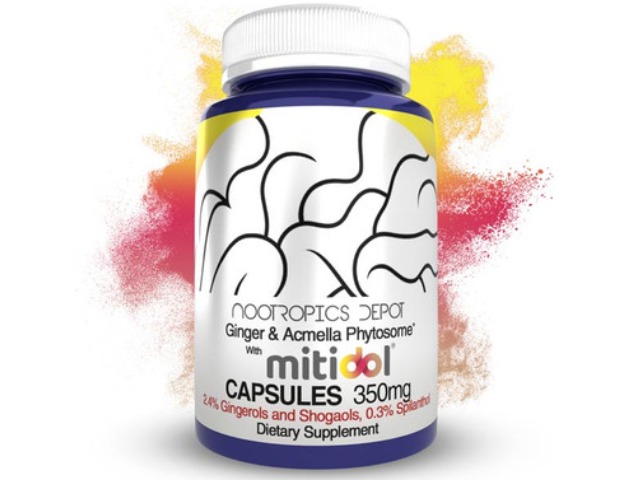
Ginger Acmella Phytosome Capsules by Nootropics Depot
Shop Now →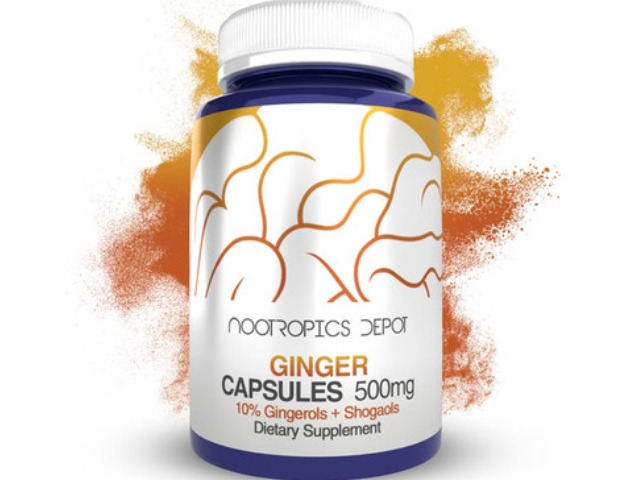
Ginger Extract Capsules | 500mg | Minimum 10% by Nootropics Depot
Shop Now →Disclosure: These are affiliate links. I earn a small commission if you purchase — at no extra cost to you. I only recommend products I personally use or have thoroughly researched.