
- Wakefulness promotion
- Mental clarity and focus
- Shorter duration than modafinil
- Potentially lower addiction liability
I’ll be honest with you — when I first heard about hydrafinil, I thought it was just another rebrand of modafinil designed to skirt prescription requirements. The nootropics market is full of that kind of thing. But the deeper I dug, the more I realized the story is both more interesting and more concerning than I expected.
Hydrafinil is a wakefulness-promoting compound that came out of legitimate pharmaceutical research — the same company behind Provigil, no less. In rat studies, it outperformed modafinil by nearly 40%. And then the company just… abandoned it. No explanation. No human trials. Nothing.
That gap between “promising animal data” and “zero human evidence” is where most of the hype — and most of the risk — lives. If you’re considering hydrafinil, you need the full picture before you spend a dime.
The Short Version: Hydrafinil (fluorenol) is a synthetic eugeroic that showed strong wakefulness-promoting effects in animal studies but has never been tested in human clinical trials for cognitive benefits. It’s shorter-acting than modafinil (4-8 hours vs. 10-15 hours) and is sold exclusively as a research chemical with no quality standards. Approach with significant caution — you are genuinely self-experimenting with a poorly characterized compound.
What Is Hydrafinil?
Hydrafinil is the commercial name for fluorenol (9-fluorenol), a synthetic alcohol derived from fluorene — a polycyclic aromatic hydrocarbon. Its chemical formula is C₁₃H₁₀O, and structurally it’s two benzene rings bridged by a carbon atom with a hydroxy group attached.
The interesting part is where it came from. In 2011-2012, Cephalon, Inc. — the company that held the US market rights to modafinil (Provigil) — published a series of studies testing over 20 fluorene-derived compounds as potential next-generation wakefulness agents. In Part III of that series, researchers discovered that a potent analog’s activity was actually due to its metabolite: fluorenol. This metabolite showed 39% greater wakefulness-promoting efficacy than modafinil over a 4-hour period in rats.
Then Cephalon shelved it. They pursued armodafinil instead and never disclosed why fluorenol was abandoned. Around 2014-2016, research chemical vendors picked it up and started selling it under the name “hydrafinil.”
Here’s the thing that matters: there is a meaningful difference between “a pharmaceutical company’s abandoned research compound” and “a proven cognitive enhancer.” Hydrafinil is firmly in the first category. That doesn’t mean it’s worthless — it means you need to calibrate your expectations accordingly.
How Does Hydrafinil Work?
If someone tells you they know exactly how hydrafinil works, they’re making it up. The honest answer is that the mechanism of action is not definitively established. But here’s what we do know.
Hydrafinil appears to act as a weak dopamine reuptake inhibitor, meaning it slows down the recycling of dopamine in your brain, leaving more of it available at the synapse. Think of it like partially blocking a drain — dopamine pools up a bit longer before getting cleared away. The key word here is “weak.” Its binding affinity at the dopamine transporter (IC₅₀ of ~9 μM) is roughly 59% weaker than modafinil’s. That weaker binding may explain why users generally describe the effects as more subtle, and it theoretically suggests a lower addiction risk.
Some sources propose that hydrafinil also acts as a 5-HT₆ receptor antagonist, which could increase acetylcholine and glutamate release — both relevant to learning and memory. But I need to be straight with you: there’s no published binding data or receptor occupancy studies to back this up. It’s a hypothesis, not an established fact.
What we can say is that it appears to promote wakefulness through pathways that partially overlap with modafinil’s — likely involving histamine and glutamate signaling — while showing no affinity for cytochrome P450 2C19. That last part matters because modafinil’s interactions with CYP2C19 are responsible for some of its drug-drug interactions, particularly with hormonal contraceptives.
Reality Check: The “39% more effective than modafinil” claim you’ll see everywhere comes from a single animal study conducted by the company that abandoned the compound. It has never been replicated, and we have no idea whether it translates to humans. Treat that number as interesting, not as a guarantee.
Benefits of Hydrafinil
Let me organize this by what we actually know versus what people report, because the gap is enormous.
What the Research Shows
The evidence base here is paper-thin. We have one series of animal studies from Cephalon (2011-2012) showing that fluorenol promotes wakefulness in rats at levels competitive with or exceeding modafinil. We have one human study — a 2021 anti-doping paper where three volunteers took a single 50mg dose so researchers could characterize urinary metabolites. That study wasn’t designed to measure cognitive effects at all.
That’s it. That is the entire body of evidence.
What Users Report
Anecdotal reports from nootropic communities describe:
- Mild, clean wakefulness without the jittery edge of caffeine
- Subtle mood and motivation enhancement — not dramatic, but noticeable
- Improved mental clarity during the active window
- Shorter duration (4-6 hours), which some see as an advantage for afternoon dosing without disrupting sleep
The consistency of these reports across multiple forums and communities suggests something real is happening. But “something real” could mean anything from genuine cognitive enhancement to a moderate placebo effect bolstered by expectation bias.
Insider Tip: The shorter duration of hydrafinil compared to modafinil can actually be a strategic advantage. If you need a productivity boost for a specific 4-6 hour window — say, a morning writing session or an afternoon of deep work — without worrying about it wrecking your sleep that night, the shorter half-life works in your favor. Many modafinil users complain about insomnia precisely because the compound sticks around for 12+ hours.
The Honest Assessment
The most common user description I’ve seen is “modafinil lite.” Effects that are real but subtle. Hit or miss between individuals. Some people swear by it, others find it completely underwhelming. If you’re expecting the kind of reliable, noticeable wakefulness that modafinil provides, you may be disappointed.
How to Take Hydrafinil
Everything in this section is based on anecdotal reports. Zero clinically validated dosing protocols exist.
Dosage:
- Starting dose: 50mg — always start low with uncharacterized compounds
- Common range: 50-150mg per day
- Upper limit typically cited: 150mg/day (some go higher, but there’s no evidence supporting it and the risk-benefit ratio gets worse)
Timing:
- Take in the morning or early afternoon
- Some users prefer an empty stomach for faster onset, but no pharmacokinetic data supports this
- Onset is typically 30-60 minutes, with peak effects around the 2-hour mark
- Total duration runs 4-8 hours depending on dose and individual metabolism
Forms:
- Usually sold as powder (off-white to yellowish) or capsules
- No pharmaceutical-grade formulations exist
- Bioavailability data is unavailable
Cycling:
- No established protocols
- General nootropic wisdom suggests cycling on and off to prevent tolerance, but no hydrafinil-specific tolerance data exists
- Some users follow a 5-days-on, 2-days-off pattern, others use it strictly as-needed
Pro Tip: If you’re new to eugeroics entirely, hydrafinil is a questionable first choice. Adrafinil has a much longer track record of human use (though it also lacks robust clinical trials), and modafinil itself is well-studied and available by prescription. Starting with the least-characterized option in the category doesn’t make sense unless you have a specific reason — like wanting the shorter duration profile.
Side Effects and Safety
This is the section I need you to actually read, not skim.
Hydrafinil has a fundamentally unknown safety profile.
No long-term human safety studies exist. No short-term human safety studies exist. The only human data point is a single-dose pharmacokinetic study in three volunteers designed to identify urinary metabolites for drug testing — not to assess safety.
Commonly reported side effects (anecdotal):
- Mild headaches
- Nausea, especially at higher doses
- Rebound sleepiness when effects wear off (particularly at 100mg+)
- Insomnia if taken too late in the day
- Subtle mood flattening in some users
- Mild restlessness or impatience
- Sensation of warmth in the head
Theoretical concerns that cannot be dismissed:
- Liver toxicity: Oxidative metabolism may produce fluorenone. While some claim hydrafinil is less hepatotoxic than adrafinil, this hasn’t been demonstrated.
- Carcinogenicity: Fluorene, the parent compound, belongs to the polycyclic aromatic hydrocarbon family — some members of which are carcinogenic. Fluorene itself has shown weak toxicity and mutagenic effects in animal models. Whether fluorenol shares these properties at typical supplement doses is unknown.
- Long-term neurotoxicity: No data either way. We simply don’t know.
Important: At least one serious adverse event has been reported involving hydrafinil combined with mild stimulants, resulting in hospitalization for possible cardiac issues. Do not combine hydrafinil with other stimulants, including high-dose caffeine. Additionally, hydrafinil is classified as a non-specified stimulant on the 2025 WADA Prohibited List — competitive athletes should avoid it entirely.
Who should NOT take hydrafinil:
- Pregnant or nursing women (zero safety data)
- Anyone under 18
- People with liver disease or compromised liver function
- People with cardiovascular conditions
- Anyone taking prescription stimulants or MAOIs
- Competitive athletes subject to anti-doping testing
Stacking Hydrafinil
I want to be careful here because there’s zero research on hydrafinil combinations. Everything below is based on user reports and theoretical reasoning about mechanism compatibility.
Potentially complementary pairings:
-
L-Theanine (100-200mg): The go-to anxiolytic pairing for any stimulant-adjacent compound. L-Theanine promotes alpha brain waves and may smooth out any restlessness or mental edge from hydrafinil without reducing wakefulness.
-
Alpha-GPC (300-600mg): As a choline source, Alpha-GPC supports acetylcholine production. If hydrafinil does have any acetylcholine-related effects through 5-HT₆ antagonism, ensuring adequate choline availability makes theoretical sense. At minimum, choline sources may help prevent the headaches some users report.
-
Rhodiola Rosea (200-400mg): An adaptogen with its own mild anti-fatigue and anxiolytic properties. The mechanisms don’t overlap with hydrafinil’s proposed pathways, making this a reasonable complementary pairing for sustained cognitive work.
What to avoid combining:
- Other eugeroics (modafinil, armodafinil, adrafinil) — redundant mechanisms with compounding risk
- High-dose caffeine — potential cardiovascular stress when combined with another wakefulness agent
- MAOIs or drugs affecting monoamine systems — unpredictable interactions with hydrafinil’s dopaminergic activity
- Alcohol — unknown interaction profile, general precautionary advice applies
My Take
Here’s where I’ll be blunt. Hydrafinil sits in an uncomfortable position in the nootropics landscape — more interesting than most research chemicals, but far less proven than its marketing implies.
The Cephalon backstory is genuinely compelling. A compound that outperformed modafinil in animal studies, developed by the same company that brought modafinil to market, then quietly abandoned? That’s the kind of story that fuels nootropic hype for good reason. But “abandoned by the company that made it” isn’t the selling point people think it is. Companies shelve compounds for all kinds of reasons — toxicity signals in later testing, unfavorable pharmacokinetics in humans, commercial considerations, patent strategy. We don’t know which applies here, and that ambiguity should give you pause.
If you’re looking for a wakefulness agent, modafinil and armodafinil are the obvious first choices — extensively studied, FDA-approved, with well-characterized safety profiles. If you want something available without a prescription, even adrafinil has decades more usage data than hydrafinil, despite its own limitations.
Where hydrafinil might make sense is as an occasional tool for people who’ve already explored better-characterized options and want something with a shorter duration window. The 4-6 hour profile is genuinely different from modafinil’s marathon-length effects, and for some use cases that matters.
But I wouldn’t make it a daily driver. Not with this evidence base. Not with this safety profile. And definitely not without sourcing from a vendor that provides third-party Certificates of Analysis confirming identity and purity above 98%.
The foundations still come first. Dial in your sleep, manage your stress, clean up your diet, move your body. Those interventions have actual evidence behind them, they’re free, and they’ll do more for your cognition than any research chemical in a bag. If you’ve got those locked down and you still want an edge, start with the compounds we actually understand before venturing into territory this uncharted.
Recommended Hydrafinil Products
I know how frustrating it is to sort through dozens of brands making the same claims. These are the ones I've personally vetted — because quality is the difference between results and wasted money.
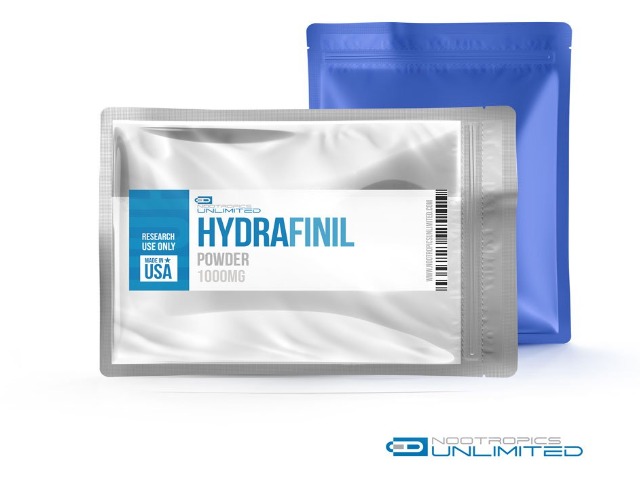
Disclosure: These are affiliate links. I earn a small commission if you purchase — at no extra cost to you. I only recommend products I personally use or have thoroughly researched.
Research & Studies
This section includes 2 peer-reviewed studies referenced in our analysis.