

- Promotes sustained wakefulness without jitteriness
- Supports alertness and mental clarity during extended work
- May enhance motivation and task acquisition
I’ll be honest — adrafinil isn’t the first compound I’d recommend to most people. It’s not even the second. But there’s a reason it keeps showing up in nootropics conversations, and it’s not just because it’s easy to buy without a prescription.
Back when I was deep in my “try everything” phase, adrafinil was one of the first eugeroics I experimented with. I needed something for those 12-hour research days that coffee alone couldn’t carry me through. And it worked — sort of. The wakefulness was real, the focus was there, but the more I learned about what was happening in my liver every time I took it, the more I realized this was a tool that demanded serious respect.
The Short Version: Adrafinil is a prodrug of modafinil — meaning your liver converts it into modafinil after you swallow it. It promotes clean, sustained wakefulness for 8-12 hours without the jittery crash of caffeine or amphetamines. The catch? About half of each dose converts to an inactive metabolite instead, and the liver processing step creates a hepatotoxicity risk that modafinil doesn’t carry. Best used occasionally — 2-3 times per week max — for demanding cognitive days when you can’t access a modafinil prescription.
What Is Adrafinil?
Adrafinil is a synthetic wakefulness-promoting compound discovered in 1974 by researchers at Laboratoires Lafon in France. They were actually screening for painkillers when they stumbled onto something unexpected — instead of reducing pain in animal models, the compound made them hyperactive and wide awake. Happy accidents in science are a real thing.
The French pharmaceutical company developed it under the brand name Olmifon, and it hit the French market in 1984 as a treatment for narcolepsy. During development, researchers identified that adrafinil’s real magic trick was happening in the liver — it was being converted into a more potent active compound they named modafinil. Lafon eventually pivoted to developing modafinil directly, which became the blockbuster prescription drug Provigil.
Here’s the part of the story that matters for anyone considering adrafinil today: in 2011, France’s drug safety agency pulled Olmifon from the market. Not because it didn’t work, but because they determined the risk-to-benefit ratio was “unfavorable” — particularly the liver concerns — given that modafinil was available as a cleaner alternative. That’s a meaningful data point.
Today, adrafinil sits in a regulatory gray zone. It’s unregulated in the US (no FDA approval, but not a controlled substance), available as a research chemical or supplement online, and banned by WADA in competitive sports. Its primary appeal is accessibility — you don’t need a prescription to get it, unlike modafinil.
Reality Check: Adrafinil exists in the nootropics world primarily because modafinil requires a prescription. If you have access to modafinil through a physician, there is no pharmacological reason to choose adrafinil instead. It’s less potent, harder on your liver, and less studied. That said, not everyone has that access, and adrafinil can be a useful tool when used responsibly.
How Does Adrafinil Work?
Think of adrafinil as a locked suitcase. It doesn’t do much on its own — the valuable stuff is packed inside. Your liver is the key.
After you swallow adrafinil, your liver metabolizes it into two compounds: modafinil (the active one, roughly 50% of the dose) and modafinilic acid (pharmacologically useless, the other ~50%). This is why adrafinil is called a “prodrug” — it’s really just a delivery vehicle for modafinil that your liver has to unpack first.
Once modafinil is circulating in your bloodstream, the wakefulness-promoting machinery kicks in through several overlapping pathways. The primary mechanism, confirmed by research published in Substance Use & Misuse (Sousa & Dinis-Oliveira, 2020), involves weak dopamine reuptake inhibition — modafinil blocks the dopamine transporter (DAT), keeping more dopamine available in the synapse. In DAT knockout mice, modafinil completely loses its wakefulness effects, which tells us dopamine is the main driver.
But it’s not just dopamine. Modafinil also enhances norepinephrine signaling (alertness), activates orexin/hypocretin neurons in the hypothalamus (your brain’s sleep-wake switch), increases histamine release (another wakefulness signal), and shifts the balance between glutamate (excitatory) and GABA (inhibitory) neurotransmission.
In plain English: adrafinil gets converted into a compound that gently nudges multiple wakefulness systems in your brain simultaneously, rather than slamming one system the way amphetamines do. That’s why the subjective experience feels “clean” — you’re not overstimulating a single pathway. You’re turning up the volume on several dials at once, each by a moderate amount.
The important practical takeaway: because half your dose becomes inactive metabolite, you need roughly 2-3 times the milligram dose of modafinil to get equivalent effects. A 600mg adrafinil dose approximates a 100-200mg modafinil dose.
Benefits of Adrafinil
Let me be upfront about the evidence landscape here — it’s thinner than what you’ll find for most compounds I write about. The clinical research for adrafinil specifically is very limited. Most of the robust evidence exists for modafinil, and while extrapolating from modafinil data is reasonable (since that’s what adrafinil converts into), it’s not the same as having direct proof.
Wakefulness and Sustained Alertness
This is adrafinil’s core benefit and the one with the most support. Through its conversion to modafinil, adrafinil promotes genuine wakefulness — not the wired, anxious alertness of excessive caffeine, but a steady state of “I am awake and present” that can last 8-12 hours.
Modafinil has strong clinical evidence for treating excessive daytime sleepiness in narcolepsy, obstructive sleep apnea, and shift work sleep disorder. Adrafinil, as a modafinil delivery vehicle, taps into these same effects.
Cognitive Performance Under Sleep Deprivation
Modafinil research shows moderate evidence for improving cognitive function in sleep-deprived individuals — attention, executive function, and working memory all benefit when you haven’t slept enough. Again, this extrapolates to adrafinil through the prodrug relationship.
Motivation and Task Engagement
An interesting animal study by Siwak et al. (2000) in Progress in Neuro-Psychopharmacology & Biological Psychiatry found that adrafinil enhanced acquisition of discrimination learning tasks in aged beagle dogs, likely through increased performance motivation rather than pure cognitive enhancement. The dogs weren’t necessarily “smarter” — they were more engaged with the task.
What the Evidence Does NOT Support
Here’s where I have to pump the brakes. There’s a counterintuitive finding worth knowing: Siwak et al. (2003) found that adrafinil at 20mg/kg actually impaired working memory in aged dogs. The proposed explanation — excessive noradrenergic stimulation in the prefrontal cortex — is a reminder that more stimulation doesn’t equal better cognition.
Reality Check: If you’re well-rested, well-fed, and not under unusual cognitive demand, the evidence for adrafinil providing meaningful nootropic benefit is weak to nonexistent. This is a wakefulness tool, not a limitless pill. It shines when you need to stay sharp during extended work or when sleep deprivation has degraded your baseline — not as an everyday cognitive enhancer.
How to Take Adrafinil Without Wasting Your Money
Dosage
- Starting dose: 150-300mg to assess your individual response
- Standard dose: 300-600mg for most people
- Upper range: 600-900mg (not recommended — diminishing returns, increasing liver burden)
Timing
Take it in the morning or early afternoon — never after 2pm unless you want to stare at the ceiling at midnight. Empty stomach for fastest onset (effects begin in 45-60 minutes, peak around 2 hours). Taking it with food will slow absorption but can reduce the nausea some people experience.
Cycling — This Is Non-Negotiable
This is the most important dosing consideration with adrafinil, and the one most people ignore.
Do not use adrafinil daily for extended periods. The liver conversion step creates a hepatic burden that accumulates with chronic use. This was literally the reason French regulators pulled it from the market.
Recommended approach: 2-3 times per week maximum, with full rest weeks every few weeks. Some people follow a 1 week on / 2 weeks off protocol. Whatever schedule you choose, build in breaks.
Pro Tip: If you find yourself needing adrafinil more than 2-3 times a week, that’s not a dosing problem — it’s a lifestyle problem. Poor sleep, chronic stress, or nutritional deficiencies are likely the real culprits. Address the foundations first. L-Theanine for stress, magnesium for sleep, and honest self-assessment for everything else.
Tolerance
Tolerance develops with regular use, and cross-tolerance exists with modafinil and armodafinil. A 1-2 week break typically resets tolerance to baseline. This is another reason cycling matters.
Forms
Available as powder (cheaper, requires a milligram scale) and capsules (convenient, slightly pricier). The powder tastes bitter — capsules are worth the premium unless you enjoy unpleasant experiences.
The Side Effects Nobody Warns You About
Common Side Effects
- Headache — the most frequently reported. Staying hydrated and adding a choline source like Alpha-GPC can help.
- Nausea and stomach discomfort — more common on an empty stomach, which is ironic since that’s also when it works best
- Insomnia — almost guaranteed if you dose too late in the day. The modafinil your liver produces has a 12-15 hour half-life.
- Anxiety and irritability — stimulant-sensitive individuals are especially vulnerable
- Dry mouth
The Liver Issue — The One That Actually Matters
Important: Chronic adrafinil use can elevate liver enzymes (ALT and AST) to clinically significant levels. This is the primary safety concern that distinguishes adrafinil from modafinil. If you use adrafinil regularly, periodic liver function tests are strongly advisable. If you have any pre-existing liver condition, adrafinil is a hard no.
This isn’t fear-mongering — it’s the specific safety signal that led to the drug’s withdrawal from the French market. Your liver has to do extra work every time you take adrafinil, and that work produces metabolic byproducts that accumulate.
Who Should Avoid Adrafinil
- Anyone with liver disease or compromised liver function
- People with heart conditions or hypertension
- Pregnant or breastfeeding women (possible miscarriage risk, developmental concerns)
- Anyone with active psychotic symptoms
- Competitive athletes (WADA-banned)
Drug Interactions to Watch
- Hormonal birth control — modafinil can reduce the effectiveness of oral contraceptives through CYP3A4 induction. Use backup contraception.
- MAOIs — serious adverse effects reported. Do not combine.
- Blood thinners (warfarin) — modafinil may alter metabolism
- Other stimulants — additive effects increase risk of anxiety, tachycardia, and insomnia
- Grapefruit juice — inhibits CYP3A4, potentially increasing adrafinil/modafinil levels
Stacking Adrafinil
Works Well With
Adrafinil + Choline Source (Alpha-GPC or Citicoline) — This is probably the most practical stack. The choline supports acetylcholine synthesis and can offset the headaches that are adrafinil’s most common side effect. 300mg Alpha-GPC is a good starting point.
Adrafinil + Racetams (Piracetam, Aniracetam, Phenylpiracetam) — The wakefulness-promoting effects complement the cognitive-enhancing properties of racetams. A popular combination for extended mental work sessions.
Adrafinil + L-Theanine (100-200mg) — If adrafinil gives you an anxious edge, L-theanine can smooth it out without reducing alertness. Same principle as the classic caffeine + L-theanine stack.
Use With Caution
Adrafinil + Caffeine — Many people stack these, but proceed carefully. Reduce your normal caffeine intake by at least half. The combination amplifies insomnia, anxiety, and heart rate effects.
Adrafinil + Other liver-metabolized supplements — Every additional compound that requires hepatic processing adds to the liver burden. Keep your stack lean.
Avoid Combining
- Adrafinil + Modafinil — Completely redundant. You’re just getting modafinil from two sources simultaneously with double the side effect risk.
- Adrafinil + MAOIs — Dangerous interaction, full stop.
- Adrafinil + Phenibut — Despite appearing in online stacks, phenibut carries significant dependency risk. Adding a liver-stressing stimulant on top creates unnecessary complexity and danger.
Insider Tip: When stacking with adrafinil, use lower doses of everything than you would individually. Your liver is already working overtime converting adrafinil — don’t pile on. Start at 50-75% of your normal dose for any stacked compound and adjust from there.
My Take
Here’s my honest assessment: adrafinil is a legitimate but second-choice tool.
The wakefulness effects are real. When I used it for those long research days, the experience was exactly what people describe — clean, sustained alertness without the crash. No jitters, no euphoria, just a reliable sense of “I am awake and I can keep working.” For that specific use case, it delivered.
But I stopped using it once I understood the pharmacology better. The math just doesn’t work in adrafinil’s favor: half your dose becomes useless metabolite, your liver takes a hit every time, and you’re essentially paying a biological tax to access the same compound you could get more efficiently through a prescription.
Who adrafinil is BEST for:
- People who need occasional wakefulness support (not daily) and don’t have access to prescription modafinil
- Night shift workers, students during finals, professionals with occasional extreme-demand days
- People who’ve already optimized sleep, nutrition, and stress management and need an occasional edge
Who should try something else:
- Anyone looking for a daily nootropic — the liver concerns make this unsuitable for chronic use
- People with any liver sensitivity — look at caffeine + L-theanine for a much safer wakefulness stack
- Anyone who can get a modafinil prescription — just do that instead
If you do use adrafinil, treat it like a power tool: incredibly useful for the right job, dangerous if used carelessly, and definitely not something you leave running every day. Cycle responsibly, get your liver enzymes checked if you’re using it regularly, and never forget that the best nootropic stack in the world can’t compensate for poor sleep and chronic stress.
Recommended Adrafinil Products
I know how frustrating it is to sort through dozens of brands making the same claims. These are the ones I've personally vetted — because quality is the difference between results and wasted money.
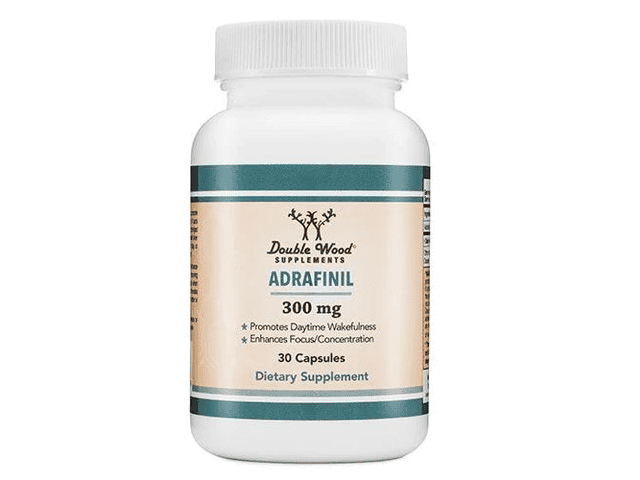
Adrafinil by DoubleWood Supplements
Shop Now →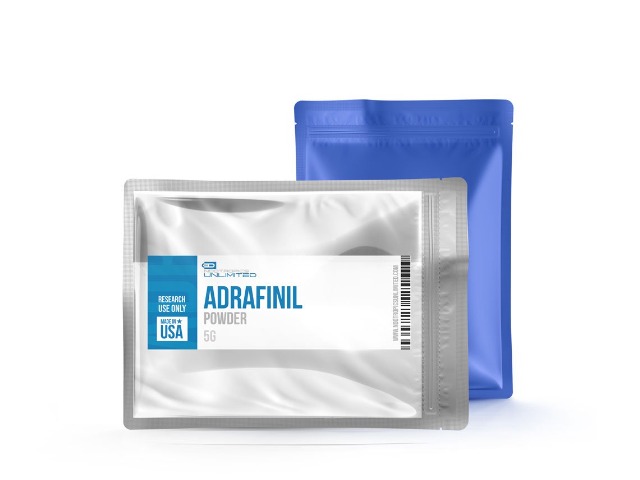
Adrafinil Powder by Nootropics Unlimited
Shop Now →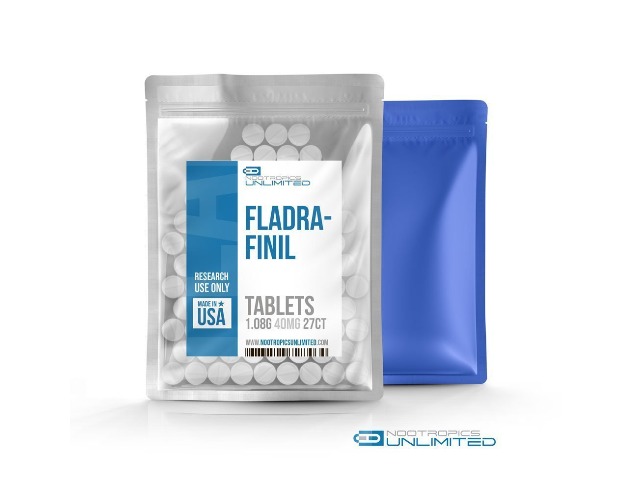
Fladrafinil by Nootropics Unlimited
Shop Now →Disclosure: These are affiliate links. I earn a small commission if you purchase — at no extra cost to you. I only recommend products I personally use or have thoroughly researched.
Research & Studies
This section includes 2 peer-reviewed studies referenced in our analysis.