
- Supports cellular energy production via Krebs cycle
- High bioavailability compared to other magnesium forms
- May support muscle recovery and reduce fatigue
- Supports healthy neurotransmitter function
- Gentle on the stomach relative to other forms
I used to think all magnesium supplements were basically the same — just grab whatever’s cheapest at the drugstore and call it a day. That approach cost me months of taking magnesium oxide that was mostly just giving me digestive issues and doing almost nothing for my energy or focus.
When I finally switched to magnesium malate, the difference was hard to ignore. Not dramatic, not overnight — but within a couple of weeks, I noticed my afternoon crashes weren’t nearly as brutal, and the muscle tension I’d been carrying in my shoulders started loosening up. That’s when I started paying attention to which form of magnesium actually matters.
The Short Version: Magnesium malate pairs magnesium with malic acid — a compound your body already uses to produce cellular energy. It’s one of the most bioavailable magnesium forms available, meaning you actually absorb what you take. Best suited for daytime energy support and muscle recovery, it’s the form I recommend if fatigue and physical performance are your main concerns. Below, I’ll break down the science, how it compares to other forms, and exactly how to use it.
What Is Magnesium Malate?
Magnesium malate is a chelated mineral supplement that bonds elemental magnesium to malic acid — an organic compound found naturally in apples and other fruits. That bond isn’t just a manufacturing convenience. It fundamentally changes how your body absorbs and uses the magnesium.
Here’s the thing most people miss about magnesium supplements: your body doesn’t just absorb “magnesium.” It absorbs the entire compound, and the carrier molecule — in this case, malic acid — brings its own benefits to the table. Malic acid is a direct participant in the Krebs cycle (also called the citric acid cycle), which is the metabolic process your mitochondria use to produce ATP — your cells’ primary energy currency.
So with magnesium malate, you’re getting a two-for-one deal. The magnesium supports over 300 enzymatic reactions in your body, including neurotransmitter synthesis, muscle contraction, and nerve signaling. The malic acid feeds directly into your energy production machinery. It’s not a coincidence that people tend to notice this form most during the daytime, when energy demands are highest.
Why does the form matter so much? Because roughly half of Americans aren’t getting adequate magnesium from diet alone. And if you’re supplementing with a cheap oxide form, you’re absorbing maybe 4% of what you swallow. Pharmacokinetic studies comparing magnesium forms have shown that magnesium malate achieves one of the highest area under the curve (AUC) values — a fancy way of saying more of it actually gets into your bloodstream where it can do something useful.
How Does Magnesium Malate Work?
Think of your mitochondria like tiny power plants inside every cell. They take raw materials — glucose, fatty acids, oxygen — and convert them into ATP, the energy molecule that powers everything from thinking to breathing to lifting weights. Magnesium and malic acid are both essential cogs in that machinery.
At a biochemical level, magnesium malate works through several pathways simultaneously. Magnesium serves as a cofactor for ATP synthesis — without adequate magnesium, your cells literally can’t produce energy efficiently. It’s also required for the proper function of NMDA receptors in the brain, which are central to learning, memory, and synaptic plasticity. Meanwhile, it helps regulate GABA activity (your brain’s main calming neurotransmitter) and modulates the HPA axis — your stress response system.
The malic acid component enters the Krebs cycle directly as malate, one of the cycle’s key intermediates. This is significant because the Krebs cycle can become a bottleneck for energy production when intermediate substrates are depleted — particularly during periods of high physical or mental demand. By supplying malate directly, you’re essentially adding fuel to a specific stage of the energy pipeline.
In plain English: magnesium malate supports your brain and body’s ability to produce and use energy, while simultaneously keeping your nervous system balanced. It’s not a stimulant — it doesn’t spike your energy like caffeine. It’s more like making sure the engine is properly oiled and has all the parts it needs to run smoothly.
Insider Tip: The energy effects of magnesium malate are subtle but cumulative. Don’t expect a caffeine-like buzz. What most people notice after 2–3 weeks of consistent use is the absence of something — fewer afternoon crashes, less mental fatigue, quicker muscle recovery. That’s the sign it’s working.
Benefits of Magnesium Malate
Let’s be honest about the evidence landscape here. Most magnesium research studies general magnesium supplementation, not magnesium malate specifically. The benefits below combine what we know about magnesium’s well-established effects with the specific advantages the malate form brings.
| Benefit | Evidence Level | Notes |
|---|---|---|
| Cellular energy production | Strong (biochemistry) | Malic acid directly feeds Krebs cycle; magnesium is a required ATP cofactor |
| Superior bioavailability | Moderate (pharmacokinetic studies) | Higher AUC than oxide, comparable to citrate |
| Muscle support & recovery | Moderate (general Mg research) | Magnesium’s role in muscle function is well-established |
| Mood & stress support | Strong (general Mg RCTs) | Multiple RCTs show magnesium improves mood markers |
| Cardiovascular support | Moderate (general Mg research) | Supports healthy blood pressure via vascular relaxation |
| Fibromyalgia symptom relief | Weak (mixed results) | Early open-label studies were positive; blinded trials failed to replicate |
Cellular energy production is the headline benefit. Both components — magnesium and malic acid — are directly involved in the mitochondrial energy production pathway. This isn’t speculative biochemistry. It’s textbook metabolism. The practical result is that people who are magnesium-deficient (and again, that’s roughly half of Americans) often report meaningful improvements in fatigue and stamina after correcting the deficiency.
Bioavailability is where malate genuinely shines compared to cheaper forms. In head-to-head pharmacokinetic comparisons, magnesium malate shows significantly higher absorption than magnesium oxide. This matters because a 500mg tablet of magnesium oxide that you absorb 4% of is giving you less usable magnesium than a 200mg dose of malate that you absorb at a much higher rate.
Muscle function and recovery tie directly into magnesium’s role in muscle contraction and relaxation. Adequate magnesium prevents the excessive calcium influx that leads to cramping and tension. Athletes and physically active people are particularly prone to magnesium depletion through sweat.
Reality Check: You’ll find articles claiming magnesium malate is a proven treatment for fibromyalgia. Here’s the honest picture: an early open-label study (Abraham & Flechas, 1992) showed promising results with magnesium malate for fibromyalgia tender points. But when researchers ran blinded, placebo-controlled trials, the results didn’t hold up. The malate form may still offer some support through its energy-production pathways, but I wouldn’t recommend it as a primary fibromyalgia intervention based on current evidence.
How to Take Magnesium Malate
Getting the most out of magnesium malate isn’t complicated, but the details matter more than most people think.
Dosage
| Use Case | Elemental Mg | Total Daily | Timing | Notes |
|---|---|---|---|---|
| General wellness | 200mg | 200mg | Morning with food | Start here for 1–2 weeks |
| Energy & muscle support | 300mg | 300mg | Morning + early afternoon, split | Most common sweet spot |
| Athletic recovery | 400mg | 400mg | Split across 2–3 doses | Higher end of supplemental range |
| Therapeutic (deficiency) | 400mg+ | Per clinician | Split doses | Work with a practitioner |
Important note on labeling: Check whether the label lists elemental magnesium or total magnesium malate compound. A capsule containing 1,000mg of magnesium malate might only provide ~150mg of elemental magnesium. The numbers above refer to elemental magnesium — the amount that actually matters.
Timing and practical details
- Take with food — improves absorption and reduces any chance of stomach upset
- Morning or early afternoon — this is a daytime form; the energy-supporting malic acid component makes it a poor choice right before bed
- Split larger doses — if taking more than 200mg elemental, divide into two doses for better absorption
- Consistency beats megadosing — daily moderate doses outperform sporadic large ones every time
- Allow 4–8 weeks for full effects on energy and muscle function to become noticeable
Pro Tip: If you’re also taking magnesium for sleep or cognitive support, consider a split-form strategy: magnesium malate in the morning for energy, and magnesium glycinate or magnesium L-threonate in the evening for relaxation and brain support. Different forms for different jobs.
Side Effects and Safety
Magnesium malate is one of the gentler magnesium forms on the digestive system, but it’s not without considerations.
Common side effects
- Loose stools or diarrhea — the most common issue, usually dose-dependent. If this happens, reduce your dose and increase gradually
- Mild nausea — typically only when taken on an empty stomach
- Abdominal cramping — rare at recommended doses
Who should be cautious
- Kidney disease: Impaired kidneys can’t clear excess magnesium efficiently. If you have reduced kidney function, talk to your doctor before supplementing
- Heart block or cardiac conditions: High magnesium levels can affect heart rhythm
- Pregnant or nursing: Magnesium is generally considered safe during pregnancy at recommended levels, but consult your provider for specific dosing
Drug interactions
This is the section people skip, and it’s the one that matters most.
Important: Magnesium malate has 67 known drug interactions. The most clinically significant ones involve antibiotics, thyroid medications, and bisphosphonates. If you take prescription medications, read this list carefully.
- Fluoroquinolone antibiotics (ciprofloxacin, levofloxacin) — magnesium dramatically reduces absorption. Separate by at least 2 hours, preferably 4
- Tetracycline antibiotics (doxycycline, minocycline) — same chelation issue. Separate by 2–4 hours
- Thyroid medications (levothyroxine) — magnesium can reduce absorption by up to 50%. Take thyroid medication at least 4 hours apart
- Bisphosphonates (alendronate, risedronate) — magnesium impairs absorption. Separate by at least 2 hours
- Blood pressure medications — additive hypotensive effect possible. Monitor blood pressure
- Muscle relaxants — magnesium may enhance effects. Use caution
The general rule: separate magnesium from any chelation-sensitive medication by at least 2 hours. When in doubt, ask your pharmacist — they’re underused resources for exactly this kind of question.
Stacking Magnesium Malate
Magnesium malate plays well with others. Here are the combinations that make the most sense biochemically.
Synergistic stacks
- Magnesium malate + CoQ10 — Both support mitochondrial energy production through complementary pathways. CoQ10 handles electron transport; malate feeds the Krebs cycle. A logical energy stack
- Magnesium malate + Creatine — Creatine supports ATP recycling while magnesium malate supports ATP production. Together they cover both sides of the cellular energy equation
- Magnesium malate + B-Complex vitamins — B vitamins are cofactors in many of the same energy pathways magnesium supports. B6 in particular enhances magnesium absorption
- Magnesium malate (AM) + Magnesium L-threonate (PM) — The “best of both worlds” approach. Malate for daytime energy, threonate for cognitive support and sleep. Different forms serving different functions based on time of day
- Magnesium malate + Taurine — Taurine supports magnesium retention in cells and has its own calming effects. A solid combination for muscle recovery and stress resilience
What to avoid combining
- Magnesium malate + calcium supplements at the same time — They compete for absorption. Separate by at least 2 hours
- Magnesium malate + high-dose zinc — Same absorption competition. If you take both, use different mealtimes
- Magnesium malate close to bedtime — The malic acid component may be mildly energizing. Pair with magnesium glycinate or threonate if you need evening magnesium
How Magnesium Malate Compares to Other Forms
This is the question I get asked most often, so here’s a straightforward comparison.
| Form | Bioavailability | Best For | GI Tolerance | Cost |
|---|---|---|---|---|
| Magnesium Malate | High | Energy, muscle recovery, daytime use | Excellent | $$ |
| Magnesium Glycinate | High | Sleep, anxiety, evening relaxation | Excellent | $$ |
| Magnesium L-Threonate | Moderate | Cognitive function, brain Mg levels | Good | $$$ |
| Magnesium Citrate | High | General supplementation, constipation relief | Moderate (laxative) | $ |
| Magnesium Oxide | Low (4%) | Budget option, constipation relief | Poor | $ |
| Magnesium Taurate | High | Cardiovascular support, blood pressure | Excellent | $$ |
The honest truth? There’s no single “best” magnesium form. It depends on what you’re trying to accomplish. Malate wins for daytime energy and physical performance. Glycinate wins for sleep and anxiety. Threonate wins for pure cognitive enhancement. And oxide wins for… well, being cheap and available at every gas station.
My Take
Here’s where I land on magnesium malate after years of personal use and recommending it to readers: it’s the best daytime magnesium form for most people, and it’s not particularly close.
The combination of high bioavailability, excellent GI tolerance, and the energy-supporting malic acid component makes it a genuinely useful daily supplement — not just another pill in the cabinet. In my experience, the people who notice the biggest difference are those who are physically active, deal with afternoon energy dips, or have been using cheap magnesium oxide and wondering why they don’t feel any different.
That said, I want to be straight with you about the limitations. The research on magnesium malate specifically is thinner than I’d like. Most of the benefits I’ve described are extrapolated from general magnesium research plus what we know about malic acid biochemistry. The logic is sound, but we’re still waiting on the kind of large-scale RCTs that would make the evidence bulletproof.
Who should try magnesium malate:
- Anyone dealing with low energy or afternoon crashes
- Physically active people who want better muscle recovery
- People currently taking magnesium oxide who aren’t seeing results
- Anyone looking for a well-absorbed, stomach-friendly magnesium form
Who should probably look elsewhere:
- If sleep is your primary concern → try magnesium glycinate
- If cognitive enhancement is the goal → look at magnesium L-threonate
- If you need help with regularity → magnesium citrate is your friend
My daily protocol: 300mg elemental magnesium malate with breakfast, then 200mg magnesium glycinate before bed. That combination has been my baseline for over two years now, and it’s one of the few supplement habits I’ve never considered dropping.
Start with 200mg in the morning, give it 3–4 weeks, and pay attention to your energy levels and muscle tension. The effects are quiet but real — the kind you notice most when you stop taking it for a week.
Recommended Magnesium Malate Products
I know how frustrating it is to sort through dozens of brands making the same claims. These are the ones I've personally vetted — because quality is the difference between results and wasted money.
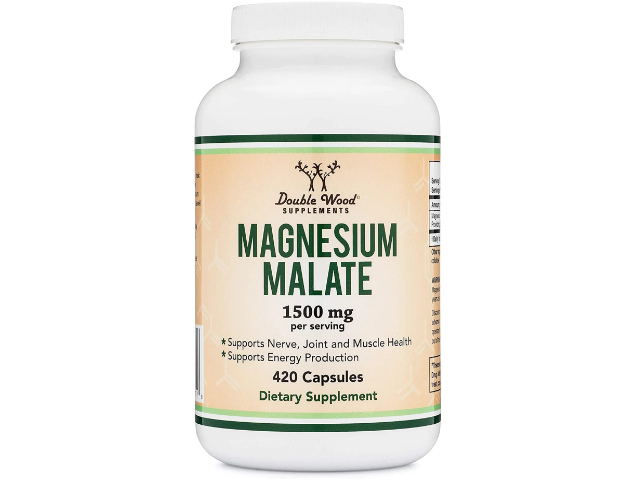
Disclosure: These are affiliate links. I earn a small commission if you purchase — at no extra cost to you. I only recommend products I personally use or have thoroughly researched.
Research & Studies
This section includes 1 peer-reviewed study referenced in our analysis.