
- Supports GABAergic neurotransmission and calm focus
- Reduces neuroinflammation and oxidative stress
- Enhances exercise performance and recovery
- Supports cardiovascular and metabolic health
I used to think taurine was just that sketchy ingredient in energy drinks—the one that made me wonder if my heart was going to explode after shotgunning a Red Bull in college. Turns out, I had it completely backward.
Taurine isn’t a stimulant. It’s not synthetic. And it’s actually one of the most abundant amino acids in your brain, heart, and muscles. The reason it’s in energy drinks isn’t to jack you up—it’s to protect you from the effects of massive caffeine doses and support cellular energy production. Once I understood what taurine actually does, it became a non-negotiable part of my daily stack.
If you’ve been dismissing taurine as “energy drink garbage,” this guide is going to change your mind.
The Short Version: Taurine is a naturally occurring amino acid that supports calm focus by modulating GABA and glutamate, reduces brain inflammation and oxidative stress, and enhances physical performance. Typical doses range from 500-2000mg daily. It’s exceptionally safe, well-researched, and pairs beautifully with stimulants to smooth out their rough edges.
What Is Taurine?
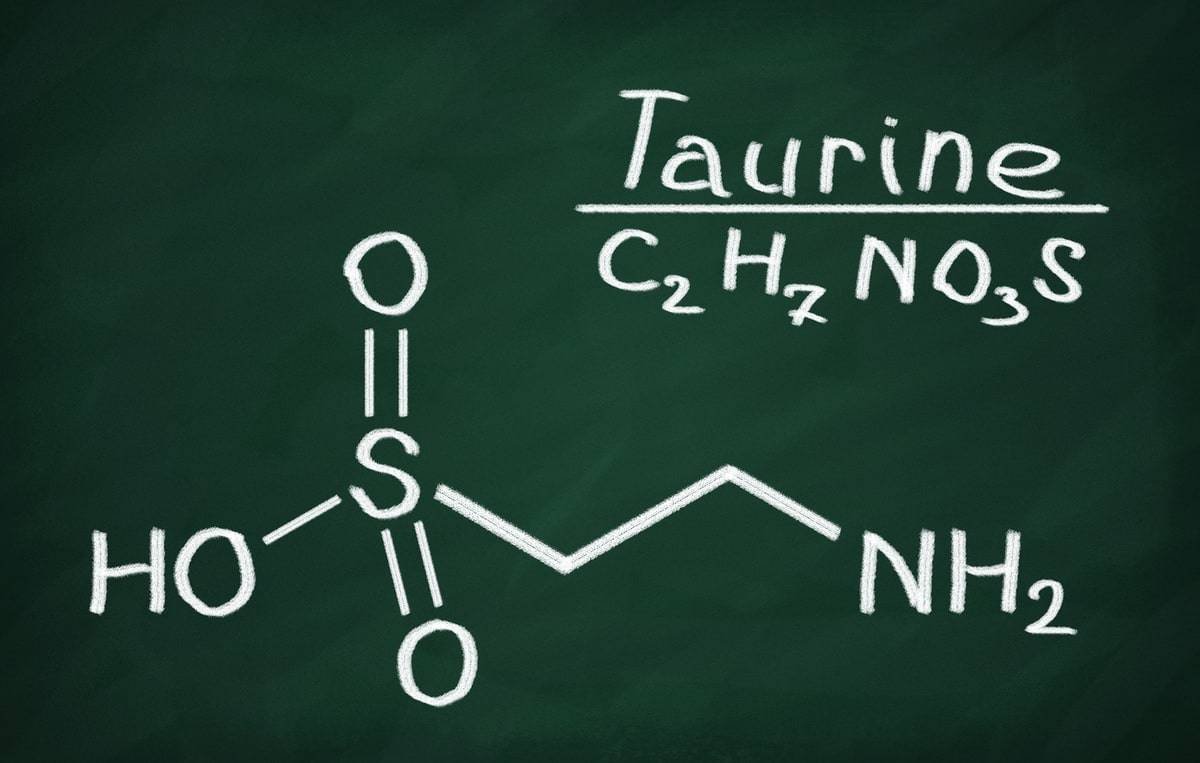
Taurine is a sulfur-containing amino acid found naturally in high concentrations throughout your body—especially in your brain, heart, retina, and skeletal muscle. Unlike the 20 standard amino acids that build proteins, taurine exists freely in tissues and fluids, where it performs critical regulatory and protective functions.
Your body produces taurine from the amino acids cysteine and methionine, with the help of vitamin B6. But endogenous production isn’t always enough—especially during periods of high stress, intense exercise, or aging (taurine levels decline significantly as we get older). That’s why supplementation can be so effective.
Taurine has been studied extensively since the 1960s, with over 2,500 published research papers examining its effects on everything from brain function to cardiovascular health. The Japanese discovered decades ago that taurine intake correlates strongly with longevity—a 2009 worldwide epidemiological survey identified it as one of the key nutritional factors explaining Japan’s exceptional life expectancy. It’s not a biohacker fad. It’s foundational biochemistry.
How Does Taurine Work? (The Science Made Simple)
Here’s the beautiful thing about taurine: it doesn’t do one flashy thing. It does a dozen essential things quietly and consistently. Think of it less like a performance-enhancing drug and more like high-quality motor oil for your brain and body.
The calming effect without sedation: Taurine acts as an agonist at GABA_A receptors—the same receptors targeted by anxiety medications and alcohol. It enhances chloride influx into neurons, causing hyperpolarization that reduces neuronal excitability. In plain English: it helps your brain shift out of overdrive without making you drowsy. A 2009 study in Advances in Experimental Medicine and Biology found that taurine can partially substitute for GABA itself and upregulates the enzymes responsible for GABA synthesis.
This isn’t about knocking yourself out. It’s about taking the edge off excessive mental chatter while maintaining clarity. I notice this most when I stack taurine with caffeine—the focus remains sharp, but the jittery anxiety disappears.
The glutamate balancing act: While taurine promotes inhibitory GABAergic tone, it also modulates excitatory glutamate signaling. It reduces excessive glutamate activity that can lead to excitotoxicity—the kind of overstimulation that damages neurons over time. Research shows taurine has modulatory effects at NMDA receptors, helping maintain optimal excitatory-inhibitory balance. A 2004 study in Neuropsychopharmacology demonstrated that taurine prevents the neurotoxicity of both beta-amyloid and glutamate receptor agonists through GABA receptor activation—suggesting protective mechanisms relevant to Alzheimer’s disease and other neurodegenerative conditions.
Translation: taurine helps your brain maintain the Goldilocks zone—not too excited, not too inhibited, just right.
The anti-inflammatory and antioxidant powerhouse: Taurine inhibits NF-kappa B, a master regulator of inflammatory pathways in the brain. Chronic neuroinflammation impairs cognitive function, disrupts neurotransmitter production, and accelerates cognitive decline. By shutting down this inflammatory cascade, taurine protects neural communication and synaptic function.
On the antioxidant front, taurine upregulates Nrf2 expression—a transcription factor that activates your body’s endogenous antioxidant defense systems. This isn’t about dumping exogenous antioxidants into your system and hoping they do something. It’s about enhancing your own cellular machinery for neutralizing oxidative stress. The result is comprehensive protection against the kind of oxidative damage that accumulates in neurons over time.
Reality Check: Taurine isn’t going to give you superhuman focus or cure brain fog overnight. It’s a foundational compound that works best when combined with proper sleep, nutrition, and stress management. Think of it as infrastructure—not a quick fix.
Benefits of Taurine (What the Research Actually Shows)
Cognitive function and neuroprotection: Multiple human studies show taurine improves mental performance, particularly under conditions of stress or fatigue. A 2007 study in Life Sciences found that specific timing of taurine supplementation affects learning ability in mice—suggesting that strategic dosing around cognitively demanding tasks may enhance retention and acquisition of new information.
More importantly, taurine’s neuroprotective effects are well-established. The 2004 study I mentioned earlier demonstrated that taurine prevents neurotoxicity from beta-amyloid plaques and glutamate receptor overactivation—both implicated in Alzheimer’s disease. Animal research consistently shows taurine reduces neuronal damage following ischemic events and protects against age-related cognitive decline.
Exercise performance and recovery: This is where taurine really shines. A 2006 study in Amino Acids examined the effects of taurine depletion on skeletal muscle and found significant impairments in contractile properties and fatigue resistance. Supplementation reverses this—improving time to exhaustion, reducing muscle damage markers, and enhancing recovery.
In my experience, 1-2 grams of taurine pre-workout noticeably improves endurance and reduces post-exercise soreness. The mechanism likely involves improved calcium handling in muscle cells and enhanced mitochondrial function.
Cardiovascular and metabolic support: Taurine has well-documented benefits for heart health and blood sugar regulation. It improves insulin sensitivity, reduces oxidative stress in cardiac tissue, and supports healthy blood pressure. A 2009 epidemiological survey published in Advances in Experimental Medicine and Biology identified taurine as a nutritional factor strongly correlated with longevity in Japanese populations—likely due to its cardiovascular and metabolic protective effects.
Mood and anxiety regulation: A 2009 study in Biological and Pharmaceutical Bulletin examined taurine’s effects on anxiety-like behavior in mice and found dose-dependent anxiolytic effects without sedation. Human data is more limited, but anecdotal reports (including my own) consistently describe a subtle calming effect—less mental noise, easier emotional regulation, better stress resilience.
Interestingly, a 2006 study in The European Journal of Neuroscience found that taurine elevates dopamine levels in the rat nucleus accumbens, with the effect antagonized by strychnine—suggesting glycine receptor involvement. This hints at a more complex neurochemical profile than simple GABAergic activity alone.
| Benefit | Evidence Level | Key Research |
|---|---|---|
| Neuroprotection | Strong (animal + human studies) | 2004 study showing beta-amyloid protection |
| Exercise performance | Strong (human RCTs) | 2006 muscle contractility study |
| Anxiety reduction | Moderate (animal studies, human anecdotal) | 2009 anxiety-like behavior study |
| Cardiovascular health | Strong (epidemiological + clinical) | 2009 Japanese longevity survey |
| Cognitive enhancement | Moderate (mixed results) | 2007 learning ability study in mice |
How to Take Taurine (Without Wasting Your Money)
Dosage: The effective range for cognitive and performance benefits is 500-2000mg daily. Most research showing meaningful effects uses doses in the 1000-2000mg range. I personally take 1000mg in the morning and another 500-1000mg pre-workout on training days.
If you’re new to taurine, start with 500mg and assess tolerance for a week before increasing. Some people notice effects immediately, others need 2-4 weeks of consistent use to appreciate the difference.
Timing:
- For cognitive support: 500-1000mg in the morning, ideally with or shortly after breakfast. Can be repeated in the early afternoon if needed.
- For exercise performance: 1000-2000mg 30-60 minutes before training. The performance benefits appear to be acute, so timing around workouts matters.
- For sleep support: 500-1000mg 1-2 hours before bed. Some people find taurine’s GABAergic effects promote relaxation and sleep quality without grogginess.
Taurine can be taken with or without food, though taking it with meals may enhance absorption and reduce the (rare) possibility of mild GI discomfort.
Forms: Taurine supplements are almost universally sold as free-form taurine powder or capsules. There’s no meaningful difference between brands—it’s a simple, stable compound. Avoid proprietary blends or “enhanced” versions unless there’s compelling evidence for improved bioavailability (which there generally isn’t).
Cycling: Not necessary. Taurine is a non-essential amino acid your body produces naturally. There’s no evidence of tolerance development or downregulation with chronic use. In fact, maintaining consistent levels is ideal given taurine’s role in foundational cellular processes.
Pro Tip: If you’re using pre-workout formulas that already contain taurine, check the label before adding more. Many quality pre-workouts include 1000-2000mg per serving. You don’t need to megadose—more isn’t necessarily better, and doses above 3000mg daily offer diminishing returns.
Side Effects & Safety (What Could Go Wrong)
Taurine is one of the safest supplements you can take. Decades of research and widespread use in energy drinks (which deliver 1000mg+ per can) have established an exceptionally clean safety profile.
Common side effects:
- Mild gastrointestinal discomfort (rare, usually only at doses >3000mg)
- Nausea (uncommon, typically if taken on an empty stomach at high doses)
- Headache (very rare, mechanism unclear)
In practice, most people experience zero side effects at standard doses.
Who should be cautious:
- Bipolar disorder: Taurine’s GABAergic effects may theoretically influence mood cycling, though clinical evidence is lacking. If you have bipolar disorder, consult your psychiatrist before adding taurine—especially if you’re on mood stabilizers.
- Kidney disease: Taurine is excreted via the kidneys. While there’s no evidence of harm, those with compromised kidney function should discuss supplementation with their physician.
Drug interactions:
| Medication/Substance | Interaction Type | Risk Level | Notes |
|---|---|---|---|
| Lithium | Potential renal clearance alteration | Moderate | Monitor lithium levels with physician |
| Blood pressure medications | Additive hypotensive effect | Low | May enhance blood pressure reduction; monitor BP |
| CNS depressants (alcohol, benzodiazepines) | Additive GABAergic effect | Low-Moderate | Avoid high-dose combinations; may increase sedation |
| Caffeine | Synergistic (beneficial) | None | Commonly combined; taurine smooths stimulant effects |
Pregnancy and nursing: Taurine is naturally present in breast milk and crucial for infant development. Supplementation during pregnancy appears safe based on available evidence, but as with any supplement, consult your healthcare provider before use.
Important: Taurine is extraordinarily safe, but if you’re on psychiatric medications (especially mood stabilizers or antipsychotics), check with your prescribing physician before adding it to your regimen. The GABAergic and dopaminergic effects, while subtle, could theoretically interact with these medications.
Stacking Taurine (The Combinations That Actually Work)
Taurine is one of the most stackable compounds in the nootropic toolkit. It plays well with nearly everything and often improves the subjective experience of other supplements.
For Focus & Productivity:
- 1000mg Taurine + 100-200mg Caffeine + 200mg L-Theanine — Morning stack for smooth, sustained focus without jitters. The taurine and theanine both blunt caffeine’s rough edges while preserving alertness. This is my go-to for deep work sessions.
- 1000mg Taurine + 300mg Alpha-GPC + 750mg Aniracetam — Cognitive enhancement stack for learning and memory consolidation. Taurine’s neuroprotective effects complement the cholinergic and AMPA-modulating effects of the other compounds.
For Exercise Performance & Recovery:
- 2000mg Taurine + 5g Creatine Monohydrate + 3-6g Beta-Alanine — Pre-workout performance stack. Taurine enhances muscular endurance and calcium handling, creatine supports ATP regeneration, beta-alanine buffers lactic acid. Take 30-60 minutes before training.
- 1500mg Taurine + 500mg Magnesium Glycinate + 1000mg L-Carnitine — Post-workout recovery stack. Supports muscle relaxation, mitochondrial function, and reduces oxidative stress from training.
For Mood, Stress & Sleep:
- 1000mg Taurine + 400mg Magnesium Threonate + 100-200mg L-Theanine — Evening stack for relaxation and sleep quality. All three compounds enhance GABAergic tone and reduce stress-related hyperarousal. Take 1-2 hours before bed.
- 500mg Taurine + 300mg Ashwagandha + 100mg Phosphatidylserine — Daytime stress resilience stack. Supports HPA axis regulation and reduces cortisol-related cognitive impairment without sedation.
What to AVOID:
- High-dose taurine + GABAergic drugs (benzodiazepines, alcohol, barbiturates): While taurine’s GABAergic effects are mild, combining with strong CNS depressants could theoretically produce additive sedation. Keep taurine doses moderate (<2000mg) if combining with these substances.
- Taurine + high-dose glutamine: Both compete for the same transporters. No evidence of harm, but may reduce the effectiveness of both. Space doses by 2-3 hours if taking both.
| Goal | Stack | Timing | Synergy Mechanism |
|---|---|---|---|
| Smooth focus | Taurine + Caffeine + L-Theanine | Morning | GABAergic calming balances stimulant effects |
| Workout performance | Taurine + Creatine + Beta-Alanine | Pre-workout | Complementary cellular energy and buffering systems |
| Stress resilience | Taurine + Ashwagandha + Phosphatidylserine | Daytime | Multi-pathway HPA axis and neuroinflammation reduction |
| Sleep quality | Taurine + Magnesium + L-Theanine | Evening | Synergistic GABAergic and NMDA modulation |
My Take
Taurine is one of those rare supplements that I think almost everyone should consider—especially if you’re dealing with stress, training hard, or trying to smooth out the rough edges of stimulants.
In my experience, taurine doesn’t produce dramatic, in-your-face effects. It’s subtle. But over time, you notice the absence of things: less caffeine jitters, faster recovery between workouts, fewer stress-induced crashes in focus. It’s foundational support that makes everything else work better.
Who should absolutely try taurine:
- Anyone using caffeine or other stimulants regularly—taurine is the best “de-jitter” compound I’ve found
- Athletes and anyone doing intense physical training—the performance and recovery benefits are well-established
- People dealing with chronic stress or anxiety—the GABAergic effects provide subtle but meaningful emotional regulation
- Anyone over 40—taurine levels decline with age, and supplementation may help preserve cognitive and cardiovascular function
Who might want to try something else first:
- If you’re looking for acute, noticeable cognitive enhancement, Alpha-GPC, L-Tyrosine, or Phenylpiracetam will give you more immediate feedback
- If sleep is your primary concern, Magnesium Glycinate or Glycine may be more targeted options (though taurine stacks beautifully with both)
- If you’re dealing with serious mood disorders, work with a healthcare provider on targeted interventions—taurine is supportive but not therapeutic on its own
The bottom line: taurine is cheap, safe, well-researched, and effective. It’s one of the first supplements I recommend to people building a foundational stack. Start with 1000mg daily for 2-4 weeks and see how you feel. If it works for you, it’ll become a permanent part of your routine—just like it did for me.
Recommended Taurine Products
I know how frustrating it is to sort through dozens of brands making the same claims. These are the ones I've personally vetted — because quality is the difference between results and wasted money.
Taurine by Nootropics Depot
Shop Now →
Taurine by Thorne Research
Shop Now →
Taurine Capsules | 500mg by Nootropics Depot
Shop Now →Disclosure: These are affiliate links. I earn a small commission if you purchase — at no extra cost to you. I only recommend products I personally use or have thoroughly researched.
Research & Studies
This section includes 31 peer-reviewed studies referenced in our analysis.
Effect of acetyl-L-carnitine on the dopaminergic system in aging brain.
Interactions of taurine and dopamine in the striatum.
Effect of acetyl-L-carnitine on extracellular amino acid levels in vivo in rat brain regions.
Metabolism of orally administered tauroursodeoxycholic acid in patients with primary biliary cirrhosis.
Plasma and platelet amino acid concentrations in patients affected by major depression and under fluvoxamine treatment.
Taurine prevents the neurotoxicity of beta-amyloid and glutamate receptor agonists: activation of GABA receptors and possible implications for Alzheimer's disease and other neurological disorders.
The effect of taurine depletion on the contractile properties and fatigue in fast-twitch skeletal muscle of the mouse.
Taurine elevates dopamine levels in the rat nucleus accumbens; antagonism by strychnine.
Specific timing of taurine supplementation affects learning ability in mice.
Taurine as the nutritional factor for the longevity of the Japanese revealed by a world-wide epidemiological survey.
Showing 10 of 31 studies. View all →