
- May support mood and reduce anhedonia
- Pro-cognitive effects on verbal memory and fluency
- Promotes hippocampal neurogenesis in animal models
- Effects may persist after discontinuation
I’ll be honest — NSI-189 is one of those compounds I keep coming back to. Not because the clinical data is a home run (it isn’t), but because nothing else works quite like it. In a world where every “next big nootropic” is just another spin on serotonin or dopamine, NSI-189 took a completely different path: instead of tweaking your neurotransmitter levels, it tries to grow new brain cells.
That’s a bold claim. And the reality is more complicated than the hype. But after digging through every published trial, the DARPA backstory, and years of community reports, I think this compound deserves a nuanced look — not the breathless “limitless pill” treatment it usually gets online.
The Short Version: NSI-189 Phosphate is an investigational neurogenesis-stimulating compound that works through a mechanism completely different from conventional antidepressants. Clinical trials show consistent pro-cognitive effects but failed to beat placebo on primary depression measures. The 40mg daily dose has the most evidence behind it. It’s genuinely novel, reasonably well-tolerated, but still unproven — and only available as a research chemical.
What Is NSI-189 Phosphate?
NSI-189 is a synthetic small molecule developed by Neuralstem, Inc. — a biotech company based in Germantown, Maryland. It was designed from the ground up to do something no existing antidepressant does: stimulate the growth of new neurons in the hippocampus, the brain region most critical for memory, learning, and emotional regulation.
The backstory is actually fascinating. Neuralstem screened over 10,000 compounds looking for molecules that could make hippocampal neural stem cells proliferate in a petri dish. NSI-189 was the winner. Early development was partly funded by DARPA — yes, the Defense Department’s research arm — which tells you something about how seriously the military takes cognitive enhancement.
Here’s the timeline that matters:
- 2011–2014: Phase 1B trial at Massachusetts General Hospital showed promising mood and cognitive improvements in 24 patients with major depression
- 2017: Phase 2 trial in 220 patients — the compound failed its primary endpoint for depression but showed significant cognitive benefits
- 2019: FDA granted orphan drug designation for Angelman syndrome
- 2021: The rights were sold to Alto Neuroscience, which rebranded it as ALTO-100
- 2024: A Phase 2b trial with 301 patients again failed its primary depression endpoint
So let’s be clear upfront: NSI-189 has not proven itself as an antidepressant in rigorous clinical trials. That matters. But the cognitive enhancement signal keeps showing up — and the mechanism is unlike anything else out there.
How Does NSI-189 Phosphate Work?
Here’s what makes NSI-189 genuinely weird in the best possible way: researchers screened it against 52 neurotransmitter receptors, ion channels, enzymes, and 900 kinases. It hit nothing. Zero. No serotonin activity. No dopamine activity. No GABA. No glutamate. None of the usual suspects.
So what is it doing?
The plain-English version: NSI-189 appears to work at a structural level rather than a chemical level. Instead of changing how much serotonin sloshes around between your neurons (like an SSRI), it seems to encourage your hippocampus to build new neurons and strengthen the connections between existing ones. Think of it as remodeling the house instead of just rearranging the furniture.
The science: In preclinical studies, NSI-189 stimulates proliferation of neural stem cells in the hippocampus — specifically the subgranular zone of the dentate gyrus, one of the few brain regions where adult neurogenesis occurs. This leads to measurable increases in hippocampal volume in rodent models. The compound also upregulates Brain-Derived Neurotrophic Factor (BDNF) and Stem Cell Factor (SCF), both critical for neuronal survival and synaptic plasticity. When hippocampal brain slices were incubated with NSI-189, researchers observed dose-dependent increases in long-term potentiation (LTP) — the cellular mechanism underlying learning and memory.
What this means for you: If NSI-189 works as theorized, the effects should be slow to build (new neurons take weeks to integrate into circuits) but potentially long-lasting — maybe even persisting after you stop taking it. And that’s actually what the Phase 1B data showed: improvements continued during a 56-day follow-up after participants stopped the drug. That’s not how stimulants or typical nootropics behave.
Reality Check: Here’s the big caveat — researchers still don’t know what molecular target NSI-189 actually binds to. The BDNF modulation appears to be indirect. And while neurogenesis has been demonstrated convincingly in animals, the human MRI data only showed non-significant trends toward increased hippocampal volume. We’re operating on strong preclinical evidence and suggestive — but not conclusive — human data.
Benefits of NSI-189 Phosphate
Let me break this down honestly, because the evidence quality varies wildly depending on what claim you’re evaluating.
Pro-Cognitive Effects — The Strongest Signal
This is where NSI-189 shines most consistently. Across both the Phase 1B and Phase 2 trials, cognitive improvements kept showing up on multiple measures:
- Significant improvements in cognitive and physical functioning (CPFQ scores) in Phase 1B
- Objective cognitive improvements on the CogScreen battery in Phase 2, with effect sizes up to Cohen’s d of 1.12 — that’s large
- The 40mg dose showed statistically significant improvements in self-reported cognitive function (p=0.03)
Community reports echo this: improved verbal fluency, better word recall, reduced brain fog, and enhanced working memory are among the most commonly reported benefits.
Mood Benefits — More Complicated
Here’s where I need to be straight with you. NSI-189 failed its primary depression endpoint in both the Phase 2 and Phase 2b trials. The clinician-rated depression scores (MADRS) didn’t separate from placebo at a statistically significant level.
However, the picture isn’t entirely bleak. In the Phase 2 trial, the 40mg dose did show significant improvements in self-rated depression symptoms (SDQ, p=0.04) and self-rated depressive severity (QIDS-SR, p=0.04). A post-hoc analysis found that the 80mg dose worked significantly better in moderately depressed patients compared to severely depressed ones.
My read: NSI-189 probably isn’t powerful enough to treat severe clinical depression on its own. But for the kind of low-grade, “everything feels flat and gray” mood state that a lot of cognitive optimizers deal with? The signal is there.
Neuroprotective Potential — Animal Data Only
In preclinical models, NSI-189 has shown impressive results for conditions beyond depression:
- Angelman syndrome (mouse model): reversed cognitive and motor impairments, leading to FDA orphan drug status
- Diabetic neuropathy (mouse models): prevented and reversed nerve damage in both Type 1 and Type 2 diabetes models
- Stroke (rat model): demonstrated structural and behavioral recovery benefits
These are promising leads, but none of this has been confirmed in humans yet.
Insider Tip: If you’re considering NSI-189, pay attention to the cognitive benefits rather than expecting it to be a mood miracle. The pro-cognitive data is the most consistent finding across every trial, and it aligns well with user reports. Set your expectations accordingly — this compound’s real strength may be sharpening your thinking, with mood improvements as a secondary bonus.
How to Take NSI-189 Phosphate
Dosage
The clinical trial data points clearly to 40mg once daily as the sweet spot. This dose showed the most consistent benefits across multiple secondary endpoints in the Phase 2 trial. Here’s the full picture:
- Starting dose: 20–40mg/day (start lower if you’re cautious)
- Standard dose: 40mg/day — the best-supported dose from clinical data
- Higher dose: 80mg/day — may be better for cognitive effects and moderate mood issues based on subgroup analysis
- Maximum tested: 120mg/day (40mg three times daily) — tested only in Phase 1B, well-tolerated but no clear advantage
Timing and Administration
NSI-189 has a half-life of roughly 17–20 hours, which supports once-daily dosing. Take it in the morning with food — this improves absorption and reduces the nausea some users experience. Some people report vivid dreams or insomnia with evening dosing.
Phosphate vs. Freebase
The phosphate salt is what was used in every clinical trial. It’s more water-soluble, more chemically stable, and has a longer shelf life. This is the form I’d recommend for oral dosing.
The freebase form is more lipophilic (fat-soluble), which makes it better suited for sublingual administration. Some users report it feels “stronger” per milligram — partly because the freebase form contains more active compound per weight (no phosphate group adding mass). But it degrades faster and requires more careful storage.
Building a Protocol
Here’s how I’d approach it:
- Week 1: Start at 20–40mg with breakfast. Note any initial side effects (headaches, mild nausea — both typically transient)
- Weeks 2–4: Hold at 40mg daily. Don’t chase effects early — remember, this works through neurogenesis, which takes time
- Week 4–8: Assess. Many users report the most noticeable cognitive benefits emerging in this window
- After 8 weeks: Evaluate whether it’s working for you. If so, consider continuing or cycling off to see if effects persist (the Phase 1B data suggests they might)
Pro Tip: Don’t judge NSI-189 in the first week. This isn’t caffeine or modafinil — you’re not going to feel a lightning bolt of focus 30 minutes after your first dose. Several users describe a “U-shaped” response: subtle initial improvements, a period of emotional turbulence around weeks 2–3, then clearer cognitive benefits by week 4. Patience is essential with neurogenic compounds.
Side Effects & Safety
The good news: NSI-189 has been remarkably well-tolerated across three clinical trials. No serious adverse events were reported at any dose in any trial.
Common Side Effects
- Headache — most frequently reported, usually resolves within the first week
- Nausea — reduced by taking with food
- Vivid or disturbing dreams — one of the most distinctive side effects; some users find these fascinating, others find them unsettling
- Dizziness and fatigue — more common in the first few days
- Insomnia — especially with evening dosing
- Dry mouth
Less Common
- Heart palpitations (especially early on)
- Restlessness
- Tingling sensations (paresthesia)
- Emotional over-sensitivity — this is worth flagging. Several community reports describe becoming “too emotional” after about a month of use. Crying at commercials, heightened empathy, emotional volatility. If this happens, reducing the dose or taking a break typically resolves it.
Important: NSI-189 is not approved for human use by any regulatory agency. It is an investigational compound available only as a research chemical. No long-term safety data beyond 12 weeks exists from controlled studies. The consequences of chronically stimulating hippocampal neurogenesis in humans are unknown. If you’re taking prescription medications — especially MAOIs or other psychotropic drugs — talk to your doctor before experimenting with this compound. Formal drug interaction studies have not been published.
Who Should Avoid NSI-189
- Pregnant or breastfeeding women (no safety data whatsoever)
- Anyone with a history of psychosis
- Those with active suicidal ideation
- Anyone currently taking MAOIs
- People with bipolar disorder (though trials are now underway for bipolar depression)
Stacking NSI-189 Phosphate
Because NSI-189 works through neurogenesis rather than neurotransmitter modulation, it stacks naturally with compounds that support brain growth and connectivity through complementary pathways.
Strong Theoretical Synergies
Lion’s Mane + NSI-189 — This is probably the most logical neurogenesis stack. Lion’s Mane stimulates Nerve Growth Factor (NGF) while NSI-189 primarily upregulates BDNF. These are complementary neurotrophic pathways. Lion’s Mane is also one of the safest compounds in the nootropic toolkit, making this a relatively low-risk combination.
Citicoline (CDP-Choline) + NSI-189 — Citicoline supports cell membrane synthesis and acetylcholine production. If NSI-189 is helping grow new neurons, citicoline provides the raw material those neurons need to build healthy membranes and communicate effectively.
DHA/Omega-3s + NSI-189 — DHA is a major structural component of neuronal membranes and supports BDNF signaling. This is a foundational pairing for any neurogenesis-focused protocol.
Exercise — I can’t emphasize this enough. Physical exercise is the single most evidence-based neurogenesis promoter we know of. If you’re taking a compound designed to grow new neurons but you’re sedentary, you’re leaving a massive amount of potential benefit on the table.
What to Avoid
- MAOIs — excluded from every clinical trial for a reason
- Other investigational neurogenic compounds (like Dihexa or P21 peptide) — stacking unknowns on unknowns is a recipe for unpredictable outcomes
- High-dose stimulants — theoretical overstimulation concern when combined with a neurogenesis promoter
Reality Check: There are zero published studies on any NSI-189 combination. Every stack recommendation — including the ones above — comes from theoretical reasoning and community reports. Proceed with appropriate caution.
My Take
Here’s where I’ll be blunt: NSI-189 is not the breakthrough antidepressant that early hype suggested. It failed its primary endpoints. Twice. That’s a fact, and no amount of hand-waving about secondary endpoints changes it.
But I keep finding it interesting for a different reason. The pro-cognitive signal is real and consistent. Across every trial, across community reports, the cognitive improvements keep showing up — better verbal memory, clearer thinking, improved focus. And the mechanism is genuinely unlike anything else available. This isn’t just another racetam or cholinergic. It’s attempting something fundamentally different at the structural level of the brain.
In my view, NSI-189 is best suited for:
- Cognitive optimizers who want something beyond the standard noopept/racetam toolkit and are willing to wait 4–8 weeks for effects
- People dealing with brain fog and mild-to-moderate mood flatness — not severe depression, but that persistent “everything is meh” state
- Self-experimenters comfortable with the risks of an unapproved compound and disciplined enough to track their response
Who should probably try something else first? Anyone with severe depression (see a psychiatrist), anyone uncomfortable with research chemicals, and anyone expecting immediate results. If you haven’t already dialed in the basics — sleep, exercise, magnesium, omega-3s, gut health — start there. A $50/month neurogenesis compound isn’t going to overcome a broken foundation.
The sourcing situation is also a real concern. Patent enforcement means vendors come and go. If you do decide to try it, insist on the phosphate form with a third-party Certificate of Analysis showing >98% purity by HPLC. Anything less is not worth the risk.
Bottom line: NSI-189 is a genuinely novel compound in a field full of me-too supplements. The science is compelling but incomplete. The clinical results are disappointing for depression but encouraging for cognition. It’s not for everyone — but for the right person, it might be exactly the kind of different approach their brain needs.
Recommended NSI-189 Phosphate Products
I know how frustrating it is to sort through dozens of brands making the same claims. These are the ones I've personally vetted — because quality is the difference between results and wasted money.
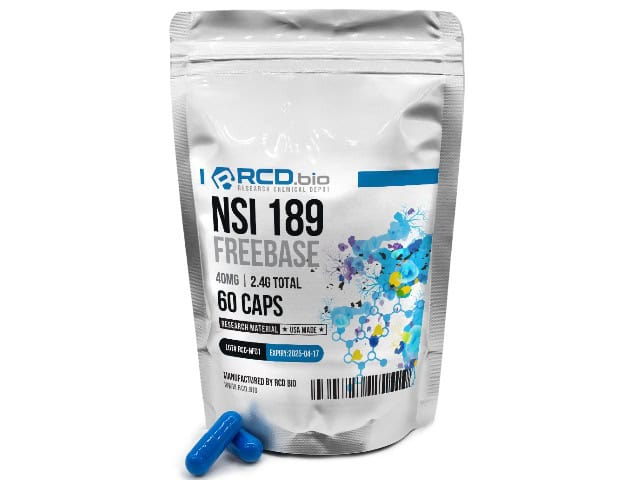
NSI 189 Freebase Capsules by Research Chemical Depot
Shop Now →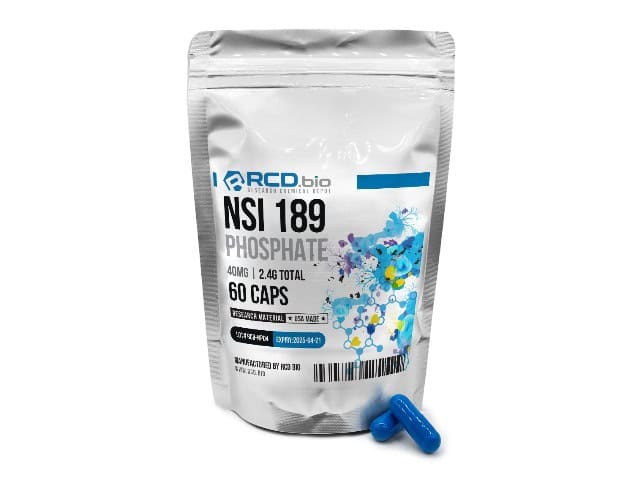
NSI 189 Phosphate by Research Chemical Depot
Shop Now →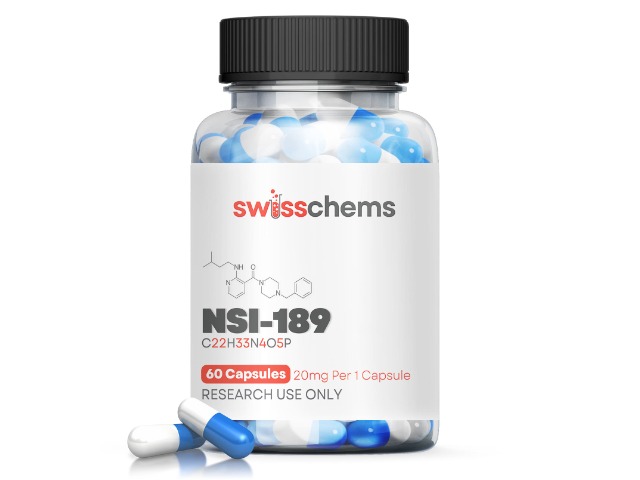
NSI-189 by SwissChem
Shop Now →Disclosure: These are affiliate links. I earn a small commission if you purchase — at no extra cost to you. I only recommend products I personally use or have thoroughly researched.
Research & Studies
This section includes 5 peer-reviewed studies referenced in our analysis.