
- Neurogenesis promotion
- Cognitive enhancement
- Neuroprotection
- Memory improvement
I’ll be honest — when I first heard about a synthetic peptide that could potentially quadruple neurogenesis in the hippocampus, I thought it sounded like science fiction. A single compound that mimics the neuroprotective effects of BDNF without being a protein? That gets past the blood-brain barrier when BDNF itself can’t?
But the preliminary research on P-21 is compelling enough that it’s worth paying attention to — even if we’re years away from having the kind of robust human data we’d want before making strong claims.
The Short Version: P-21 is a synthetic peptide derived from Cerebrolysin that appears to promote neurogenesis and enhance BDNF signaling without being a neurotrophic factor itself. Early research shows promise for cognitive enhancement and neuroprotection, but human data is extremely limited. This is firmly in the “research peptide” category — not a well-established nootropic.
What Is P-21 Peptide?
P-21 is a synthetic peptide originally derived from Cerebrolysin, a complex mixture of neurotrophic peptides extracted from pig brain tissue. Researchers identified this specific 11-amino-acid sequence as one of the active components responsible for Cerebrolysin’s neurotrophic effects — then synthesized it as a standalone compound to study its mechanisms.
Unlike BDNF itself (which can’t cross the blood-brain barrier when taken externally), P-21 is small enough to penetrate brain tissue and appears to enhance BDNF signaling indirectly. The peptide was developed specifically to provide neuroprotective and cognitive-enhancing effects without requiring direct administration of large neurotrophic proteins.
Here’s the “foundations first” reality check though: This is a research peptide with limited human safety data and zero long-term studies. If you’re ignoring sleep, gut health, chronic inflammation, or foundational nutrients like Magnesium Threonate while chasing exotic peptides, you’re building on sand. P-21 might be a powerful tool — but it’s an advanced tool, not a substitute for the basics.
How Does P-21 Peptide Work?
P-21’s mechanisms are surprisingly elegant for a synthetic compound. Instead of trying to deliver neurotrophic factors directly (which largely don’t work orally or even via injection due to the blood-brain barrier), it appears to enhance your brain’s own production of these critical growth signals.
The Plain-English Version:
Think of BDNF as fertilizer for your brain’s neurons. P-21 doesn’t deliver the fertilizer directly — it turns up the gene expression that tells your brain to make more of its own fertilizer. And critically, it does this while simultaneously reducing inflammatory signals (specifically leukemia inhibitory factor, or LIF) that normally inhibit neurogenesis.
The Evidence:
Research shows P-21 significantly upregulates BDNF expression and activates the TrkB receptor pathway — the cellular machinery responsible for neuronal survival, growth, and synaptic plasticity. In animal models, P-21 administration resulted in a four-fold increase in neurogenesis markers (DCX+ and Ki-67+ cells) in the hippocampus, the brain region most critical for learning and memory formation.
The peptide works through multiple complementary pathways:
- Enhances BDNF/TrkB signaling without being BDNF itself
- Inhibits LIF, a cytokine that suppresses neural stem cell differentiation
- Promotes synaptic protein expression, improving signal transmission between neurons
- Reduces neuroinflammation by modulating microglial activation
So What?
In practical terms: P-21 appears to create optimal conditions for your brain to build new neural connections and protect existing ones. This isn’t an acute “feel it in an hour” compound like Caffeine — it’s working at the level of gene expression and cell proliferation. The effects would theoretically build over weeks to months of consistent use, similar to how Lion’s Mane or Bacopa Monnieri work (but potentially through more direct mechanisms).
Benefits of P-21 Peptide (What the Research Actually Shows)
Let’s be clear about the evidence quality here: we have compelling animal research and mechanistic studies, but no published human clinical trials as of 2026. Everything below is based on preclinical data and anecdotal reports from research peptide users.
Cognitive Enhancement & Memory
The most robust finding in animal studies is P-21’s effect on learning and memory consolidation. In models of traumatic brain injury and neurodegenerative disease, P-21 administration improved performance on memory tasks and accelerated cognitive recovery. The mechanism — enhanced hippocampal neurogenesis — is well-established. The question is whether the magnitude of effect in rodents translates proportionally to humans.
Evidence level: Moderate (animal studies only)
Neuroprotection
P-21 shows protective effects against amyloid-beta and tau pathology in Alzheimer’s disease models, primarily through its anti-inflammatory and neurotrophic mechanisms. It appears to reduce the inflammatory cascade that accelerates neurodegeneration while simultaneously promoting repair processes.
This is intellectually interesting but practically uncertain. We don’t know if the doses that show neuroprotective effects in mice are achievable (or safe) in humans, and we don’t know if the protective mechanisms translate across species.
Evidence level: Preliminary (animal models, mechanism-based)
Neuroplasticity & Learning
P-21’s enhancement of synaptic plasticity markers suggests it could support faster skill acquisition and adaptation to new cognitive demands. The peptide increases expression of synaptic vesicle proteins and postsynaptic receptors — the physical infrastructure of learning.
Anecdotally, users report improved working memory and faster information processing within 2-4 weeks of consistent use. But without controlled human trials, it’s impossible to separate placebo effects from genuine pharmacological action.
Evidence level: Preliminary (mechanism + anecdotes)
Reality Check: The research on P-21 is genuinely exciting from a neuroscience perspective. But “exciting animal research” and “proven effective in humans” are separated by years of expensive clinical trials. Approach this compound with informed caution, not hype-driven expectations.
How to Take P-21 Peptide (Without Wasting Your Money)
Here’s where things get murky. There are no established human dosing protocols, only extrapolations from animal research and user experimentation in biohacker communities.
| Use Case | Typical Dose | Frequency | Administration | Notes |
|---|---|---|---|---|
| Cognitive support | 1-5mg | 2-3x/week | Subcutaneous | Conservative starting point |
| Neuroprotection | 5-10mg | 2-3x/week | Subcutaneous | Based on animal dose conversions |
| Post-injury recovery | 5-10mg | 3x/week | Subcutaneous | Short-term protocols (4-8 weeks) |
Administration Details:
P-21 is administered via subcutaneous injection (not oral — peptides are broken down in the stomach). Most users inject into fatty tissue in the abdomen or thigh. The peptide comes as lyophilized (freeze-dried) powder that must be reconstituted with bacteriostatic water before use.
Timing: No established optimal timing. Some users dose in the morning, others before bed. Theoretical rationale for evening dosing: BDNF expression follows circadian rhythms and may be more responsive during sleep/recovery periods.
Cycling: Unknown if cycling is necessary. Conservative approach would be 8-12 week cycles with 4 week breaks to assess baseline function and minimize unknown long-term risks.
Starting Protocol:
- Start at 1-2mg twice weekly for the first 2 weeks
- Assess tolerance and any subjective effects
- If well-tolerated, consider increasing to 5mg 2-3x weekly
- Maintain detailed logs of cognitive function, sleep quality, and any side effects
- Reassess at 8 weeks — is there measurable benefit justifying continued use?
Pro Tip: If you’re new to peptide administration, practice sterile injection technique with something safer and better-studied first (like BPC-157 for injury recovery). P-21 is not the compound to learn on — get your protocol dialed in with lower-risk peptides before experimenting with research-stage nootropics.
Side Effects & Safety (What Could Go Wrong)
This is the most important section, and the honest answer is: we don’t know enough yet.
Reported Side Effects (from user logs, not clinical trials):
- Mild injection site reactions (redness, slight swelling — common with any subcutaneous injection)
- Transient headaches (possibly related to acute changes in neurotrophic signaling)
- Sleep disturbances in some users (mechanism unclear)
Theoretical Risks:
- Uncontrolled neurogenesis: Could excessive BDNF upregulation in certain brain regions cause issues? We don’t have long-term data.
- Tumor growth concerns: BDNF signaling can promote cell proliferation. While there’s no evidence P-21 increases cancer risk, it’s a theoretical concern with any growth-promoting compound.
- Unknown interactions: Limited data on how P-21 interacts with medications or other supplements.
Who Should Avoid P-21:
- Anyone with active cancer or history of brain tumors (until we have safety data)
- Pregnant or nursing women (zero safety data)
- People on immunosuppressants (peptide effects on immune function unclear)
- Anyone uncomfortable with the risk profile of research peptides
| Medication/Substance | Interaction Type | Risk Level | Notes |
|---|---|---|---|
| Antidepressants (SSRIs) | Serotonergic modulation | Unknown | Both affect neurotrophic signaling; theoretical interaction |
| Immunosuppressants | Immune modulation | Moderate | P-21 may affect microglial activity |
| Other BDNF modulators | Additive effects | Low-Moderate | Lion’s Mane, 7,8-DHF — monitor for overstimulation |
| MAO inhibitors | Neurotransmitter effects | Unknown | Theoretical interaction; consult physician |
Important: P-21 is sold as a research chemical, not a supplement. It is not approved for human use by the FDA. Anyone using this compound is engaging in self-experimentation with unknown long-term risks. If you have any medical conditions or take prescription medications, do not use P-21 without physician guidance.
Stacking P-21 Peptide (The Combinations That Actually Work)
Given the unknowns around P-21 itself, stacking should be approached conservatively. The goal is synergistic mechanisms without compounding risks.
For Cognitive Enhancement & Neuroplasticity:
- P-21 (5mg, 3x/week subcutaneous)
- Lion’s Mane (1000mg daily, standardized extract)
- Alpha-GPC (300mg, morning)
- L-Theanine (200mg with morning coffee)
Rationale: Lion’s Mane provides complementary NGF support through a different mechanism. Alpha-GPC ensures adequate choline for the new synaptic connections P-21 theoretically promotes. L-Theanine smooths out any potential overstimulation.
For Neuroprotection & Recovery (Post-Injury):
- P-21 (5-10mg, 3x/week)
- BPC-157 (250-500mcg daily)
- Curcumin (1000mg with black pepper extract)
- Omega-3s (2-3g EPA/DHA daily)
Rationale: BPC-157 enhances tissue repair through different pathways (VEGF, collagen synthesis). Curcumin and omega-3s provide broad anti-inflammatory support. This stack addresses neuroinflammation from multiple angles.
For Deep Learning & Memory Consolidation:
- P-21 (5mg, evenings before sleep, 2-3x/week)
- Bacopa Monnieri (300mg, 50% bacosides, daily)
- Phosphatidylserine (300mg before bed)
- Magnesium Threonate (2000mg elemental, evening)
Rationale: Bacopa enhances dendritic branching through separate mechanisms from P-21. Phosphatidylserine and Magnesium Threonate support synaptic function and sleep-dependent memory consolidation. Evening P-21 dosing aligns with overnight neuroplastic processes.
| Stack Combo | Synergy Type | Evidence Level | Notes |
|---|---|---|---|
| P-21 + Lion’s Mane | Neurotrophic (NGF + BDNF) | Theoretical | Complementary mechanisms |
| P-21 + BPC-157 | Neuroprotection + repair | Anecdotal | Popular for TBI recovery |
| P-21 + Racetams | Plasticity + receptor modulation | Speculative | No data; potentially overstimulating |
What to AVOID:
- Multiple BDNF modulators simultaneously (P-21 + 7,8-DHF + high-dose Lion’s Mane) until you’ve tested each individually. Overstimulation of neurotrophic signaling is theoretically possible.
- Combining with other research peptides you haven’t used before. Isolate variables.
- Stimulant stacks until you understand P-21’s effects on your sleep and anxiety levels.
Insider Tip: If you’re going to experiment with P-21, keep the rest of your stack stable and well-tolerated. Don’t introduce multiple new variables simultaneously. You want to know if the effects (positive or negative) are actually from the P-21.
My Take
Here’s the truth: P-21 is one of the most intellectually compelling nootropic compounds I’ve researched — and one of the riskiest to actually recommend.
The mechanism is elegant. The animal research is genuinely exciting. If the neurogenesis data translates to humans even partially, this could be a powerful tool for cognitive enhancement and neuroprotection. But we’re operating on “ifs” and “mights” without the human safety data that would make me comfortable saying “try this.”
Who might consider P-21:
- Experienced biohackers already comfortable with research peptides and self-experimentation
- People recovering from traumatic brain injury who’ve exhausted safer options (under medical supervision)
- Individuals with family history of neurodegenerative disease willing to accept unknown risks for potential neuroprotective benefits
Who should absolutely try something else:
- Anyone new to nootropics — start with Lion’s Mane, Bacopa Monnieri, or Magnesium Threonate. These have actual human safety data.
- People uncomfortable with injections or research chemical risk profiles
- Anyone looking for acute cognitive effects — if that’s your goal, Caffeine + L-Theanine or a well-formulated racetam like Aniracetam makes more sense.
My honest assessment: If I were designing a long-term neuroprotection stack for myself, I’d prioritize compounds with 10+ years of human safety data first — Curcumin, omega-3s, Bacopa, Lion’s Mane. Only after optimizing those foundational pieces would I consider adding a research peptide like P-21.
The risk-reward calculation might shift if you’re dealing with acute brain injury or early-stage neurodegeneration. In those contexts, the potential upside could justify the unknowns. But for general cognitive enhancement? I’d wait for better human data.
If you do decide to experiment with P-21, approach it like the self-experiment it is: detailed logs, conservative dosing, regular reassessment of whether the benefits justify the risks. And if you’re not seeing measurable improvements within 8-12 weeks, don’t keep dosing out of hope or sunk cost fallacy.
Recommended P-21 Peptide Products
I know how frustrating it is to sort through dozens of brands making the same claims. These are the ones I've personally vetted — because quality is the difference between results and wasted money.
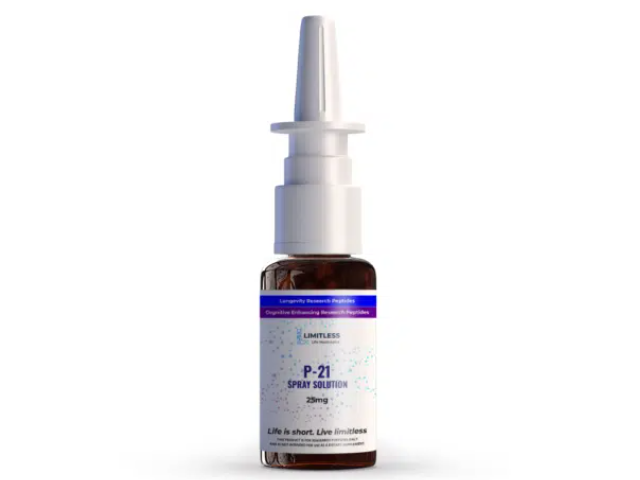
Disclosure: These are affiliate links. I earn a small commission if you purchase — at no extra cost to you. I only recommend products I personally use or have thoroughly researched.
Research & Studies
This section includes 1 peer-reviewed study referenced in our analysis.