Your brain is not a fixed machine. Every conversation you have, every skill you practice, every problem you solve physically reshapes the neural circuits involved. This is neuroplasticity — the brain’s ability to reorganize itself by forming new connections, strengthening useful ones, and pruning unused pathways. It’s the mechanism behind learning, recovery from injury, and adaptation to new demands.
The old neuroscience view was that brain development ended in early adulthood and it was all downhill from there. We now know that’s wrong. Neuroplasticity operates throughout your entire life — though it does slow with age, and certain interventions can meaningfully accelerate or preserve it.
The practical question is: which interventions actually work? There’s a lot of hand-waving about “rewiring your brain” in the wellness space, much of it attached to products rather than evidence. This article focuses on what the clinical data actually supports.
The Short Version: The strongest neuroplasticity interventions are physical exercise (a 2025 meta-analysis of fMRI studies found consistent gray matter and functional connectivity increases, Hedges’ g=0.271 for cognitive performance) and structured cognitive training (a 2024 meta-analysis of 35 RCTs showed supervised computerized training improved verbal memory with SMD 0.55 in MCI patients). Moderate-intensity exercise is optimal — excessive training actually promotes oxidative stress rather than plasticity. Among supplements, curcumin and omega-3s support BDNF signaling, while lion’s mane stimulates nerve growth factor. But supplements are secondary to behavioral interventions for plasticity.
The Biology: What Makes Neuroplasticity Work
Neuroplasticity operates through several mechanisms at different scales:
Synaptic plasticity is the strengthening or weakening of connections between neurons based on activity. Long-term potentiation (LTP) — the cellular basis of learning — occurs when repeated activation of a synapse makes it more efficient. This is driven by NMDA receptor activation, calcium influx, and downstream signaling through BDNF-TrkB, CaMK, CREB, and MAPK/ERK pathways. A 2026 review detailed how these pathways decline with aging, driven by neuroinflammation and oxidative stress, but remain modifiable through exercise and targeted interventions.
Structural plasticity involves actual physical changes: growth of new dendritic spines, myelination of axons (making signal transmission faster), and even neurogenesis — the birth of new neurons in the hippocampus. Exercise-induced hippocampal volume increases are now well-documented through neuroimaging studies.
Extracellular matrix remodeling: A 2024 discovery identified peri-synaptic chondroitin sulfate clusters — essentially “cartilage” structures around synapses — as key mediators of activity-dependent plasticity and memory formation. These structures physically gate which synapses can be modified, adding a layer of regulation beyond the neurons themselves.
The “use it or lose it” principle is real: neural pathways that are frequently activated are strengthened and maintained, while unused connections are pruned away through synaptic elimination. This is efficient — your brain allocates resources to high-value circuits — but it means that sustained, deliberate practice is required to build and maintain any cognitive skill.
Tier 1: Exercise — The Most Powerful Plasticity Driver
A 2025 meta-analysis of fMRI studies (52 studies, 1,503 participants) established that physical exercise enhances general cognitive performance (Hedges’ g = 0.271) with consistent increases in task-related brain activation, particularly in the bilateral precuneus. The degree of brain activation increase correlated positively with cognitive improvement.
A parallel 2025 study on structural brain changes found that cardiovascular and mixed exercise programs increased gray matter volume, white matter integrity, cortical thickness (especially in the hippocampus and medial prefrontal cortex), and functional connectivity across default mode, visuospatial, and sensorimotor networks.
The Intensity Sweet Spot
A 2024 meta-analysis from animal models revealed something important: moderate-volume exercise (3-5 days/week) reduced oxidative stress in the cerebellum (SMD -2.41 for lipid peroxidation) while increasing antioxidant enzymes (SOD, CAT, GSH), promoting adaptive neuroplasticity. But high-volume exercise actually increased lipid peroxidation (SMD 4.55), suggesting maladaptive, neurotoxic effects from overtraining.
The practical implication: more isn’t better. Consistent moderate-intensity exercise 4-5 days per week is optimal for neuroplasticity. Marathon training or excessive HIIT may actually work against you.
Exercise Protocols That Work
- HIIT (3-4x/week): Produces the largest acute BDNF spikes, driving activity-dependent plasticity
- Resistance training (2-3x/week): Increases gray matter density and supports neurotrophin release
- Coordination-intensive activities (dance, martial arts, racquet sports): Activate motor learning circuits that require complex sequencing and real-time adaptation — highly plasticity-demanding
- Combined protocols: The 2025 fMRI meta-analysis found the strongest effects with combined aerobic + resistance programs
See our BDNF article for the detailed evidence on exercise and neurotrophic factor release.
Tier 2: Cognitive Training — Use It or Lose It
The evidence for structured cognitive training has matured significantly. A 2024 meta-analysis of 35 RCTs found that computerized cognitive training (CCT) in people with mild cognitive impairment produced:
- Verbal memory improvement: SMD 0.55 (95% CI 0.35-0.74) — a moderate effect
- Visual memory improvement: SMD 0.36 (95% CI 0.12-0.60)
- Working memory improvement: SMD 0.37 (95% CI 0.10-0.64)
An important finding: supervised CCT produced larger effects across all domains, while unsupervised CCT only benefited verbal memory. Having structure, accountability, and appropriate challenge calibration matters.
The INHANCE trial (covered in our cholinergics article) added biological evidence: 10 weeks of speed-based cognitive training (BrainHQ) produced a measurable 2.3% increase in cholinergic terminal density in the anterior cingulate cortex, effectively reversing approximately one decade of age-related cholinergic decline. This is direct neuroimaging evidence that cognitive training produces structural changes in the brain.
What Counts as Effective Cognitive Training
Not all “brain games” are equal. The training needs to:
- Challenge you at the edge of your ability: If it’s comfortable, it’s not driving plasticity. The task should feel effortful.
- Involve processing speed: Speed-based training (where you must respond quickly to stimuli) appears to produce the strongest effects, likely because it demands rapid neural processing that drives efficiency adaptations.
- Be structured and progressive: Gradually increasing difficulty prevents plateauing and maintains the challenge-skill balance that drives adaptation.
- Target transferable skills: Working memory training, attention switching, and processing speed have the broadest transfer to real-world cognitive function.
Beyond formal programs, genuine novel learning drives plasticity powerfully: learning a musical instrument, studying a new language, mastering a complex game (chess, Go), or acquiring any skill that demands sustained effortful practice.
Tier 3: Stress Reduction and Recovery
Chronic stress is one of the most potent suppressors of neuroplasticity. Cortisol directly reduces BDNF expression in the hippocampus, impairs LTP, and can cause dendritic atrophy in the prefrontal cortex. Managing stress isn’t just about feeling better — it’s about preserving the biological machinery of plasticity.
Meditation and Mindfulness
A meta-analysis of 12 RCTs found that mindfulness meditation significantly increased serum BDNF levels, with larger effects from longer intervention periods (8+ weeks). Meditation also increases cortical thickness in the prefrontal cortex and anterior cingulate cortex — regions critical for attention and executive function.
The mechanism is likely dual: reduced cortisol removes a brake on BDNF expression, while the sustained attentional demands of meditation practice directly exercise plasticity-relevant circuits.
Sleep
Sleep is when memory consolidation occurs — the process of transferring newly encoded information from hippocampal short-term storage to cortical long-term storage. During slow-wave sleep, recently active synapses are reactivated and strengthened through offline replay. Sleep deprivation directly impairs LTP and reduces hippocampal BDNF. No supplement or training protocol compensates for inadequate sleep.
Music
Musical training produces some of the most dramatic structural brain changes documented in neuroimaging literature. A 2024 systematic review confirmed that musicians show increased gray matter volume in auditory, motor, and visuospatial regions, with cortical thickness differences detectable after even modest training periods. You don’t need to become a professional — learning an instrument at any age drives multi-regional plasticity.
Nutritional Support for Plasticity
Supplements play a supporting role in neuroplasticity — they don’t drive it, but they can remove bottlenecks and amplify the effects of behavioral interventions.
Curcumin
Curcumin activates the BDNF/PI3K/Akt signaling cascade and reduces neuroinflammation through NLRP3 inflammasome inhibition. When combined with exercise, it produces additive BDNF increases. Use enhanced-bioavailability formulations (Longvida, Meriva). Dose: 400-1,000mg daily.
Omega-3 Fatty Acids
DHA is a structural component of neuronal membranes and supports the membrane fluidity that BDNF receptors need to function. Omega-3 deficiency impairs synaptic plasticity; adequate intake is permissive — it removes a bottleneck rather than providing a boost. Dose: 1-2g combined EPA/DHA daily.
Lion’s Mane
Lion’s mane stimulates nerve growth factor (NGF) synthesis, supporting cholinergic neuron health and neurite outgrowth. It’s better categorized as a neuroprotective agent than a plasticity accelerator, but the mechanisms overlap. Dose: 500-3,000mg dual-extracted daily for 8+ weeks. See our BDNF article.
Magnesium L-Threonate
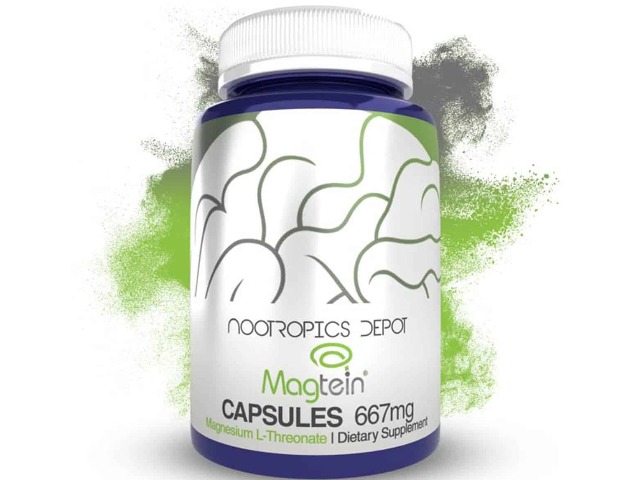
Magnesium L-threonate is the only magnesium form shown to increase brain magnesium levels, enhancing NMDA receptor function and synaptic plasticity. NMDA receptors are the molecular coincidence detectors that trigger LTP — inadequate magnesium impairs their function. Dose: 1,500-2,000mg daily. See our magnesium guide.
Bacopa Monnieri
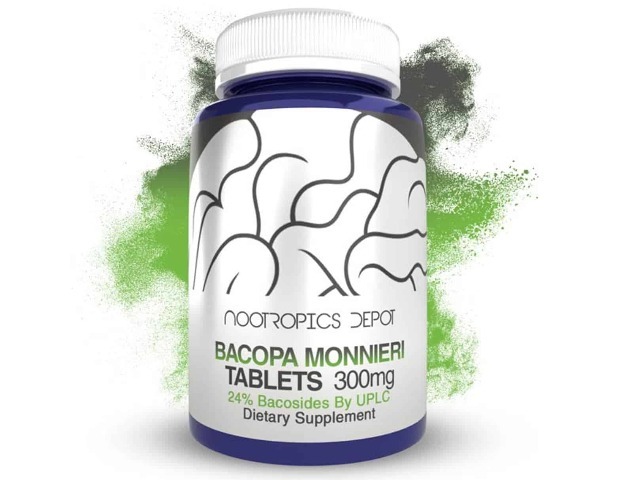
Bacopa enhances long-term potentiation through CREB signaling and modulates cholinergic transmission. A 2024 RCT found significant improvements in multiple cognitive domains including working memory, mental flexibility, and concentration after 84 days. Dose: 300-600mg standardized extract daily.
Emerging Technology: Neurostimulation
Transcranial alternating current stimulation (tACS) showed promise in a 2025 meta-analysis: beta and alpha frequency stimulation increased cortical excitability and power for 60+ minutes through NMDA/BDNF-dependent plasticity mechanisms. This is an emerging research tool, not a consumer recommendation yet — but it suggests that external brain stimulation may eventually become a practical plasticity enhancer.
Putting It All Together
Here’s how I prioritize neuroplasticity interventions, from most to least impactful:
Foundation (non-negotiable):
- Exercise 4-5x/week (combined HIIT + resistance + coordination-intensive activity)
- 7-9 hours quality sleep
- Active stress management (meditation, yoga, or equivalent)
Cognitive Demand:
- Novel skill learning (instrument, language, complex game)
- Structured cognitive training (BrainHQ or similar, supervised if possible)
- Challenging professional/intellectual work
Nutritional Support:
- Curcumin (400-1,000mg enhanced bioavailability daily)
- Omega-3s (1-2g DHA/EPA daily)
- Magnesium L-threonate (1,500-2,000mg daily)
- Lion’s mane (500-3,000mg daily)
What I avoid: Overtraining (high-volume exercise increases oxidative stress), passive screen time that doesn’t demand cognitive effort, and chronic sleep restriction that impairs memory consolidation.
My Protocol
My approach to maintaining neuroplasticity is built into my daily routine rather than being a separate “brain training” regimen:
- Exercise: HIIT or vigorous cardio 4-5x/week plus resistance training 3x/week. I also play tennis, which demands real-time motor adaptation and decision-making.
- Cognitive demand: Deep work sessions on challenging problems, reading dense non-fiction, and learning new technical skills.
- Supplements: 400mg Longvida curcumin, 2g omega-3s, 300mg Bacopa monnieri daily.
- Recovery: 8 hours sleep, 10-15 minutes meditation most mornings.
The key insight about neuroplasticity is that it’s not something you do as a separate activity — it’s a property that emerges from how you live. Consistently challenging your brain through varied, effortful activities while providing adequate recovery and nutritional support is the formula. There are no shortcuts, but there also isn’t a ceiling — your brain continues adapting as long as you keep demanding more from it.