
If you’re optimizing for one cognitive function, focus is probably it. And if you’re optimizing for focus, the cholinergic system is the most direct lever you can pull. Acetylcholine (ACh) is the neurotransmitter most directly tied to sustained attention, working memory, and the ability to filter relevant information from noise. When cholinergic signaling is strong, you can hold complex problems in working memory, resist distraction, and maintain productive output for hours. When it’s weak, everything feels like wading through fog.
The challenge is that your cholinergic system declines with age — approximately 2.5% per decade, as measured by specialized PET imaging. And most people aren’t getting enough dietary choline to begin with (see our choline brain health article for the deficiency data). The good news: the right combination of supplementation and behavioral strategies can meaningfully counteract this decline.
The Short Version: Alpha-GPC is now confirmed as the superior cholinergic precursor, outperforming citicoline across cognitive and behavioral domains in a 2025 meta-analysis. Huperzine A is a potent acetylcholinesterase inhibitor — effective but requiring careful cycling. Bacopa monnieri builds memory and stress resilience over weeks of consistent use. The INHANCE trial showed that 10 weeks of cognitive speed training reversed approximately one decade of cholinergic decline. For most people, the optimal stack is a cholinergic precursor (alpha-GPC or citicoline) plus a long-term memory builder (Bacopa) plus foundational choline from diet.
How the Cholinergic System Supports Focus
Acetylcholine isn’t just “the memory neurotransmitter.” Recent neuroimaging research has mapped its specific roles in cognitive performance:
Attention and filtering: ACh modulates the signal-to-noise ratio in cortical processing. Higher cholinergic activity in the anterior cingulate cortex — a region critical for sustained attention and executive function — correlates with superior cognitive flexibility, faster reaction times, and enhanced working memory.
Domain-specific associations: The cholinergic basal forebrain isn’t monolithic. Research shows its subregions map to different cognitive functions: the Ch1/2 regions are selectively associated with episodic memory, while the Ch4 subregion predicts attention and visuospatial performance. This matters because it means different types of cognitive decline reflect damage to different parts of the cholinergic system.
Age-related vulnerability: The anterior cingulate cortex loses cholinergic terminal density at ~2.5% per decade, while the occipital cortex is relatively spared. This selective vulnerability explains why attention and executive function decline before basic visual processing in aging brains.
Tier 1: Cholinergic Precursors
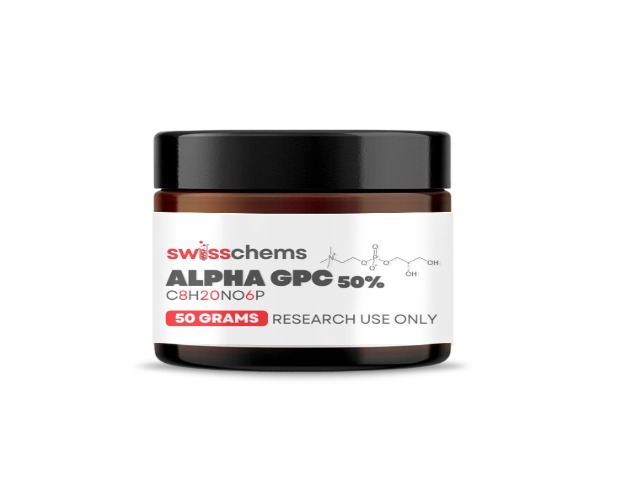
Alpha-GPC: The Evidence-Based Winner
Alpha-GPC (L-alpha-glycerylphosphorylcholine) is a phospholipid-derived choline source that rapidly delivers choline to the brain across the blood-brain barrier.
The definitive comparison came in a 2025 systematic review and meta-analysis in Frontiers in Neurology (PMID 41426989) that pooled data from three RCTs directly comparing alpha-GPC against citicoline at equivalent doses (1,000mg/day). Alpha-GPC demonstrated statistically significant superiority across multiple domains:
- Overall clinical outcomes (SCAG total): WMD −3.92
- Cognitive function: WMD −1.80
- Interpersonal relationships: WMD −1.09
- Affective disorders: WMD −0.50
- Apathy: WMD −1.40
The only domain where citicoline matched alpha-GPC was pure memory (word fluency and Wechsler Memory Scale) — no significant difference there.
Why alpha-GPC wins: It contains 41% choline by weight (vs. citicoline’s lower content) and produces nearly double the plasma choline increase (25.8 umol/L vs. 13.1 umol/L). It’s converted directly to free choline, while citicoline requires multiple metabolic steps.
Dose: 300-600mg daily for cognitive enhancement. Up to 1,200mg daily in clinical trials for dementia. I take 300mg in the morning on cognitively demanding days. See our alpha-GPC substance page for full pharmacology.
Citicoline: The Neuroprotective Alternative
Citicoline (CDP-choline) breaks down into choline plus cytidine, which converts to uridine. This gives it a dual mechanism: cholinergic support plus uridinergic neuroprotection through enhanced phosphatidylcholine synthesis and membrane repair.
While it ranked second to alpha-GPC in the head-to-head comparison, citicoline has unique strengths:
- Better evidence for neuroprotection after brain injury and stroke recovery
- Dopamine modulation through uridine’s effects on dopaminergic signaling
- Equivalent memory outcomes — if pure memory is your primary target, citicoline is just as effective
Dose: 250-500mg daily. See our citicoline substance page.
My recommendation: Alpha-GPC for acute focus and general cognitive enhancement. Citicoline if you’re prioritizing neuroprotection or recovery. Some people combine lower doses of both (150mg alpha-GPC + 250mg citicoline) for broad-spectrum cholinergic support.
Tier 2: Acetylcholinesterase Inhibitors
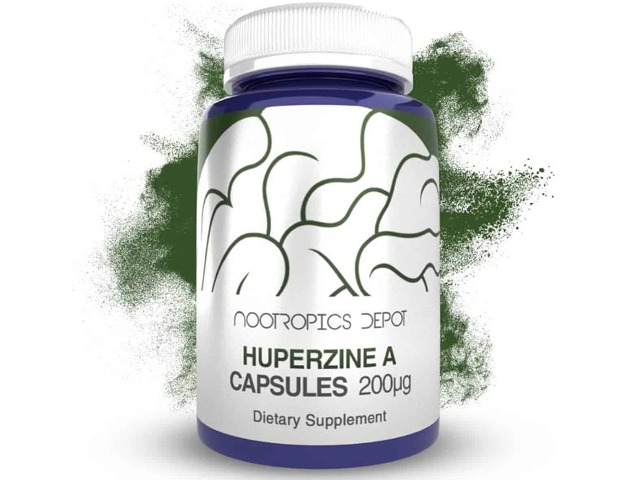
Huperzine A: Potent but Requires Cycling
Huperzine A, extracted from Chinese club moss, works by a completely different mechanism: it temporarily inhibits acetylcholinesterase (AChE), the enzyme that breaks down acetylcholine. Instead of giving your brain more raw material, it makes existing acetylcholine last longer.
A phase II trial in mild-to-moderate Alzheimer’s disease found that the dose matters enormously:
- 200 mcg twice daily: No significant cognitive improvement vs. placebo
- 400 mcg twice daily: 2.27-point ADAS-Cog improvement at 11 weeks (vs. 0.29-point decline for placebo, p=0.001)
A 2025 RCT in neurosurgery patients found that 0.2mg huperzine A postoperatively significantly preserved cognitive function measured by MMSE compared to standard care, preventing the postoperative cognitive decline that commonly follows general anesthesia.
Important caveats: Because it inhibits breakdown rather than increasing supply, huperzine A can lead to excess cholinergic activity if overused. Symptoms of too much ACh include brain fog, low mood, excessive salivation, and GI discomfort — the opposite of what you want. Cycle it: 3-4 days on, 2-3 days off, or reserve for days of peak cognitive demand. Don’t stack it with high-dose alpha-GPC without monitoring your response.
Dose: 50-200 mcg on demanding days. See our huperzine A substance page.
Tier 3: Long-Term Cognitive Builders
These compounds work over weeks to months, building resilience rather than providing acute effects.
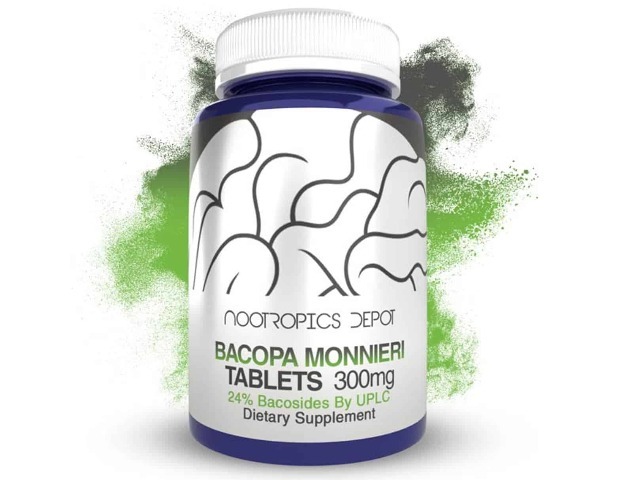
Bacopa Monnieri: The Slow Builder
Bacopa monnieri modulates acetylcholine release, binds muscarinic receptors, and enhances choline acetyltransferase activity. It also reduces cortisol, modulates the HPA axis, and supports hippocampal function through anti-inflammatory mechanisms.
The evidence is mixed but overall positive. A comprehensive 2024 RCT found significant improvements in verbal short-term memory, spatial short-term memory, working memory, visuospatial working memory, episodic memory, concentration, alertness, reasoning, and mental flexibility compared to placebo after 84 days. Anxiety and cortisol were reduced; sleep quality and BDNF were increased.
However, a 2025 RCT in healthy adults with self-reported memory problems found no significant differences in verbal learning, attention, or working memory — though the Bacopa group showed significantly greater reductions in stress reactivity and lower fatigue after cognitive demand.
My interpretation: Bacopa’s primary value is as a stress-resilient memory builder over months of use, not an acute focus enhancer. The cognitive benefits likely emerge most clearly in people with genuine cognitive stress or early decline, not in well-rested, healthy adults tested over short periods.
Dose: 300-450mg standardized extract daily (10-20% bacopa glycosides) for at least 12 weeks. Take with a fat-containing meal for better absorption. See our Bacopa substance page.
Phosphatidylserine: Membrane Support
Phosphatidylserine (PS) comprises about 15% of the brain’s total phospholipids and is critical for maintaining neuronal membrane integrity and facilitating interneuronal communication.
A 2024 twelve-month RCT in 190 Chinese adults with mild cognitive impairment found that PS combined with alpha-linolenic acid significantly improved arithmetic performance, similarity test scores, and short-term memory. Importantly, the intervention also increased serum acetylcholine, GABA, and serotonin levels, suggesting broad neurotransmitter support.
A 2025 trial in healthy children found no overall cognitive benefits, but a subgroup with below-median baseline performance showed improvements in visuospatial memory — suggesting PS may be most useful for people with existing cognitive weaknesses rather than those at baseline.
Dose: 100-300mg daily. Think of PS as foundational support rather than an acute cognitive booster.
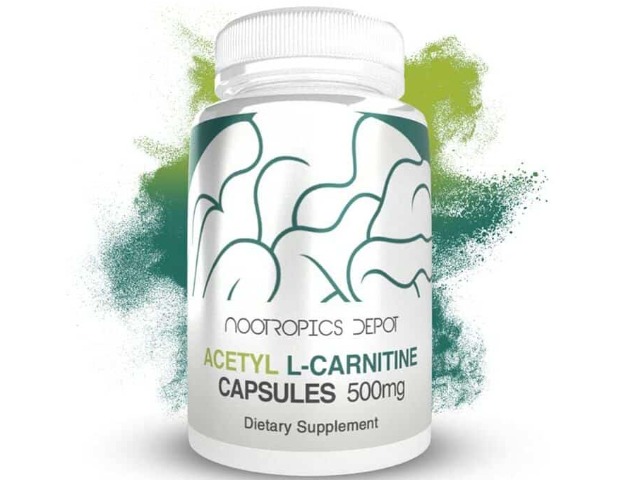
Acetyl-L-Carnitine: The Cholinergic Protector
ALCAR provides acetyl groups that serve as cofactors for acetylcholine synthesis via choline acetyltransferase. It crosses the blood-brain barrier and supports mitochondrial energy production in neurons.
A 2024 study using a Drosophila Alzheimer’s model found that ALCAR selectively preserved cholinergic neurons and memory function when amyloid-beta was expressed — notably, it did not protect dopaminergic neurons in the same model, suggesting specificity for cholinergic circuits.
Human evidence is limited to small studies showing benefits in aging populations and depression, but the mechanistic case is compelling: ALCAR provides both the acetyl groups needed for ACh synthesis and the mitochondrial support that cholinergic neurons require for sustained firing.
Dose: 500-1,500mg daily. Pairs well with a choline precursor (alpha-GPC or citicoline) for complementary mechanisms.
Beyond Supplements: The INHANCE Trial
The most remarkable cholinergic finding of 2025 wasn’t a supplement — it was a behavioral intervention.
The INHANCE trial at McGill University randomized 92 healthy adults aged 65+ to either a computerized speed-based cognitive training program (BrainHQ) or recreational computer games. Both groups trained 30 minutes daily for 10 weeks. Researchers used FEOBV-PET imaging to directly measure cholinergic terminal density before and after.
The results: only the BrainHQ group showed a 2.3% increase in cholinergic activity in the anterior cingulate cortex. Given that natural decline is ~2.5% per decade, this single 10-week intervention effectively reversed approximately one decade of cholinergic aging. Additional improvements were observed in the hippocampus and parahippocampal gyrus.
The mechanism: activity-dependent upregulation of the vesicular acetylcholine transporter, driven by increased neuronal firing and cholinergic demand during speed-based training. Your brain literally builds more cholinergic capacity when you demand it.
This suggests that supplements work best when combined with cognitively demanding activity. Taking alpha-GPC and then scrolling social media is a waste. Taking alpha-GPC and then engaging in focused, challenging mental work creates the demand that drives cholinergic system adaptation.
Building Your Focus Stack
Here’s how I think about combining cholinergic interventions, from foundational to advanced:
Foundation (everyone):
- Adequate dietary choline: 2-3 eggs daily provides ~300mg highly bioavailable phosphatidylcholine
- Cognitively demanding work: this is the stimulus that drives cholinergic adaptation
Level 1 — Precursor Support:
- Alpha-GPC (300-600mg daily) for direct cholinergic enhancement, OR
- Citicoline (250-500mg daily) if you also want neuroprotective/dopaminergic benefits
- ALCAR (500-1,000mg daily) as a complementary acetyl group donor
Level 2 — Long-Term Builders:
- Bacopa monnieri (300mg standardized extract daily for 12+ weeks) for memory and stress resilience
- Phosphatidylserine (100-300mg daily) for membrane support
Level 3 — Acute Enhancement (use sparingly):
- Huperzine A (50-200 mcg) on days of peak cognitive demand
- Cycle: 3-4 days on, 2-3 days off to prevent excess cholinergic buildup
Signs you’ve overdone it: If you experience brain fog, flat mood, excessive salivation, or GI discomfort while taking cholinergics, you likely have too much acetylcholine activity. Scale back, especially on AChE inhibitors.
My Protocol
- Morning on demanding days: 300mg alpha-GPC + 200mg L-theanine + caffeine. The alpha-GPC provides raw material, L-theanine smooths the caffeine, and the combination creates focused, sustained attention.
- Daily: 300mg Bacopa monnieri with dinner (fat-containing meal). This is my long-term memory builder.
- Occasional: 100 mcg huperzine A on days when I need absolute peak output — maybe 2-3 times per month.
- Foundation: 2-3 eggs daily for baseline choline, focused deep work sessions that demand cholinergic system engagement.
I don’t take alpha-GPC every day — I use it 3-4 days per week when I have the most cognitively demanding work. On lighter days, dietary choline is sufficient. The Bacopa is daily because its benefits accumulate over time and diminish if you stop.
For detailed dosing, safety, and pharmacology on each compound, see the individual substance pages linked throughout.