Flow state — that elusive condition where you’re so absorbed in challenging work that time distorts, self-consciousness vanishes, and performance peaks — has been romanticized in productivity culture as the holy grail of focus. “Just get into flow” is the advice, as if it were a switch to flip.
But the neuroscience of flow has matured significantly, and the picture is more nuanced and more useful than the pop-science version. A 2026 systematic review of nine neuroimaging studies (fMRI, EEG, PET) across tasks from jazz improvisation to video games revealed specific, reproducible brain dynamics during flow — and they’re not what most people expect. Flow isn’t hyperfocus. It’s not just the prefrontal cortex working overtime. It’s a distinct neural state involving selective network suppression, enhanced connectivity between typically competing brain networks, and a specific neurochemical environment.
Understanding this biology won’t let you snap into flow on command, but it will help you create the conditions where flow is more likely to emerge naturally.
The Short Version: Flow involves selective suppression of the default mode network (DMN, which handles self-referential thought and mind-wandering) alongside enhanced executive control network (ECN) activity for sustained attention. A 2024 Drexel EEG study showed flow in jazz musicians requires two conditions: deep expertise (building specialized neural networks) plus release of conscious control (“letting go”). Dopaminergic activation in the striatum drives the intrinsic reward that makes flow self-sustaining. The practical formula: master your craft deeply enough that execution becomes semi-automatic, then structure your environment to minimize interruptions and match challenge to skill level.
What’s Actually Happening in Your Brain During Flow
Network Dynamics: The DMN-ECN Dance
Your brain operates through large-scale networks that typically compete for resources:
- The Executive Control Network (ECN): Centered in the lateral prefrontal and parietal cortices, this network handles directed attention, working memory, and goal-directed behavior
- The Default Mode Network (DMN): Centered in the medial prefrontal cortex, posterior cingulate cortex, and precuneus, this network activates during mind-wandering, self-referential thought, and daydreaming
Normally, these networks are anticorrelated — when one activates, the other deactivates. You’re either focused on a task (ECN dominant) or wandering internally (DMN dominant).
The 2026 systematic review found that flow involves a specific pattern: core DMN regions (medial prefrontal cortex, posterior cingulate cortex) are suppressed — reducing self-monitoring and self-criticism — while the ECN is strongly active for sustained task engagement. But here’s the interesting part: DMN and ECN connectivity actually increases during flow for creative tasks, suggesting a unique integration where task-focused attention coexists with some creative processing that normally requires the DMN.
This explains flow’s subjective quality: you lose self-consciousness (DMN suppression of self-referential processing) while maintaining intense task focus (ECN activation), and creative solutions emerge seemingly effortlessly (DMN-ECN integration).
Transient Hypofrontality: The “Letting Go” Mechanism
The transient hypofrontality hypothesis proposes that flow involves temporary reduction in dorsolateral prefrontal cortex (dlPFC) activity. The dlPFC is your inner critic and executive controller — it monitors your performance, judges your output, and maintains self-awareness. During flow, this monitoring system partially deactivates, reducing the executive overcontrol that interferes with fluid performance.
The 2025 evidence supports a refined version of this: flow doesn’t involve a complete frontal shutdown but rather selective suppression of self-monitoring circuits while task-relevant executive functions (attention direction, working memory maintenance) remain active. It’s not that your prefrontal cortex goes offline — it’s that the parts devoted to self-evaluation quiet down while the parts devoted to task performance stay engaged.
This is why anxiety is the nemesis of flow: anxiety activates exactly the self-monitoring, threat-evaluating circuits that flow requires to be suppressed.
The Expertise Prerequisite
A 2024 Drexel University EEG study of jazz improvisation revealed something important that productivity gurus often skip: flow requires deep prior expertise. The musicians who achieved flow had spent years building specialized neural networks for musical idea generation. Flow wasn’t about trying harder — it was about having so much domain expertise that the brain could switch from conscious, effortful control to automatic, fluid execution.
The study identified two phases:
- Expertise buildup: Years of deliberate practice create specialized brain networks for domain-specific tasks
- Control release: During flow, these well-trained networks operate with minimal conscious supervision, producing the feeling of effortless performance
This has a practical implication: you can’t flow-hack your way through a task you haven’t mastered. Flow emerges from the intersection of high skill and appropriate challenge. If you’re constantly struggling because the task exceeds your competence, you’ll get frustration, not flow.
The Neurochemistry
Flow involves a specific cocktail of neurochemical changes:
- Dopamine: Striatal dopamine increases during flow, driving the intrinsic reward and motivation that make flow self-sustaining. The 2025 Nature Neuroscience finding that dopamine operates with spatial precision — like a “postal service” rather than a broadcast — means that flow-associated dopamine acts on specific reward circuits rather than flooding the whole brain. See our dopamine supplements article for more on dopamine biology.
- Norepinephrine: Elevated during the initial engagement phase, supporting arousal and vigilance
- Endocannabinoids (anandamide): Likely contribute to the blissful quality of flow and the reduction in pain/discomfort awareness
- Gamma-band oscillations: Neural synchrony in the gamma frequency range increases during flow, indicating coordinated processing across brain regions
How to Create Flow Conditions
You can’t force flow, but you can create the conditions that make it probable. Based on the neuroscience:
1. Match Challenge to Skill (The Sweet Spot)
The most reliable flow trigger is the challenge-skill balance. The task needs to be approximately 4% beyond your current skill level — hard enough to demand full engagement but not so hard that it triggers anxiety and frustration.
The 2025 NeuroImage study confirmed this with EEG data: learning progress (the perception that you’re improving at the right rate) predicted flow through enhanced proactive preparation and feedback processing. When you’re in the sweet spot, your brain’s prediction systems engage optimally.
Practical application: If a task is too easy, add constraints (tighter deadlines, higher quality standards). If too hard, break it into smaller components you can master sequentially.
2. Eliminate Distractions (Protect the ECN)
Every notification, interruption, or environmental distraction activates the orienting response and pulls resources from the ECN toward evaluating the new stimulus. Studies show it takes 15-25 minutes to return to equivalent depth of focus after an interruption. In a typical open-office environment with frequent interruptions, flow is essentially impossible.
Practical application: Phone on airplane mode. Notifications off. Door closed or headphones on. Communicate to colleagues that you’re unavailable for a defined period. The research is clear: your environment matters more than your willpower.
3. Build Expertise First (The Non-Negotiable Prerequisite)
The Drexel jazz study’s finding applies broadly: flow requires domain competence. For knowledge workers, this means you need sufficient expertise in your field that portions of the work have become semi-automatic — freeing cognitive resources for the creative, challenging portions.
Practical application: Don’t expect flow when you’re brand new to a task. Invest in deliberate practice to build the foundational skills, then seek flow experiences in the zone where those skills meet appropriately challenging problems.
4. Set Clear Goals and Feedback Loops
Flow requires knowing what you’re trying to achieve (clear goals) and being able to tell how you’re progressing (immediate feedback). Without goals, attention drifts. Without feedback, you can’t calibrate your challenge-skill balance.
Practical application: Before starting a flow session, define your specific objective. For writing: “complete section X.” For coding: “implement feature Y.” For analysis: “answer question Z.” Then arrange your work so you can see progress in real-time.
5. Reduce Anxiety (Suppress the Self-Monitor)
Since anxiety activates exactly the self-monitoring circuits that flow suppresses, managing pre-session anxiety is important. This doesn’t mean eliminating all stress — some arousal is necessary for flow. But rumination, self-doubt, and worry are direct flow killers.
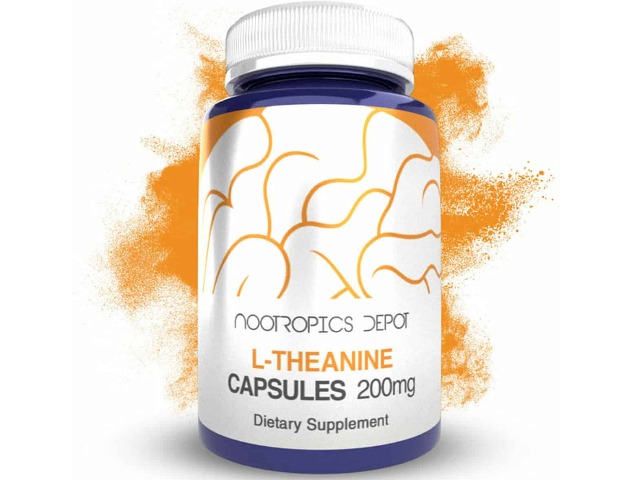
Practical application: L-theanine (200mg) promotes alpha brain wave activity, which is associated with relaxed alertness — a state that resembles flow’s precursor condition. Our L-theanine + caffeine article covers this combination in detail. Brief meditation or deep breathing before a flow session can also reduce anticipatory anxiety.
Supplements That Support Deep Focus
No supplement creates flow. But certain compounds support the neurochemical conditions that make flow more accessible:
L-Theanine + Caffeine
L-theanine (200mg) + caffeine (100-200mg) is the closest thing to a “focus stack” with clinical support. L-theanine increases alpha brain waves and GABA availability (reducing anxiety without sedation), while caffeine increases norepinephrine and dopamine (enhancing arousal and motivation). Together, they create the alert-but-calm state that precedes flow.
Alpha-GPC
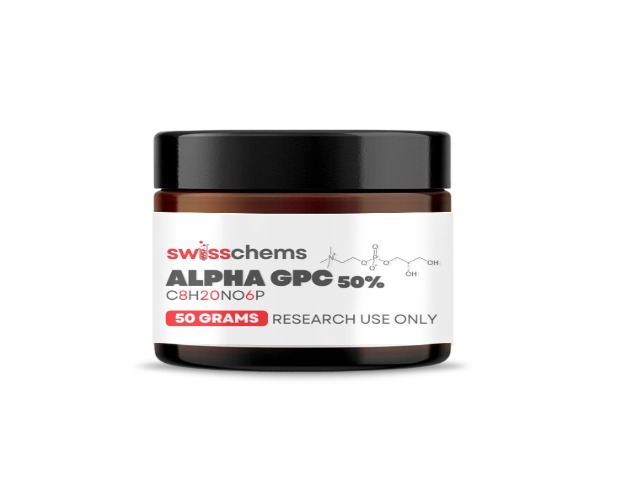
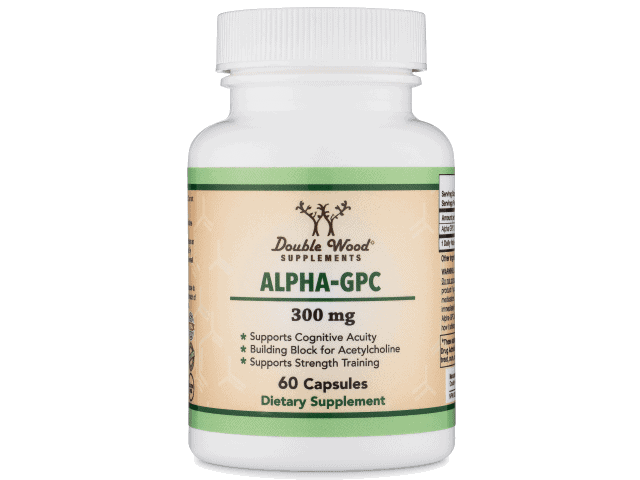
Alpha-GPC (300mg) provides the cholinergic precursor that supports sustained attention. Acetylcholine is the neurotransmitter most directly tied to attentional focus, and the cholinergic system degrades with age. See our cholinergics article for the evidence.
Rhodiola Rosea
Rhodiola (200-400mg) helps maintain cognitive performance during extended work sessions by buffering fatigue and stress. It won’t sharpen peak focus, but it can extend the duration of productive work before cognitive fatigue sets in.
What I’d Skip
Phenylpiracetam and other racetams: These are research chemicals (Red List) with limited evidence in healthy adults. The focus effects are inconsistent and the regulatory status is problematic.
Nootropic “flow stacks”: Pre-formulated products marketed for flow states are generally under-dosed combinations of individually useful compounds. Buy what you need separately at effective doses.
Microdosing: Whatever its actual effects, this doesn’t belong in a responsible supplement recommendation given its legal status and the absence of controlled trial data for cognitive enhancement in healthy adults.
Flow vs. Hyperfocus vs. Deep Work
These terms are often conflated but describe different things:
Flow is a specific psychological state with defined characteristics: challenge-skill balance, loss of self-consciousness, distorted time perception, intrinsic reward, and effortless control. It emerges from appropriate conditions and involves the specific neural dynamics described above.
Hyperfocus (common in ADHD) shares some surface features — intense absorption, loss of time awareness — but involves different neural dynamics. Hyperfocus often occurs involuntarily on tasks with high reward salience regardless of importance, may persist beyond productivity, and doesn’t require the challenge-skill balance that flow demands. It’s driven more by reward sensitivity than by optimized network coordination.
Deep work (Cal Newport’s framework) is a behavioral strategy — scheduling extended, uninterrupted blocks for cognitively demanding work. It creates the conditions for flow but doesn’t guarantee it. You can do deep work without achieving flow, and the work is still valuable.
All three are useful in different ways. Flow is the peak performance state; deep work is the reliable daily practice; understanding hyperfocus is important for people with ADHD who want to channel it productively.
My Protocol for Deep Concentration
My approach to maximizing focused work output:
- Morning routine: 200mg L-theanine + caffeine, 300mg alpha-GPC on demanding days. Brief meditation (5-10 minutes) to reduce residual anxiety.
- Environment: Phone on airplane mode, all notifications disabled, noise-canceling headphones with instrumental music (no lyrics). I work in 90-minute blocks aligned with ultradian rhythms, then take a 15-20 minute break.
- Task structure: Clear objective defined before each block. Tasks calibrated to be challenging but within my competence zone. Complex projects broken into achievable sub-goals.
- Recovery: I don’t try to maintain flow all day. 2-3 deep focus blocks of 60-90 minutes is a productive day. The rest is communication, administrative work, and recovery.
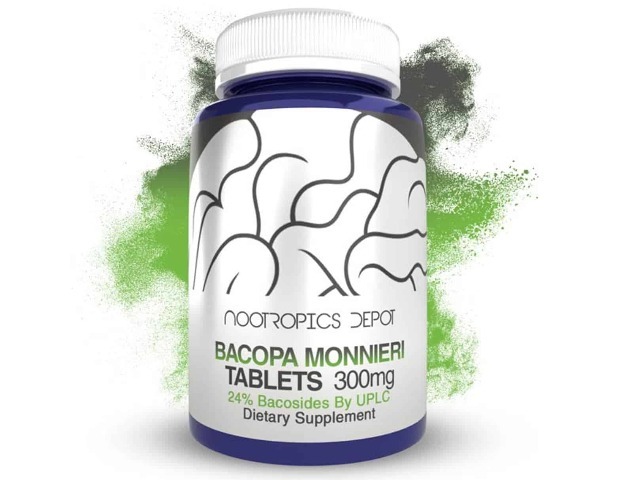
- Long-term: Regular exercise (maintains BDNF and dopaminergic function), adequate sleep (memory consolidation), and Bacopa monnieri (300mg daily as a long-term memory builder).
The most important realization about flow is that it’s not the goal — productive output is the goal, and flow is one state that can contribute. Obsessing over achieving flow is counterproductive because the self-monitoring involved (“Am I in flow yet?”) activates exactly the circuits flow requires to be suppressed. Set up the conditions, do the work, and let flow happen when it happens.
For more on the cholinergic and dopaminergic systems that support sustained attention, see our cholinergics for focus and dopamine supplements articles.