
- Supports healthy body composition and fat metabolism
- May enhance NAD+ levels and cellular energy production
- Supports muscle function and exercise recovery
- May promote insulin sensitivity and metabolic health
I’ll be honest — I ignored 5-Amino-1MQ for a long time. It kept popping up in peptide forums sandwiched between GLP-1 agonists and growth hormone secretagogues, and the marketing hype was thick enough to make my skeptic alarm go off. “Burns fat without dieting!” “Reverses aging at the cellular level!” You know the drill.
Then I actually read the research. And while the compound doesn’t live up to the breathless marketing copy, what it does do — and how it does it — is genuinely interesting. It targets a metabolic bottleneck that most people have never heard of, and the preclinical data is surprisingly consistent.
Here’s the catch: there are still zero published human clinical trials. So let’s talk about what we actually know, what we don’t, and whether this is worth your attention (and your money).
The Short Version: 5-Amino-1MQ is a small synthetic molecule that blocks the enzyme NNMT, which drains your cells of NAD+ and methylation capacity — two things your metabolism desperately needs. Animal studies consistently show reduced body fat, improved insulin sensitivity, and enhanced muscle function without appetite suppression. But no human trials exist yet, making this a “promising but unproven” compound best suited for informed self-experimenters who’ve already nailed their foundations.
What Is 5-Amino-1MQ?
Despite showing up in every “peptide” vendor’s catalog, 5-Amino-1MQ isn’t actually a peptide. It’s a small synthetic molecule — a methylquinolinium compound — that was first characterized in 2017 by researchers at the University of Texas Medical Branch. The team, led by Stanley Watowich and Harshini Neelakantan, was hunting for a way to block a specific enzyme called nicotinamide N-methyltransferase, or NNMT.
Why would anyone want to block NNMT? Because this enzyme is essentially a metabolic saboteur. It chews through two of your body’s most important resources — nicotinamide (a form of vitamin B3 that your cells need to make NAD+) and SAM (your primary methyl donor). NNMT is overexpressed in obesity, type 2 diabetes, and aging. The more active it is, the worse your metabolic profile gets.
The researchers screened several candidate molecules and published their findings in Biochemical Pharmacology. 5-Amino-1MQ stood out for its selectivity — it blocked NNMT without interfering with related enzymes, which reduces the risk of off-target side effects. Neelakantan and Watowich went on to co-found Ridgeline Therapeutics to develop NNMT inhibitors commercially.
As of early 2026, the compound is not FDA-approved for any indication. It’s available through research chemical suppliers and some compounding pharmacies, but anyone using it should understand they’re operating well ahead of the clinical evidence.
How Does 5-Amino-1MQ Work?
Think of NNMT as a wasteful middleman in your cells’ energy economy. It takes nicotinamide — which your body needs to produce NAD+, the molecule that powers virtually every metabolic process — and converts it into a mostly useless byproduct called 1-MNA. To make matters worse, this reaction also burns through SAM, your body’s universal methyl donor.
The result is a double drain: less raw material for NAD+ production, and less methylation capacity for everything from DNA repair to neurotransmitter synthesis. This enzyme is particularly overactive in fat tissue, liver, and aged muscle — exactly the places where metabolic dysfunction causes the most damage.
5-Amino-1MQ plugs directly into NNMT’s nicotinamide-binding pocket, shutting the enzyme down. The downstream effects have been measured in multiple studies:
- Intracellular NAD+ increases 1.2 to 1.6x at therapeutic concentrations, according to the original 2017 research
- SAM levels are preserved, maintaining the cell’s methylation machinery
- Lipogenesis drops significantly — fat accumulation decreased by 50% at moderate concentrations and 70% at higher concentrations in cell culture, with an EC50 of roughly 2.3 µM in adipocytes
- A 2024 review in Frontiers in Pharmacology confirmed that NNMT knockdown “elicits heightened energy expenditure in adipose and hepatic tissues, mitigates lipid accumulation, and enhances insulin sensitivity”
In plain English: blocking NNMT tips the metabolic scales toward energy production and away from fat storage. Your cells get more NAD+ to fuel mitochondria, more SAM to maintain methylation, and less biochemical incentive to pack away fat. And critically, this happens without touching appetite — the mechanism is entirely about how your cells handle energy, not about making you eat less.
The Benefits — And How Strong the Evidence Actually Is
Let me be straight with you about the evidence landscape here. Everything we have comes from cell culture and animal studies. The data is consistent and mechanistically coherent — but “consistent rodent data” is not the same as “proven in humans.” I’ve seen too many promising preclinical compounds fizzle in human trials to pretend otherwise.
Fat Loss and Metabolic Health (Strong Preclinical Evidence)
This is where the data is most compelling. In diet-induced obese mice treated with 5-Amino-1MQ for just 11 days, body weight decreased roughly 5% while untreated controls gained weight. White adipose tissue dropped about 35%. Individual fat cells shrank by over 30%. Plasma cholesterol fell approximately 30%. And here’s the detail that matters — food intake didn’t change. The mice ate the same amount. They just burned more of it.
A 2024 study from Ridgeline Therapeutics, published in Diabetes, Obesity & Metabolism, extended this to 28 days of once-daily dosing and found dose-dependent improvements across the board: less body fat, better glucose tolerance, improved insulin sensitivity, reduced hyperinsulinemia, and less fatty liver. That’s a meaningful replication.
Reality Check: These are mouse studies with subcutaneous injection, not oral capsules in humans. The metabolic principles translate, but the specific magnitudes of fat loss may not. If a vendor tells you “lose 35% of your body fat,” they’re extrapolating rodent data in a way that isn’t honest.
Muscle Function and Aging (Promising Preclinical Evidence)
A 2024 study in Scientific Reports tested 5-Amino-1MQ in aged mice (22–24 months old — the equivalent of roughly 65–70 in human years). Grip strength improved about 25% with the compound alone and about 25% with exercise alone. Combined? A 60% improvement. Running endurance increased by 150% in the combination group. Intramuscular fat — the marbling that builds up in aging muscle and impairs function — was significantly reduced.
This is the finding that excites me most, honestly. Age-related muscle decline is one of the biggest drivers of disability and lost independence, and an intervention that enhances rather than replaces exercise benefits is exactly the right approach.
Gut Microbiome Effects (Early Evidence)
A 2022 Scientific Reports study found that 5-Amino-1MQ combined with a low-fat diet produced a distinct gut microbiome profile — decreased Erysipelatoclostridium and increased Lactobacillus, both of which track with better metabolic health. Interesting, but a single study in mice.
Anti-Cancer Activity (Very Early Evidence)
There’s preliminary data showing 5-Amino-1MQ can inhibit cancer cell proliferation without harming normal cells, and may enhance immunotherapy response in bladder cancer models. This is far too early to draw any practical conclusions from, but it’s worth tracking.
Cognitive Enhancement (No Direct Evidence)
I need to address this because it’s all over the marketing. Claims that 5-Amino-1MQ is a nootropic or cognitive enhancer have no direct published evidence supporting them. The theoretical argument — more NAD+ means better mitochondrial function means better brain energy — is mechanistically plausible. But plausible and proven are very different things. If cognitive enhancement is your primary goal, you’d be better served by compounds with actual human cognitive data like Bacopa Monnieri or Lion’s Mane.
How to Take 5-Amino-1MQ Without Wasting Your Money
Important caveat up front: No human clinical trial has established optimal dosing. Everything below comes from practitioner protocols, pharmacokinetic rat data, and community experience. Treat these as starting points, not gospel.
Pharmacokinetic data from a validated rat study published in the Journal of Pharmaceutical and Biomedical Analysis gives us useful baselines: oral bioavailability is about 38%, with a half-life of roughly 7 hours after oral dosing. That half-life supports once or twice daily dosing for most people.
Starting Protocol:
- Begin at 50 mg once daily, taken with food (morning or early afternoon)
- Assess tolerance for 1–2 weeks
- If well-tolerated, increase to 50 mg twice daily (100 mg total)
- The common range is 50–150 mg per day, split across 1–2 doses
- Some practitioners recommend cycling 8 weeks on, 4 weeks off — though there’s no hard evidence for this specific schedule
Pro Tip: Take it with a meal. The most commonly reported side effect is nausea, and it’s almost always from taking it on an empty stomach. Morning dosing with breakfast is the sweet spot for most people — a few report mild stimulatory effects that could interfere with sleep if taken too late in the day.
Forms available: Oral capsules are the most common and practical. Sublingual solutions and subcutaneous injections exist but are less common. Injectable doses are dramatically lower (150–300 micrograms, not milligrams) because they bypass first-pass metabolism.
Timeline of effects: Don’t expect overnight results. Based on community reports, subtle energy improvements appear in week one, exercise tolerance improves around weeks 2–3, and visible body composition changes typically emerge at weeks 3–4. The most pronounced benefits are reported at 4–8 weeks of consistent use.
The Side Effects Nobody Warns You About
Let me be clear: we don’t have systematic human safety data. What we have are animal study observations and anecdotal user reports. That said, here’s the picture.
What animal studies show: In the original mouse studies, “administration of NNMT inhibitors did not impact total food intake nor produce any observable adverse effects.” The 28-day Ridgeline Therapeutics study reported no adverse effects. Significant cell toxicity only appeared at concentrations well above therapeutic range (600 µM, versus the 1–60 µM therapeutic window). This is reassuring but not sufficient.
What users report: Nausea is the most common complaint, almost always tied to empty-stomach dosing. Some report mild fatigue, dizziness, or headache, particularly in the first few days. Starting at higher doses (100 mg+) seems to trigger more of these issues.
Important: Avoid 5-Amino-1MQ if you are pregnant or breastfeeding (zero safety data), have significant kidney or liver disease (limited clearance data, and NNMT is highly expressed in the liver), or are undergoing active cancer treatment without oncologist supervision. Specific drug interactions are poorly documented — use caution if you’re combining with other NAD+-modulating supplements like NMN or NR at high doses, and always consult your healthcare provider before combining with prescription medications.
Stacking 5-Amino-1MQ
The most logical stack partner — and the one you’ll see discussed most often — is NMN (Nicotinamide Mononucleotide). The rationale is elegant: 5-Amino-1MQ prevents NNMT from draining your nicotinamide supply (conservation), while NMN provides additional NAD+ precursor material (supply). You’re plugging the leak and filling the tank. Several vendors sell combined capsules, typically 5-Amino-1MQ 25 mg + NMN 500 mg.
Nicotinamide Riboside works on similar logic — it’s another NAD+ precursor that pairs well with the conservation approach of NNMT inhibition.
Resveratrol is another interesting pairing. It activates SIRT1, a sirtuin enzyme that requires NAD+ as a cofactor. If 5-Amino-1MQ is boosting your NAD+ levels, resveratrol has more fuel to work with. Mechanistically sound, though unstudied as a specific combination.
The exercise synergy deserves its own mention. That 2024 aging mouse study showed additive benefits — 60% grip strength improvement from the combination versus 25% from either intervention alone. If you’re using 5-Amino-1MQ, regular resistance training isn’t optional. It’s the multiplier that makes the compound worthwhile.
What to avoid combining without medical supervision: Other fat-loss compounds like semaglutide, tirzepatide, or tesofensine. The metabolic effects overlap in ways that haven’t been studied together, and stacking multiple metabolic interventions without oversight is how people get into trouble.
My Take
Here’s where I land on 5-Amino-1MQ: the science is genuinely interesting, and the preclinical data is more consistent than what I see for most research compounds that make it to the consumer market. NNMT inhibition is a validated target, the mechanism makes sense, and the animal results have been replicated across multiple independent studies and endpoints.
But — and this is a big but — we’re still in the “educated self-experimentation” phase. No human trials. No long-term safety data. No established human dosing protocol. The compound is expensive (expect $100–$150 for a month’s supply at standard doses), and you can get meaningful metabolic benefits from better-studied, less expensive interventions first.
Who this is best for: Someone who has already dialed in their sleep, nutrition, exercise, and stress management — the foundations — and is looking for an additional metabolic edge, particularly around body composition and exercise performance. Someone who understands they’re operating ahead of the clinical evidence and is comfortable with that tradeoff. Someone willing to invest 6–8 weeks of consistent use to evaluate results.
Who should probably try something else: If you haven’t optimized the basics yet, start there. If cognitive enhancement is your primary goal, look at compounds with actual human cognitive data. If budget is tight, creatine, magnesium, and consistent exercise will give you more bang for your buck.
Insider Tip: If you do try 5-Amino-1MQ, pair it with NMN and a solid resistance training program. The supply-plus-conservation approach to NAD+ makes mechanistic sense, and the exercise synergy data from the aging mouse study is the most exciting finding in the literature. Start low, be patient, and track objective metrics — body composition measurements, workout performance, recovery time — not just how you “feel.”
The bottom line: 5-Amino-1MQ is one of the more scientifically grounded research compounds out there, but “more grounded than most unproven compounds” is a low bar. Approach it with eyes open, expectations calibrated, and foundations already in place.
Recommended 5-Amino-1MQ Products
I know how frustrating it is to sort through dozens of brands making the same claims. These are the ones I've personally vetted — because quality is the difference between results and wasted money.
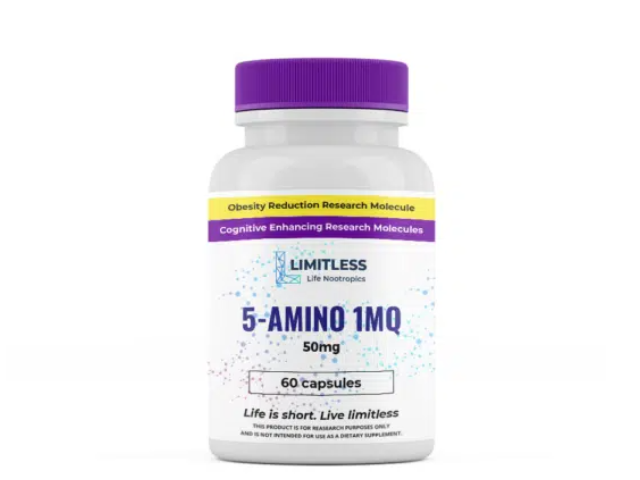
Disclosure: These are affiliate links. I earn a small commission if you purchase — at no extra cost to you. I only recommend products I personally use or have thoroughly researched.
Research & Studies
This section includes 3 peer-reviewed studies referenced in our analysis.