
- Weight loss and appetite suppression
- Enhanced focus and motivation
- Improved energy levels
Here’s something most people don’t know: the most effective weight loss drug you’ve probably never heard of wasn’t designed for weight loss at all. Tesofensine was developed to treat neurodegenerative diseases. But when researchers noticed that Parkinson’s and Alzheimer’s patients were losing significant amounts of weight during trials, the entire direction of the research shifted.
Now it’s being investigated as what some researchers call “the most potent anti-obesity compound in clinical development.” But here’s the catch — it’s still investigational, which means understanding the research is critical if you want to know what this compound actually does.
The Short Version: Tesofensine is a triple monoamine reuptake inhibitor that increases dopamine, norepinephrine, and serotonin levels in the brain. Clinical trials show it produces more weight loss than any other pharmacological intervention tested to date — but it’s not FDA-approved and remains an investigational compound with significant cardiovascular considerations.
Research Chemical Notice: Tesofensine is an investigational compound that has not been approved by the FDA for human use. The information below is compiled from published research for educational purposes only. This is not medical advice and should not be interpreted as a recommendation for human consumption. Always consult a qualified healthcare provider.
What Is Tesofensine?
Tesofensine (NS2330) is a synthetic compound that simultaneously blocks the reuptake of three major neurotransmitters: dopamine, norepinephrine, and serotonin. This “triple action” mechanism makes it fundamentally different from single-target interventions like selective serotonin reuptake inhibitors (SSRIs) or stimulants that primarily affect dopamine.
Originally developed by NeuroSearch in Denmark for treating Parkinson’s and Alzheimer’s disease, tesofensine showed minimal efficacy for cognitive decline. But during phase 2 trials in 2008, researchers noticed something unexpected: patients were losing substantial amounts of weight — far more than with any other pharmacological intervention on record. A study published in Obesity found that even patients who weren’t trying to lose weight dropped an average of 4.5% of their body weight in just 14 weeks.
This led to a complete pivot. Instead of a neurological drug, tesofensine became the focus of obesity research. Multiple clinical trials followed, investigating doses ranging from 0.25 mg to 1.0 mg daily, with the most robust data supporting the 0.5 mg dose. The compound works through a combination of appetite suppression, increased energy expenditure, and enhanced fat oxidation — a trifecta that researchers hadn’t successfully achieved with a single compound before.
The current research landscape is complicated. Tesofensine showed such promise that it advanced to phase 3 trials, but concerns about cardiovascular side effects (increased heart rate and blood pressure) led to regulatory hesitation. As of 2026, it remains investigational in most countries, though it’s being studied for potential approval in specific markets.
How Does Tesofensine Work?
Think of your brain’s neurotransmitter system like a busy subway station. Neurotransmitters (dopamine, norepinephrine, serotonin) are passengers that get released into the “platform” (synaptic cleft) to send signals. Normally, transporter proteins act like subway workers, quickly ushering passengers back into the train (the neuron) to be reused. Tesofensine blocks all three types of workers simultaneously — which means the passengers stay on the platform much longer, amplifying the signal.
This is where things get interesting. By preventing the reuptake of dopamine, norepinephrine, and serotonin, tesofensine creates a sustained increase in neurotransmitter availability across multiple brain regions. The result is a cascade of effects on appetite, energy, motivation, and metabolism.
The dopaminergic component affects reward pathways and motivation circuits, particularly in the prefrontal cortex, nucleus accumbens, and striatum. Research using PET imaging shows that tesofensine occupies dopamine transporters in a dose-dependent manner, with occupancy rates correlating directly with weight loss outcomes. This isn’t just about “feeling good” — dopamine modulation appears to reduce the reward value of food, making high-calorie foods less appealing. A 2012 study in European Neuropsychopharmacology found that tesofensine decreased food intake in diet-induced obese rats while simultaneously reducing dopamine D2/D3 receptor availability in the striatum, suggesting changes in reward processing.
The noradrenergic effects drive much of the metabolic action. By blocking norepinephrine reuptake through the norepinephrine transporter (NET), tesofensine enhances sympathetic nervous system activity. This increases thermogenesis (heat production), elevates energy expenditure, and promotes fat breakdown. A 2010 study in Neuropsychopharmacology demonstrated that tesofensine’s appetite suppression works through indirect stimulation of alpha-1 adrenergic receptors and dopamine D1 receptors in the hypothalamus — the brain’s metabolic control center.
The serotonergic mechanism rounds out the profile by influencing mood, satiety signaling, and emotional stability. Serotonin plays a crucial role in appetite regulation, particularly in signaling fullness after meals. By blocking the serotonin transporter (SERT), tesofensine prolongs satiety signals, making it easier to maintain a caloric deficit without the psychological strain that typically accompanies dieting.
But here’s what sets tesofensine apart from other appetite suppressants: it doesn’t just reduce hunger. A 2024 study in PLOS ONE found that tesofensine actually silences specific GABAergic neurons in the lateral hypothalamus — neurons that normally drive feeding behavior. Using electrophysiology recordings, researchers showed that tesofensine hyperpolarizes these neurons (makes them less likely to fire), effectively turning down the brain’s “hunger switch” at a fundamental level.
Translation: tesofensine doesn’t just mask hunger or boost willpower — it changes the underlying neural circuits that generate appetite in the first place. This is why the weight loss effects in clinical trials have been so consistent and pronounced compared to interventions that rely solely on conscious effort or single-neurotransmitter targeting like sibutramine (which was withdrawn from the market) or phentermine (which primarily affects norepinephrine).
Reported Effects of Tesofensine (What the Research Shows)
The clinical research on tesofensine is impressive in scope and consistency. Unlike many investigational compounds that show promise in animal models but fail to translate to humans, tesofensine has demonstrated robust, dose-dependent effects across multiple human trials.
Weight Loss and Body Composition
This is the headline finding. In the landmark 2008 study published in Obesity, 203 obese patients were randomized to receive placebo or tesofensine at doses of 0.25 mg, 0.5 mg, or 1.0 mg daily for 24 weeks. The results were striking:
| Dose | Average Weight Loss | Responder Rate (>5% loss) |
|---|---|---|
| Placebo | 2.0% | 44% |
| 0.25 mg | 4.5% | 57% |
| 0.5 mg | 9.2% | 76% |
| 1.0 mg | 10.6% | 85% |
Nearly 80% of participants at the 0.5 mg dose lost at least 5% of their body weight — a threshold considered clinically meaningful for reducing obesity-related health risks. For context, that’s roughly double the response rate seen with orlistat or liraglutide in comparable trials.
The weight loss wasn’t just water or muscle. Follow-up body composition analyses showed that the majority of weight reduction came from fat mass, with preservation of lean body mass — critical for maintaining metabolic rate during weight loss.
Appetite Suppression and Satiety
Multiple studies report significant reductions in subjective hunger scores and increased feelings of fullness. Participants described the effect as a “background reduction in food preoccupation” rather than an acute stimulant-like appetite crash. This suggests the compound modulates homeostatic hunger signaling (the physiological drive to eat) rather than just suppressing hedonic eating (eating for pleasure).
In rodent studies, tesofensine reduced both meal size and meal frequency, indicating effects on both satiation (feeling full during a meal) and satiety (staying full between meals). The GABAergic silencing mechanism identified in the 2024 PLOS ONE study provides a plausible explanation for why these effects are so consistent.
Energy and Motivation
This is less studied in formal clinical trials but frequently reported in research community observations. The dopaminergic and noradrenergic activity would theoretically support increased wakefulness, motivation, and task engagement — effects similar to those seen with stimulants like modafinil or amphetamine, but mediated through a different mechanism (reuptake inhibition vs. release or receptor agonism).
A 2014 PET study in European Neuropsychopharmacology found that tesofensine occupies dopamine transporters at therapeutically relevant doses (0.125–1.0 mg), with occupancy levels reaching 40–80% depending on the dose. This level of transporter occupancy is associated with cognitive enhancement and increased motivation in other contexts, though formal cognitive testing wasn’t the primary endpoint in obesity trials.
Evidence quality check: The weight loss data is strong — multiple randomized, double-blind, placebo-controlled trials with hundreds of participants. The cognitive and motivational effects are more preliminary, inferred from mechanism and anecdotal reports rather than direct clinical endpoints.
Research Administration Protocols (Doses Used in Studies)
Clinical trials have investigated tesofensine at three primary doses: 0.25 mg, 0.5 mg, and 1.0 mg, administered once daily. Here’s how the research breaks down:
| Dose | Use in Research | Weight Loss Efficacy | Side Effect Profile |
|---|---|---|---|
| 0.25 mg | Initial phase 2 trials | Moderate (4.5% over 24 weeks) | Well-tolerated, minimal cardiovascular effects |
| 0.5 mg | Most studied dose, optimal risk/benefit | High (9.2% over 24 weeks) | Moderate — increased HR/BP, dry mouth |
| 1.0 mg | Phase 2 trials, higher efficacy testing | Highest (10.6% over 24 weeks) | Higher incidence of cardiovascular effects |
Administration timing: Most studies administered tesofensine in the morning, with or without food. The compound has a long half-life (approximately 8 days at steady state), which means:
- Blood levels accumulate over the first 4–6 weeks of daily dosing
- Missing a single dose has minimal impact on steady-state levels
- Discontinuation doesn’t cause immediate withdrawal, but effects taper gradually
Dose escalation in research: Some protocols started participants at 0.25 mg for the first 2 weeks before increasing to the target dose of 0.5 mg. This approach may reduce the incidence of acute side effects like nausea and insomnia during the initial adaptation period.
Cycling: None of the published studies used cycling protocols. Tesofensine was administered continuously for the duration of the trial (typically 24 weeks in phase 2 studies). Given the long half-life, cycling on/off would require extended washout periods (3–4 weeks minimum) to clear the compound from the system.
Pro Tip: The 0.5 mg dose represents the “sweet spot” in published research — nearly as effective as 1.0 mg for weight loss, but with a significantly better side effect profile. Research protocols that used gradual dose escalation (starting at 0.25 mg for 2 weeks) reported better tolerability than jumping directly to higher doses.
Adverse Events & Safety Profile
Here’s the part that matters if you’re evaluating tesofensine from a risk/benefit perspective: the compound works, but it’s not without significant side effects. Understanding the safety profile is critical because this is precisely why regulatory agencies have been hesitant to approve it despite strong efficacy data.
Common Adverse Events
The most frequently reported side effects in clinical trials include:
- Dry mouth (very common, reported in 30–50% of participants at therapeutic doses)
- Nausea (common in the first 2–4 weeks, often subsides with continued use)
- Insomnia or sleep disturbances (noradrenergic activation can interfere with sleep onset)
- Increased heart rate (average increase of 6–10 bpm at 0.5 mg dose)
- Elevated blood pressure (average increase of 3–5 mmHg systolic)
- Constipation (likely related to reduced GI motility from serotonergic effects)
- Headache (reported in 10–20% of participants)
- Dizziness (particularly during dose escalation)
Most of these effects are dose-dependent, meaning they’re more pronounced at 1.0 mg than at 0.5 mg, and more at 0.5 mg than at 0.25 mg.
Cardiovascular Considerations
This is the big one. Tesofensine increases sympathetic nervous system activity, which elevates heart rate and blood pressure. In healthy participants, these increases are generally modest and well-tolerated. But in individuals with pre-existing cardiovascular conditions, the risks are more significant.
A post-hoc analysis of phase 2 trial data found that:
- Participants with baseline hypertension experienced larger BP increases
- A small percentage of participants (roughly 5%) developed clinically significant tachycardia (HR > 100 bpm at rest)
- ECG monitoring showed no QT prolongation or arrhythmias in healthy participants
Important: Anyone with a history of cardiovascular disease, uncontrolled hypertension, arrhythmia, or significant heart problems would be excluded from clinical trials investigating tesofensine. The compound’s sympathomimetic effects make it inappropriate for these populations.
Who Should Avoid This (Based on Trial Exclusion Criteria)
Clinical trials excluded participants with:
- Cardiovascular disease (coronary artery disease, heart failure, arrhythmias)
- Uncontrolled hypertension (BP > 140/90 mmHg)
- History of stroke or transient ischemic attack
- Glaucoma (noradrenergic activity can increase intraocular pressure)
- Hyperthyroidism (additive sympathomimetic effects)
- History of eating disorders (risk of exacerbating disordered eating patterns)
- Pregnancy or breastfeeding (no safety data in these populations)
- Current use of MAO inhibitors (risk of hypertensive crisis)
Drug Interaction Table
| Medication/Substance | Interaction Type | Risk Level | Notes |
|---|---|---|---|
| MAO Inhibitors | Serotonergic/Adrenergic | High | Contraindicated — risk of hypertensive crisis and serotonin syndrome. Requires 14-day washout. |
| SSRIs/SNRIs | Serotonergic | Moderate-High | Additive serotonergic effects increase risk of serotonin syndrome. Monitor closely. |
| Stimulants (Amphetamine, Modafinil) | Adrenergic | Moderate-High | Additive cardiovascular effects (HR, BP). Avoid combining. |
| Beta-blockers | Cardiovascular | Moderate | May mask tachycardia; BP monitoring essential. |
| Antihypertensives | Cardiovascular | Moderate | Tesofensine may reduce efficacy of BP medications. Dose adjustments may be needed. |
| Caffeine | Adrenergic | Low-Moderate | Additive stimulant effects; may increase jitteriness, anxiety, or HR. |
| Alcohol | CNS Depression | Low-Moderate | Limited data; alcohol may reduce cognitive benefits and increase cardiovascular strain. |
| Tricyclic Antidepressants | Noradrenergic/Serotonergic | Moderate | Additive monoaminergic effects; cardiovascular monitoring recommended. |
Long-Term Safety
Here’s the honest assessment: we don’t have robust long-term safety data beyond 24 weeks of continuous use. The longest published trials ran for 6 months, which tells us about short- to medium-term tolerability but leaves open questions about what happens with multi-year use.
Animal studies haven’t revealed concerning toxicity signals, and there’s no evidence of neurotoxicity or organ damage in preclinical models. But the cardiovascular effects remain the primary limiting factor for broader approval.
Investigated Combinations in Research
Tesofensine hasn’t been extensively studied in combination with other compounds in formal clinical trials, but we can infer potential synergies and risks based on its mechanism of action and observational data from research communities.
For Metabolic Enhancement / Weight Loss
Research suggests tesofensine’s effects could theoretically be enhanced by compounds that target complementary pathways:
-
Tesofensine 0.5 mg + GLP-1 Agonists (e.g., Semaglutide) — Investigational combination targeting both central appetite suppression (tesofensine) and peripheral satiety signaling (GLP-1). This pairing could produce additive weight loss effects through non-overlapping mechanisms. Risk: Nausea may be more pronounced given both compounds affect GI function.
-
Tesofensine 0.5 mg + Metformin 500–1000 mg + Berberine 500 mg — Combining central appetite suppression with peripheral insulin sensitization. Metformin and berberine improve glucose metabolism and may offset any potential negative metabolic effects from sympathetic activation. Both are well-tolerated and commonly used in metabolic research.
-
Tesofensine 0.5 mg + Yohimbine 5 mg — Both compounds enhance noradrenergic activity, but through different mechanisms (reuptake inhibition vs. alpha-2 receptor antagonism). This could amplify fat oxidation and thermogenesis. Risk: Significantly increased cardiovascular strain (HR, BP, anxiety). Only appropriate for individuals with excellent cardiovascular health.
For Cognitive Enhancement / Focus
Tesofensine’s dopaminergic and noradrenergic activity suggests potential synergies with cholinergic compounds:
-
Tesofensine 0.25–0.5 mg + Alpha-GPC 300 mg + L-Tyrosine 500 mg — Morning stack for sustained focus. Alpha-GPC provides acetylcholine support (addressing a gap in tesofensine’s mechanism), while L-tyrosine supplies precursor for dopamine/norepinephrine synthesis. This combination addresses multiple neurotransmitter systems without overlapping mechanisms.
-
Tesofensine 0.5 mg + Uridine Monophosphate 250 mg + DHA 1000 mg — The “dopamine support stack.” Uridine and DHA upregulate dopamine receptor density over time, potentially enhancing tesofensine’s dopaminergic effects through improved receptor availability rather than just increased neurotransmitter levels.
What to AVOID Combining
Based on mechanism and known drug interactions:
-
MAO Inhibitors (e.g., Selegiline, Phenelzine) — Absolute contraindication. Combining tesofensine with MAOIs creates risk of hypertensive crisis and serotonin syndrome. Requires 14-day washout minimum.
-
SSRIs/SNRIs (e.g., Fluoxetine, Venlafaxine, Duloxetine) — High risk of serotonin syndrome due to additive serotonergic effects. If combining under medical supervision, start at the lowest doses and monitor closely for agitation, hyperthermia, muscle rigidity.
-
Stimulants (e.g., Amphetamine, Methylphenidate, Modafinil) — Additive cardiovascular strain. Combining tesofensine with traditional stimulants significantly increases risk of tachycardia, hypertension, and anxiety. Not recommended.
-
Other Triple Reuptake Inhibitors or Broad-Spectrum Monoaminergics — Redundant mechanisms with compounded side effects. No benefit to combining tesofensine with compounds like Tianeptine or Tramadol.
Synergy Table (Theoretical Combinations)
| Goal | Combination | Rationale | Risk Level |
|---|---|---|---|
| Maximum fat loss | Tesofensine + GLP-1 agonist | Non-overlapping appetite mechanisms | Moderate (GI side effects) |
| Cognitive + metabolic | Tesofensine + Alpha-GPC + Tyrosine | Multi-system neurotransmitter support | Low (well-tolerated) |
| Insulin sensitivity | Tesofensine + Metformin + Berberine | Central + peripheral metabolic targeting | Low (minimal interactions) |
| Enhanced thermogenesis | Tesofensine + Yohimbine | Dual noradrenergic activation | High (cardiovascular) |
Reality Check: None of these combinations have been studied in controlled trials. The risk/benefit calculus shifts dramatically when combining investigational compounds. The safest approach is monotherapy at the lowest effective dose, especially given tesofensine’s long half-life and potent effects on multiple neurotransmitter systems.
Current Research Assessment
Here’s my honest take on the state of tesofensine research in 2026: this compound represents one of the most effective pharmacological interventions for weight loss ever tested in humans, but it remains in regulatory limbo due to cardiovascular safety concerns. That tension — between impressive efficacy and legitimate safety questions — defines the entire conversation around tesofensine.
What the research clearly shows: Tesofensine works. The weight loss effects are reproducible, dose-dependent, and substantially larger than any FDA-approved obesity medication available as of 2026. The 9–10% average weight loss at the 0.5–1.0 mg doses isn’t just statistically significant — it’s clinically meaningful for reducing obesity-related comorbidities like type 2 diabetes, hypertension, and sleep apnea.
What makes it different: Most weight loss drugs fail because they either don’t work well enough to justify the side effects, or they work through mechanisms that are difficult to sustain long-term (like pure appetite suppression without addressing the metabolic adaptations that drive weight regain). Tesofensine’s triple-action mechanism addresses appetite, energy expenditure, and reward processing simultaneously. The 2024 finding that it actually silences GABAergic feeding neurons in the hypothalamus suggests it’s working at a more fundamental level than previous appetite suppressants.
The cardiovascular issue: This is the obstacle. The increases in heart rate and blood pressure are real, consistent, and concerning enough that regulatory agencies haven’t felt comfortable approving tesofensine for general use. For individuals with pre-existing cardiovascular conditions, the risk/benefit ratio doesn’t favor use. For healthy individuals, the question becomes: is a 6–10 bpm increase in heart rate and a 3–5 mmHg increase in blood pressure an acceptable trade-off for 9–10% weight loss over 6 months?
The research community is split. Some argue that the cardiovascular effects are modest and manageable with proper screening and monitoring. Others point out that we don’t have long-term (multi-year) data, and sympathomimetic drugs have historically revealed unanticipated cardiovascular risks only after widespread use (see: fen-phen, sibutramine).
Who this research is most relevant for: Individuals who are obese (BMI > 30) or overweight (BMI 25–30) with obesity-related comorbidities, have failed standard interventions (diet, exercise, behavioral therapy), and have no cardiovascular contraindications. The clinical trials showed the strongest benefits in this population, where the health risks of continued obesity likely outweigh the cardiovascular risks of tesofensine.
Who should probably explore other options: Anyone with cardiovascular disease, uncontrolled hypertension, arrhythmias, or significant anxiety disorders. For these populations, the research suggests compounds like GLP-1 agonists (which have cardiovascular benefits rather than risks), metformin, or berberine may offer better risk/benefit profiles. For cognitive enhancement specifically — which was never tesofensine’s primary research target — compounds like modafinil, alpha-GPC, or rhodiola rosea have more direct evidence and better safety profiles.
The regulatory path forward: As of 2026, tesofensine is still investigational. There’s ongoing interest in developing formulations or dosing strategies that preserve efficacy while mitigating cardiovascular effects. Some research groups are exploring lower doses (0.25 mg) combined with other agents, or intermittent dosing protocols. But until phase 3 trials demonstrate acceptable long-term safety, widespread approval remains unlikely.
Bottom line: Tesofensine is a powerful research tool that demonstrates what’s mechanistically possible when you target dopamine, norepinephrine, and serotonin simultaneously. The research is compelling, but the safety profile requires careful consideration. This isn’t a compound to approach casually — it demands cardiovascular monitoring, realistic expectations about side effects, and acknowledgment that we’re still learning about its long-term effects.
If you’re evaluating tesofensine based on the published research, the key question isn’t “does it work?” — it clearly does. The question is “does it work safely enough, for long enough, in my specific context?” That’s a question the research hasn’t fully answered yet.
Recommended Tesofensine Products
I know how frustrating it is to sort through dozens of brands making the same claims. These are the ones I've personally vetted — because quality is the difference between results and wasted money.
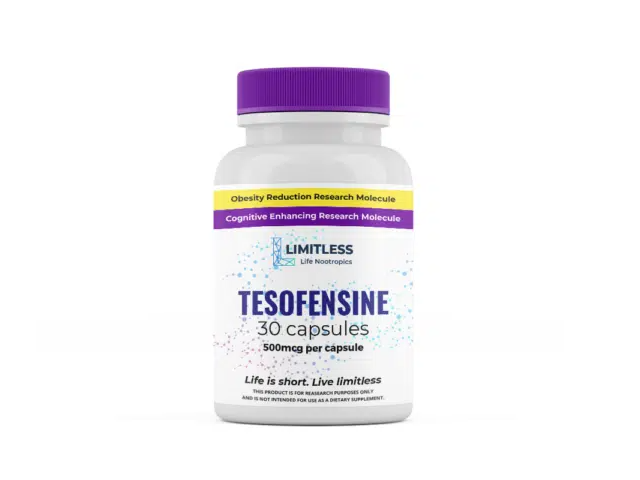
Limitless Life Nootropics Tesofensine 250mcg (30 Capsules) by Nootropics Depot
Shop Now →Limitless Life Nootropics Tesofensine 500mcg (30 Capsules) by Nootropics Depot
Shop Now →Disclosure: These are affiliate links. I earn a small commission if you purchase — at no extra cost to you. I only recommend products I personally use or have thoroughly researched.
Research & Studies
This section includes 5 peer-reviewed studies referenced in our analysis.