
- Neuroprotection via melanocortin receptor activation
- Anti-inflammatory effects through NF-κB inhibition
- Oligodendrocyte support and myelin preservation
- BDNF upregulation for neurotrophic signaling
- Adrenal cortisol stimulation (clinical use)
Here’s something most people in the nootropics world don’t realize: one of the most promising neuroprotective peptides ever studied is also one you should almost certainly never take on your own.
I’m talking about ACTH 1-39 — adrenocorticotropic hormone. It’s the full-length version of the hormone your pituitary gland pumps out every morning to wake up your adrenal glands. It protects oligodendrocytes, cranks up BDNF, tames neuroinflammation through melanocortin receptors — and it floods your body with cortisol the entire time it’s doing it.
That cortisol problem is exactly why Russian researchers in the 1980s carved out just the brain-active fragment (amino acids 4-10) and turned it into Semax — keeping the cognitive benefits and ditching the hormonal chaos. But to understand why Semax works, you need to understand its parent molecule first.
The Short Version: ACTH 1-39 is a 39-amino acid pituitary hormone with legitimate neuroprotective and anti-inflammatory properties, primarily used clinically for autoimmune conditions (as Acthar Gel). It is not a practical nootropic due to its potent cortisol stimulation and injection-only administration. For cognitive enhancement, its derivative Semax (ACTH 4-10 analog) is the version the nootropic community actually uses. Below, I break down the science, why it matters, and what you should actually consider taking instead.
What Is Adrenocorticotropic Hormone (ACTH) 1-39?
ACTH 1-39 is your body’s primary signal molecule for turning on cortisol production. It’s a polypeptide — a short chain of 39 amino acids — produced in the anterior pituitary gland by slicing up a larger precursor protein called proopiomelanocortin (POMC). That same precursor also gives rise to alpha-MSH, beta-endorphin, and several other bioactive peptides. Your body is efficient like that — one big protein, multiple tools.
The history here is genuinely fascinating. Researchers first isolated adrenocorticotropic material from porcine pituitary glands back in 1929. By 1950, Philip Hench had won the Nobel Prize for using ACTH and cortisone to treat rheumatoid arthritis — one of the first demonstrations that the immune system could be pharmaceutically modulated. The full amino acid sequence was mapped through the 1950s, and by 1973, Choh Hao Li’s team achieved total synthesis of the complete 39-amino acid chain.
Today, ACTH 1-39 exists in two pharmaceutical forms: H.P. Acthar Gel (a porcine-derived formulation FDA-approved since 1952, now manufactured by Mallinckrodt) and cosyntropin (a synthetic version of just the first 24 amino acids, used for adrenal diagnostic testing). Pure synthetic ACTH 1-39 is available only as a research chemical — not approved or intended for human self-administration.
Reality Check: Despite its impressive neuroprotective profile in lab studies, ACTH 1-39 is a powerful hormone with serious systemic effects. This is not a compound you order from a peptide vendor and inject at home. The nootropic community’s interest in it should be purely educational — understanding the science so you can make smarter choices about related compounds like Semax.
How Does Adrenocorticotropic Hormone (ACTH) 1-39 Work?
Think of ACTH 1-39 as a master key that fits multiple locks throughout your body. The biggest lock — the one everyone talks about — is the melanocortin 2 receptor (MC2R) sitting on your adrenal gland cells. When ACTH turns that lock, cortisol pours out. That’s the endocrine story most textbooks stop at.
But ACTH also fits locks in your brain. And that’s where things get interesting for anyone who cares about cognitive function.
The Adrenal Pathway (Why You Don’t Want This)
ACTH 1-39 is the sole natural activator of MC2R, with an extraordinarily potent binding affinity (EC50 of just 57 picomolar). The receptor requires a chaperone protein called MRAP to function, forming a complex that’s unique in endocrine biology. Once activated, the signaling cascade runs: ACTH → MC2R/MRAP → Gs protein → adenylyl cyclase → increased cAMP → PKA activation → StAR protein and steroidogenic enzymes → cortisol.
In plain English: ACTH is the switch that turns on your body’s primary stress hormone. Chronically elevated cortisol shrinks your hippocampus, wrecks your sleep architecture, tanks your immune function, and accelerates aging. Not exactly a nootropic feature.
The Brain Pathways (Why Researchers Are Fascinated)
Here’s the part that makes ACTH 1-39 scientifically compelling. Beyond MC2R, it also activates melanocortin receptors 3, 4, and 5 in the central nervous system — and these receptors trigger genuinely neuroprotective cascades:
MC4R activation (the dominant brain receptor) inhibits NF-κB, the master inflammatory switch. This reduces TNF-α, IL-1β, and IL-6 while boosting anti-inflammatory IL-10. It also triggers the ERK-cFos pathway, which upregulates BDNF — your brain’s primary growth and repair signal. In the brainstem, MC4R activation fires up the vagal anti-inflammatory pathway, sending acetylcholine signals that dampen systemic inflammation.
MC3R activation in the hypothalamus and limbic system adds another layer of neuroprotection and influences energy homeostasis.
On the neurotransmitter front, ACTH enhances both basal and stimulus-evoked dopamine release (through a mechanism independent of D2 receptors), increases central acetylcholine release, and protects neurons against glutamatergic excitotoxicity from NMDA, AMPA, and kainate receptors.
Pro Tip: This is exactly why Semax exists. Russian pharmacologists recognized that the cognitive and neuroprotective activity lives in the ACTH 4-10 fragment — those seven amino acids activate MC3R and MC4R brain pathways without touching MC2R on the adrenals. All the brain benefits, none of the cortisol spike. It’s one of the most elegant examples of rational drug design in nootropic history.
A Critical Caveat About Brain Penetration
Full-length ACTH 1-39 is a large molecule that likely has poor blood-brain barrier penetration. Its CNS effects may actually be indirect — working through peripheral immune cell signaling, circumventricular organs (brain regions without a complete blood-brain barrier), vagal nerve pathways, or simply through the cortisol it produces (which does cross the BBB). This is another reason the shorter fragments like ACTH 4-10 are more practical for cognitive targeting.
Benefits of Adrenocorticotropic Hormone (ACTH) 1-39
Let me be straight with you about the evidence here. ACTH 1-39 has some genuinely impressive preclinical data, but the human cognitive enhancement data is essentially nonexistent for the full-length peptide. Here’s what we know, organized by how strong the evidence actually is.
Strong Evidence: Anti-Inflammatory and Oligodendrocyte Protection
The anti-inflammatory mechanism through MC4R and NF-κB inhibition is thoroughly characterized and forms the basis for Acthar Gel’s FDA approval for multiple sclerosis exacerbations, nephrotic syndrome, and several other inflammatory conditions.
A landmark 2014 study by Benjamins and colleagues demonstrated that ACTH 1-39 at just 200 nanomolar protected oligodendrocyte precursor cells from an impressive range of insults — staurosporine, glutamate, NMDA, AMPA, kainate, quinolinic acid, hydrogen peroxide, and nitric oxide-mediated damage. It also promoted oligodendrocyte proliferation and myelin sheet formation. For anyone concerned about white matter integrity and myelin health, this is compelling science.
In animal models of traumatic brain injury, cosyntropin (ACTH 1-24) reduced neuroinflammation and improved spatial memory (Siebold et al., 2020). MC4R agonists show consistent neuroprotective benefits across stroke, TBI, and hemorrhage models.
Moderate Evidence: Consciousness and Cognitive Recovery
A 2024 study by Wu and colleagues found that in 208 patients with disorders of consciousness, higher ACTH levels significantly predicted recovery, with an AUC of 0.78 and sensitivity of 77.5%. This suggests ACTH signaling plays a meaningful role in brain arousal and recovery.
In a fascinating 2024 case report, Yajima and colleagues documented isolated ACTH deficiency that mimicked dementia with Lewy bodies — complete with cognitive decline, hallucinations, and motor symptoms. The “dementia” was completely reversed with hydrocortisone replacement. That’s a powerful reminder that hormonal balance matters for brain function.
Weak or Negative Evidence: Direct Cognitive Enhancement
Here’s where I have to be honest about the limitations. Multiple randomized controlled trials of ACTH fragments (specifically ORG 2766) in Alzheimer’s patients showed no benefit. Studies in depressed elderly populations were similarly disappointing. And a 2000 study by Smolnik and colleagues found that ACTH 4-10 actually impaired working memory and increased errors in some tasks.
Reality Check: The neuroprotective potential of ACTH signaling is real, but it doesn’t translate to “take ACTH and get smarter.” The anti-inflammatory and oligodendrocyte-supporting properties are clinically meaningful for disease states — not for healthy people looking for a cognitive edge. If you want the cognitive benefits of melanocortin receptor activation, Semax is the tool that was specifically designed for that job.
How to Take Adrenocorticotropic Hormone (ACTH) 1-39
I want to be very clear: this section exists for educational purposes, not as a protocol recommendation. ACTH 1-39 is not a nootropic you self-administer.
Clinical Dosages (Medical Supervision Only)
- Diagnostic testing (ACTH stimulation test): 5-30 mcg subcutaneous of ACTH 1-39, or 250 mcg IV of cosyntropin (ACTH 1-24)
- Therapeutic (Acthar Gel): 40-80 USP units intramuscular or subcutaneous every 24-72 hours
- Infantile spasms: 150 U/m² divided into twice-daily injections with a 2-week taper
Pharmacokinetics
Native ACTH 1-39 has a half-life of just 10-30 minutes in blood — your body breaks it down fast. The Acthar Gel formulation extends this to about 2.6-3.4 hours through sustained release. Oral bioavailability is zero. The peptide is completely destroyed in your GI tract, so it must be injected (IM, SC, or IV).
What You Should Actually Consider Instead
For cognitive enhancement through the melanocortin pathway, Semax (synthetic ACTH 4-10 analog) is the established choice:
- Standard dose: 300-600 mcg/day intranasal
- Advanced dose: Up to 900 mcg/day
- Cycle: 10-14 days on, 7+ days off
- Timing: Morning or early afternoon to avoid insomnia
- Onset: 15-30 minutes; effects last 20-24 hours
Insider Tip: If you’re new to peptide nootropics and interested in this pathway, start with standard-dose Semax and give it a full 10-day cycle before judging. The effects are subtle at first — improved verbal fluency, cleaner focus, better stress resilience — and tend to build over the cycle. It’s not a stimulant buzz. It’s more like someone quietly turned up the resolution on your thinking.
Side Effects and Safety
ACTH 1-39’s side effect profile is one of the primary reasons it’s unsuitable for nootropic use. These aren’t minor inconveniences — they’re the predictable consequences of chronically elevating cortisol.
Common Side Effects (from Acthar Gel Clinical Data)
- Fluid retention and weight gain
- Elevated blood pressure (sodium retention, plasma volume expansion)
- Hyperglycemia and worsened blood sugar control
- Mood changes ranging from euphoria to depression and irritability
- Fatigue
- Increased susceptibility to infections (immunosuppression)
Serious Risks
- Adrenal suppression: Your adrenal glands can essentially shut down after prolonged use. Recovery may take 6 months to 2 years — that’s not a typo
- Cushing’s syndrome with prolonged use (moon face, central obesity, muscle wasting, skin changes)
- GI bleeding and ulceration, especially when combined with NSAIDs
- Severe psychiatric effects including psychosis and severe depression
- Bone loss and osteoporosis, cataracts, muscle weakness
- Anaphylaxis, particularly with porcine-derived products like Acthar Gel
Important: ACTH 1-39 has documented embryocidal effects and is associated with intrauterine growth restriction and preterm birth. It should never be used during pregnancy unless the clinical benefits clearly outweigh serious risks, under close medical supervision.
Drug Interactions
- Corticosteroids: Additive effects; compounded adrenal suppression risk
- NSAIDs: Significantly increased GI bleeding risk
- Diabetes medications: May require dose increases due to ACTH-induced hyperglycemia
- CYP3A4 inhibitors (azole antifungals, protease inhibitors): Increased glucocorticoid exposure
- Potassium-wasting diuretics: Additive hypokalemia risk
Contraindications
Hypersensitivity to porcine protein, systemic fungal infections, live vaccines during treatment, uncontrolled diabetes or hypertension, active GI ulcers, and osteoporosis.
Stacking Adrenocorticotropic Hormone (ACTH) 1-39
Since ACTH 1-39 itself is not used in nootropic stacks, let’s talk about stacking its derivative Semax — which is how the nootropic community actually accesses this pathway.
Established Semax Combinations
Semax + Selank: This is the classic Russian peptide stack. Semax handles focus, motivation, and BDNF upregulation through melanocortin receptors while Selank provides anxiolytic effects through GABA modulation and tuftsin-related immune support. They complement rather than overlap — one drives you forward, the other keeps you calm while it happens.
Semax + Noopept: Complementary cognitive enhancement through different mechanisms. Semax works the melanocortin/BDNF pathway; Noopept modulates glutamatergic signaling and cycloprolylglycine. Users frequently report sharper memory encoding with this combination.
Semax + Cerebrolysin: For serious neurological support — BDNF upregulation from Semax paired with the neurotrophic peptide mixture in Cerebrolysin. This is a stack more commonly seen in clinical recovery contexts than casual cognitive optimization.
What NOT to Combine with Full ACTH 1-39
- Live vaccines (immunosuppression risk)
- Multiple immunosuppressants
- High-dose NSAIDs without gastroprotection
- Other cortisol-elevating substances or chronic stress (you’re already making enough cortisol)
Adaptogens like ashwagandha, rhodiola, and phosphatidylserine may theoretically buffer cortisol effects, but this is speculative for ACTH 1-39 specifically and doesn’t make it suitable for self-administration.
My Take
I’ll be direct: ACTH 1-39 is a molecule you should understand, not one you should take.
The science is genuinely fascinating. The melanocortin receptor system is one of the most elegant signaling networks in the brain, and ACTH’s ability to protect oligodendrocytes, suppress neuroinflammation, and upregulate BDNF is no joke. If you could isolate those effects from the cortisol tsunami — well, that’s exactly what the developers of Semax did.
Here’s what ACTH 1-39 taught me about the nootropic space: the most interesting molecules are often the ones that point you toward something better. ACTH 1-39 pointed researchers toward the ACTH 4-10 sequence, which became Semax, which became one of the most consistently well-reviewed nootropic peptides in the world. Understanding the parent molecule helps you understand why the derivative works and how to use it more intelligently.
Who should care about this? Anyone interested in melanocortin receptor pharmacology, myelin health, neuroinflammation, or the science behind peptide nootropics. If you’re dealing with autoimmune neurological conditions, Acthar Gel is a legitimate pharmaceutical option — talk to your neurologist.
Who should look elsewhere? Anyone hoping to self-administer ACTH 1-39 for cognitive enhancement. The risk-to-benefit ratio is terrible. Take Semax instead — it’s specifically engineered to give you the brain benefits without the adrenal consequences, it’s intranasal rather than injectable, and it has decades of clinical use in Russia backing its safety profile.
The smartest nootropic decisions I’ve ever made weren’t about finding the most powerful compound. They were about finding the right tool for the specific job — and knowing when a molecule’s risks make it the wrong tool, no matter how impressive the mechanism looks on paper.
Recommended Adrenocorticotropic Hormone (ACTH) 1-39 Products
I know how frustrating it is to sort through dozens of brands making the same claims. These are the ones I've personally vetted — because quality is the difference between results and wasted money.
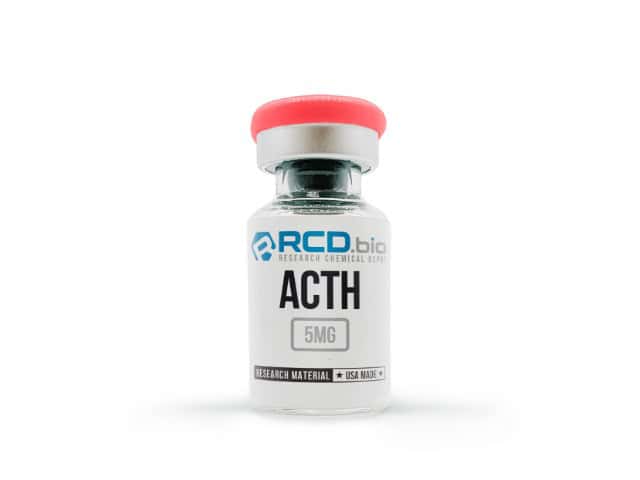
Disclosure: These are affiliate links. I earn a small commission if you purchase — at no extra cost to you. I only recommend products I personally use or have thoroughly researched.