
- Supports memory and learning through acetylcholinesterase inhibition
- Neuroprotective against oxidative stress and neuroinflammation
- May reduce anxiety and support mood through monoamine modulation
- Enhances vivid dreaming and may promote lucid dreaming
- Supports synaptic plasticity via NGF and BDNF pathways
I’ll be honest — I slept on Celastrus paniculatus for years. I kept seeing it mentioned in Ayurvedic texts, filed it under “interesting but obscure,” and moved on to the next shiny racetam. That was a mistake.
When I finally tried it, the first thing I noticed wasn’t sharper focus or better recall. It was the dreams. Vivid, cinematic, can’t-believe-that-wasn’t-real dreams. Then, about two weeks in, I started noticing something subtler — a quiet clarity during conversations, words coming easier, connections forming faster. Not stimulant energy. More like someone had cleaned a foggy window I didn’t know was dirty.
Celastrus paniculatus is one of those rare nootropics where the traditional wisdom and the modern science are actually saying the same thing. And the science is catching up fast.
The Short Version: Celastrus paniculatus (Jyotishmati) is an ancient Ayurvedic brain tonic with strong preclinical evidence for memory enhancement, neuroprotection, and mood support. It works primarily by inhibiting acetylcholinesterase and reducing neuroinflammation. Best for people seeking a multi-target cognitive enhancer with a long safety track record, though human clinical trials are still lacking. Below, I break down the mechanisms, the evidence, dosing protocols, and who should (and shouldn’t) try it.
What Is Celastrus paniculatus?
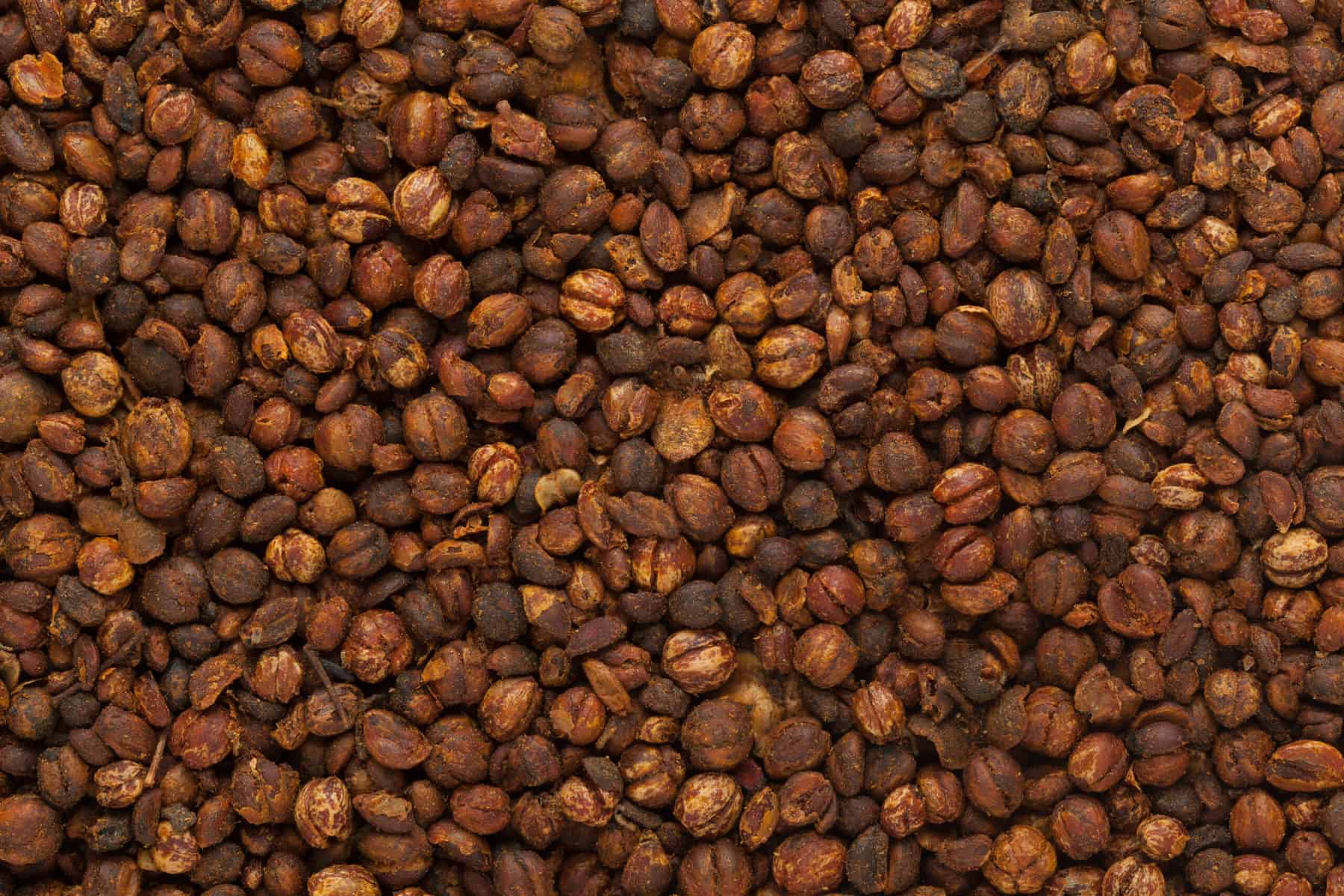
Celastrus paniculatus is a large, woody climbing shrub native to India, where it grows wild across the Himalayas, Western Ghats, and Bengal at elevations up to 1,800 meters. Its Sanskrit name — Jyotishmati — literally translates to “luminous” or “divine light,” which tells you exactly what ancient practitioners thought it did for the mind.
This plant holds a special place in Ayurvedic medicine as a Medhya Rasayana — one of a small, elite class of herbs specifically designated for rejuvenating the intellect. It appears in the Charaka Samhita (roughly 300–200 BCE), one of the oldest medical texts in existence, prescribed for forgetfulness and nervous system disorders. The traditional protocol was simple: grind the seeds into a paste, mix with honey, and give to scholars before study. Thousands of years later, we’re still using the seeds — just in capsule form.
The bioactive compounds live primarily in the seeds and their oil, which contain a complex cocktail of β-dihydroagarofuranoid sesquiterpenes (the key acetylcholinesterase inhibitors), alkaloids like celastrine and paniculatin, flavonoids, terpenoids, and a fatty acid profile dominated by oleic acid (~54%). It’s this multi-compound complexity that gives Celastrus its multi-target action — and why isolating a single “active ingredient” misses the point.
Reality Check: Celastrus paniculatus is now classified as endangered in Thailand due to overharvesting. If you’re sourcing this, buy from reputable suppliers who use sustainable cultivation practices. The plant’s future depends on it.
How Does Celastrus paniculatus Work?
Here’s what makes Celastrus paniculatus genuinely interesting from a pharmacological standpoint: it doesn’t just pull one lever. It works across at least five distinct brain systems simultaneously. That’s unusual for a single botanical, and it’s why the preclinical results have been so consistent.
The Cholinergic System — Your Memory Hardware
The primary mechanism is acetylcholinesterase (AChE) inhibition. In plain English: your brain makes acetylcholine to form and retrieve memories. An enzyme called AChE breaks it down. Celastrus slows that enzyme, so more acetylcholine stays available for longer.
A study published in Pharmaceutical Biology found that the aqueous seed extract showed dose-dependent AChE inhibition at 350–1050 mg/kg in rats, with memory improvements in the elevated plus maze comparable to piracetam. The β-dihydroagarofuranoid sesquiterpenes in the seeds are the confirmed AChE-inhibiting compounds.
Think of it like putting a slow drain on your bathtub instead of leaving the plug out. The acetylcholine your brain produces sticks around longer to do its job.
The Anti-Inflammatory Shield — NF-κB Pathway
Chronic neuroinflammation is one of the biggest silent killers of cognitive performance. Celastrus paniculatus oil directly targets the NF-κB inflammatory pathway, reducing IL-6, TNF-α, and nitric oxide in the brain. A 2023 study in Metabolic Brain Disease demonstrated this in a scopolamine-induced cognitive impairment model, where CP oil treatment restored both synaptic plasticity markers and behavioral performance.
Neuroprotection — Guarding the Gate
The water-soluble extracts protect neurons against glutamate excitotoxicity — the process where too much glutamate overstimulates neurons until they die. CP does this by dampening NMDA receptor-activated currents and reducing calcium flooding into cells. This prevents the downstream cascade of mitochondrial dysfunction, caspase activation, and programmed cell death.
Monoamine Modulation — The Mood Connection
This is where it gets particularly interesting for people dealing with stress or low mood. Celastrus restores dopamine, noradrenaline, and serotonin levels in stressed models. It inhibits MAO-A (the enzyme that breaks down these neurotransmitters) and interacts with dopamine D2 receptors, serotonin 5-HT1A receptors, and GABA-B receptors. This multi-receptor activity explains why users report both cognitive and emotional benefits.
Pro Tip: The monoamine modulation is why some people feel a noticeable mood lift within the first few days, even before the memory effects kick in. If you’re stacking this with anything serotonergic, start with a lower dose and pay attention.
Neurotrophic Support — Building New Connections
Celastrus increases nerve growth factor (NGF) and restores BDNF levels — the proteins your brain needs to build and maintain neural connections. It also improves synaptophysin immunoreactivity, a marker of synaptic density. This is the mechanism behind the cumulative benefits that build over weeks of consistent use.
Benefits of Celastrus paniculatus
Let me be straight with you about the evidence here. The preclinical data is remarkably strong and consistent. The human data is almost nonexistent. That’s the honest picture.
Memory and Learning
This is the headline benefit and the best-supported one. Across multiple animal models — scopolamine-induced amnesia, glutamate-induced brain injury, elevated plus maze, Morris water maze, novel object recognition — Celastrus paniculatus consistently improves memory acquisition and retention. The effects are comparable to established nootropics like piracetam and even the pharmaceutical donepezil.
One small double-blind trial (2021) in adults aged 50–65 with mild cognitive impairment showed improved attention span and processing speed over 12 weeks. But the sample size was small and details are limited. We need more human trials. Period.
Neuroprotection
This is where the evidence gets genuinely exciting. CP has shown protection in models of Huntington’s disease, Parkinson’s disease (both MPP⁺-induced and rotenone-induced), epilepsy-associated cognitive decline, lead-induced neurotoxicity, and aluminum-induced neurodegeneration. The breadth of neuroprotective activity across different damage models suggests a fundamental mechanism rather than a narrow effect.
Mood and Anxiety Support
Seed oil at 50–200 mg/kg decreased immobility in depression models comparable to fluoxetine, with an impressively low ED50 of 17–32 mg/kg. For anxiety, doses of 140–560 mg/kg showed significant anxiolytic effects in the elevated plus maze, with the highest dose matching diazepam — but without causing tolerance or sedation. That last part is significant.
A randomized controlled trial is currently underway comparing Celastrus paniculatus capsules (500 mg twice daily) versus sertraline for generalized anxiety disorder. When those results publish, they could change the conversation around this plant entirely.
Dream Enhancement
This won’t show up in most clinical summaries, but it’s one of the most consistently reported effects: dramatically more vivid dreams, with some users achieving lucid dreaming within 3–5 days. The mechanism isn’t fully characterized, but it likely relates to the cholinergic enhancement — acetylcholine plays a central role in REM sleep architecture.
Insider Tip: If you’re interested in the dream effects specifically, try 5–10 seeds about an hour before bed for 3–5 consecutive nights. Most people notice a difference by night two or three. Fair warning: the dreams can be intense.
How to Take Celastrus paniculatus
Forms and Dosing
Whole seeds are the most traditional form. Start with 5 seeds per day, chewed thoroughly (they’re bitter — fair warning). You can work up to 15–20 seeds. The traditional Ayurvedic method was to start with one seed and add one per day until reaching an effective dose.
Seed oil is the concentrated fat-soluble form. Take 3–5 drops in warm milk (the traditional vehicle) or on an empty stomach. The milk isn’t just tradition — the fat helps absorption.
Standardized extract capsules are the most practical option. Look for 200–500 mg per serving, standardized to at least 8% polyphenols or ≥15% saponins. The registered clinical trial uses 500 mg twice daily, which is a reasonable upper-range target.
Timing
For acute cognitive effects, take it in the morning on a relatively empty stomach. For the dream effects, take it 1–2 hours before bed. If capsules cause GI discomfort, take them with food — you’ll trade some absorption speed for tolerability.
Building Your Protocol
Start at the low end of any form for the first week. Celastrus is one of those compounds where individual responses vary significantly — some people find it primarily stimulating, others primarily sedating. You need to find where you land before committing to a dose.
Expect the timeline to look something like this:
- Days 1–3: Possible dream changes, subtle clarity
- Weeks 1–2: Mood effects become noticeable
- Weeks 3–6: Memory and learning benefits build
- Months 2+: Cumulative neuroprotective benefits
Pro Tip: If you’re getting drowsiness from morning doses, try splitting your dose — half in the morning, half in the afternoon. Some users find that eliminates the sedation while preserving the cognitive benefits.
Side Effects and Safety
At standard doses, Celastrus paniculatus is well-tolerated with a long traditional safety record. The LD50 in animal studies is 3–5 g/kg depending on the extract type, and seed oil has shown no significant toxicity up to 2000 mg/kg. But there are some things you absolutely need to know.
Common at therapeutic doses: Mild GI discomfort (especially without food), occasional drowsiness at higher doses, and rarely, headache.
At high doses (above 2 grams): The plant acts as an emetic and purgative — meaning vomiting and severe diarrhea. This is well-documented in traditional Ayurvedic texts. Dose matters.
Important: Celastrus paniculatus is strongly contraindicated in pregnancy due to documented abortifacient properties. Animal studies have also shown anti-fertility effects in males, including sperm cell depletion and arrested spermatogenesis. If you’re trying to conceive — either partner — skip this one. Some animal studies also noted reversible liver effects at certain doses, so if you have existing liver concerns, consult your healthcare provider.
Drug Interactions to Watch
- Cholinesterase inhibitors (donepezil, rivastigmine) or cholinergic nootropics like Alpha-GPC and Huperzine A: Additive cholinergic effects could cause excessive acetylcholine activity
- SSRIs and MAOIs: CP has its own MAO-A inhibitory activity and serotonergic effects — combining could potentially cause serotonergic issues
- Sedatives and benzodiazepines: Possible additive sedation at higher CP doses
Stacking Celastrus paniculatus
The Ayurvedic Brain Stack
The most natural pairing is with other Medhya Rasayanas. Bacopa monnieri is the obvious partner — both target cognition through complementary mechanisms, with Bacopa bringing stronger long-term memory consolidation and Celastrus providing sharper acute clarity. Add Gotu Kola for cerebral blood flow and you’ve got the traditional Ayurvedic nootropic triad.
Ashwagandha pairs well if stress is a primary concern — it handles the HPA axis while Celastrus handles the cholinergic and monoaminergic sides.
The Cholinergic Stack
If you’re using racetams, Celastrus makes pharmacological sense as a partner. Racetams increase acetylcholine turnover (your brain uses more), while Celastrus inhibits breakdown (more sticks around). Just add a choline source to supply the raw material, and start everything at lower doses to find your balance.
What to Avoid Stacking
Don’t combine with Huperzine A — both are AChE inhibitors, and doubling up on that mechanism invites cholinergic side effects (headache, nausea, muscle tension). Same logic applies to galantamine. Pick one AChE inhibitor per stack.
Be cautious combining with anything strongly serotonergic given the MAO-A inhibition. And if you’re stacking multiple sedating herbs at high doses, you might end up too relaxed to be productive.
My Take
Celastrus paniculatus sits in a frustrating sweet spot: the pharmacology is genuinely compelling, the traditional track record spans millennia, and the preclinical evidence is unusually consistent — but we’re still waiting for the human clinical trials to catch up. That registered RCT comparing it to sertraline for anxiety could be a game-changer when it publishes.
In my experience, the effects are real but subtle. This isn’t a stimulant hit or an obvious “on” switch. It’s more like gradually upgrading your mental operating system over weeks. The dream enhancement is the most immediately noticeable effect and, honestly, it’s worth trying for that alone if you’re curious about lucid dreaming.
Who this is best for: People looking for a multi-target cognitive enhancer with mood support who are comfortable working with traditional botanicals and have realistic expectations about timelines. It’s particularly interesting if you respond well to cholinergic nootropics but want something with a broader mechanism profile than Huperzine A alone.
Who should try something else: If you need strong human clinical evidence before trying anything, go with Bacopa monnieri — it has the trials to back it up. If you’re pregnant, trying to conceive, or on SSRIs/MAOIs, this is a clear skip.
My honest recommendation: Start with the standardized extract capsules at 200–250 mg once daily for a week, then increase to twice daily if you tolerate it well. Give it a full 4–6 weeks before judging the cognitive effects. Keep a simple journal — rate your focus, memory, mood, and dream vividness on a 1–5 scale each day. You’ll spot the pattern before you consciously “feel” it.
Celastrus paniculatus is one of those nootropics that rewards patience and consistency. The ancient Ayurvedic practitioners who called it “divine light” were onto something. The modern science is just starting to explain why.
Recommended Celastrus paniculatus Products
I know how frustrating it is to sort through dozens of brands making the same claims. These are the ones I've personally vetted — because quality is the difference between results and wasted money.
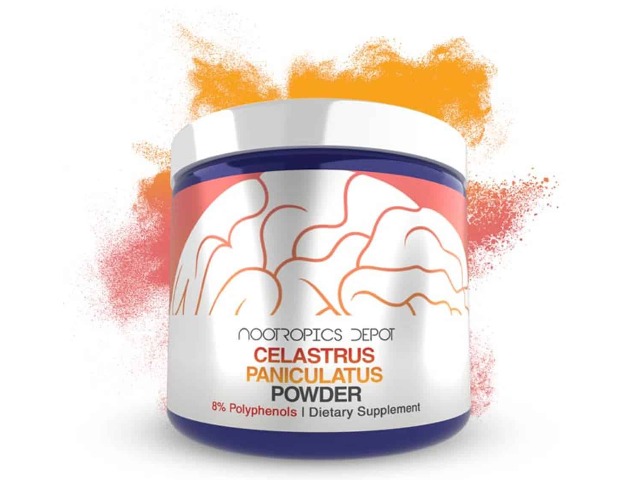
Celastrus Paniculatus by Nootropics Depot
Shop Now →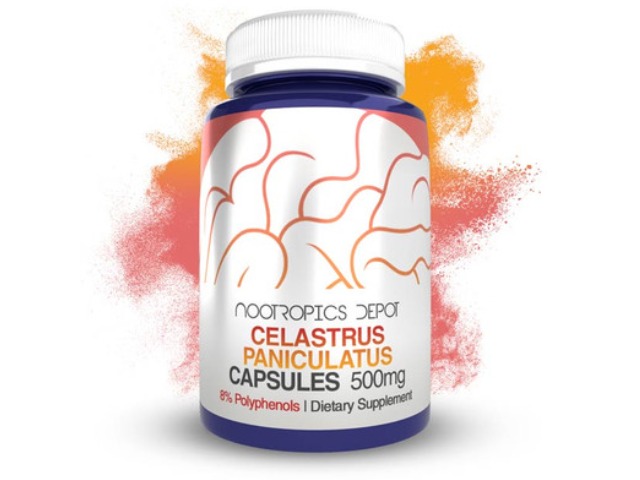
Celastrus Paniculatus Extract Capsules | 500mg by Nootropics Depot
Shop Now →Disclosure: These are affiliate links. I earn a small commission if you purchase — at no extra cost to you. I only recommend products I personally use or have thoroughly researched.
Research & Studies
This section includes 9 peer-reviewed studies referenced in our analysis.