
- May improve body composition and reduce body fat
- Supports healthy testosterone levels in men
- Activates the cAMP/CREB pathway involved in memory consolidation
- May reduce intraocular pressure
- Supports thyroid function and metabolic rate
I’ll be honest — I first heard about forskolin not because of some cutting-edge neuroscience paper, but because of the CILTEP stack hype that swept through every biohacking forum around 2013. The promise was irresistible: combine forskolin with artichoke extract and you’d chemically induce long-term potentiation in your brain. Essentially, hack your memory at the cellular level.
I bought the stack. I took it religiously. And my results were… underwhelming. My stomach, however, had plenty to say about the experience.
But here’s the thing — the deeper I dug into the actual science behind forskolin, the more interesting the story got. This isn’t just another overhyped supplement. It’s the only natural compound on earth that directly activates a specific enzyme at the heart of cellular signaling. The nootropic story might be unfinished, but the metabolic and hormonal evidence is real. Let me walk you through what actually holds up.
The Short Version: Forskolin is a plant compound from Coleus forskohlii that uniquely activates adenylyl cyclase, raising cAMP levels throughout the body. Its strongest evidence is for improving body composition in overweight men and lowering eye pressure in glaucoma. The nootropic angle — boosting memory through the cAMP/CREB pathway — is scientifically sound but unproven in human trials. Most people will notice metabolic effects long before any cognitive ones.
What Is Coleus forskohlii?
Coleus forskohlii — now officially reclassified as Plectranthus barbatus — is a tropical plant in the mint family native to India, Nepal, and Thailand. It’s been used in Ayurvedic medicine for over 3,000 years under the names Makandi and Pashanabhedi, traditionally prescribed for heart conditions, asthma, digestive complaints, and skin diseases.
The compound that put this plant on the modern map is forskolin, a labdane diterpene found concentrated in the roots. It was first isolated in 1974 by researchers at the Indian Central Drug Research Institute working with Hoechst Pharmaceuticals. What they found was remarkable — this single compound reduced muscle spasms, lowered blood pressure, and inhibited platelet aggregation. But the truly unique discovery came later: forskolin directly activates adenylyl cyclase, something no other natural compound does.
That discovery turned forskolin into one of the most widely used research tools in cell biology. Scientists use it in labs worldwide to study cAMP signaling. The supplement industry, naturally, noticed the same mechanism and asked a different question: can we use this to enhance human performance?
How Does Coleus forskohlii Work?
Think of your cells like houses, each with a thermostat that controls activity levels. Most supplements knock on the front door and ask politely — they bind to receptors on the cell surface and send a message inside. Forskolin skips the door entirely. It walks straight to the thermostat and turns it up.
That thermostat is adenylyl cyclase, the enzyme that converts ATP into cyclic AMP (cAMP) — one of the most important signaling molecules in your body. Two forskolin molecules bind directly within a hydrophobic pocket of adenylyl cyclase, locking the enzyme’s catalytic domains into their active shape. This happens independently of any receptor — no G-protein needed, no hormone required. Forskolin just flips the switch.
What happens when cAMP rises depends on where it rises:
-
In neurons: cAMP activates Protein Kinase A (PKA), which phosphorylates CREB — a transcription factor that drives the production of proteins essential for long-term potentiation (LTP). This is the molecular basis of converting short-term memories into long-term ones. A study by Leutgeb et al. showed that forskolin application produced persistent, uniform increases in phosphorylated CREB across hippocampal neurons, with CREB activation continuing to build for 4 hours during LTP maintenance (Neuroscience, 2005).
-
In fat cells: Elevated cAMP activates hormone-sensitive lipase, which breaks stored triglycerides into free fatty acids and glycerol — essentially unlocking your fat stores for energy use.
-
In the thyroid: Forskolin activates adenylate cyclase in thyroid tissue, stimulating T3 and T4 secretion even more steeply than TSH itself. This means a direct metabolic rate boost.
-
In the testes: cAMP stimulates testosterone production in Leydig cells through the same signaling cascade.
In plain English: forskolin turns up cellular activity across multiple systems simultaneously. The effects you notice depend on which tissues are most responsive in your body — and that varies from person to person.
Benefits of Coleus forskohlii
Body Composition — The Strongest Evidence
This is where forskolin actually delivers on its promises, at least for men. The landmark study is Godard et al. (2005): a 12-week randomized, double-blind, placebo-controlled trial in 30 overweight men taking 250 mg of 10% forskolin extract twice daily. The results were clear — body fat percentage and fat mass decreased significantly compared to placebo, bone mass increased, and lean body mass trended upward (Obesity Research, 2005).
A comprehensive review of 7 clinical studies (including 4 RCTs) confirmed significant benefits for body composition, particularly in men.
Reality Check: The evidence for women tells a different story. A separate trial found that Coleus forskohlii did not promote weight loss in women, though it may help slow weight gain. If you’re a woman looking primarily for fat loss, forskolin probably isn’t your best first option.
Testosterone Support
From the same Godard study, serum free testosterone increased significantly in the forskolin group. Total testosterone rose 16.77% compared to a 1.08% decrease in the placebo group. The mechanism makes biological sense — cAMP directly stimulates the Leydig cells that produce testosterone. It’s not going to replace TRT for someone with clinical hypogonadism, but for men looking for a natural nudge, the evidence is encouraging.
The Nootropic Angle — Promising Science, Missing Proof
Here’s where I have to be straight with you. The theoretical case for forskolin as a cognitive enhancer is genuinely compelling. The cAMP → PKA → CREB cascade is one of the best-understood mechanisms in memory science. Bernabeu et al. (1997) showed that infusing forskolin directly into the hippocampus enhanced memory consolidation in rats when given during the critical 3-6 hour window after training (PNAS, 1997). Vitolo et al. (2002) demonstrated that forskolin reversed amyloid beta’s inhibition of LTP in hippocampal neurons — a finding with obvious implications for Alzheimer’s research (PNAS, 2002).
But — and this is a significant but — no published human clinical trial has demonstrated cognitive enhancement from oral forskolin in healthy adults. A 2024 study testing the CILTEP stack (forskolin + artichoke extract) found no acute cognitive improvement in healthy middle-aged participants.
The gap between “this works in a petri dish” and “this makes you smarter when you swallow a capsule” is enormous. Oral bioavailability, blood-brain barrier penetration, achieving sufficient local concentrations in the hippocampus — these are real hurdles that haven’t been cleared yet.
Intraocular Pressure
This is a genuinely well-supported benefit. Multiple clinical trials show forskolin — both oral and topical — reduces intraocular pressure. A multi-center Italian RCT with 97 glaucoma patients found that oral forskolin plus rutin achieved a 10% IOP decrease, with 15% reduction in patients who started with high IOP. If you’re managing glaucoma, this is worth discussing with your ophthalmologist.
How to Take Coleus forskohlii
Standard dosage: 250 mg of 10% standardized extract, twice daily — giving you 50 mg of actual forskolin per day. This matches what was used in the most successful clinical trials.
Timing: Split your doses between morning and early afternoon. Forskolin can be mildly stimulating through its thyroid and catecholamine effects, so taking it too late may interfere with sleep.
With or without food: Taking it with food reduces GI side effects (and trust me, you’ll want that buffer at first), but it may lower absorption from roughly 75% to 30-50%. My advice: start with food for the first week or two, then experiment with an empty stomach once your gut adjusts.
Pro Tip: Look for products using the ForsLean branded extract from Sabinsa — this is the patented form used in the clinical trials that actually showed results. Many generic forskolin products fail independent testing for actual forskolin content. The supplement industry has a real quality control problem here.
Forms: Capsules are standard and best-studied. Powder exists but is harder to dose accurately. Eye drops are specific to glaucoma research.
Cycling: A common approach is 8-12 weeks on, 4 weeks off. There’s no strong scientific mandate for this, but some users report diminishing effects at higher doses over time, and cycling is generally prudent with compounds that affect hormonal signaling.
Side Effects & Safety
GI distress is the elephant in the room. Diarrhea, stomach cramps, and nausea are far and away the most common complaints — and the reason many people abandon forskolin. This makes biological sense: elevated cAMP in intestinal cells drives water secretion. Starting with a lower dose and taking it with food helps significantly.
Other reported side effects include rapid heart rate, headache, low blood pressure, and dizziness. Some users report paradoxical fatigue, and a handful describe mood disturbances at higher doses — including irritability that one user attributed to testosterone-driven effects at 40 mg/day.
Important: Forskolin is absolutely contraindicated in polycystic kidney disease — elevated cAMP directly promotes cyst growth. It should also be avoided during pregnancy (a 2022 study showed endocrine disruption in human placental cells), with bleeding disorders, and before surgery. It interacts with 73+ medications including blood thinners, blood pressure drugs, diabetes medications, and thyroid drugs. If you’re on any prescription medication, talk to your doctor before starting forskolin.
Stacking Coleus forskohlii
The CILTEP Stack
The most famous forskolin stack pairs it with artichoke extract (specifically for its luteolin content, a PDE4 inhibitor). The logic is elegant: forskolin increases cAMP production while luteolin prevents cAMP breakdown. Dual mechanism, sustained elevation.
The typical protocol: ~4 mg forskolin + 900 mg artichoke extract + 500-800 mg Acetyl-L-Carnitine + vitamin B6.
I have to be honest about this stack’s track record, though. Despite the beautiful theory, the 2024 clinical trial found no acute cognitive benefit. That doesn’t mean chronic use is ineffective — the trial only measured acute effects — but it tempers expectations.
Complementary Combinations
- Alpha-GPC or Citicoline: Cholinergic support that may complement cAMP-mediated signaling
- Lion’s Mane: Stimulates NGF, which feeds into CREB through overlapping pathways — potentially synergistic for neuroplasticity
- Bacopa Monnieri: Supports synaptic plasticity through complementary mechanisms and has its own evidence for memory in humans
- Caffeine: A weak non-selective PDE inhibitor that may mildly enhance cAMP effects
What to Avoid
Don’t combine forskolin with blood pressure medications (additive hypotension risk), blood thinners (additive bleeding risk), or thyroid medications without medical supervision (additive thyroid stimulation).
My Take
Forskolin occupies a strange position in the nootropic world. It has one of the most scientifically elegant mechanisms you’ll find — directly activating the enzyme at the top of the cAMP/CREB memory cascade — and yet the human evidence for cognitive enhancement simply isn’t there yet.
Where I do think it earns its place is as a metabolic and hormonal support compound, particularly for men dealing with stubborn body composition or looking for a natural testosterone nudge. The Godard study is solid, and the mechanism is well-understood. If that’s your goal, 250 mg of a quality 10% extract twice daily for 8-12 weeks is a reasonable experiment.
For pure nootropic purposes? I’d be lying if I said I noticed dramatic cognitive effects from forskolin alone or in the CILTEP stack. The preclinical science keeps me interested — especially the Alzheimer’s-related research — but I can’t recommend it as a primary cognitive enhancer when compounds like Bacopa Monnieri and Lion’s Mane have actual human cognitive data behind them.
If you do try it, spring for a ForsLean-branded product, start with food, and give your gut a week to adjust before judging anything. And if your primary goal is cognitive enhancement, make sure your sleep, gut health, and stress management are dialed in first. No amount of cAMP activation can compensate for a broken foundation.
Recommended Forskolin Products
I know how frustrating it is to sort through dozens of brands making the same claims. These are the ones I've personally vetted — because quality is the difference between results and wasted money.
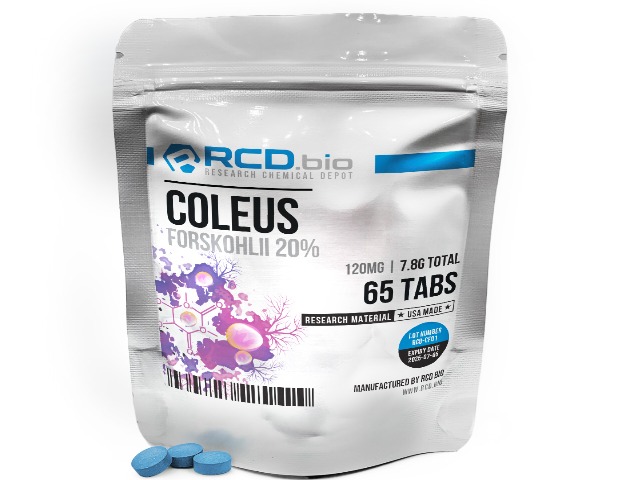
Disclosure: These are affiliate links. I earn a small commission if you purchase — at no extra cost to you. I only recommend products I personally use or have thoroughly researched.