
- May support cerebral blood flow via PDE5 inhibition
- Preclinical evidence for neuroprotection and amyloid reduction
- Traditional use for libido, energy, and vitality
- Mild PDE4 inhibition may support memory consolidation
- Anti-inflammatory and antioxidant properties in brain tissue
I’ll be honest — when I first heard the name “Horny Goat Weed,” I almost dismissed it entirely. It sounds like something you’d find next to gas station energy pills, sandwiched between a “male enhancement” formula and a questionable testosterone booster. But the more I dug into the actual research on Epimedium grandiflorum and its active compound icariin, the more I realized there’s a legitimately interesting nootropic story buried underneath the embarrassing marketing.
The catch? Most of that story is still being written in animal labs, not human trials. And that distinction matters.
The Short Version: Epimedium grandiflorum is a traditional Chinese herb with a 2,000-year history, primarily known for libido support but containing icariin — a compound with impressive preclinical data for neuroprotection, memory, and cerebral blood flow. The honest reality: human cognitive evidence is nonexistent, and oral bioavailability is a major problem. It’s best used as a long-term supportive supplement for vitality and blood flow, not as an acute cognitive enhancer.
What Is Epimedium grandiflorum?
Epimedium grandiflorum is a flowering plant in the Berberidaceae family, native to China, Japan, and Korea. The genus Epimedium contains over 60 species, with several used medicinally — primarily E. brevicornum, E. sagittatum, and E. koreanum alongside E. grandiflorum.
In Traditional Chinese Medicine, it’s known as Yín Yáng Huò (淫羊藿) — literally “licentious goat plant.” The name comes from an old legend about a goat herder who noticed his flock getting, well, enthusiastic after grazing on the plant. It’s been documented in Chinese herbal texts for roughly 2,000 years, first appearing around 200 BCE and formally catalogued in Shen Nong’s Canon of Medicinal Herbs around 400 CE. TCM classifies it as a “kidney yang” tonic, prescribed for fatigue, low libido, joint pain, and age-related cognitive decline.
The primary bioactive compound is icariin, a prenylated flavonol glycoside. In your body, icariin gets metabolized into icariside II (the primary active metabolite) and icaritin. These metabolites are where most of the interesting biological activity actually happens — which is important context for understanding why the research is promising but the real-world results can be inconsistent.
The Chinese Academy of Medical Sciences lists Epimedium among an elite group of herbs believed to slow aging and promote longevity. Whether that reputation is fully earned by modern standards is a different conversation — but the traditional track record is long enough to warrant serious investigation.
How Does Epimedium grandiflorum Work?
Here’s where things get genuinely interesting. Icariin doesn’t just do one thing — it hits multiple pathways that matter for both blood flow and brain function.
The blood flow angle is the most well-known. Icariin is a mild PDE5 inhibitor — the same mechanism as Viagra. It prevents the breakdown of cGMP, which increases nitric oxide signaling and relaxes blood vessels. More blood flow to the brain means more oxygen and nutrient delivery. The important caveat: sildenafil is roughly 80 times more potent at PDE5 inhibition than icariin. So if you’re expecting pharmaceutical-grade vasodilation from an herb, you’ll be disappointed.
The cognitive angle is less discussed but arguably more interesting for nootropic purposes. Icariin also inhibits PDE4, the enzyme that breaks down cAMP — a second messenger critical for attention, memory consolidation, and long-term potentiation. This is the same pathway targeted by research compounds like rolipram. Think of cAMP as the signal that tells your neurons “this connection matters, keep it.”
The neurotransmitter angle adds another layer. Research published in Molecules (2023) found that icariside II acts as a selective agonist at the dopamine D3 receptor, while icaritin shows selective antagonist effects on the muscarinic M2 receptor. In plain English: the metabolites of icariin can nudge both dopamine and acetylcholine systems — two neurotransmitter pathways central to motivation, reward, and memory.
Beyond these receptor-level effects, icariin demonstrates broad neuroprotective activity in preclinical models:
- Anti-amyloid: Reduces the enzymes that produce amyloid plaques while boosting the enzymes that clear them
- Anti-inflammatory: Suppresses microglial activation and the NLRP3 inflammasome — key drivers of neuroinflammation
- Neurotrophic: Activates BDNF pathways and promotes neurogenesis
- Antioxidant: Protects mitochondria from oxidative damage
And critically, icariin can cross the blood-brain barrier, which means these aren’t just test-tube effects — the compound can actually reach your brain tissue.
Reality Check: All of these mechanisms sound incredible on paper. But mechanisms aren’t outcomes. Showing that a compound can inhibit PDE5, modulate dopamine, and reduce amyloid in a petri dish or a mouse brain doesn’t mean swallowing a capsule will noticeably sharpen your thinking. The gap between “biologically plausible” and “clinically proven” is enormous — and Epimedium sits squarely in that gap for cognitive applications.
Benefits of Epimedium grandiflorum
Let me be upfront about the evidence landscape here, because it’s a mixed bag that requires honest framing.
Where the Preclinical Data Shines
The animal research on icariin and cognition is genuinely impressive. In Alzheimer’s disease rat models, icariin at 10-30 mg/kg reduced β-amyloid deposition and improved learning and memory performance. In accelerated aging mouse models (SAMP8), it reversed learning impairment and inhibited neuronal apoptosis. Studies on chronic cerebral hypoperfusion show improvements in white matter integrity through BDNF and NRG1 signaling pathways.
A 2025 study in the Journal of Ethnopharmacology found that Epimedium flavonoids combined with Curculigo improved cognitive performance in naturally aged mice by suppressing NLRP3 inflammasome activation — one of the hottest targets in aging research right now.
These aren’t fringe findings. They’re published in reputable journals, they’re reproducible, and they paint a consistent picture of neuroprotection across multiple animal models.
Where the Human Evidence Falls Short
Here’s the uncomfortable truth: there are zero published human RCTs testing icariin specifically for cognitive enhancement. None. The entire neuroprotective story is preclinical.
The most relevant human data comes from a 2019 randomized, double-blind, placebo-controlled pharmacokinetics study that tested doses of 100-1,680 mg/day of icariin in 24 healthy adults. It was well-tolerated up to 900 mg. But the critical finding was sobering: blood levels of icariin were very low or undetectable at all tested doses. The compound simply doesn’t absorb well orally.
The strongest human clinical evidence for Epimedium is actually for bone health — small controlled studies suggest benefits for postmenopausal osteoporosis using a phytoestrogen extract containing icariin. But even that evidence is limited.
What Users Actually Report
The most consistent real-world effect people notice is improved libido and sexual function — which makes sense given the PDE5 mechanism and the 2,000 years of traditional use for exactly that purpose. Users also commonly report mild mood elevation, increased warmth and blood flow, and subtle energy improvements. Cognitive effects are occasionally mentioned but are generally described as mild background support rather than anything dramatic.
Insider Tip: If you’re interested in the neuroprotective angle, think of Epimedium as a long-term investment, not a quick return. The animal data suggests consistent dosing over weeks to months is what moves the needle on brain-protective pathways — not single doses. Pair it with foundational practices (sleep, exercise, anti-inflammatory diet) and don’t expect it to carry the cognitive load alone.
How to Take Epimedium grandiflorum
Dosing Epimedium correctly matters more than with most herbs, because the icariin content between products can vary wildly — from less than 1% to over 60%.
Dosage by Extract Standardization
- 10% icariin extract: 500-1,000 mg daily (provides 50-100 mg icariin). Good for general vitality and whole-plant benefits.
- 50% icariin extract: 200-500 mg daily (provides 100-250 mg icariin). Better for targeted PDE5 inhibition and precise dosing.
- 60% icariin extract: Available from specialty suppliers. Allows the most precise icariin dosing.
If a product doesn’t list standardization percentage, that’s a red flag. Move on.
Timing and Absorption
Take Epimedium with a fat-containing meal. Icariin is lipophilic, meaning it dissolves better in fat than water. A meal with avocado, olive oil, or eggs will meaningfully improve absorption compared to taking it on an empty stomach.
For acute effects (blood flow, warmth, libido): take 30-60 minutes before desired activity. For chronic neuroprotective effects: take daily at a consistent time. Some users report mild stimulation, so morning or early afternoon dosing may be preferable over evening.
The Bioavailability Problem — and What to Do About It
This is the elephant in the room. Oral bioavailability of icariin is estimated around 12% at best, and the human PK study found blood levels essentially undetectable. Strategies that may help:
- Piperine (Black Pepper Extract): May inhibit CYP3A4 metabolism of icariin, keeping more of it in circulation. A reasonable co-administration strategy.
- Dietary fats: As mentioned above, fat-soluble compounds need fat for absorption.
- Advanced formulations: Nanoparticle and cyclodextrin delivery systems have shown 400-500% bioavailability improvements in research settings — but most commercial products don’t use these yet.
Cycling
No established protocols exist in the literature. Given the phytoestrogenic activity, cycling is probably prudent for long-term use. A reasonable approach: 5 days on / 2 days off, or 8 weeks on / 2 weeks off.
Pro Tip: Start at the lower end of dosing for at least 2-4 weeks before increasing. The effects of Epimedium are cumulative, and rushing to higher doses just increases the chance of GI discomfort without faster results. Patience is the actual hack here.
Side Effects and Safety
Epimedium is generally well-tolerated at standard doses, but it’s not without risks — especially at higher doses or with long-term use.
Common Side Effects
- GI discomfort and nausea (dose-dependent — most common above 900 mg icariin)
- Sweating and feeling warm or flushed
- Dry mouth and thirst
Serious but Rare Reports
- Tachyarrhythmia and hypomania in an elderly patient with congestive heart failure
- Severe muscle spasms with elevated creatine kinase
- Gynecomastia-like symptoms in one long-term user — likely related to estrogenic activity
Important: Do NOT combine Epimedium with nitrates (nitroglycerin) — the shared PDE5 mechanism can cause dangerous blood pressure drops. This is the same warning that applies to Viagra, and it’s serious. If you take any heart medication, talk to your doctor before using this herb.
Who Should Avoid Epimedium
- People with cardiovascular disease, especially arrhythmia-prone individuals
- Anyone with hormone-sensitive cancers (breast, uterine, ovarian, prostate)
- People on anticoagulants — may increase bleeding risk
- Those taking CYP3A4-metabolized medications (Epimedium induces this enzyme, potentially reducing effectiveness of many common drugs including some statins, antidepressants, and birth control pills)
Pregnancy and nursing: No safety data exists. The hormonal and estrogenic activity make this a clear avoid.
Stacking Epimedium grandiflorum
Epimedium works best as part of a stack rather than a standalone nootropic. Here’s what makes sense to combine — and what doesn’t.
Synergistic Combinations
- Cistanche tubulosa: A classic TCM pairing. Cistanche adds androgen receptor activity while Epimedium handles the blood flow side. Together they cover vitality from multiple angles.
- Tongkat Ali: Tongkat Ali increases free testosterone via SHBG reduction — a completely different mechanism than Epimedium’s PDE5 pathway. Complementary, not redundant.
- Ginkgo biloba: Additive cerebral blood flow enhancement. Ginkgo’s PAF antagonism works through a different vascular mechanism than icariin’s PDE5 inhibition. If blood flow to the brain is your goal, this pairing makes pharmacological sense.
- Black Pepper Extract (Piperine): Not a nootropic synergy per se, but a practical one — piperine may meaningfully improve icariin absorption by inhibiting its metabolism.
Reasonable Additions
- Panax Ginseng: Traditional pairing in TCM. Ginsenosides complement icariin’s cognitive and energy effects through adaptogenic pathways.
- Maca: Different mechanism entirely (mitochondrial energy, hormonal modulation) — complements rather than duplicates Epimedium’s effects.
What to Avoid Combining
- Pharmaceutical PDE5 inhibitors (sildenafil, tadalafil) — additive hypotension risk. Don’t stack nature’s PDE5 inhibitor with pharma’s version.
- High-dose phytoestrogens (soy isoflavones, red clover) — excessive estrogenic stimulation
- Blood thinners (warfarin, aspirin at therapeutic doses) — additive bleeding risk
My Take
Here’s my honest assessment after spending significant time with this compound and even more time with the research: Epimedium grandiflorum is a fascinating substance that’s stuck in a frustrating middle ground.
The preclinical neuroprotective data is genuinely compelling. Multiple animal studies, reproducible results, clear mechanisms across PDE5, PDE4, BDNF, anti-inflammatory, and anti-amyloid pathways. If even half of what we see in mice translates to humans, this could be a meaningful neuroprotective tool.
But “if” is doing a lot of heavy lifting in that sentence. We have zero human cognitive trials. And the bioavailability data — blood levels “very low or undetectable” even at high doses — is a serious concern that the supplement industry largely ignores.
So who is this actually for? If you’re looking for a traditional vitality and libido support herb with a long safety record and a plausible neuroprotective upside, Epimedium is a reasonable choice. The sexual health effects are the most reliably reported by users, and the blood flow mechanism is well-understood.
If you’re looking for a primary cognitive enhancer — something you’ll notice sharpening your focus or memory — this probably isn’t your best first option. Lion’s Mane, Bacopa Monnieri, or Citicoline all have stronger human evidence for cognitive outcomes.
Where I think Epimedium earns its place is as a supporting player in a broader stack — particularly for people over 40 who are thinking about long-term brain health, vascular function, and healthy aging. Pair it with compounds that have stronger acute cognitive evidence, use it consistently, take it with fat and piperine, and think of it as insurance rather than a performance enhancer.
The name may be ridiculous. The science underneath it is worth taking seriously — with appropriate expectations.
Recommended Horny Goat Weed Products
I know how frustrating it is to sort through dozens of brands making the same claims. These are the ones I've personally vetted — because quality is the difference between results and wasted money.
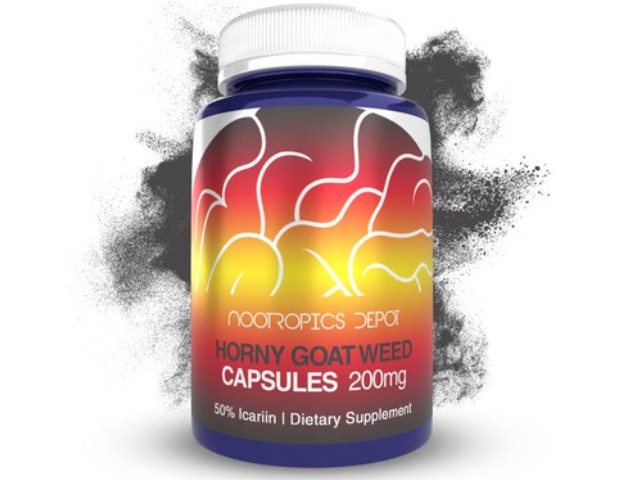
Horny Goat Weed Capsules by Nootropics Depot
Shop Now →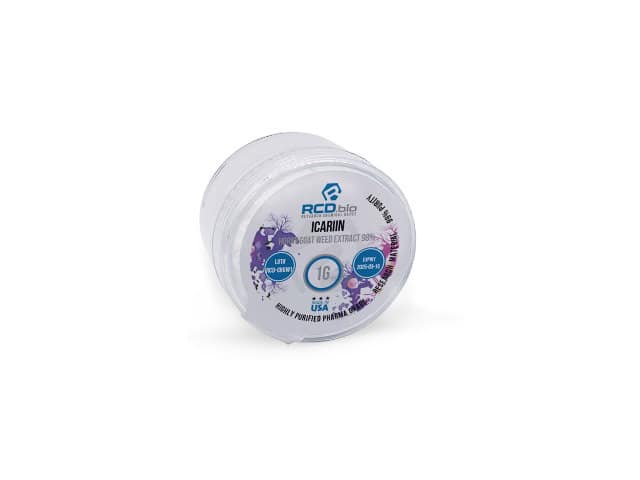
Buy Icariin (Horny Goat Weed Extract) 98% by Research Chemical Depot
Shop Now →Disclosure: These are affiliate links. I earn a small commission if you purchase — at no extra cost to you. I only recommend products I personally use or have thoroughly researched.