
- Supports cognitive function and neuroprotection
- Enhances mood and energy through gut-brain axis modulation
- Supports healthy testosterone levels and libido
- Promotes neuronal growth factor expression (BDNF, NGF, GDNF)
- Provides antioxidant and anti-inflammatory activity
I’ll be honest — when I first heard about a parasitic desert plant that the Chinese have been calling the “Ginseng of the Deserts” for two millennia, I figured it was the kind of thing that sounds amazing on paper and does absolutely nothing in practice. I’d been burned before by overhyped traditional herbs with cool backstories and zero science to back them up.
But Cistanche tubulosa kept showing up. In the research. In the forums. In conversations with practitioners I trust. And when I finally dug into the actual data — the neurotransmitter modulation, the gut-brain connection, the hormonal support — I understood why this plant has survived 2,000 years of continuous medicinal use while most ancient remedies have faded into footnotes.
The Short Version: Cistanche tubulosa is a desert-dwelling parasitic plant with nearly 2,000 years of use in Traditional Chinese Medicine. Its active compounds — primarily echinacoside and acteoside — support cognitive function, mood, energy, and hormonal health through multiple pathways including neurotransmitter restoration, gut microbiome modulation, and neuroprotective growth factor stimulation. The human clinical evidence is still early-stage, but the mechanistic data is compelling and the safety profile is solid. Below, I break down exactly how it works, what the research actually says, and who should consider trying it.
What Is Cistanche tubulosa?
Cistanche tubulosa is a holoparasite — meaning it has no chlorophyll and can’t photosynthesize at all. It survives by latching onto the roots of host plants, typically tamarisk trees, in the deserts of northwestern China, the Middle East, and Central Asia. It’s basically a botanical vampire, and somehow that makes it one of the most interesting nootropic compounds I’ve come across.
In Traditional Chinese Medicine, Herba Cistanche (Rou Cong Rong) was first recorded in the Shennong Bencao Jing around 100 AD — the oldest surviving Chinese herbal text. Over the centuries it appeared in every major TCM pharmacological reference, and it was the single most frequently prescribed herb for chronic kidney disease across successive Chinese dynasties. It was also a go-to for impotence, female infertility, and — somewhat amusingly — constipation. (More on that laxative effect later.)
Here’s the important distinction: there are two major Cistanche species in commerce. Cistanche deserticola is the original pharmacopeial species, but it’s now endangered in the wild. Cistanche tubulosa was added to the Chinese Pharmacopoeia in 2005 as an approved substitute, and it’s now the dominant commercial species because it’s easier to cultivate and actually contains higher concentrations of the key active compounds. If you’re buying a Cistanche product today, tubulosa is what you want.
Reality Check: Cistanche is a slow-build adaptogen, not an instant cognitive enhancer. If you’re looking for something you’ll feel in 30 minutes, this isn’t it. It’s more comparable to Ashwagandha or Rhodiola in character — subtle background improvements that compound over weeks. The foundations still matter most: sleep, nutrition, gut health, stress management. No desert plant is going to override a broken foundation.
How Does Cistanche tubulosa Work?
The primary bioactive compounds are phenylethanoid glycosides (PhGs) — specifically echinacoside and acteoside (also called verbascoside). These are the compounds that drive most of the interesting effects, and they work through several overlapping pathways.
The neurotransmitter story. In animal models of Alzheimer’s and Parkinson’s disease, Cistanche extracts restore depleted levels of serotonin and dopamine in the brain. They also reverse cholinergic dysfunction — the breakdown of the acetylcholine system that’s central to memory formation. Think of it as helping your brain’s chemical messaging service get back on track after disruption.
At a deeper level, Cistanche stimulates the expression of three critical growth factors: BDNF (brain-derived neurotrophic factor), NGF (nerve growth factor), and GDNF (glial cell-derived neurotrophic factor). These are the proteins your brain uses to build, maintain, and repair its neural wiring. GDNF is particularly interesting because it specifically protects dopaminergic neurons — the ones that degenerate in Parkinson’s disease.
The gut-brain connection. This is where it gets really fascinating. Cistanche significantly modulates gut microbiota composition, increasing production of short-chain fatty acids — particularly butyric acid derivatives with direct neuroprotective properties. Here’s the thing that blew my mind: roughly 90% of your body’s serotonin is produced in your gut, not your brain. So when Cistanche shifts your gut microbiome in a favorable direction, the downstream effects on mood and cognition may be as much about your gut as your neurons.
There’s an important caveat that most supplement marketers conveniently forget to mention: echinacoside and acteoside have extremely low oral bioavailability — less than 1%. That sounds damning until you consider the gut microbiota data. The compounds may not need to reach your bloodstream in large quantities to work because they’re doing much of their heavy lifting right there in the gut, reshaping the microbial ecosystem that influences your brain through the vagus nerve and immune signaling.
The hormonal angle. Echinacoside activates the ghrelin receptor to stimulate growth hormone secretion (demonstrated in vitro) and upregulates steroidogenic enzymes in the CYP450 pathway that support testosterone synthesis. This dual hormonal action — growth hormone plus testosterone support — helps explain why Cistanche has been used for vitality and sexual function for centuries.
Pro Tip: Because Cistanche works substantially through gut microbiome modulation, your results may partly depend on your baseline gut health. If your gut is in rough shape, consider working on that foundation first with probiotics, fermented foods, and dietary changes. A healthy gut gives Cistanche more to work with.
Benefits of Cistanche tubulosa
Let me be straight with you about the evidence landscape here. The mechanistic data is genuinely compelling. The traditional use history is nearly unmatched. But the human clinical trial data? It’s early. Here’s what we actually know.
Cognitive Function
A 2024 randomized, double-blind, placebo-controlled trial gave 100 middle-aged and elderly adults a combination of Cistanche tubulosa and Ginkgo biloba (72 mg echinacoside + 27 mg flavonol glycosides daily) for 90 days. The treatment group showed significant improvements on the Mini-Mental State Examination. A network meta-analysis the same year ranked this Cistanche-Ginkgo combination as the most effective natural extract combination for enhancing memory, executive function, and cognitive flexibility.
The honest caveat: both key human trials combined Cistanche with Ginkgo, so we can’t isolate exactly how much each ingredient contributed. That said, the combination clearly works, and the preclinical data for Cistanche alone is strong.
Neuroprotection
Animal studies paint a consistently promising picture. Cistanche extracts protect dopaminergic neurons in Parkinson’s models, reduce amyloid-beta deposition relevant to Alzheimer’s, and protect blood-brain barrier integrity after ischemic stroke by modulating microglial neuroinflammation. A 2025 study found that Cistanche glycosides improved cognitive decline in Alzheimer’s model mice through m6A methylation regulation — a cutting-edge epigenetic mechanism.
An open-label study of Memoregain® (the clinical-grade Cistanche extract) in 18 patients with moderate Alzheimer’s disease over 48 weeks found that cognitive function improved in 10 patients and stabilized in most others. The numbers weren’t statistically significant given the tiny sample, but for a disease where steady decline is the expected trajectory, stabilization is meaningful.
Mood and Energy
The antidepressant-like effects demonstrated in chronic stress animal models — mediated through gut microbiota restoration and hippocampal neurotransmitter normalization — align closely with what users consistently report: a gradual but noticeable lift in baseline mood and a clean, non-jittery sense of increased vitality.
Hormonal Support
Animal studies show increased testosterone levels and improved reproductive function, supported by the ghrelin receptor activation and steroidogenic enzyme upregulation mechanisms. This is probably the most consistently reported benefit among users, particularly enhanced libido.
Reality Check: The human evidence for Cistanche as a standalone nootropic is preliminary. We have strong mechanistic data, excellent animal studies, and promising but small or combination-design human trials. It’s not in the same evidence tier as Bacopa or Ginkgo for cognition. But the multi-pathway mechanism of action — spanning neurochemistry, gut-brain axis, and hormonal support — is genuinely unique and worth paying attention to.
How to Take Cistanche tubulosa
Dosage
Your dose depends entirely on the extract standardization:
- High-potency standardized extract (50% echinacoside + 10% acteoside): 200–400 mg/day — this is the sweet spot for most people
- Standard extract (~7.5% echinacoside): 300–600 mg/day
- Supercritical CO2 extract (20% echinacoside + 20% verbascoside): 100–200 mg/day — higher bioactive density means lower doses
- Clinical therapeutic dose (as used in the Alzheimer’s study): 1,800 mg/day — don’t start here
Start at the lower end of whatever form you’re using and assess for 4–6 weeks before increasing. This isn’t a compound where doubling the dose doubles the effect.
Timing and Protocol
Take it in the morning with food. Some users report mild stimulation or sleep disruption with evening dosing, and food improves tolerance. If you’re taking 400 mg or more, splitting into a morning and midday dose is reasonable.
Expect a 2–6 week onset period. Most users don’t notice anything in the first week. The effects build gradually — improved mood and energy tend to show up first, with cognitive benefits emerging later.
Cycling
There’s no established cycling protocol and no clear evidence of tolerance. A 4–6 weeks on, 1–2 weeks off approach is sensible given the limited long-term safety data, but some users take it continuously without issues.
Insider Tip: The standardization matters more than the brand. A product listing “Cistanche tubulosa 500mg” with no standardization information could contain almost anything in terms of active compound content. Always look for products specifying echinacoside and acteoside percentages. The gold standard is 50% echinacoside + 10% acteoside. If a product doesn’t list these numbers, move on.
Side Effects and Safety
Cistanche has a reassuring safety profile for a compound with this much biological activity. A 28-day repeated dose toxicity study in rats and a 180-day study in beagle dogs at 1.5 g/kg/day found no observable adverse effects.
Common side effects (mild and infrequent):
- Mild gastrointestinal discomfort or nausea
- Laxative effect — this was actually one of its traditional uses, so don’t be surprised
- Occasional dizziness
Less common reports:
- Insomnia or restlessness, particularly with evening dosing
- Irritability or mood changes in sensitive individuals
The serious data point: In an EFSA safety review analyzing 1,076 patients in vascular dementia studies at 1,800 mg/day, 12 adverse events were classified as possibly related to the extract, including 2 severe events: cerebral hemorrhage and epilepsy. These occurred at high therapeutic doses in elderly patients with significant medical complexity. At standard supplemental doses, the risk profile appears much milder.
Important: Avoid Cistanche if you are pregnant or nursing — there is no safety data for these populations. Use caution if you have autoimmune conditions (it has immunomodulatory effects), hormone-sensitive conditions (it influences testosterone and steroidogenic pathways), or if you take anticoagulant medications (theoretical interaction risk). The European Food Safety Authority declined to authorize it as a novel food in 2021 due to insufficient safety documentation — not because of identified dangers, but because the submitted studies didn’t meet their methodological standards.
Stacking Cistanche tubulosa
Best Pairings
Cistanche + Ginkgo biloba — This is the most evidence-backed combination. The 2024 RCT and network meta-analysis both support it for cognitive function. Ginkgo’s cerebrovascular effects complement Cistanche’s neurotransmitter and growth factor mechanisms. A typical stack: 300 mg Cistanche (50% ECH) + 120 mg Ginkgo (24% flavone glycosides).
Cistanche + Tongkat Ali — Complementary testosterone and vitality support through different mechanisms. Tongkat Ali has stronger human evidence for hormonal effects, while Cistanche adds the neuroprotective and gut-brain dimensions.
Cistanche + Shilajit — The Ayurvedic counterpart to Cistanche’s TCM tradition. Shilajit’s fulvic acid content may enhance the bioavailability and steroidogenic enzyme activity of the combination.
Cistanche + Saffron — Serotonergic and dopaminergic synergy for mood support. Both work through different mechanisms to support neurotransmitter balance.
Cistanche + Lion’s Mane — If neuroprotection is your primary goal, Lion’s Mane’s stronger NGF stimulation paired with Cistanche’s GDNF and BDNF support covers the major neurotrophin pathways.
What to Avoid
Be cautious stacking with multiple hormonal modulators simultaneously — combining Cistanche with Tongkat Ali and DHEA and Epimedium could push androgenic stimulation further than intended. Pick one or two complementary compounds, not the entire testosterone aisle.
Watch the blood-thinning stack effect if you’re combining with Ginkgo, fish oil, and other supplements with anticoagulant properties. The individual effects are mild, but they can add up.
My Take
After spending a lot of time with the research and using Cistanche myself, here’s where I land: this is one of the more interesting compounds in the nootropic space, but it’s not for everyone.
Cistanche is best for the person who wants a single compound that quietly supports multiple systems — brain health, mood, hormonal balance, and gut function — without dramatic acute effects. If you’re the type who values slow, cumulative improvements and you have the patience to wait 4–6 weeks for results, Cistanche fits your approach perfectly.
You should probably look elsewhere if you want fast-acting cognitive enhancement (try Piracetam or caffeine), if you need strong evidence-backed cognitive support right now (go with Bacopa or Ginkgo standalone), or if you’re uncomfortable with a compound that has limited human trial data as a solo ingredient.
What genuinely excites me about Cistanche is the gut-brain axis mechanism. We’re only beginning to understand how much our cognitive function depends on what’s happening in our microbiome, and Cistanche appears to work precisely at that intersection. As the research catches up to the mechanism — and I think it will — I expect Cistanche to become a much bigger deal in the nootropic world.
For now, I’d rank it as a strong “worth trying” for the right person, especially stacked with Ginkgo where the evidence is strongest. Start with 200 mg of a quality standardized extract, give it six weeks, and pay attention to mood and energy before looking for cognitive effects. That’s the protocol that gives this compound its best shot at showing you what it can do.
Recommended Cistanche tubulosa Products
I know how frustrating it is to sort through dozens of brands making the same claims. These are the ones I've personally vetted — because quality is the difference between results and wasted money.
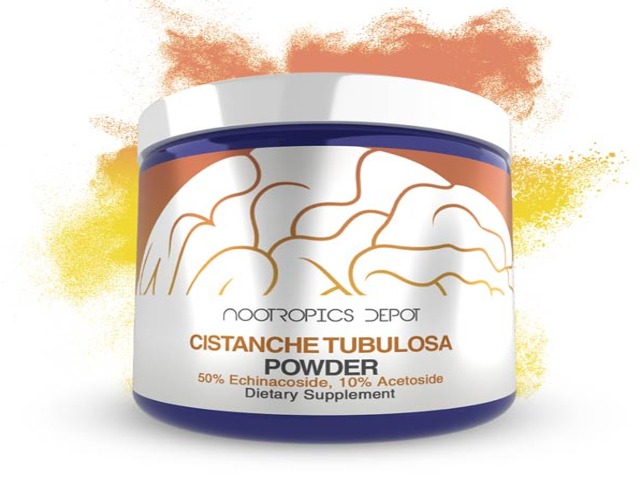
Cistanche tubulosa Powder by Nootropics Depot
Shop Now →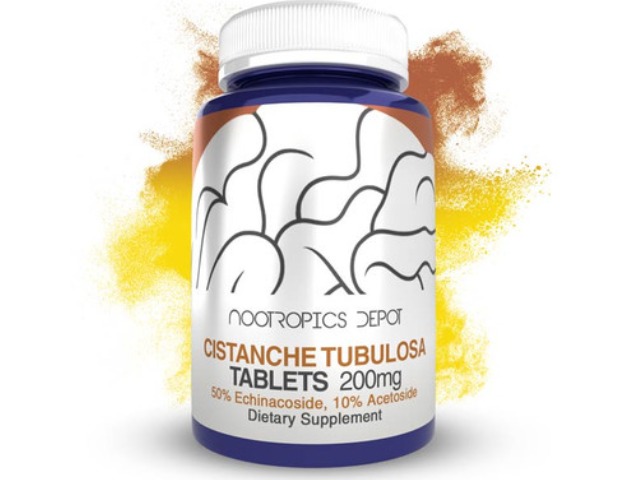
Nootropics Depot Buy Cistanche Tubulosa Tablets
Shop Now →Disclosure: These are affiliate links. I earn a small commission if you purchase — at no extra cost to you. I only recommend products I personally use or have thoroughly researched.
Research & Studies
This section includes 6 peer-reviewed studies referenced in our analysis.