
- Stimulates Nerve Growth Factor (NGF) and BDNF synthesis
- Supports cognitive function and memory
- Promotes nerve regeneration and neuroplasticity
- Reduces symptoms of mild cognitive impairment
- Supports gut health via the gut-brain axis
- May reduce anxiety and depression symptoms
I’ll be honest — when I first heard about a shaggy white mushroom that could help your brain grow new connections, I filed it under “things that sound amazing on Reddit but probably don’t work.” That was about six years ago. Since then, Lion’s Mane has become one of the few supplements I’ve taken consistently, and the research behind it has only gotten stronger.
Here’s what makes Hericium erinaceus different from almost every other nootropic on the market: it doesn’t just tweak your brain chemistry for a temporary boost. It tells your brain to build new infrastructure. That distinction matters more than you think.
The Short Version: Lion’s Mane is a medicinal mushroom containing unique compounds (hericenones and erinacines) that stimulate your brain’s own nerve growth factors. Multiple double-blind clinical trials show real cognitive improvements — better memory, faster reaction time, and protection against age-related decline. It’s not a stimulant, it’s not dramatic, and it takes weeks to really kick in. But the science is solid, the safety profile is excellent, and it’s one of the most well-studied natural nootropics available.
What Is Lion’s Mane?
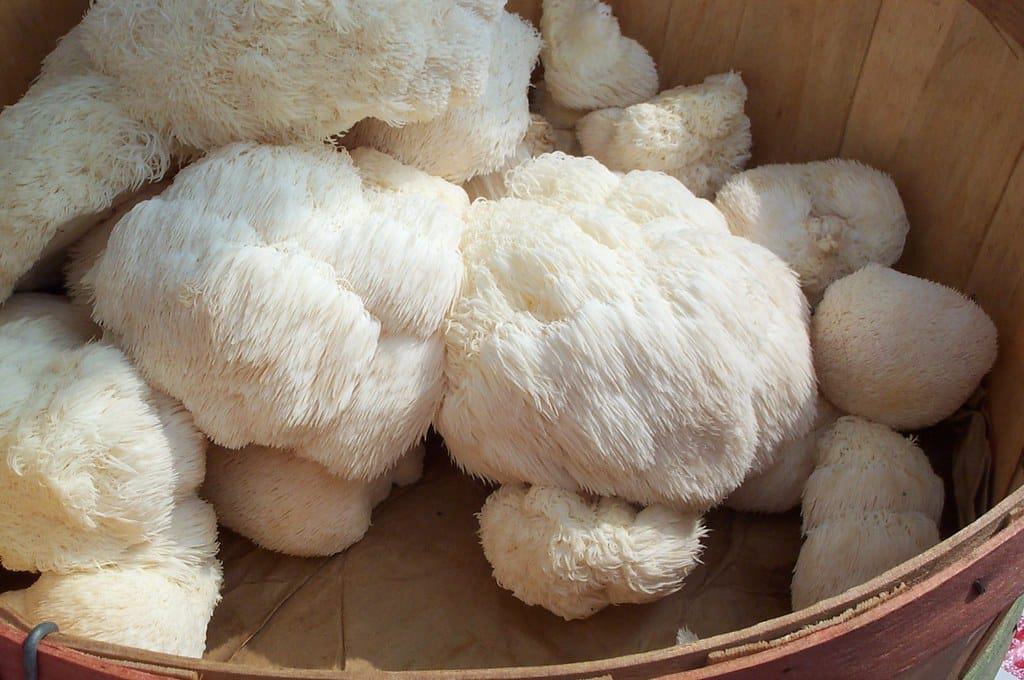
Hericium erinaceus is a large, white, cascading-spined mushroom that grows wild on hardwood trees — particularly oak, walnut, and beech — in temperate forests across North America, Europe, and Asia. If you’ve ever seen one in the wild, you’d remember it. It looks like a fluffy white waterfall hanging off a tree trunk. Nothing else in the fungal kingdom quite resembles it.
In Traditional Chinese Medicine, Lion’s Mane has been used for centuries to strengthen digestion, calm the mind, and address what TCM practitioners call “Qi deficiency” — a pattern that maps surprisingly well onto what we’d now call chronic fatigue, brain fog, and gut dysfunction. In Japan, it’s called Yamabushitake, named after the Yamabushi mountain hermit monks who reportedly used it for meditation and mental clarity.
The modern story really begins in the late 1980s, when Japanese researcher Hirokazu Kawagishi isolated a class of compounds called hericenones from the fruiting body. His team then identified erinacines in the mycelium. Both turned out to stimulate something remarkable: Nerve Growth Factor synthesis. That discovery launched three decades of neurological research that’s still accelerating today.
Reality Check: Lion’s Mane is not going to turn you into a genius overnight. It’s not a stimulant, and you won’t “feel it” the way you feel caffeine or modafinil. The effects are subtle, cumulative, and best appreciated over months — not hours. If you’re looking for an instant cognitive boost, this isn’t it. If you’re playing the long game with your brain health, keep reading.
How Does Lion’s Mane Work?
Most nootropics work by manipulating neurotransmitters — more dopamine here, more acetylcholine there. Lion’s Mane does something fundamentally different. It tells your brain to produce more of the growth factors that build, repair, and maintain neurons themselves.
Think of it this way: if your brain is a city, most nootropics are adjusting traffic flow. Lion’s Mane is building new roads.
The two primary compound classes responsible are hericenones (found in the fruiting body) and erinacines (found in the mycelium). Both stimulate the synthesis of Nerve Growth Factor (NGF) and Brain-Derived Neurotrophic Factor (BDNF) — two proteins essential for neuronal growth, survival, and synaptic plasticity. Erinacine A is particularly interesting because it has roughly 24% oral bioavailability and crosses the blood-brain barrier via passive diffusion, meaning it actually reaches your brain tissue when you swallow it.
More recently, researchers identified a newer class of compounds — hericerin derivatives like NDPIH and hericene A — that activate a pan-neurotrophic pathway in hippocampal neurons converging on ERK1/2 signaling. In plain English, they found additional ways Lion’s Mane promotes neuronal growth that we didn’t even know about five years ago.
But the brain benefits don’t stop at neurotrophins. Lion’s Mane also works through:
- Anti-inflammatory pathways: Bioactive compounds inhibit NF-κB activation, suppress COX-2 and iNOS, and reduce neuroinflammation — which is increasingly recognized as a driver of cognitive decline.
- Gut-brain axis modulation: Beta-glucan polysaccharides feed beneficial gut bacteria, increase short-chain fatty acid production, and strengthen intestinal barrier integrity. Those SCFAs travel to your brain via the bloodstream and vagus nerve, influencing cognition and mood. This is why some people notice improved digestion alongside clearer thinking.
- Antioxidant defense: Scavenges reactive oxygen species and upregulates your body’s own antioxidant enzymes.
So what does this actually mean for you? Lion’s Mane isn’t a quick-fix stimulant. It’s rebuilding your brain’s capacity to learn, adapt, and protect itself from damage — through multiple independent mechanisms. That’s why the effects compound over time and why the clinical trials that ran the longest showed the strongest results.
Benefits of Lion’s Mane
Here’s where Lion’s Mane genuinely stands out in the nootropic world: it has multiple double-blind, placebo-controlled trials in humans. That’s rarer than you’d think.
Cognitive Function in Mild Cognitive Impairment
The landmark study is Mori et al. (2009), published in Phytotherapy Research. Thirty Japanese adults aged 50–80 with mild cognitive impairment received either 3g/day of Lion’s Mane or placebo for 16 weeks. The treatment group showed significantly improved cognitive function scores at weeks 8, 12, and 16. One critical detail: scores declined after supplementation stopped, suggesting this is something you take consistently, not occasionally.
Protection in Mild Alzheimer’s Disease
Li et al. (2020) ran a 49-week trial — one of the longest nootropic supplement studies I’ve seen — using erinacine A-enriched mycelium in patients with mild Alzheimer’s. The supplement group showed improved MMSE scores, better daily functioning, and preserved nerve fiber integrity on brain imaging. The placebo group showed measurable neural degeneration over the same period. That’s not just improvement — that’s protection.
Cognitive Benefits in Healthy Adults
This is the part that gets my attention most. Saitsu et al. (2019) found MMSE improvements in healthy older adults after 12 weeks. Docherty et al. (2023) tested 1.8g/day in healthy adults aged 18–45 and found improved reaction time on a Stroop task within 60 minutes of a single dose. La Monica et al. (2023) found that even a single 1g dose improved working memory, complex attention, and reaction time within 2 hours.
Mood and Anxiety
Nagano et al. (2010) found reduced depression and anxiety in menopausal women after 4 weeks. The mechanism appeared independent of NGF levels, suggesting Lion’s Mane has mood-supporting pathways we haven’t fully mapped yet.
Nerve Regeneration (Animal Studies)
Multiple animal studies show Lion’s Mane promotes peripheral nerve regeneration after crush injuries and supports myelination. This is preliminary but promising for anyone interested in long-term nerve health.
Insider Tip: The clinical trials showing the strongest cognitive results ran 12–49 weeks. If you try Lion’s Mane for two weeks and decide “it doesn’t work,” you haven’t actually given it a fair shot. Commit to at least 8–12 weeks of consistent use before evaluating.
How to Take Lion’s Mane
Dosage
- Fruiting body extract (standardized to ≥25% beta-glucans): 500–3,000 mg/day, split into 2–3 doses
- Whole fruiting body powder (non-extracted): 3,000–5,000 mg/day — higher dose needed because active compound concentrations are lower
- Erinacine A-enriched mycelium: 1,050 mg/day (three 350mg capsules) — this is the exact dose from the 49-week Alzheimer’s trial
Start at the lower end — 500mg of a quality extract — and work up over 1–2 weeks. There’s no evidence that more is dramatically better; consistency matters far more than megadosing.
Timing
Lion’s Mane is non-stimulating, so timing is flexible. Some people prefer morning or midday dosing to align with cognitive demands. Others split doses across meals for digestive comfort. There’s no strong evidence favoring one approach.
Forms
- Dual extract (hot-water + alcohol): Generally considered the gold standard because it captures both water-soluble beta-glucans and alcohol-soluble hericenones/terpenoids
- Hot-water extract: Effective for beta-glucans and hericenones; the most traditional preparation
- Erinacine A-enriched mycelium: Specifically targets the compounds with the best BBB penetration data
Pro Tip: Look at the beta-glucan content on the label. This is the single most reliable quality marker. You want ≥25% beta-glucans — premium products hit 30–40%+. If the label doesn’t list beta-glucan content at all, that’s a red flag. And watch out for “mycelium on grain” products — these can be 30–70% rice or oat starch filler, which means you’re paying mushroom prices for grain.
Cycling
There’s no established need to cycle Lion’s Mane. The Mori (2009) trial showed benefits increasing steadily over 16 weeks of continuous use. Some people cycle 4 weeks on / 1 week off out of habit, but there’s no scientific basis for it. In fact, since cognitive scores declined after discontinuation in that trial, continuous use seems preferable.
Side Effects and Safety
Lion’s Mane has one of the cleanest safety profiles in the supplement world.
The most common side effect is mild gastrointestinal discomfort — stomach upset, nausea, or bloating — particularly when starting or at higher doses. In the 49-week Alzheimer’s trial, only 4 out of the total participants dropped out due to side effects (abdominal discomfort, nausea, and one skin rash). That’s remarkable for a study of that length.
Who should avoid Lion’s Mane:
- Anyone with a known mushroom allergy
- People with autoimmune conditions (MS, lupus, rheumatoid arthritis) — Lion’s Mane may increase immune activity
- Those on anticoagulants or antiplatelets (warfarin, aspirin) — may enhance bleeding risk
- People taking antidiabetic medications — may lower blood sugar further
- Anyone on immunosuppressants — opposing mechanisms
- Pregnant or nursing women — no safety data exists
Important: Discontinue Lion’s Mane at least 2 weeks before any scheduled surgery due to potential effects on blood clotting and blood sugar. And if you’re taking SSRIs or SNRIs, talk to your doctor before adding Lion’s Mane — it has serotonergic and neurotrophic activity that could theoretically interact, though no studies have confirmed this.
Stacking Lion’s Mane
Lion’s Mane plays well with others, partly because its mechanism — neurotrophic factor stimulation — is so distinct from most other nootropics.
The Stamets Stack
Popularized by mycologist Paul Stamets: Lion’s Mane + Niacin (Vitamin B3). The theory is that niacin’s vasodilatory flush helps distribute Lion’s Mane’s active compounds to peripheral nerve tissues. You can use this stack without the psilocybin component that the full protocol includes. Start with a low niacin dose (50–100mg) to manage the flush.
Lion’s Mane + Cordyceps
One of the most popular mushroom stacks. Cordyceps targets energy production and oxygen utilization while Lion’s Mane handles the cognitive/neurotrophic side. Together, they cover mental and physical performance from different angles.
Lion’s Mane + Bacopa Monnieri
Both support memory, but through completely different mechanisms. Bacopa works through cholinergic pathways and antioxidant protection; Lion’s Mane works through neurotrophins. Complementary, not redundant. Both also require extended use (8+ weeks) to show full benefits.
Lion’s Mane + Choline Sources
Alpha-GPC or CDP-Choline provide acetylcholine precursors that may complement the new neuronal connections Lion’s Mane promotes. You’re building new roads (Lion’s Mane) and fueling the cars that drive on them (choline).
Lion’s Mane + DHA
DHA is a structural brain lipid. If Lion’s Mane is stimulating new neuronal growth, DHA provides the building materials. A solid foundational combination.
What to Avoid Combining
Use caution stacking Lion’s Mane with blood-sugar-lowering supplements like berberine or anticoagulant herbs like Ginkgo biloba — the effects could compound. And absolutely avoid combining with immunosuppressant medications.
My Take
Lion’s Mane is one of the few supplements I recommend to almost everyone who asks me where to start with nootropics. Not because it’s the most dramatic or the fastest-acting — it’s neither. But because it’s doing something genuinely unique that nothing else in the natural supplement world replicates: telling your brain to build and maintain its own neural infrastructure.
I’ve taken it consistently for years. The effects aren’t flashy. I don’t feel “wired” or “enhanced.” What I notice is that my thinking feels cleaner over time — better recall, more fluid verbal expression, fewer of those frustrating tip-of-the-tongue moments. And honestly, I notice it most when I stop taking it for a few weeks.
Best for:
- Anyone over 40 looking to protect long-term cognitive function
- People dealing with brain fog (after addressing foundations — sleep, gut, stress)
- Students or professionals wanting cumulative cognitive support without stimulants
- Anyone interested in nerve health or neuroplasticity
Probably not for you if:
- You want an immediate, noticeable cognitive boost (try caffeine + L-theanine instead)
- You have an autoimmune condition or are on immunosuppressants
- You aren’t willing to take it consistently for at least 2–3 months
One last thing — quality matters enormously here. A dual-extracted fruiting body product with verified beta-glucan content is a completely different supplement from a mycelium-on-grain capsule that’s mostly rice starch. Don’t cheap out on this one. Check the beta-glucans, verify the extraction method, and look for third-party testing. Your brain is worth it.
How Lion's Mane Mushroom Compares
Recommended Lion's Mane Mushroom Products
I know how frustrating it is to sort through dozens of brands making the same claims. These are the ones I've personally vetted — because quality is the difference between results and wasted money.
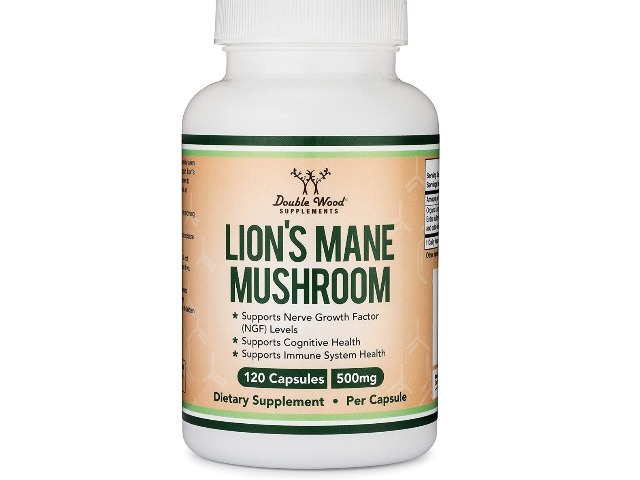
Lion's Mane by DoubleWood Supplements
Shop Now →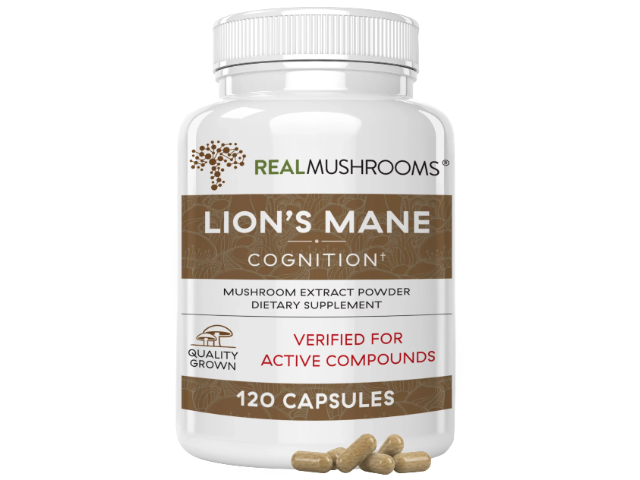
Lion's Mane by Real Mushroom
Shop Now →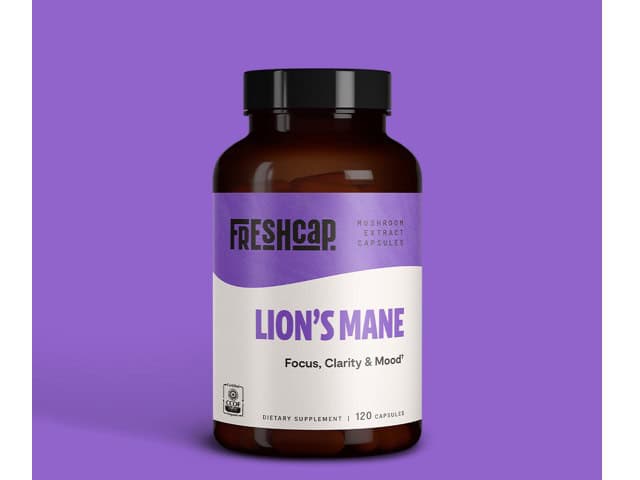
Lion's Mane Capsules by FreshCap
Shop Now →Disclosure: These are affiliate links. I earn a small commission if you purchase — at no extra cost to you. I only recommend products I personally use or have thoroughly researched.