
- Supports memory and verbal recall
- Enhances acetylcholine activity
- Supports glutathione metabolism
I spent three months trying to figure out why my “advanced nootropic stack” wasn’t doing anything for my memory. Turned out I was missing something foundational — a naturally occurring compound my body was already making, just not enough of it.
That compound was L-Pyroglutamic Acid, and once I understood how it works, a lot of pieces clicked into place.
The Short Version: L-Pyroglutamic acid (L-PCA) is a cyclic amino acid derivative that your body naturally produces as part of the glutathione pathway. Research shows it supports memory and learning by enhancing acetylcholine activity in the brain. Best studied for age-related memory decline with a favorable safety profile, though large-scale clinical trials are still needed.
What Is L-Pyroglutamic Acid?
L-Pyroglutamic acid is one of those compounds that flies under the radar because it sounds technical and isn’t marketed with flashy claims. But here’s what makes it interesting: it’s already in your body, playing a crucial role in both brain function and your primary antioxidant defense system.
Your body produces L-PCA from glutathione — your master antioxidant — through a metabolic pathway called the γ-glutamyl cycle. This isn’t some exotic plant extract or synthetic pharmaceutical. It’s an endogenous molecule, particularly concentrated in your central nervous system, where it acts as a neuromodulator.
The compound was first discovered back in 1882 when researchers found that heating glutamic acid (a primary excitatory neurotransmitter) causes it to lose a water molecule and cyclize into pyroglutamic acid. But it wasn’t until the 1980s and 1990s that researchers started investigating its potential as a cognitive enhancer.
What caught researchers’ attention was L-PCA’s structural similarity to the racetam family of nootropics — it shares the same 2-oxo-pyrrolidone base structure as piracetam. That structural relationship turned out to be more than coincidental.
Here’s the foundations-first reality: L-PCA works best when your body’s baseline glutathione production is healthy. That means adequate protein intake, good gut function, and managing oxidative stress through sleep and stress management. No supplement fixes a broken foundation — it builds on what’s already there.
How Does L-Pyroglutamic Acid Work?
Think of L-PCA as a multi-tool for your neurotransmitter systems. It doesn’t just hit one target — it influences several interconnected pathways that matter for cognition.
The Acetylcholine Connection
The most well-documented mechanism involves the cholinergic system — your brain’s primary learning and memory network. L-PCA increases the release of acetylcholine from the cerebral cortex, essentially turning up the volume on your brain’s memory circuits.
In animal studies, L-PCA prevented scopolamine-induced amnesia by stopping the drop in brain acetylcholine levels. Scopolamine is essentially a chemical eraser for the cholinergic system, used in research to model memory dysfunction. The fact that L-PCA blocked this effect tells us it’s actively protecting and enhancing cholinergic transmission.
Translation: if your brain were a library, acetylcholine is what helps you file and retrieve information. L-PCA makes that filing system work more efficiently.
The Glutamate Angle
L-PCA is a cyclic analogue of glutamic acid — the brain’s primary excitatory neurotransmitter. Research shows it interacts with excitatory amino acid receptors in the forebrain, though the exact mechanisms are still being mapped out.
This matters because glutamatergic transmission is involved in synaptic plasticity — your brain’s ability to strengthen or weaken connections based on experience. It’s the neurochemical foundation of learning.
The Glutathione Pathway
Here’s where L-PCA gets interesting from a holistic perspective. It participates in the glutathione metabolic pathway, supporting your body’s primary antioxidant defense system. This has neuroprotective implications — oxidative stress is a major contributor to cognitive decline.
Studies confirm that L-PCA crosses the blood-brain barrier, allowing it to directly influence central nervous system function rather than just acting peripherally.
Pro Tip: Because L-PCA affects both cholinergic and glutamatergic systems, it pairs well with choline sources like Alpha-GPC or CDP-Choline. This combination provides both the raw material (choline) and the signal boost (L-PCA) your brain needs for optimal acetylcholine function.
Benefits of L-Pyroglutamic Acid
Let’s be honest about the evidence quality here — it’s promising but limited. We’re not looking at dozens of large-scale human trials. What we have are a handful of well-designed studies with encouraging results, backed by mechanistic research that explains why those results make sense.
Memory Enhancement in Older Adults
The strongest clinical evidence comes from a 1990 double-blind, placebo-controlled trial published in Fundamental & Clinical Pharmacology. Forty elderly subjects with age-related memory decline were split into treatment and placebo groups for 60 days.
The results were statistically significant:
- Decreased errors in attention tests (Zazzo test)
- Improved short-term memory retrieval
- Enhanced long-term memory storage and retrieval (Buschke test)
- No adverse drug reactions observed
This wasn’t a subtle effect — participants showed measurable improvements across multiple cognitive assessments. The study design was solid, and the fact that no side effects emerged is noteworthy.
Animal research supports these findings. Studies in aged rats showed that pyroglutamic acid improved learning and memory capacities, providing cross-species validation of the cognitive benefits.
The Evidence Quality Reality Check
Here’s where I need to pump the brakes. While these results are encouraging, the scientific community generally agrees that more robust, large-scale clinical trials are needed. We’re talking about a handful of studies from the 1980s and 1990s — not the extensive research base you’d see with something like caffeine or creatine.
There are currently no clinically approved medicines using L-PCA as an active ingredient for any formal therapeutic indication. It’s available in dietary supplements, but that’s a different regulatory category entirely.
Reality Check: L-Pyroglutamic acid shows real promise for age-related memory decline, but don’t expect the same level of research validation as more established nootropics. The evidence is good enough to warrant interest and personal experimentation, but not strong enough to make definitive clinical claims.
What This Means Practically
If you’re dealing with age-related memory issues or want to support healthy cognitive aging, L-PCA has a reasonable evidence base and favorable safety profile. It’s not a magic bullet, but few things are. Most users who benefit notice effects after consistent use over 4-8 weeks — this isn’t a “feel it immediately” compound.
How to Take L-Pyroglutamic Acid
Based on available research and user reports, here’s the practical dosing protocol.
Dosage Range
Standard supplemental doses range from 500mg to 2000mg daily, typically split into two doses. Most people start at the lower end (500-750mg daily) and assess response before increasing.
I’d recommend starting with 500mg once daily with breakfast for the first week. If you tolerate it well and want stronger effects, increase to 500mg twice daily (morning and early afternoon). Some users go up to 1000mg twice daily, but there’s diminishing returns beyond that point for most people.
Timing Recommendations
Take L-PCA with food. This enhances absorption and reduces the likelihood of digestive upset. Research suggests that food intake doesn’t dramatically affect plasma levels, but anecdotally, taking it on an empty stomach increases the risk of nausea for some users.
Avoid taking doses late in the day — some users report sleep disturbances or increased alertness that can interfere with falling asleep. Morning and early afternoon dosing works best.
Forms and Bioavailability
L-PCA is available as capsules or powder. Both work fine — powder gives you more dosing flexibility, capsules are more convenient. Some products combine it with arginine as arginine pyroglutamate, which is a different compound with its own properties.
Approximately 30% of orally administered L-PCA is excreted unchanged in urine in animal models, suggesting decent but not complete absorption. The compound distributes throughout the body and crosses the blood-brain barrier — that’s the important part.
Timeline for Effects
Most users notice cognitive effects within days to a week of consistent use, but optimal benefits typically emerge after 4-8 weeks. This aligns with the clinical trial duration of 60 days showing significant improvements.
Don’t expect dramatic overnight changes. This is more like a slow-building foundation than a light switch.
Insider Tip: Consistency matters more than dosage. Taking 500mg daily for 8 weeks will yield better results than sporadically taking 1500mg. Your brain responds to steady, predictable input — not erratic megadosing.
Side Effects & Safety
L-Pyroglutamic acid has a favorable safety profile based on available research, but that doesn’t mean it’s side-effect-free for everyone.
Common Side Effects
The most frequently reported side effects include:
- Headaches — The most common complaint, likely related to increased glutamate activity or changes in neurotransmitter balance. Usually mild and often resolve after the first week.
- Nausea — More common on an empty stomach or at higher doses. Taking with food typically prevents this.
- Sleep disturbances — Some users report difficulty falling asleep or more vivid dreams, particularly if dosing too late in the day.
- Mild anxiety — Rare, but some users sensitive to glutamatergic compounds notice increased mental stimulation that feels uncomfortable.
These effects are generally mild and dose-dependent. Most people tolerate L-PCA well, especially when starting at lower doses.
Who Should NOT Take L-Pyroglutamic Acid
Avoid L-PCA if you fall into any of these categories:
- Pregnant or breastfeeding women (insufficient safety data)
- People taking blood thinners like warfarin or aspirin without medical supervision
- Those with diabetes or hypoglycemia (monitor blood sugar closely)
- Young children (not studied in pediatric populations)
- People with known disorders of glutamine or glutathione metabolism
Important: If you have a diagnosed medical condition or take prescription medications, consult with a healthcare practitioner before adding L-PCA. This is especially critical if you’re on psychiatric medications or anything affecting neurotransmitter systems.
Drug Interactions
Specific drug interaction data is limited. The main concern is combining L-PCA with:
- Blood thinners (potential interaction due to unknown mechanisms)
- Other glutamatergic compounds (additive effects could cause overstimulation)
- CNS stimulants (may intensify stimulation)
Long-Term Safety
The clinical trials showing benefit used 60-day protocols with no adverse effects. Long-term safety data (6+ months) in humans is lacking. Based on its endogenous nature and the safety profile in available studies, it appears safe for extended use, but we don’t have definitive long-term human data.
Elevated blood levels of pyroglutamic acid can indicate problems with glutamine or glutathione metabolism, but this is typically seen in rare inherited metabolic disorders (pyroglutamic acidemia), not from supplementation.
Stacking L-Pyroglutamic Acid
This is where L-PCA gets interesting. Its structural similarity to racetams and its cholinergic mechanism make it a natural stacking candidate.
The Racetam + Choline Foundation
L-PCA shares the same 2-oxo-pyrrolidone base structure as Piracetam. Both compounds enhance cholinergic function and show synergy with choline sources.
Research on piracetam demonstrates clear synergy with choline — performance increased beyond either compound alone, and evidence suggests piracetam’s potency increased when combined with choline. The same logic applies to L-PCA.
Recommended Stacking Partners:
Alpha-GPC (300-600mg daily)
- Provides choline for acetylcholine synthesis
- L-PCA enhances acetylcholine release
- Together, you get both substrate and signal
CDP-Choline (250-500mg daily)
- Similar mechanism to Alpha-GPC but with additional benefits for phospholipid synthesis
- Studies on racetams show synergy with CDP-Choline in sub-threshold doses
Piracetam (1600-4800mg daily)
- Structurally related, mechanistically similar
- Both prevent acetylcholine depletion
- Combined effects may be additive or synergistic
Bacopa Monnieri (300mg standardized extract)
- Supports dendritic branching and learning
- Works through different mechanisms than L-PCA
- Complementary long-term cognitive support
Other Supporting Compounds:
- L-Theanine (100-200mg) — Balances any stimulation, promotes calm focus
- Magnesium L-Threonate (1000-2000mg) — Supports synaptic plasticity and NMDA receptor function
What to Avoid Combining:
- Multiple glutamatergic compounds without caution — excessive glutamate can cause overstimulation, anxiety, or excitotoxicity. Don’t stack L-PCA with multiple other glutamate-modulating compounds until you understand your tolerance.
- Blood thinners without medical supervision
- High-dose stimulants — the added acetylcholine boost can intensify stimulation uncomfortably
Pro Tip: Start with L-PCA alone for 1-2 weeks to assess your baseline response before adding other compounds. This lets you isolate effects and troubleshoot if something doesn’t feel right.
My Take
I’ll be direct: L-Pyroglutamic acid is one of those “interesting but underappreciated” nootropics that doesn’t get enough attention because it’s not flashy or heavily marketed.
Here’s what I appreciate about it — it’s endogenous, it participates in glutathione metabolism (which matters for long-term brain health), and the mechanism makes sense. Enhancing acetylcholine release while supporting your body’s primary antioxidant system is a combination I can get behind.
The evidence isn’t extensive, but what exists is solid. That 1990 double-blind trial showing memory improvements in elderly subjects is legit — measurable effects, no side effects, good study design. It’s not a massive body of research, but it’s enough to justify personal experimentation.
Who should try L-PCA?
- Older adults noticing memory decline — this is where the research is strongest
- People stacking racetams who want a structurally related compound with cholinergic effects
- Those interested in endogenous nootropics rather than synthetic compounds
- Anyone looking to support glutathione metabolism alongside cognitive function
Who should probably try something else first?
- People new to nootropics — start with more established compounds like Caffeine + L-Theanine, Creatine, or Bacopa Monnieri
- Those seeking dramatic, immediate effects — L-PCA is subtle and builds over weeks
- Anyone with glutamate sensitivity — you may not tolerate the glutamatergic activity well
In my experience, L-PCA works best as part of a comprehensive stack rather than as a standalone. Pairing it with Alpha-GPC or CDP-Choline makes sense given the mechanism. I’ve used it in 8-week cycles with 500mg twice daily, and the memory and verbal fluency support is noticeable but not overwhelming.
The biggest challenge is managing expectations. This isn’t “limitless in a bottle” — it’s a compound that supports healthy cognitive function through well-understood mechanisms. If you’re looking for foundational cognitive support with a favorable safety profile, L-PCA is worth trying. Just don’t expect miracles, and give it at least 4-6 weeks of consistent use before judging results.
And remember: no supplement fixes poor sleep, chronic stress, or a garbage diet. Get the foundations right first. Then add L-PCA to an already solid protocol, and you’ll get more out of it.
Recommended L-Pyroglutamic Acid Products
I know how frustrating it is to sort through dozens of brands making the same claims. These are the ones I've personally vetted — because quality is the difference between results and wasted money.
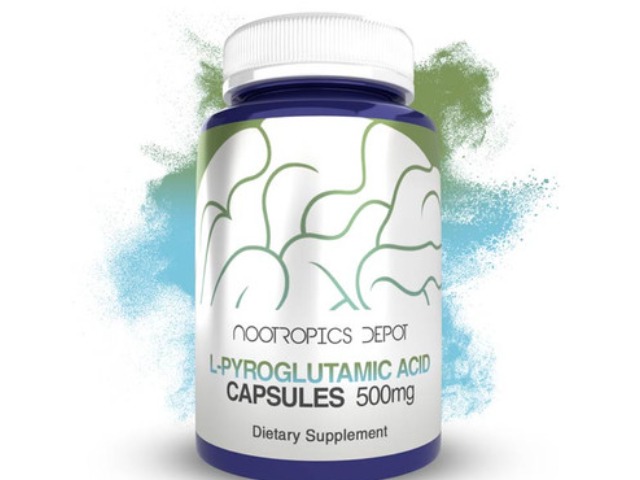
Disclosure: These are affiliate links. I earn a small commission if you purchase — at no extra cost to you. I only recommend products I personally use or have thoroughly researched.
Research & Studies
This section includes 6 peer-reviewed studies referenced in our analysis.