
- Immune system modulation
- Blood sugar regulation
- Long-term neuroprotection
- Antioxidant defense
- Cognitive support via BDNF and AMPA receptor enhancement
- Anti-inflammatory
In feudal Japan, there was a mushroom so rare and prized that foragers who stumbled upon it in the wild would literally dance with joy. Local lords offered it as tribute to the Shogun. It was worth its weight in silver.
That mushroom was maitake — Grifola frondosa — and it wasn’t valued because it tasted good on pizza (though it does). It was valued because people noticed something: those who ate it regularly just… didn’t get sick as often. They had more energy. They aged more gracefully.
Fast forward a few hundred years, and modern science is starting to explain why. Turns out, maitake contains some of the most well-characterized immunomodulatory compounds in the mushroom kingdom — and newer research suggests it may be doing a lot more for your brain than anyone expected.
The Short Version: Maitake (Grifola frondosa) is a medicinal mushroom with the strongest evidence among functional fungi for immune support and blood sugar regulation. Its neuroprotective potential — through AMPA receptor enhancement, BDNF upregulation, and amyloid-beta clearance — is compelling but still largely preclinical. It’s best used as a long-term foundational mushroom in a broader health stack, not as a standalone nootropic for acute cognitive enhancement.
What Is Grifola frondosa?
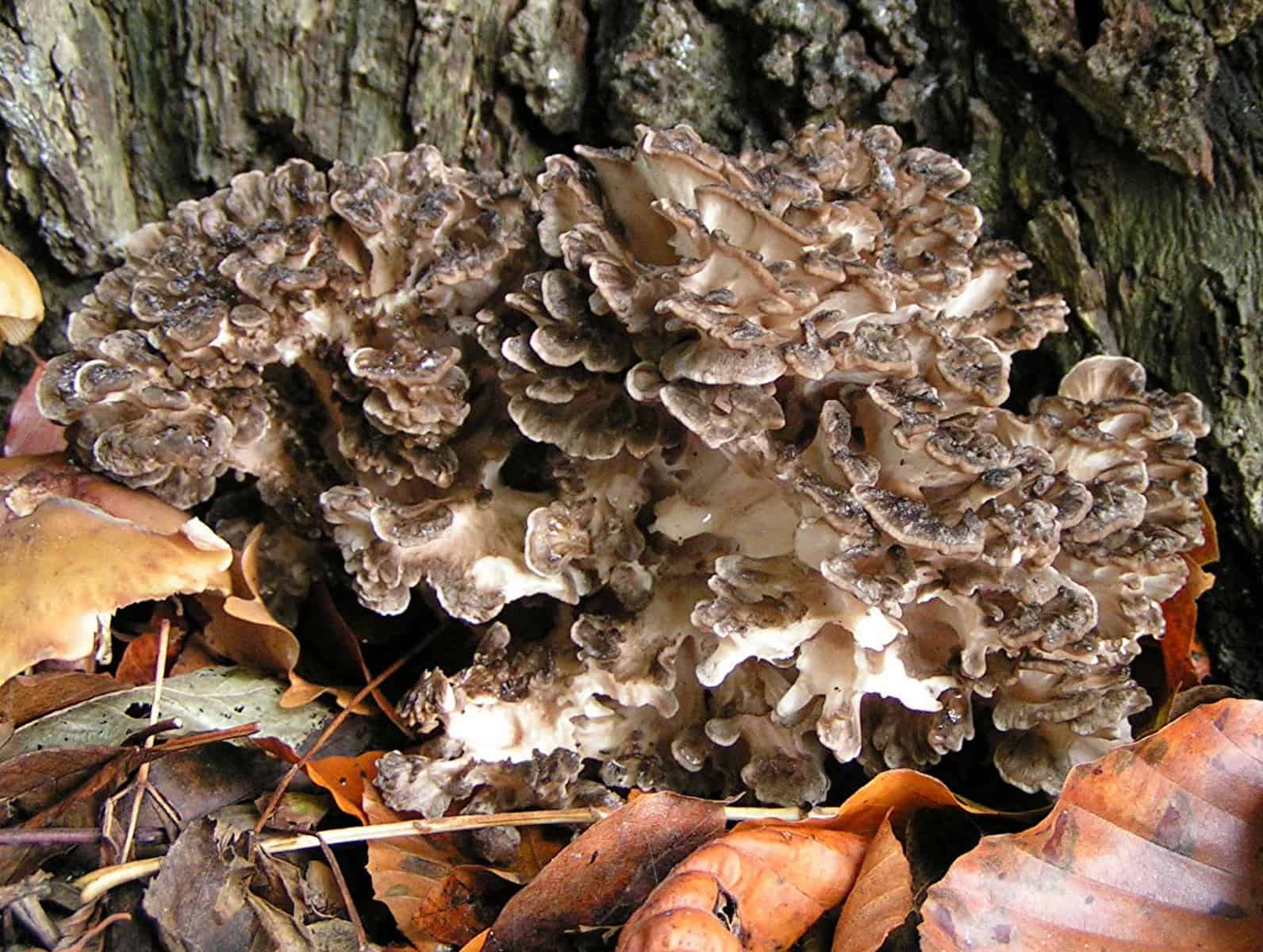
Grifola frondosa is a large polypore mushroom that grows at the base of oak, elm, and maple trees in temperate hardwood forests across Japan, China, Europe, and the northeastern United States. Individual specimens can grow massive — we’re talking 50+ pounds. The Japanese name “maitake” translates to “dancing mushroom,” from the legend about joyful foragers.
It’s been used in traditional Chinese and Japanese medicine for centuries, primarily for immune support and general vitality. But here’s the thing — maitake couldn’t be cultivated artificially until the mid-1980s. Before that, it was genuinely rare and wild-harvested only. Once Japanese cultivators cracked the code, production exploded. By 1999, Japan was producing nearly 40,000 metric tons annually.
The real scientific interest kicked off in the 1980s and ’90s when researchers isolated specific beta-glucan fractions — D-fraction, MD-fraction, and a proteo-beta-glucan called PGM — and started documenting their effects on the immune system. More recently, the neuroprotective research has been picking up steam, which is what makes maitake interesting from a nootropics perspective.
Reality Check: Maitake is not the mushroom you take when you need to crush a deadline tomorrow. That’s Lion’s Mane. Maitake is the mushroom you take because you want your immune system, your metabolism, and your brain to still be working well in twenty years. It’s the long game.
How Does Grifola frondosa Work?
Think of maitake as a systems-level optimizer. Where something like caffeine flips a single switch (adenosine receptors), maitake works across multiple pathways simultaneously — immune, metabolic, antioxidant, and neurological. That’s what makes it both powerful and subtle. You don’t “feel” it acutely because it’s recalibrating systems, not spiking neurotransmitters.
The Immune Engine
Maitake’s beta-glucans — specifically the β-1,3/1,6-glucans — are what researchers call biological response modifiers. They don’t just “boost” your immune system (which is an oversimplification that drives immunologists crazy). They modulate it. These beta-glucans bind to Dectin-1 and Toll-like receptors on immune cells, activating macrophages, dendritic cells, natural killer cells, and T cells. The result is an immune system that responds more appropriately — stronger when it needs to be, more measured when it doesn’t.
A Phase I/II clinical trial in breast cancer patients found that maitake D-fraction modulated immune parameters in a dose-dependent manner, with intermediate doses (5–7 mg/kg/day) producing the most significant effects. Interestingly, the dose-response curve was non-monotonic — some doses enhanced certain immune markers while others suppressed them. Translation: more isn’t always better. There’s a sweet spot.
The Brain Protection System
This is where it gets interesting for the nootropics crowd. A 2023 review in the International Journal of Medicinal Mushrooms laid out the neuroprotective pathways, and they’re genuinely impressive:
AMPA receptor enhancement. PGM (the proteo-beta-glucan unique to maitake) boosts expression of AMPA receptors, which are critical for learning and memory. In a study on aluminum chloride–induced amnesia in mice, PGM treatment at 5–10 mg/kg/day significantly enhanced AMPA receptor and BDNF levels in the hippocampus while tamping down tau protein hyperphosphorylation — one of the hallmarks of Alzheimer’s pathology.
Amyloid-beta clearance. In APP/PS1 transgenic Alzheimer’s model mice, PGM activated microglia and astrocytes, promoting their recruitment to amyloid-beta plaques and enhancing phagocytosis — essentially helping the brain’s cleanup crew do its job. The result was reduced amyloid burden in the cortex and hippocampus and measurable improvements in learning and memory.
Antioxidant defense. Maitake polysaccharides upregulate the Nrf2/ARE pathway, cranking up expression of antioxidant genes like SOD1, CAT, and HO-1. Oxidative stress is a major driver of neurodegeneration, so this is foundational protection.
Anti-neuroinflammation. A compound called o-orsellinaldehyde suppresses NF-κB and MAPK signaling in glial cells, reducing the kind of chronic neuroinflammation that quietly erodes cognitive function over years.
In plain English: maitake helps your brain clean up toxic protein aggregates, build stronger learning circuits, defend against oxidative damage, and keep inflammation in check. That’s a solid neuroprotective profile. The caveat — and I’ll be straight with you — is that nearly all of this data comes from animal models. We don’t yet have human clinical trials specifically examining maitake’s cognitive effects.
The Blood Sugar Connection
Here’s an underappreciated angle. Maitake glycoproteins enhance insulin sensitivity, and a 2024 study in npj Science of Food confirmed that maitake polysaccharides reduced insulin resistance in high-fat-diet mice by modifying gut microbiota. Why does this matter for your brain? Because insulin resistance is increasingly recognized as a driver of cognitive decline — some researchers even call Alzheimer’s “Type 3 diabetes.” By supporting healthy blood sugar metabolism, maitake may be protecting your brain through a side door.
Benefits of Grifola frondosa
Strong Evidence
Immune modulation is where maitake has the most robust data. Multiple animal studies and one Phase I/II human trial confirm that maitake beta-glucans meaningfully modulate immune function. The human trial in breast cancer patients showed immunological changes with no dose-limiting toxicity. This is maitake’s wheelhouse.
Blood sugar regulation has solid animal evidence and suggestive human data. If you’re dealing with metabolic health concerns or insulin resistance, maitake is one of the better-supported natural options — though it’s a complement to lifestyle changes, not a replacement for them.
Moderate Evidence
Neuroprotection and cognitive support has compelling mechanistic data and positive results in multiple animal models (aluminum chloride amnesia mice, APP/PS1 transgenic Alzheimer’s mice, aged rats, even Drosophila Parkinson’s models). A 2022 study showed maitake extracts reduced alpha-synuclein toxicity — relevant to Parkinson’s disease — with lower ROS levels and reduced protein aggregation. The mechanisms are plausible and the animal data is consistent, but we need human trials.
Preliminary Evidence
Anti-aging effects via FOXO and NRF2 pathway activation have been demonstrated in yeast and C. elegans models. Promising, but very early-stage. Anti-inflammatory gut effects were shown in a 2025 study where maitake attenuated severe colitis in vitamin D-deficient mice.
Insider Tip: The best predictor of whether maitake will work for you isn’t the brand — it’s your consistency. Most users who report benefits took it daily for at least 4–6 weeks before noticing anything. The ones who quit after two weeks and said “it didn’t work” never gave it a chance to do what it does.
How to Take Grifola frondosa
Dosage
- Whole mushroom powder: 1–3g per day (1,000–3,000mg). This is basic supplementation.
- Standardized extract (fruiting body): 500–1,500mg per day. Look for beta-glucan standardization on the label.
- D-fraction/MD-fraction liquid extract: 35–150mg per day. This is the most concentrated, most-researched form.
- Clinical protocol (from the breast cancer trial): 35–150mg D-fraction combined with 4–6g whole mushroom powder daily, split into two doses.
Start at the lower end. Give it a full month before adjusting.
Timing and Administration
Take maitake with food — it enhances absorption and minimizes any GI discomfort. There’s no strong data favoring morning over evening, so take it when you’ll be most consistent. If using the clinical dose range, split it into two daily doses with meals.
Forms Matter
This is where people waste money. Hot-water extraction significantly increases bioavailability of beta-glucans compared to raw powder. Dual extraction (hot water + alcohol) captures both water-soluble polysaccharides and alcohol-soluble compounds. If you’re buying a basic dried mushroom powder with no extraction process listed on the label, you’re getting less of the good stuff.
And this is critical: fruiting body extract, not mycelium-on-grain. Myceliated grain products are mostly starch with low beta-glucan content. The fruiting body is where the researched bioactive compounds live. If the label doesn’t specify “fruiting body,” assume the worst.
Pro Tip: Look for products that list beta-glucan percentage on the label — at least 20–30%. If they only list “polysaccharides” without specifying beta-glucans, you might be paying for starch filler. Companies that test for and list beta-glucan content are telling you they have nothing to hide.
Cycling
No established cycling protocol exists for maitake. As an adaptogenic mushroom, continuous daily use is the standard approach. Some users cycle 5 days on / 2 days off, or 8 weeks on / 2 weeks off, but that’s anecdotal preference, not science.
Side Effects Nobody Warns You About
The good news: maitake is one of the safest medicinal mushrooms out there. The Phase I/II cancer trial found no dose-limiting toxicity, and most people tolerate it without issues.
Common side effects are mild digestive stuff — bloating, loose stools, or nausea — typically because of the high polysaccharide and fiber content. Start low and ramp up if this happens.
Less common: occasional dry mouth, metallic taste, or skin sensitivity. Maitake contains psoralens, which can increase photosensitivity in some people. Rare but worth knowing.
Important: If you’re on diabetes medications (insulin, metformin, sulfonylureas), use caution — maitake can lower blood sugar additively, increasing hypoglycemia risk. Same goes for anticoagulants (warfarin, aspirin) — there’s potential for additive blood-thinning effects. If you’re on immunosuppressants for autoimmune conditions or after transplant, maitake may counteract those drugs. And discontinue use 2 weeks before any scheduled surgery. Talk to your doctor if any of these apply to you.
Pregnant or nursing? Not enough safety data exists. Play it safe and skip it or consult your provider.
Stacking Grifola frondosa
Maitake is a natural team player. It provides the immune, metabolic, and antioxidant foundation that complements more targeted nootropics.
The Classic Mushroom Trio
Maitake + Reishi + Shiitake: This is a traditional combination with documented synergistic immunostimulatory effects. Reishi adds calming adaptogenic and sleep support, shiitake adds nutritional breadth and lentinan, and maitake anchors the immune modulation.
The Cognitive Stack
Maitake + Lion’s Mane: This is probably the smartest two-mushroom combination you can run. Lion’s Mane is the stronger direct nootropic — stimulating NGF, enhancing actual cognitive performance in human trials. Maitake provides the neuroprotective, anti-inflammatory, and metabolic foundation that makes Lion’s Mane’s work more sustainable. Think of it as Lion’s Mane building new neural connections while maitake protects the ones you already have.
The Energy Stack
Maitake + Cordyceps: Cordyceps handles energy production and oxygen utilization while maitake covers immune and metabolic support. Good for active people who want both resilience and performance.
Non-Mushroom Synergies
- Maitake + Vitamin C: May enhance beta-glucan absorption and amplify immune effects.
- Maitake + Vitamin D: Maitake naturally contains vitamin D2 (especially UV-exposed varieties), and vitamin D synergizes with its immune modulation.
- Maitake + Curcumin: Combined anti-inflammatory and antioxidant coverage through different pathways.
- Maitake + Berberine: Potentially synergistic for blood sugar regulation, but monitor closely — the cumulative blood sugar–lowering effect could cause hypoglycemia.
What to Avoid
Don’t stack maitake with immunosuppressant drugs. Don’t combine it with high-dose anticoagulants without medical supervision. And be thoughtful about stacking multiple blood sugar–lowering supplements (berberine, gymnema, bitter melon) simultaneously — the cumulative hypoglycemia risk is real.
My Take
I’ll be honest — maitake isn’t the flashiest thing in my cabinet. I don’t take it and feel a wave of focus wash over me. There’s no “limitless” moment. And for a long time, that made me undervalue it.
But here’s what I’ve come to appreciate after years of working with medicinal mushrooms: the compounds that make the biggest difference long-term are rarely the ones you “feel” acutely. Maitake is the supplement I take because I care about my immune resilience, my metabolic health, and the long-term structural integrity of my brain — not because I need to power through a deadline tonight.
Who maitake is best for:
- People building a comprehensive health stack who want immune and metabolic support as a foundation
- Anyone with blood sugar concerns looking for natural, evidence-backed support alongside lifestyle changes
- Those interested in long-term neuroprotection, especially when stacked with Lion’s Mane for direct cognitive benefits
- Cancer patients exploring complementary approaches (with their oncologist’s knowledge)
Who should probably look elsewhere:
- If you want acute cognitive enhancement, start with Lion’s Mane, Bacopa, or Alpha-GPC
- If you’re on immunosuppressants, this isn’t your mushroom
- If you want something you can “feel” working right away, maitake will disappoint you
My recommendation: if you’re already taking Lion’s Mane and want to build out your mushroom stack, maitake is one of the best additions you can make. Get a quality fruiting body extract with verified beta-glucan content, take it consistently for at least six weeks, and let it do its quiet, foundational work. The Japanese weren’t dancing over this mushroom for nothing.
Recommended Maitake Mushroom Products
I know how frustrating it is to sort through dozens of brands making the same claims. These are the ones I've personally vetted — because quality is the difference between results and wasted money.
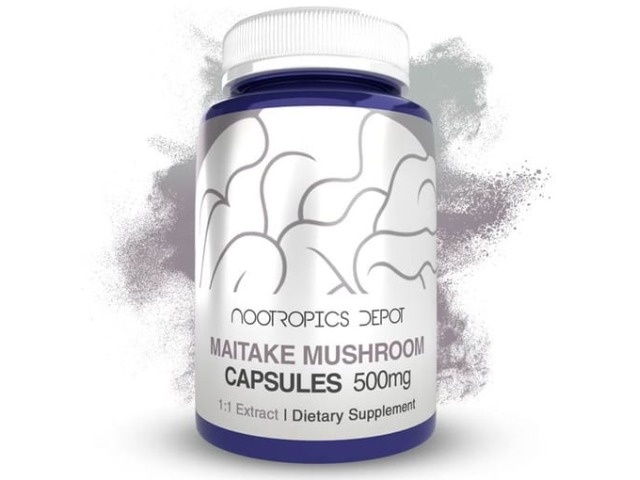
Maitake Mushroom by Nootropics Depot
Shop Now →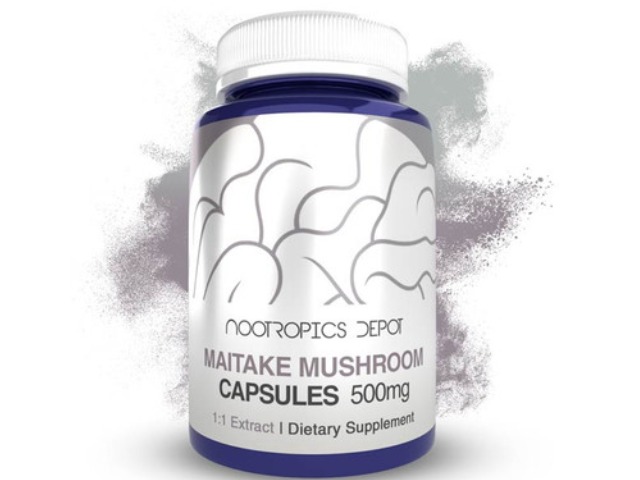
Maitake Mushroom Capsules - Grifola Frondosa by Nootropics Depot
Shop Now →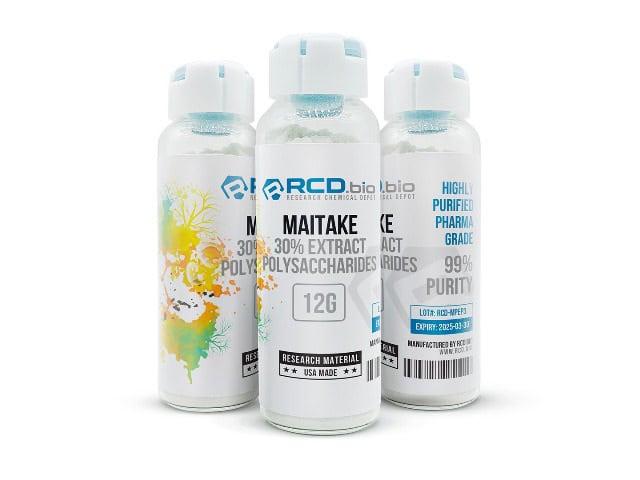
Maitake Powder 30% Extract by Research Chemical Depot
Shop Now →Disclosure: These are affiliate links. I earn a small commission if you purchase — at no extra cost to you. I only recommend products I personally use or have thoroughly researched.