
- Mitochondrial Energy Production
- Neuroprotection
- Cognitive Enhancement
- Mood Support
- Anti-Aging
I’ll be honest — the first time someone told me to try methylene blue for brain fog, I thought they were messing with me. A bright blue dye? The stuff they use to stain slides in high school biology? That’s supposed to make me think better?
Then I looked at the research. And then I tried it. And then I understood why this compound — first synthesized in 1876 — keeps showing up in cutting-edge neuroscience labs over a century later.
Methylene blue is one of those rare substances where the deeper you dig, the more impressive it gets. But it also comes with some real caveats that most nootropic blogs gloss over. If you’re on antidepressants, for instance, this one could land you in the emergency room. So let’s get into all of it — the good, the bad, and the blue.
The Short Version: Methylene blue is a synthetic compound that enhances mitochondrial function in the brain at low doses, potentially improving energy, focus, and neuroprotection. It works best for people dealing with brain fog, age-related cognitive decline, or mitochondrial dysfunction — but it has a critical interaction with serotonergic medications that you absolutely must know about before trying it. Below, I break down the science, the dosing sweet spot, and who should (and shouldn’t) consider it.
What Is Methylene Blue?
Methylene blue (methylthioninium chloride) is a synthetic thiazine dye that’s been in medical use longer than almost any drug you can name. It was first created in 1876 by German chemist Heinrich Caro, and by 1891 it was being used to treat malaria. It’s on the World Health Organization’s List of Essential Medicines. This isn’t some fly-by-night research chemical — it has a longer safety track record than aspirin.
What makes it fascinating for brain health is something scientists didn’t fully appreciate until relatively recently: at low doses, methylene blue acts as an alternative electron carrier in your mitochondria — the tiny power plants inside every cell. When your mitochondria are struggling (from aging, inflammation, toxins, or just chronic stress), MB can essentially step in and keep the energy production line moving.
Here’s the thing, though. Methylene blue follows what pharmacologists call a hormetic dose-response curve. That’s a fancy way of saying: a little helps, a lot hurts. At low concentrations, it’s a potent antioxidant and mitochondrial enhancer. Crank the dose up too high, and it flips — becoming a pro-oxidant that actually increases oxidative stress. This isn’t a “more is better” compound. Getting the dose right is everything.
Reality Check: Methylene blue isn’t a magic brain pill. It’s a mitochondrial support tool with legitimate science behind it — but most of the human evidence comes from small studies or disease-specific contexts (like Alzheimer’s), not large trials in healthy people looking to get sharper. If your sleep, gut health, and stress management aren’t dialed in, those foundations will always outperform any single supplement.
How Does Methylene Blue Work?
Think of your brain cells like a house that runs on a private generator. That generator is your mitochondria, and the electricity it produces is ATP — the universal energy currency your neurons need to fire, form memories, and keep you focused. When the generator starts sputtering (aging, inflammation, toxin exposure), the lights dim. That’s brain fog.
Methylene blue is like a backup circuit that keeps the electricity flowing even when the main wiring has problems.
Here’s what’s actually happening at the molecular level. In your mitochondria, electrons get passed along a chain of protein complexes (Complexes I through IV) to generate ATP. When things go wrong — say Complex I or III gets damaged — electrons leak out and create reactive oxygen species (free radicals) instead of energy. Methylene blue can accept electrons from NADH and transfer them directly to cytochrome c, effectively bypassing the damaged sections. A 2008 study in Biochemical Pharmacology demonstrated that MB at low concentrations (0.5–2 µM) increased mitochondrial complex IV activity by 30% and enhanced cellular oxygen consumption.
In plain English: it keeps your cellular power plants running even when parts of the assembly line are broken. And because your brain consumes roughly 20% of your body’s total energy despite being only 2% of your mass, anything that improves mitochondrial efficiency hits your cognition first.
But that’s not the only mechanism at play. Methylene blue also:
- Inhibits monoamine oxidase A (MAO-A), the enzyme that breaks down serotonin, norepinephrine, and dopamine. This contributes to its mood-supporting effects — but it’s also why mixing it with antidepressants is dangerous.
- Inhibits nitric oxide synthase (NOS) and guanylate cyclase, reducing excessive nitric oxide production, which in the brain can contribute to neuroinflammation and excitotoxicity.
- Activates the Nrf2 pathway, upregulating your body’s own antioxidant defenses — including glutathione, the master antioxidant.
- Reduces tau protein aggregation, which is directly relevant to Alzheimer’s disease pathology. Multiple studies have shown MB disrupts the tau aggregation process that forms neurofibrillary tangles.
The net effect at low doses is a brain cell that produces more energy, generates fewer damaging free radicals, and has stronger built-in defenses against age-related damage. That’s a compelling package.
Benefits of Methylene Blue
Cognitive Enhancement and Memory
The benefit most nootropic users care about. Animal studies have been consistently promising — rodents given low-dose MB show improved memory consolidation, better performance on maze tasks, and enhanced fear extinction learning. A pivotal 2016 study in Radiology used fMRI to examine MB’s effects on sustained attention and memory retrieval in healthy humans. Participants receiving a single low dose (280 mg USP-grade, which is higher than the typical nootropic dose) showed a 7% increase in correct responses during a sustained attention task and significant increases in fMRI activity in brain regions associated with memory and attention.
That said, let’s be transparent: we don’t have large-scale RCTs confirming cognitive enhancement in healthy adults taking the lower nootropic doses of 10–30 mg/day. The human evidence is encouraging but preliminary for the “get sharper” use case.
Neuroprotection
This is where the evidence is strongest. MB’s combination of mitochondrial support, antioxidant activity, and tau aggregation inhibition makes it a compelling neuroprotective agent. Research in animal models of traumatic brain injury, stroke, and Parkinson’s disease has consistently shown that MB reduces neuronal damage and improves functional outcomes when administered at low doses.
For Alzheimer’s specifically, the story is nuanced. A modified form of MB called LMTM (leuco-methylthioninium) went through Phase 3 clinical trials as a tau aggregation inhibitor. The results were disappointing as a standalone treatment. However, post-hoc analyses suggested potential benefits in patients not taking other Alzheimer’s drugs — and the underlying mechanism of tau inhibition remains scientifically sound.
Mood Support
MB’s MAO-A inhibitory activity gives it antidepressant-like properties. A small crossover study in patients with bipolar depression found significant improvements in depression scores with low-dose MB compared to placebo. This mechanism is well-established — MAO-A inhibition increases the availability of serotonin, norepinephrine, and dopamine in the synaptic cleft.
Mitochondrial and Anti-Aging Support
Beyond the brain, MB’s mitochondrial effects have implications for cellular aging broadly. Research has shown it can extend the lifespan of human fibroblasts in culture, improve mitochondrial function in aged cells, and activate autophagy — the cellular cleanup process that declines with age.
| Benefit | Evidence Level | Key Findings |
|---|---|---|
| Memory & Attention | Moderate (small human studies + animal data) | 7% improvement in sustained attention (fMRI study); robust animal evidence |
| Neuroprotection | Strong (multiple animal models, human disease studies) | Reduces oxidative damage, inhibits tau aggregation, protects against TBI |
| Mood Support | Preliminary (small crossover study) | MAO-A inhibition; improved bipolar depression scores |
| Anti-Aging / Mitochondrial | Moderate (cell studies + animal models) | Extends fibroblast lifespan, activates Nrf2, enhances Complex IV |
How to Take Methylene Blue Without Wasting Your Money
Getting the dose right with methylene blue isn’t optional — it’s the whole ballgame. Remember that hormetic curve: too little does nothing, too much does harm. Here’s how to find the sweet spot.
Dosage
- Nootropic / general cognitive support: 0.5–1 mg/kg/day (roughly 10–20 mg for most people)
- Enhanced neuroprotective support: 1–2 mg/kg/day (roughly 20–30 mg for most people)
- Starting dose: Begin at the low end (0.5 mg/kg, or ~10 mg) and stay there for at least a week before increasing
- Upper limit: Do not exceed 2 mg/kg/day without medical supervision. Higher doses shift MB from antioxidant to pro-oxidant
| Use Case | Daily Dose | How to Take | Notes |
|---|---|---|---|
| Beginner / Assessment | 0.5 mg/kg (~10 mg) | Once, morning | Stay here 1–2 weeks |
| General Nootropic | 0.5–1 mg/kg (~15–20 mg) | Once, morning | Most users settle here |
| Neuroprotective | 1–2 mg/kg (~20–30 mg) | Split AM/PM | For age-related concerns |
Timing and Practical Tips
- Take it in the morning. MB can be mildly stimulating due to its effects on mitochondrial energy production and catecholamine levels. Taking it late in the day may interfere with sleep.
- Take it with food. This reduces the chance of nausea, which is the most commonly reported side effect.
- Expect blue-green urine. This is completely normal and not a sign of anything wrong. It’s just the dye clearing your system. At higher doses, it can also tinge your sweat and temporarily stain your mouth and teeth.
Form Matters — A Lot
This is critical. Methylene blue comes in different grades:
- USP/pharmaceutical grade: This is what you want. Purity ≥99%, tested for heavy metals and contaminants.
- Chemical/industrial grade: Used for aquarium treatment, biological staining, etc. Contains impurities including heavy metals like arsenic, aluminum, cadmium, and mercury. Never ingest this.
Insider Tip: The price difference between pharmaceutical-grade and industrial-grade MB is significant — but this is one supplement where you absolutely cannot cheap out. Industrial-grade methylene blue can contain up to 8–11% impurities, including toxic heavy metals. Always verify that your source provides a Certificate of Analysis showing ≥99% purity.
Cycling
There’s no established cycling protocol for methylene blue, but many experienced users take it 5 days on, 2 days off, or follow a 4-weeks-on, 1-week-off schedule. The rationale is theoretical — preventing potential downregulation of endogenous antioxidant systems — rather than evidence-based. If you feel consistently good on it, daily use at low doses appears safe based on the available data.
The Side Effects and Safety Warnings You Need to Know
Common Side Effects
At typical nootropic doses (0.5–2 mg/kg), side effects are generally mild:
- Blue-green urine — universal and harmless
- Blue discoloration of mouth/tongue — temporary, from the solution
- Mild nausea — usually resolves by taking with food
- Headache — occasionally reported, typically at higher doses
- Mild GI discomfort — more common when taken on an empty stomach
The Serotonin Syndrome Warning
Important: Methylene blue is a potent MAO-A inhibitor. Combining it with serotonergic medications — including SSRIs (Prozac, Zoloft, Lexapro), SNRIs (Effexor, Cymbalta), tricyclic antidepressants, tramadol, triptans, St. John’s Wort, or 5-HTP — can trigger serotonin syndrome, a potentially life-threatening condition. The FDA issued a formal warning about this interaction. If you are on any serotonergic medication, do NOT take methylene blue without direct medical supervision. This is not a gray area.
Serotonin syndrome symptoms include agitation, confusion, rapid heart rate, elevated blood pressure, muscle rigidity, and in severe cases, seizures and hyperthermia. Multiple case reports in the medical literature document this interaction at even moderate MB doses.
Contraindications
- G6PD deficiency — MB can trigger severe hemolytic anemia in individuals with glucose-6-phosphate dehydrogenase deficiency. G6PD deficiency affects roughly 400 million people worldwide and is more common in people of African, Mediterranean, and Southeast Asian descent. Get tested if you’re unsure.
- Renal impairment — MB is primarily excreted by the kidneys. Impaired kidney function increases the risk of accumulation and toxicity.
- Pregnancy and breastfeeding — Insufficient safety data. Avoid.
- Doses above 7 mg/kg — At this level, MB itself causes methemoglobinemia (the very condition it’s used to treat at therapeutic doses). This is well above the nootropic range, but worth knowing.
Stacking Methylene Blue
MB’s mitochondrial mechanism makes it a natural partner for other compounds that support cellular energy and neuroprotection. Here are the synergies that make the most sense:
Works Well With
- CoQ10 (100–200 mg) — CoQ10 supports the same electron transport chain that MB assists. Together, they provide complementary mitochondrial support at different points in the chain.
- PQQ (10–20 mg) — PQQ stimulates mitochondrial biogenesis (the creation of new mitochondria), while MB optimizes the ones you already have. Logical pairing.
- Creatine (3–5 g) — Creatine provides a direct phosphate buffer for ATP recycling. Combined with MB’s electron transport enhancement, this stack targets cellular energy from two angles.
- NAD+ precursors (NMN 250–500 mg or NR) — NAD+ is a critical cofactor in mitochondrial energy metabolism. Supporting NAD+ levels alongside MB’s electron carrier function is synergistic.
- Alpha-Lipoic Acid (300–600 mg R-ALA) — Another mitochondrial antioxidant that recycles other antioxidants including glutathione and vitamin C.
Avoid Combining With
- SSRIs, SNRIs, MAOIs, and all serotonergic drugs — Risk of serotonin syndrome (see above)
- 5-HTP and L-Tryptophan — These increase serotonin production and should not be combined with an MAO-A inhibitor
- St. John’s Wort — Also has serotonergic and MAO-inhibiting activity; stacking risks are compounded
- High-dose antioxidants (Vitamin C >1 g, NAC >1200 mg) — Theoretical concern that very high antioxidant doses could interfere with MB’s redox cycling mechanism, though this isn’t well-established clinically
Pro Tip: If you’re building a mitochondrial support stack, the combination of methylene blue (10–20 mg) + CoQ10 (200 mg) + PQQ (20 mg) is one of the most science-backed trifectas for cellular energy. Take them together in the morning with a meal containing some fat for best absorption of CoQ10.
My Take
I’ll be straight with you — methylene blue is one of the more interesting compounds I’ve explored, and also one of the most misunderstood. The internet is full of people either treating it like a miracle elixir or dismissing it because “it’s a dye.” Both takes miss the point.
What MB actually is: a well-characterized pharmaceutical with a specific, elegant mechanism of action — mitochondrial electron cycling — that happens to have meaningful implications for brain function. The science is real. The neuroprotective potential is significant. And subjectively, I notice a clean, subtle clarity on days I take it that’s distinct from stimulants or racetams.
That said, this isn’t a first-line nootropic for most people. If you’re new to cognitive optimization, start with the foundations — magnesium, omega-3s, creatine, quality sleep. MB is a precision tool for people who’ve already got the basics locked in and want to specifically target mitochondrial function, or for those dealing with age-related cognitive changes where mitochondrial decline is a primary driver.
Who I think it’s best for:
- Adults 40+ noticing age-related cognitive slowing
- Anyone with identified mitochondrial dysfunction
- People looking to add neuroprotective insurance to their stack
- Biohackers who’ve already optimized the fundamentals
Who should look elsewhere:
- Anyone on serotonergic medications (full stop)
- People who haven’t addressed sleep, gut, and stress foundations
- Anyone looking for a noticeable “kick” — MB is subtle, not stimulating
- People uncomfortable with the blue urine situation (it’s real, and it’s persistent)
If you do try it, invest in pharmaceutical-grade, start low at 10 mg, take it in the morning with food, and give it at least 2–4 weeks before assessing. And for the love of everything, check your medication list twice before ordering. The serotonin syndrome risk is not theoretical — it’s documented and dangerous.
This is a compound I keep in my rotation. Not every day, but consistently enough that I consider it part of my long-term neuroprotective strategy. For the right person, it’s genuinely worth exploring.
Recommended Methylene Blue Products
I know how frustrating it is to sort through dozens of brands making the same claims. These are the ones I've personally vetted — because quality is the difference between results and wasted money.
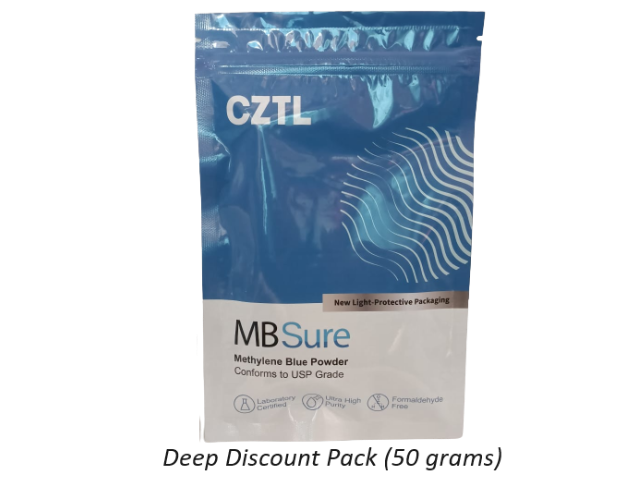
Methylene Blue by CZTL
Shop Now →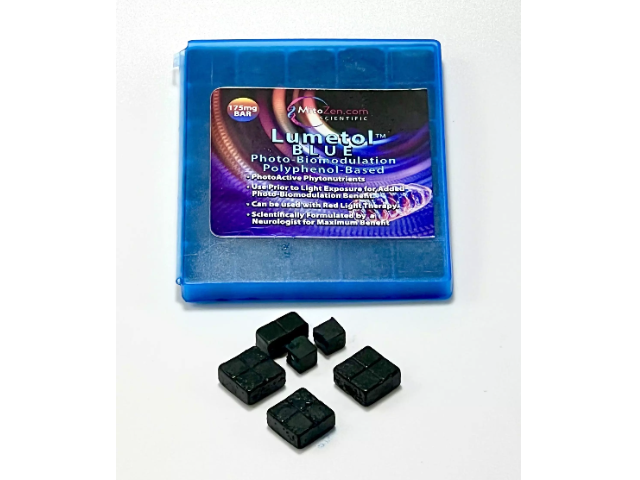
Methylene Blue Lumetol Bars+ by MitoZen
Shop Now →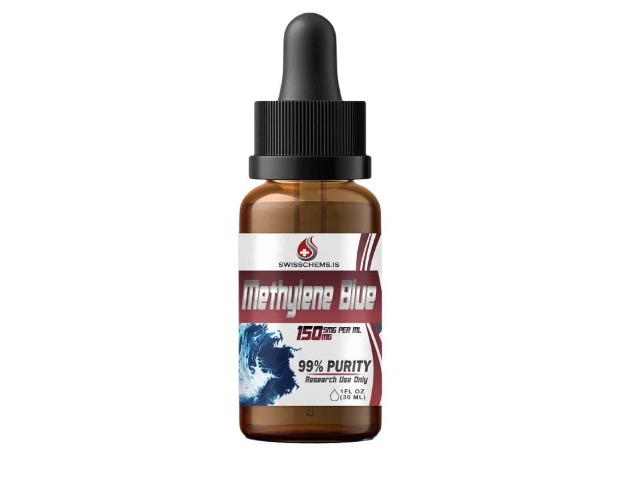
Methylene Blue by Swiss Chem
Shop Now →Disclosure: These are affiliate links. I earn a small commission if you purchase — at no extra cost to you. I only recommend products I personally use or have thoroughly researched.
Research & Studies
This section includes 12 peer-reviewed studies referenced in our analysis.
Potential of methylene blue to block oxygen radical generation in reperfusion injury.
Methylene blue adjuvant therapy of schizophrenia.
Methylene blue improves brain oxidative metabolism and memory retention in rats.
Memory facilitation by methylene blue: dose-dependent effect on behavior and brain oxygen consumption.
Influence of methylene blue on microglia-induced inflammation and motor neuron degeneration in the SOD1(G93A) model for ALS.
Therapeutic benefits of methylene blue on cognitive impairment during chronic cerebral hypoperfusion.
Alternative mitochondrial electron transfer for the treatment of neurodegenerative diseases and cancers: Methylene blue connects the dots.
Methylene blue treatment for residual symptoms of bipolar disorder: randomised crossover study.
Methylene blue stimulates substrate-level phosphorylation catalysed by succinyl-CoA ligase in the citric acid cycle.
Methylene blue improves mitochondrial respiration and decreases oxidative stress in a substrate-dependent manner in diabetic rat hearts.
Showing 10 of 12 studies. View all →