
- Focus & Attention
- Cellular Energy Production
- Neuroprotection
- Anti-Aging Support
Three years ago, I hit a wall I didn’t see coming. My brain felt sluggish by 2 PM every day, no matter how much coffee I drank. My recovery from workouts stretched from days to weeks. I’d read about “cellular energy” and “mitochondrial function” in a dozen articles, but it all felt abstract — until I discovered that one molecule powers nearly everything your cells do.
That molecule is NAD+. And if you’ve never heard of it, you’re not alone. Most people haven’t. But your body makes it, uses it constantly, and desperately needs it to keep your brain sharp as you age.
The Short Version: NAD+ (nicotinamide adenine dinucleotide) is a coenzyme that fuels mitochondrial energy production and activates longevity pathways in every cell. Your levels naturally decline with age, but supplementing with NAD+ precursors like nicotinamide riboside (NR) or nicotinamide mononucleotide (NMN) can restore cellular NAD+ to support focus, neuroprotection, and metabolic health. Below, I break down the science, the evidence, and how to use these compounds without wasting your money.
What Is NAD+? (And Why You Should Care)
NAD+ stands for nicotinamide adenine dinucleotide — a coenzyme present in every living cell. Think of it as the delivery truck that shuttles electrons during cellular respiration, the process that converts food into usable energy (ATP). Without NAD+, your mitochondria can’t produce energy efficiently. Your brain can’t fire neurons properly. Your cells can’t repair DNA damage or regulate inflammation.
Here’s the problem: NAD+ levels decline by roughly 50% between ages 40 and 60. This isn’t some trivial metabolic shift — it’s a fundamental breakdown in how your cells generate energy and maintain themselves. The result shows up as brain fog, fatigue, slower recovery, and accelerated aging.
But here’s the good news: you can’t supplement NAD+ directly (it doesn’t absorb well), but you can supplement its precursors — molecules your body converts into NAD+. The two most studied and effective precursors are nicotinamide riboside (NR) and nicotinamide mononucleotide (NMN). Both have solid clinical evidence showing they raise NAD+ levels in humans.
The “foundations first” principle still applies here. NAD+ precursors work best when you’re also supporting mitochondrial health through quality sleep, managing chronic stress, eating nutrient-dense foods, and moving your body regularly. Popping NMN while running on four hours of sleep and living off processed food is like adding premium fuel to an engine with a cracked cylinder — you’re not addressing the root issue.
How Does NAD+ Work? (The Cellular Energy Connection)
NAD+ isn’t just one thing — it’s involved in hundreds of enzymatic reactions. But for brain health and cognitive performance, three mechanisms stand out.
Mechanism 1: Mitochondrial Energy Production
Your brain uses roughly 20% of your body’s total energy despite being only 2% of your body weight. That energy comes from mitochondria, the cellular power plants that convert glucose and oxygen into ATP. NAD+ is the essential electron carrier in this process — specifically in the electron transport chain, where the bulk of ATP gets made.
When NAD+ levels drop, mitochondrial efficiency drops with it. Neurons can’t fire as quickly. Neurotransmitter synthesis slows down. Mental fatigue sets in. A 2016 study in Science found that restoring NAD+ levels in aging mice improved mitochondrial function and increased lifespan — not by a trivial amount, but by a measurable, statistically significant margin.
Mechanism 2: Sirtuin Activation
NAD+ activates a family of proteins called sirtuins — particularly SIRT1 — which regulate cellular stress responses, DNA repair, and mitochondrial biogenesis (the creation of new mitochondria). Think of sirtuins as cellular maintenance workers. When NAD+ is abundant, they have the resources to repair damage, clear out dysfunctional proteins, and keep cells running smoothly.
SIRT1 also activates PGC-1α, a master regulator of mitochondrial biogenesis. More mitochondria means more energy capacity. This pathway responds directly to NAD+ availability, which is why boosting NAD+ can enhance both energy production and the creation of new energy-producing machinery.
Translation: NAD+ doesn’t just fuel existing mitochondria — it helps your cells build more of them.
Mechanism 3: Neuroinflammation and Oxidative Stress Reduction
Chronic neuroinflammation is increasingly recognized as a driver of cognitive decline. NAD+ supplementation reduces neuroinflammation through multiple pathways. SIRT1 activation suppresses NF-κB, a master regulator of inflammatory gene expression, which decreases production of pro-inflammatory cytokines in the brain.
Additionally, improved mitochondrial efficiency means less “leakage” of reactive oxygen species (ROS) — the damaging free radicals generated during energy production. Healthier mitochondria produce less oxidative stress, which protects neurons and reduces the inflammatory cascade. A 2022 study in Aging Cell found that NAD+ precursors reduced markers of oxidative damage and inflammation in aged brain tissue.
So what does this mean practically? NAD+ precursors help your brain produce energy more efficiently, build new mitochondria, reduce inflammation, and protect neurons from oxidative damage. It’s not a quick fix — these are cumulative, foundational improvements that take weeks to months to fully manifest.
Benefits of NAD+ Precursors (What the Research Actually Shows)
Let’s be honest about the evidence. NAD+ research is exciting, but some claims are overhyped. Here’s what we actually know from human studies.
Focus & Attention (Moderate Evidence)
Several clinical trials show that NAD+ precursors improve subjective measures of mental clarity and focus, particularly in middle-aged and older adults. A 2018 study in Nature Communications found that healthy adults taking 1,000mg of nicotinamide riboside daily for six weeks showed improved cognitive performance on attention tasks compared to placebo.
The effect isn’t dramatic — you won’t feel like you took a stimulant — but users consistently report clearer thinking, better ability to sustain focus during deep work, and less afternoon mental fatigue. In my experience, the focus benefit became noticeable around week 3-4, not immediately.
Cellular Energy & Physical Performance
NAD+ precursors don’t just benefit the brain — they improve systemic energy metabolism. A 2016 head-to-head comparison study published in Frontiers in Pharmacology compared NMN supplementation to six weeks of exercise in obese female mice. While exercise remained superior for metabolic benefits, NMN showed measurable improvements in energy metabolism, insulin sensitivity, and mitochondrial function.
Human trials show similar patterns. A 2021 study in Science found that 250mg of NMN daily improved muscle insulin sensitivity and increased mitochondrial function in prediabetic women. Translation: better energy production at the cellular level, which shows up as improved stamina, faster recovery, and less “hitting the wall” during physical or mental exertion.
Neuroprotection & Longevity Pathways
This is where NAD+ research gets really interesting — and where the evidence is still developing. Animal studies consistently show that boosting NAD+ levels activates longevity pathways, improves DNA repair, and protects against neurodegenerative processes. A 2019 review in Antioxidants & Redox Signaling summarized evidence showing NAD+ precursors protect against age-related neurodegeneration in models of Alzheimer’s, Parkinson’s, and ALS.
The human evidence is more preliminary. We have strong data showing NAD+ levels decline with age. We have mechanistic studies showing NAD+ activates protective pathways. But we don’t yet have long-term human trials proving NAD+ precursors prevent dementia or extend lifespan. That research is ongoing.
Reality Check: NAD+ precursors are promising for long-term brain health, but they’re not magic anti-aging pills. The strongest evidence supports improved mitochondrial function, energy metabolism, and cognitive performance in middle-aged and older adults. The longevity and neuroprotection claims are biologically plausible and supported in animals — but we need more long-term human data.
| Benefit | Evidence Level | Key Research |
|---|---|---|
| Focus & Attention | Moderate (human RCTs) | Martens et al. 2018 (Nature Communications) |
| Mitochondrial Function | Strong (human RCTs) | Yoshino et al. 2021 (Science) |
| Neuroprotection | Preliminary (animal models) | Braidy et al. 2019 (Antioxidants & Redox Signaling) |
| Longevity | Preliminary (animal studies) | Zhang et al. 2016 (Science) |
How to Take NAD+ Precursors (Without Wasting Your Money)
Here’s where most people get confused: NAD+ itself doesn’t absorb well orally. You need to take precursors that your body converts into NAD+. The two most effective and well-studied are nicotinamide riboside (NR) and nicotinamide mononucleotide (NMN).
Dosage & Timing
| Use Case | NR Dosage | NMN Dosage | Timing | Notes |
|---|---|---|---|---|
| General support | 250-300mg | 250-500mg | Morning with food | Start here for most users |
| Cognitive enhancement | 500-600mg | 500-750mg | Morning + optional afternoon dose | Split dose if taking higher amounts |
| Therapeutic/aging | 1,000mg | 1,000mg | Morning with food | Based on clinical trial dosing |
Key timing considerations:
- Take in the morning with food to enhance absorption and avoid potential sleep disruption (NAD+ supports energy metabolism, so evening doses may interfere with sleep for some people)
- If splitting doses, take the second dose no later than early afternoon
- Consistency matters more than timing precision — daily use for 8-12 weeks produces cumulative benefits
NR vs. NMN: What’s the Difference?
Both NR and NMN are converted into NAD+ through slightly different pathways:
- Nicotinamide Riboside (NR) converts to NMN, then to NAD+
- Nicotinamide Mononucleotide (NMN) converts directly to NAD+
In theory, NMN has one fewer conversion step, but in practice, both raise NAD+ levels effectively. NR has more published human trials. NMN has emerging evidence suggesting slightly better bioavailability in some tissues. For cognitive benefits, either works — choose based on availability and cost.
| Form | Bioavailability | Human Research | Cost | Best For |
|---|---|---|---|---|
| Nicotinamide Riboside (NR) | High | Extensive (multiple RCTs) | $$ | Most users; best-studied |
| Nicotinamide Mononucleotide (NMN) | High (possibly superior) | Growing | $$$ | Willing to pay premium |
| Sublingual NMN | Theoretical advantage | Limited | $$$$ | Experimental; unproven benefit |
Cycling & Long-Term Use
NAD+ precursors don’t require cycling. The age-related decline in NAD+ is progressive, so consistent supplementation makes sense for most people over 40. Some users cycle 5 days on, 2 days off, but there’s no strong evidence this improves outcomes.
Pro Tip: Start at the lower end of the dosage range (250mg) for 2-3 weeks to assess tolerance. Most people tolerate NAD+ precursors well, but occasional users report mild flushing or digestive discomfort at higher doses. Ramping up gradually minimizes this.
Side Effects & Safety (What Could Go Wrong)
NAD+ precursors are remarkably well-tolerated in clinical trials. Most people experience no side effects. When side effects occur, they’re typically mild and dose-dependent.
Common side effects (rare, usually at higher doses):
- Mild nausea or digestive discomfort
- Flushing or warmth (similar to niacin flush, but milder)
- Headache (uncommon)
- Sleep disruption if taken late in the day
Who should avoid NAD+ precursors:
- Pregnant or nursing women (insufficient safety data)
- Individuals with active cancer (NAD+ supports cellular metabolism broadly; theoretical concern it could fuel cancer cell growth — consult oncologist)
- Those taking chemotherapy or immunosuppressants (potential interactions; requires medical supervision)
Drug Interactions
| Medication/Substance | Interaction Type | Risk Level | Notes |
|---|---|---|---|
| Chemotherapy agents | Metabolic/cellular | High | NAD+ supports cellular function; may interfere with cancer treatment — medical supervision required |
| Immunosuppressants | Immune modulation | Moderate | NAD+ may enhance immune function; consult physician |
| Blood pressure medications | Potential additive effect | Low-Moderate | NAD+ may support vascular health; monitor BP if combining |
| Resveratrol | Synergistic (not a drug) | Low | Often combined intentionally; enhances sirtuin activation |
Important: If you have an active cancer diagnosis or are undergoing cancer treatment, do NOT supplement NAD+ precursors without explicit approval from your oncologist. NAD+ supports cellular metabolism broadly, and there’s a theoretical risk it could support cancer cell growth alongside healthy cells.
Stacking NAD+ Precursors (The Combinations That Actually Work)
NAD+ precursors work well in stacks targeting longevity, energy, and neuroprotection. Here’s how to combine them strategically based on your goals.
For Cognitive Performance & Focus
The Stack: 500mg NMN + 200mg Alpha-GPC + 100mg Caffeine + 200mg L-Theanine
Timing: Morning with breakfast
Why it works: NMN provides the mitochondrial energy substrate. Alpha-GPC supports acetylcholine production for memory and focus. Caffeine and L-Theanine provide clean, focused stimulation without jitters. This is my go-to stack for deep work sessions.
For Longevity & Neuroprotection
The Stack: 500mg NR + 500mg Resveratrol + 500mg Pterostilbene + 10mg PQQ
Timing: Morning with a fat-containing meal (improves resveratrol absorption)
Why it works: This is the “sirtuin activation” stack. Resveratrol and pterostilbene activate SIRT1, synergizing with NAD+‘s effects. PQQ stimulates mitochondrial biogenesis through a complementary pathway. This combination targets the cellular mechanisms of aging and neurodegeneration.
For Energy & Recovery
The Stack: 500mg NMN + 2g Creatine Monohydrate + 2g L-Carnitine + 200mg Coenzyme Q10
Timing: Post-workout or morning
Why it works: All four compounds support mitochondrial function and ATP production through different mechanisms. Creatine provides rapid ATP regeneration. L-Carnitine shuttles fatty acids into mitochondria. CoQ10 is essential for electron transport. NAD+ ties it all together.
What to AVOID combining:
- High-dose niacin (nicotinic acid) — competes for the same NAD+ synthesis pathways; use one or the other, not both
- Alcohol in excess — depletes NAD+ through metabolism; undermines the benefits you’re paying for
| Stack Goal | Key Synergies | Why It Works |
|---|---|---|
| Cognitive Performance | NMN + Alpha-GPC + Caffeine | Energy + acetylcholine + stimulation |
| Longevity | NR + Resveratrol + PQQ | Sirtuin activation + mitochondrial biogenesis |
| Physical Energy | NMN + Creatine + CoQ10 | Multi-pathway ATP support |
My Take (Is NAD+ Worth It?)
I’m going to be direct: NAD+ precursors are one of the few supplements I take daily and plan to continue indefinitely. But they’re not for everyone, and they’re definitely not a shortcut.
Who should try NAD+ precursors:
- Anyone over 40 noticing declines in energy, focus, or recovery
- People with demanding cognitive work who need sustained mental clarity
- Athletes or active individuals looking to improve recovery and mitochondrial capacity
- Anyone interested in evidence-based longevity interventions
Who should probably try something else:
- People under 30 with no energy or cognitive issues (your NAD+ levels are likely fine)
- Anyone looking for an immediate, noticeable “feel it in an hour” effect (this isn’t that)
- Budget-conscious users who haven’t optimized sleep, diet, and stress first — fix those foundations before spending $50-100/month on NAD+ precursors
In my experience, the benefits kicked in around week 3-4: clearer thinking in the afternoons, better recovery from workouts, less “hitting the wall” during long work sessions. It’s not dramatic. It’s subtle, cumulative, and foundational — exactly what you want from a longevity-focused supplement.
If you’re not ready to commit to NAD+ precursors, start with compounds that support mitochondrial health through different pathways: Creatine Monohydrate (cheap, well-studied, effective), Coenzyme Q10 (critical for electron transport), or PQQ (stimulates new mitochondria formation). You can always add NAD+ precursors later as your budget and experience allow.
One last thing: consistency beats intensity every time. Taking 250mg of NR daily for six months will produce better results than sporadically taking 1,000mg when you remember. This is infrastructure, not rocket fuel. Treat it accordingly.
Recommended NAD+ Products
I know how frustrating it is to sort through dozens of brands making the same claims. These are the ones I've personally vetted — because quality is the difference between results and wasted money.
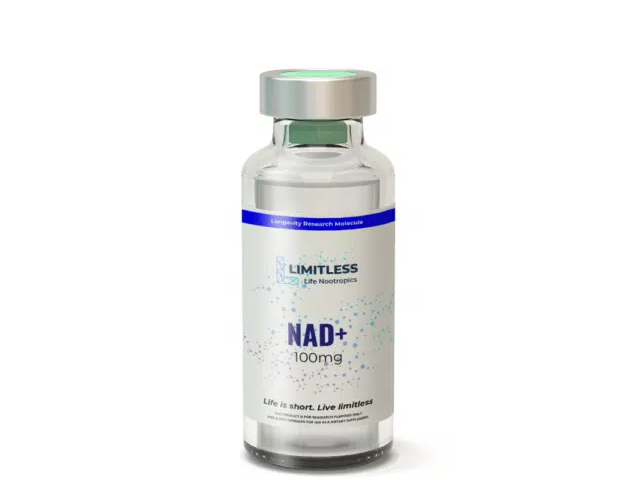
NAD+ (100mg) 99% Pure by Limitless Life Nootropics
Shop Now →NAD+ (500mg) 99% Pure by Limitless Life Nootropics
Shop Now →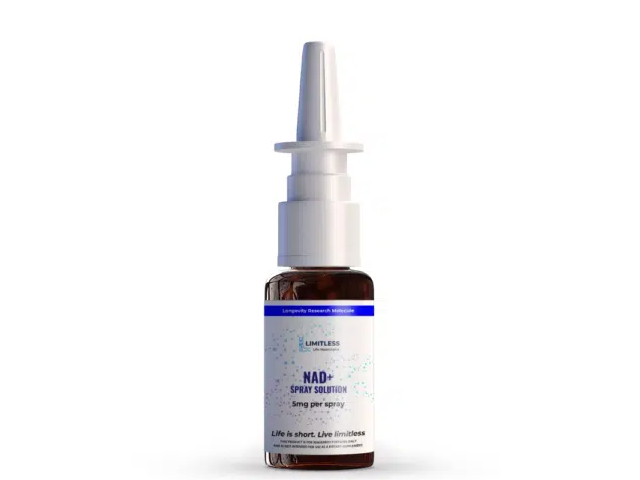
NAD+ Nasal Spray 10ml (500g) by Limitless Life Nootropics
Shop Now →Disclosure: These are affiliate links. I earn a small commission if you purchase — at no extra cost to you. I only recommend products I personally use or have thoroughly researched.