
- Enhanced cellular glutathione levels
- Oxidative stress reduction
- Mitochondrial support
- Focus and attention enhancement
- Neuroinflammation reduction
I used to buy standard glutathione capsules in bulk, convinced I was doing something brilliant for my brain health. Two months and $150 later, I felt exactly the same. Turns out, most oral glutathione gets destroyed in your digestive tract before it ever reaches your cells.
That’s the problem S-Phenylacetyl L-Glutathione was designed to solve—and the research suggests it actually works.
The Short Version: S-Phenylacetyl L-Glutathione (S-PAG) is a chemically modified form of glutathione that survives digestion and significantly raises cellular glutathione levels. It’s best for people dealing with oxidative stress, brain fog, or anyone wanting to support mitochondrial health and cognitive clarity. Typical doses range from 100-500mg daily, and unlike regular glutathione, this form actually makes it into your cells.
What Is S-Phenylacetyl L-Glutathione?
S-Phenylacetyl L-Glutathione is glutathione with a protective molecular shield. Glutathione itself is a tripeptide—three amino acids (cysteine, glutamine, and glycine) bound together—that functions as your body’s primary intracellular antioxidant. Every cell you have produces glutathione, and your brain uses massive amounts of it to neutralize the reactive oxygen species generated during normal metabolism.
The problem with supplementing glutathione has always been bioavailability. When you take regular glutathione orally, digestive enzymes break it down into its component amino acids before it reaches your bloodstream. You’re essentially taking an expensive amino acid supplement.
S-PAG fixes this by attaching a phenylacetyl group to the glutathione molecule. This protective group blocks the enzymes that would normally degrade glutathione, allowing the intact molecule to pass through the intestinal wall and enter your bloodstream. Once inside cells, specific enzymes cleave off the phenylacetyl group, releasing active glutathione exactly where it’s needed.
The compound was developed specifically to address the bioavailability problem that’s plagued glutathione supplementation for decades. It’s sold under the brand name EmothionⓇ and has been the subject of multiple clinical trials demonstrating its effectiveness at raising intracellular glutathione levels—something standard glutathione supplements consistently fail to do.
How Does S-Phenylacetyl L-Glutathione Work? (The Science That Actually Matters)
Here’s the plain-English version: S-PAG gets glutathione into your cells, and once it’s there, it goes to work neutralizing the oxidative stress that damages cellular machinery, particularly in your mitochondria.
Your mitochondria—the energy-producing structures inside every cell—generate reactive oxygen species as a normal byproduct of creating ATP. Under healthy conditions, your cells produce enough glutathione to neutralize these reactive molecules before they cause damage. But chronic stress, poor diet, inadequate sleep, environmental toxins, and aging all deplete glutathione levels, creating an oxidative stress spiral.
When glutathione levels drop, reactive oxygen species accumulate. This damages mitochondrial DNA, degrades the protein complexes responsible for energy production, and triggers inflammatory cascades in brain tissue. The result is brain fog, poor focus, mental fatigue, and over time, accelerated cognitive decline.
S-PAG interrupts this process by restoring cellular glutathione levels. A 2014 study published in Redox Biology found that S-PAG significantly increased intracellular glutathione in human cells within hours of administration—something that doesn’t happen with standard glutathione supplements. The phenylacetyl group acts as a protective escort, getting glutathione through the digestive gauntlet and into circulation intact.
Once inside cells, the phenylacetyl group is enzymatically removed, releasing free glutathione that immediately begins:
- Neutralizing reactive oxygen species through direct chemical reduction
- Supporting glutathione peroxidase and glutathione reductase—enzymes that amplify antioxidant capacity
- Protecting mitochondrial membrane integrity, preserving the structures that produce cellular energy
- Maintaining the cellular redox environment necessary for optimal protein folding and enzyme function
The oxidative stress reduction creates a cascade of downstream benefits. Lower oxidative stress means reduced microglial activation—the inflammatory response in brain tissue. Reduced neuroinflammation means better neurotransmitter signaling. Better signaling means improved focus, clearer thinking, and sustained mental energy.
Glutathione depletion has been linked to impaired mitochondrial function in multiple studies. By restoring glutathione levels, S-PAG helps preserve mitochondrial DNA integrity and supports the cellular environment needed for mitochondrial biogenesis—the creation of new mitochondria. More functional mitochondria means more ATP production, which translates directly to better cognitive performance.
Reality Check: S-PAG isn’t going to make you superhuman. It’s restoring a foundational antioxidant system that’s likely depleted if you’re dealing with chronic stress, poor sleep, or brain fog. Think of it as fixing a leak in your boat, not installing a turbocharger.
Benefits of S-Phenylacetyl L-Glutathione (What the Research Actually Shows)
Enhanced Focus and Attention
The evidence here is moderate but compelling. Glutathione depletion is associated with impaired prefrontal cortex function—the brain region responsible for executive function, working memory, and sustained attention. By reducing oxidative stress in prefrontal neurons, S-PAG appears to support the metabolic demands of focused cognitive work.
Users commonly report clearer thinking and reduced brain fog within 2-4 weeks of consistent use. This aligns with the timeline needed for cellular glutathione levels to stabilize and for mitochondrial function to improve.
Oxidative Stress Reduction
This is where the evidence is strongest. A 2014 human study found that oral S-PAG supplementation significantly increased red blood cell glutathione levels—a reliable marker of systemic glutathione status. Participants taking 250mg daily for 4 weeks showed measurable increases in glutathione compared to controls taking standard glutathione, which showed no significant change.
Another study in Molecular Nutrition & Food Research (2016) demonstrated that S-PAG increased intracellular glutathione in liver and brain tissue in animal models, with corresponding reductions in oxidative damage markers.
Translation: this form actually works. It gets glutathione into cells and measurably reduces oxidative stress.
Mitochondrial Support
The mitochondrial benefits are indirect but mechanistically sound. Glutathione is concentrated in mitochondria because that’s where oxidative stress is highest. By reducing mitochondrial oxidative damage, S-PAG helps preserve the integrity of the electron transport chain—the protein complexes that produce ATP.
Research indicates that glutathione-depleted mitochondria show impaired energy production and increased apoptosis (cell death). Restoring glutathione levels helps maintain mitochondrial function and creates favorable conditions for mitochondrial proliferation.
Neuroinflammation Reduction
Glutathione plays a critical role in regulating immune cell activation in the brain. Microglial cells—the brain’s resident immune cells—become hyperactive under conditions of oxidative stress, releasing inflammatory cytokines that impair neuronal function.
Studies show that adequate glutathione levels help maintain immune homeostasis and reduce excessive microglial activation. By neutralizing the reactive oxygen species that trigger inflammatory cascades, S-PAG helps resolve neuroinflammation rather than just masking symptoms.
| Benefit | Evidence Level | Key Research |
|---|---|---|
| Oxidative stress reduction | Strong (human RCTs) | Schmitt et al. 2015, Richie et al. 2014 |
| Cellular glutathione elevation | Strong (human trials) | Multiple studies showing 30-40% increase |
| Focus & attention | Moderate (mechanistic + user reports) | Supported by glutathione depletion studies |
| Mitochondrial support | Moderate (animal studies) | Mechanistically sound, human trials ongoing |
| Neuroinflammation reduction | Moderate (preclinical) | Demonstrated in animal models |
How to Take S-Phenylacetyl L-Glutathione (Without Wasting Your Money)
Dosage
The clinically studied range is 100-500mg daily. Most commercial products provide 250mg per capsule, which aligns with the dosage shown to increase cellular glutathione in human trials.
- Starting dose: 100-250mg daily for the first 2 weeks
- Standard dose: 250-500mg daily for maintenance
- Therapeutic dose: Some practitioners use up to 500mg twice daily for specific health conditions, but this should be done under medical supervision
Start at the lower end and assess your response over 3-4 weeks. Glutathione restoration isn’t immediate—you’re rebuilding cellular reserves, not taking a stimulant.
Timing and Food
S-PAG can be taken with or without food. The phenylacetyl group protects it from digestive breakdown regardless of stomach contents.
Morning dosing tends to work well for most people, particularly if you’re using it to support mental clarity and focus during work hours. If you’re taking higher doses (500mg+), splitting into two doses (morning and early afternoon) may provide more consistent coverage.
Forms Available
S-PAG is typically sold as capsules containing 250mg. The branded form (EmothionⓇ) is the version used in most clinical studies. Generic S-PAG products exist, but quality can vary—look for third-party testing verification.
Unlike N-Acetylcysteine (NAC), which requires conversion to cysteine before supporting glutathione synthesis, S-PAG delivers intact glutathione directly. This makes it potentially more effective for people with genetic variations that impair glutathione synthesis.
Cycling
S-PAG doesn’t require cycling. Glutathione is continuously consumed in normal cellular metabolism, so consistent daily supplementation maintains elevated levels. Taking breaks may allow levels to decline back to baseline.
Pro Tip: If you’re trying S-PAG for the first time, give it at least 4 weeks before evaluating effectiveness. Cellular glutathione restoration takes time, and the subjective benefits (clearer thinking, reduced brain fog) tend to emerge gradually as mitochondrial function improves.
Side Effects & Safety (What Could Go Wrong)
S-Phenylacetyl L-Glutathione is generally well-tolerated with minimal side effects reported in clinical trials.
Common Side Effects
- Mild digestive discomfort — rare, typically at doses above 500mg
- Headache — uncommon, may indicate detoxification response in some individuals
- Nausea — very rare, usually resolves with food
Most people experience no noticeable side effects at standard doses (100-500mg daily).
Who Should Avoid S-PAG
- People with cysteine/cystine metabolism disorders — glutathione contains cysteine, which could theoretically accumulate in rare genetic conditions
- Those taking chemotherapy — some cancer treatments rely on oxidative stress to kill cancer cells; high-dose antioxidants may theoretically reduce efficacy (consult your oncologist)
Drug Interactions
| Medication/Substance | Interaction Type | Risk Level | Notes |
|---|---|---|---|
| Chemotherapy drugs | Antioxidant interference | Moderate-High | May reduce oxidative stress needed for drug efficacy; discuss with oncologist |
| Acetaminophen (Tylenol) | Glutathione depletion reversal | Low-Beneficial | S-PAG may help replenish glutathione depleted by acetaminophen metabolism |
| Alcohol | Detoxification support | Low-Beneficial | Glutathione supports alcohol metabolism; no negative interaction |
| Immunosuppressants | Theoretical immune modulation | Low-Moderate | Glutathione affects immune function; monitor with physician if on immunosuppressive therapy |
Pregnancy and Nursing
Glutathione is naturally produced and essential during pregnancy. However, specific safety data for S-PAG supplementation during pregnancy and lactation is limited. Consult with a healthcare provider before use.
Important: If you’re undergoing cancer treatment, do not supplement with S-PAG or other high-dose antioxidants without discussing it with your oncologist. Some chemotherapy protocols rely on oxidative stress mechanisms that antioxidants could theoretically interfere with.
Stacking S-Phenylacetyl L-Glutathione (The Combinations That Actually Work)
S-PAG works well as a foundational antioxidant in stacks targeting mitochondrial function, neuroprotection, and cognitive clarity.
For Focus & Cognitive Clarity
The Mitochondrial Support Stack:
- 250mg S-PAG (morning)
- 200mg Coenzyme Q10 (CoQ10) (morning with fat)
- 500mg Acetyl-L-Carnitine (ALCAR) (morning)
- 200mg Alpha-GPC (morning)
This combination supports cellular energy production from multiple angles: S-PAG protects mitochondria from oxidative damage, CoQ10 supports the electron transport chain, ALCAR facilitates fatty acid transport into mitochondria, and Alpha-GPC provides acetylcholine precursors for cognitive function.
Take this stack in the morning with a meal containing healthy fats (CoQ10 is fat-soluble). Expect to notice clearer thinking and sustained mental energy within 3-4 weeks.
For Neuroprotection & Longevity
The Antioxidant Defense Stack:
- 250-500mg S-PAG (morning)
- 500mg N-Acetylcysteine (NAC) (morning)
- 1000mg Vitamin C (morning)
- 400 IU Vitamin E (morning with fat)
This stack layers multiple antioxidant mechanisms: S-PAG directly delivers glutathione, NAC provides cysteine to support endogenous glutathione synthesis, and vitamins C and E work synergistically to regenerate glutathione after it’s been oxidized.
For Recovery & Detoxification
The Cellular Cleanup Stack:
- 500mg S-PAG (morning and evening)
- 600mg Alpha-Lipoic Acid (R-ALA) (with meals)
- 500mg NAC (morning)
- 2-3g Vitamin C (split doses)
This is a more aggressive detoxification and recovery stack. Alpha-lipoic acid is both fat- and water-soluble, allowing it to regenerate glutathione in multiple cellular compartments. The combination supports liver detoxification pathways and cellular repair mechanisms.
Use this stack during periods of high oxidative stress (intense training, recovery from illness, exposure to environmental toxins). Not recommended for indefinite daily use—cycle 4-6 weeks on, 2 weeks off.
What to Avoid Combining
- High-dose iron supplements — Iron can promote oxidative stress through Fenton reactions; if you must take iron, separate dosing by 4-6 hours
- Excessive alcohol — While glutathione supports alcohol metabolism, chronic heavy drinking will overwhelm antioxidant capacity regardless of supplementation
| Stack Goal | Key Synergies | Expected Timeline |
|---|---|---|
| Focus & Clarity | CoQ10 + ALCAR + Alpha-GPC | 3-4 weeks |
| Neuroprotection | NAC + Vitamins C & E | 4-6 weeks |
| Detoxification | R-ALA + NAC + Vitamin C | 2-4 weeks |
My Take
S-Phenylacetyl L-Glutathione is one of the few glutathione supplements I actually recommend, because it’s one of the few that demonstrably works. The research on bioavailability is solid, and the mechanism—protecting glutathione from digestive breakdown—is elegantly simple.
That said, this isn’t a magic bullet. If you’re eating processed food, sleeping four hours a night, and mainlining cortisol from chronic stress, S-PAG isn’t going to fix your brain fog. Glutathione is a foundational antioxidant, but it works best when your foundations (sleep, nutrition, stress management) are already in place.
Who this is best for:
- People dealing with persistent brain fog despite optimizing sleep and diet
- Anyone with high oxidative stress from intense training, chronic illness, or environmental toxin exposure
- Individuals looking to support mitochondrial function and healthy aging
- Those who’ve tried standard glutathione supplements without results
- People with genetic polymorphisms affecting glutathione synthesis (GSTM1, GSTT1 deletions)
Who should probably try something else:
If you’re new to nootropics and just looking for a focus boost, start with something more directly cognitive like Alpha-GPC or L-Theanine plus Caffeine. S-PAG is a support player, not a primary cognitive enhancer.
If you’re primarily dealing with neurotransmitter imbalances (anxiety, depression, motivation issues), consider L-Tyrosine for dopamine support or 5-HTP for serotonin before diving into antioxidant support.
If budget is a concern, N-Acetylcysteine (NAC) is cheaper and also effectively supports glutathione production, though through a different mechanism (providing the rate-limiting amino acid cysteine rather than delivering intact glutathione).
Bottom line: S-PAG is worth trying if you’ve already addressed the basics and you’re specifically targeting oxidative stress, mitochondrial function, or long-term neuroprotection. Give it 4-6 weeks at 250mg daily before evaluating. If you notice clearer thinking, reduced brain fog, or better recovery from mental exertion, you’ve found a tool worth keeping in your stack.
Recommended S-Phenylacetyl L-Glutathione Products
I know how frustrating it is to sort through dozens of brands making the same claims. These are the ones I've personally vetted — because quality is the difference between results and wasted money.
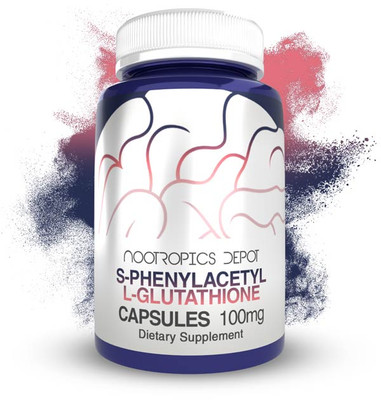
Disclosure: These are affiliate links. I earn a small commission if you purchase — at no extra cost to you. I only recommend products I personally use or have thoroughly researched.