
- Dopaminergic neuron protection and regeneration
- Cognitive enhancement and spatial learning
- Neurotrophic factor upregulation (BDNF, NGF)
- Anti-neuroinflammatory effects
- MAO-A and MAO-B inhibition
I’ll be straight with you — this is one of those compounds that makes the neuroscience nerd in me genuinely excited and the safety-conscious practitioner in me deeply cautious at the same time.
9-Methyl-β-carboline (most people call it 9-Me-BC or 9-MBC) showed up on my radar a few years back when users in nootropics communities started reporting that it “reset” their dopamine tolerance after burning out on stimulants. Bold claim. So I went digging into the actual research and found something surprising: the preclinical science behind this compound is legitimately fascinating. But — and this is a big but — we’re working with zero human clinical trials, a real phototoxicity concern, and a research base that comes almost entirely from one group of German neuroscientists.
That’s the kind of situation where I think you deserve the full picture, not just the hype.
The Short Version: 9-Me-BC is a synthetic beta-carboline research chemical that supports dopaminergic neurons through multiple simultaneous mechanisms — MAO inhibition, neurotrophic factor stimulation, dendritic growth, and anti-inflammatory effects. The preclinical science is promising, but there are no human trials, and documented phototoxicity (UV-induced DNA damage) makes this a compound that demands serious respect. Best suited for experienced nootropics users who understand the risks and can commit to strict sun avoidance protocols.
What Is 9-Methyl-β-Carboline?
Beta-carbolines are a family of compounds that occur naturally in your body — they’re derived from tryptophan and show up in your blood, brain, and cerebrospinal fluid. You also encounter them in cooked meats, coffee, tobacco smoke, and alcohol. Some of them, frankly, are bad news for your neurons.
That’s what makes 9-Me-BC such a weird story. Researchers at the Technical University of Dresden were studying beta-carbolines around 2007, mostly because the 2,9-dimethylated versions were suspected of contributing to Parkinson’s disease. Then they tested 9-Me-BC — a version with a single methyl group at the N9 position — and got the opposite result. Instead of killing dopaminergic neurons, it was helping them grow and differentiate. The key discovery paper by Hamann, Wernicke, and Lehmann (2007) in Neurochemistry International described this as genuinely unexpected.
Here’s the important context: 9-Me-BC is not a supplement. It’s not FDA-approved for anything. It’s a research chemical with a CAS number (2521-07-5) and a molecular weight of about 182 g/mol. Everything we know about it comes from petri dishes and rodent studies. If you see a vendor marketing it like a proven cognitive enhancer, that’s a red flag.
Reality Check: 9-Me-BC exists in a space between “promising research compound” and “we have no idea what this does in humans long-term.” The gap between “protects dopaminergic neurons in mouse cell cultures” and “safe and effective cognitive enhancer for you” is enormous. Treat the research as interesting, not as medical evidence.
How Does 9-Methyl-β-Carboline Work?
Here’s where things get genuinely interesting. Most nootropics hit one or maybe two targets. 9-Me-BC appears to work on at least six different mechanisms simultaneously. Think of it less like a single key fitting a single lock, and more like a master keyring opening multiple doors in the same building.
The Dopamine Engine
The most studied effect is its impact on dopaminergic neurons — the brain cells responsible for motivation, reward, movement, and that feeling of “I actually want to do things today.”
9-Me-BC stimulates tyrosine hydroxylase (TH) expression, the rate-limiting enzyme in dopamine synthesis. In plain English: it doesn’t just flood your brain with more dopamine the way a stimulant does. It appears to upregulate the machinery your neurons use to produce dopamine in the first place. A 2010 study by Polanski et al. in the Journal of Neurochemistry showed it also increases dopamine content and dopamine uptake capacity in cell cultures.
It also inhibits the enzymes that break dopamine down. Specifically, it blocks monoamine oxidase A (IC₅₀ = 1 μM) about 15 times more potently than MAO-B (IC₅₀ = 15.5 μM), according to Keller et al. (2020) in the Journal of Neural Transmission. That means dopamine, serotonin, and norepinephrine all stick around longer.
So what does this mean practically? The compound appears to both increase dopamine production capacity AND slow its breakdown — a two-pronged approach that’s more sophisticated than most dopaminergic compounds, which typically only do one or the other.
The Neurotrophic Factor Factory
This is the part that excites neuroscientists the most. 9-Me-BC stimulates astrocytes (support cells in the brain) to produce a cocktail of neurotrophic factors — the growth signals that help neurons survive, grow, and form new connections:
- BDNF (brain-derived neurotrophic factor) — approximately doubled
- Artemin — increased roughly 3.2-fold
- NCAM1 (neural cell adhesion molecule) — increased about 1.4-fold
- TGF-β2, Neurotrophin 3 — both significantly upregulated
It also activates genes critical for dopaminergic neuron development — Sonic hedgehog (Shh), Wnt1, Nurr1, and Pitx3. These are the genetic programs your brain uses to build and maintain dopamine-producing neurons.
Dendritic Growth and Synaptic Connections
A 2012 study by Gruss et al. in the Journal of Neurochemistry found that 10 days of treatment in rats resulted in more complex, elongated dendritic trees and higher spine numbers on neurons in the hippocampus. Dendrites are the branching structures neurons use to receive signals from other neurons. More dendrites with more spines means more potential connections — which is the structural basis for learning and memory.
Pro Tip: The dendritic growth mechanism explains why experienced users consistently report that effects take 7-10 days to become noticeable and persist for weeks after stopping. You’re not just changing brain chemistry temporarily — if the animal research translates, you’re changing brain structure. That takes time to build and doesn’t disappear overnight.
Anti-Inflammatory and Neuroprotective Effects
9-Me-BC inhibits the proliferation of activated microglia (the brain’s immune cells that can cause damage when chronically activated) and decreases inflammatory cytokines. It also lowers levels of alpha-synuclein — a protein whose accumulation is a hallmark of Parkinson’s disease. These effects are mediated through the PI3K/Akt signaling pathway — blocking PI3K completely abolished the compound’s beneficial effects in cell culture studies.
Benefits of 9-Methyl-β-Carboline
Let me be direct about the quality of evidence here, because I think honesty about what we do and don’t know is more valuable than hype.
Strong Preclinical Evidence
Dopaminergic neuron protection and regeneration: This is the most replicated finding. Multiple studies from the Dresden group have shown that 9-Me-BC protects dopaminergic neurons against various toxins, reverses dopamine-depleting damage, and increases mitochondrial complex I activity by approximately 80% in treated rats. Wernicke et al. (2010) in Pharmacological Reports demonstrated that intracerebroventricular delivery for 14 days normalized tyrosine hydroxylase-positive neuron counts in the substantia nigra of Parkinson’s model rats.
Cognitive enhancement in rodents: The Gruss et al. (2012) study showed that 10 days of treatment (but not 5 days) improved spatial learning in the radial maze, associated with elevated hippocampal dopamine and the dendritic proliferation described above.
Moderate Evidence
MAO inhibition has been characterized in a single in vitro study using human enzymes. Neurotrophic factor upregulation was demonstrated in cell culture. Both are well-designed studies but await replication.
What We Don’t Know
- Human pharmacokinetics — half-life, oral bioavailability, tissue distribution
- Whether oral dosing in humans achieves brain concentrations comparable to the cell culture studies
- Long-term safety in any species
- Whether the “dopamine tolerance reset” effect reported by users is real or placebo
Reality Check: The entire published research base comes from a handful of labs, primarily one group in Germany. There are zero human clinical trials. When someone tells you 9-Me-BC “regenerates dopamine neurons,” they’re extrapolating from rat models and cell cultures. That’s a legitimate starting point for investigation, not a proven benefit.
How to Take 9-Methyl-β-Carboline
Critical caveat up front: there are no human clinical trials establishing safe or effective dosing. Everything below comes from extrapolation of animal research and anecdotal user reports.
Dosage
In the rat cognitive enhancement study, the effective dose was 0.19 mg/kg/day administered subcutaneously for 10 days. Most human users report taking 15-30mg per day orally, with 15mg being the most common starting point (and what most commercial capsules contain).
If you choose to experiment with this compound, start at 15mg and stay there for the full cycle before considering any increase.
Timing and Administration
Take it in the morning. The MAO inhibition and downstream dopaminergic effects can disrupt sleep if taken later in the day. There’s no established recommendation on food, though some users report taking it with a fat source for absorption. No human bioavailability data exists to confirm whether this matters.
Cycling Protocol
Most users follow a cycling approach — 2-4 weeks on, followed by an equal or longer break. This makes sense given the MAO inhibition properties and unknown accumulation dynamics. The animal research suggests 10 days is the minimum for cognitive effects to emerge, so cycles shorter than two weeks may not be worth the effort.
Insider Tip: If you’re going to try 9-Me-BC, plan your cycle around a period when you can genuinely minimize sun exposure. Winter months or a stretch where you’ll be mostly indoors. This isn’t optional — the phototoxicity concern is the most well-documented safety issue with this compound. More on that below.
Forms
Available as powder and capsules. Given that effective doses are in the 15-30mg range, capsules are strongly preferred unless you own a milligram-precision scale and are experienced in weighing doses this small. A 5mg error on a 15mg dose is a 33% deviation — that matters.
Side Effects & Safety
This is the section that matters most, and I’m going to be thorough here because the risks with 9-Me-BC are not hypothetical.
The Phototoxicity Problem
This is the most serious and scientifically documented concern. 9-Methyl-β-carbolines are efficient photosensitizers — they cause DNA damage when activated by UVA radiation from sunlight.
A 2013 study by Vignoni et al. in Organic & Biomolecular Chemistry demonstrated that upon UVA excitation, 9-Me-BC induces DNA damage through type-I photochemical reactions, producing oxidized purine residues, single-strand breaks, and cyclobutane pyrimidine dimers. In intact cells, this manifested as increased micronuclei formation and decreased cell proliferation.
Translation: if this compound is in your system and UV light hits your skin, it can damage your DNA. That’s not speculation — it’s documented photochemistry.
Important: You MUST avoid UV and significant sun exposure while taking 9-Me-BC and for an unknown period after stopping. We don’t have human pharmacokinetic data to tell you how long the compound persists in tissue. Wear broad-spectrum sunscreen, cover exposed skin, and seriously consider limiting outdoor time during peak UV hours. If you work outdoors or live somewhere sunny and can’t avoid exposure, this compound is not for you.
MAO Inhibition Risks
With an MAO-A IC₅₀ of 1 μM, standard MAOI precautions apply:
Tyramine-rich foods — aged cheeses, fermented foods, cured meats, tap beer — could theoretically trigger a hypertensive crisis. The risk at typical nootropic doses is unknown, but the pharmacology is real.
Serotonin syndrome is a serious risk when combining 9-Me-BC with any serotonergic medication. Symptoms include agitation, hyperthermia, rapid heart rate, and in severe cases, it can be fatal.
Who Should NOT Take 9-Me-BC
- Anyone on SSRIs, SNRIs, MAOIs, or other serotonergic medications — serotonin syndrome risk
- Anyone on stimulant medications — unpredictable dopaminergic interactions
- Anyone with melanoma risk or history of skin cancer — photosensitization compounds the danger
- Anyone with significant sun exposure they cannot avoid
- Anyone with bipolar disorder — MAO inhibition can trigger manic episodes
- Pregnant or nursing women — absolutely zero safety data
- Anyone under 18 — no data whatsoever
Other Reported Side Effects
Anecdotally, users have reported insomnia, headache, reduced ability to taste, and gastrointestinal discomfort. These are generally described as mild but worth monitoring.
Stacking 9-Methyl-β-Carboline
I want to be upfront: there is essentially zero published research on 9-Me-BC in combination with anything else. All stacking advice is theoretical or anecdotal.
Potentially Complementary
- Antioxidants like Vitamin C, NAC, or Alpha-Lipoic Acid — may help offset oxidative stress from photosensitization, though this is speculative
- Uridine + DHA + choline (the “Mr. Happy Stack”) — complementary dopaminergic support through different mechanisms
- Magnesium — general neuroprotective support that won’t interact with MAO pathways
Do NOT Combine With
- SSRIs/SNRIs — serotonin syndrome risk. This is not negotiable.
- Other MAO inhibitors like harmine, harmaline, selegiline — compounded MAO inhibition
- 5-HTP or L-tryptophan — increasing serotonin precursors while simultaneously inhibiting the enzyme that breaks serotonin down is a recipe for serotonin syndrome
- High-dose stimulants — unpredictable cardiovascular and neurological effects
- St. John’s Wort — serotonergic, same concern as SSRIs
- Phenibut — additive neurochemical effects with poor predictability
My Take
Here’s where I land on 9-Me-BC: it’s one of the most scientifically interesting research chemicals in the nootropics space, and it’s also one of the most overhyped relative to its actual evidence base.
The multimodal mechanism is genuinely impressive. Most nootropics hit one target. This compound appears to simultaneously support dopamine production, protect dopaminergic neurons, stimulate neurotrophic factors, promote dendritic growth, and reduce neuroinflammation. That’s a compelling preclinical profile, and I understand why the nootropics community gets excited about it.
But I can’t in good conscience recommend this to most people. The phototoxicity isn’t theoretical — it’s documented photochemistry. The MAO inhibition creates real interaction risks that most casual supplement users aren’t equipped to manage. And the entire evidence base consists of cell cultures and rat studies from a small number of labs.
Who this is BEST for: Experienced nootropics users who genuinely understand MAO inhibitor precautions, can commit to strict UV avoidance during and after a cycle, have no contraindicated medications, and accept that they’re essentially self-experimenting with a research chemical.
Who should try something else: Honestly, most people. If you’re looking for dopaminergic support, Mucuna Pruriens has more human data. If you want neurotrophic factor support, Lion’s Mane has actual human clinical trials. If you’re interested in neuroprotection, Bacopa Monnieri has decades of research behind it.
The foundations always matter more than the exotic compounds. Get your sleep, gut health, nutrition, and stress management dialed in first. If you’ve done all that and you’re still drawn to 9-Me-BC — go in with your eyes open, respect the risks, and keep your cycles short and your sunscreen closer.
Recommended 9-methyl-β-carboline Products
I know how frustrating it is to sort through dozens of brands making the same claims. These are the ones I've personally vetted — because quality is the difference between results and wasted money.
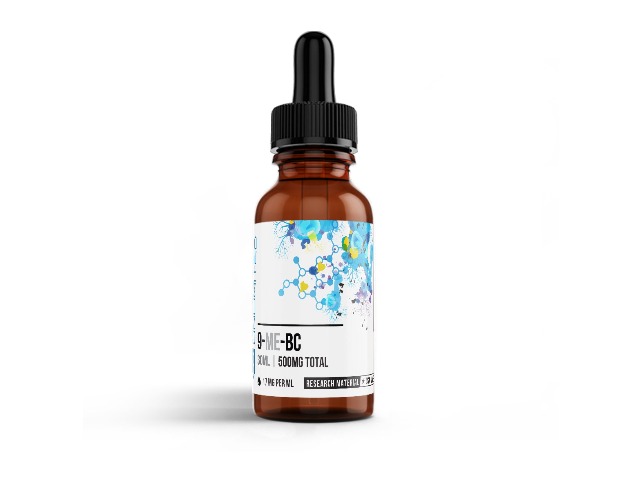
9-ME-BC by Nootropics Unlimited
Shop Now →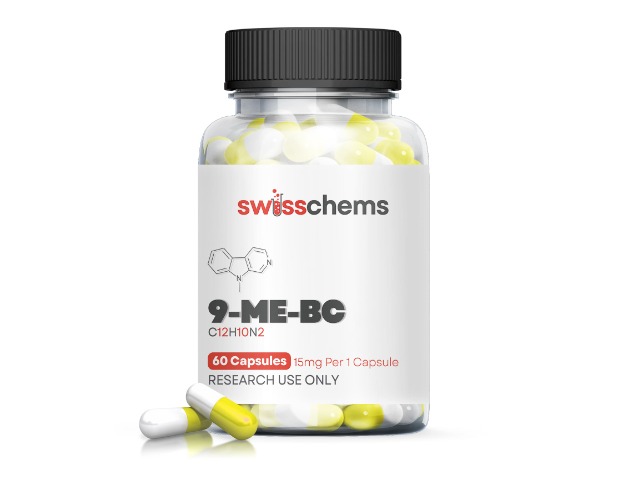
9-Me-BC Capsules by Swiss Chems
Shop Now →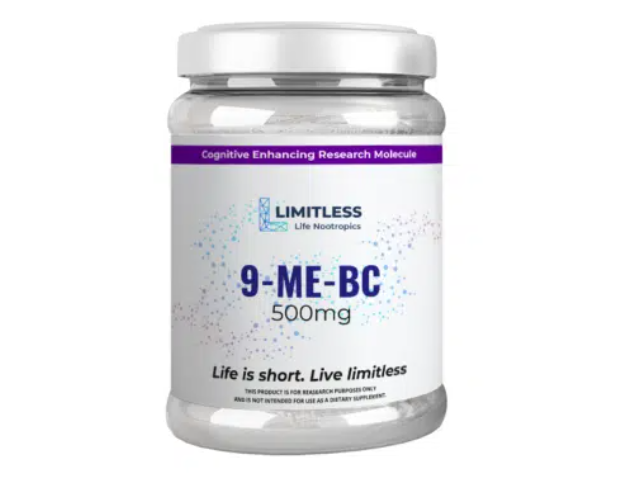
9-Me-BC Powder - 500mg - 1000mg by Limitless Life Nootropics
Shop Now →Disclosure: These are affiliate links. I earn a small commission if you purchase — at no extra cost to you. I only recommend products I personally use or have thoroughly researched.
Research & Studies
This section includes 2 peer-reviewed studies referenced in our analysis.