
- Supports cellular energy production via the Krebs cycle
- Promotes healthy aging and longevity through epigenetic regulation
- Precursor to glutamate and GABA neurotransmitter synthesis
- Supports collagen synthesis and bone health
- Modulates immune function and inflammatory response
- May enhance athletic performance and recovery
I’ll be honest — when someone first told me about alpha-ketoglutarate, I assumed it was another overhyped longevity buzzword cooked up by biohacker Twitter. A molecule your body already makes that’s supposed to reverse aging? Sure. And my morning coffee cures existential dread.
Then I actually looked at the research. And then I looked again. Because AKG isn’t some exotic compound scraped off a rainforest leaf — it’s a fundamental building block of how every cell in your body produces energy, makes neurotransmitters, and regulates which genes get turned on or off. The animal data on lifespan extension is some of the most compelling I’ve seen. The human data? Still early. But what’s there is hard to ignore.
The Short Version: Alpha-ketoglutarate (AKG) is a Krebs cycle intermediate that your body already produces — it’s central to cellular energy, neurotransmitter synthesis, and epigenetic regulation. Animal studies show significant lifespan extension, and preliminary human data suggests measurable biological age reduction. The calcium form (Ca-AKG) at 500–1,000mg daily is the go-to for longevity. It’s not a stimulant you’ll “feel” — it works at a deeper, cellular level.
What Is Alpha-Ketoglutarate?
Alpha-ketoglutarate — AKG for short — is a five-carbon molecule that your mitochondria produce every second of every day as part of the Krebs cycle, the central energy-production pathway that keeps you alive. It was first identified as a key metabolic intermediate after Hans Adolf Krebs described the citric acid cycle in 1937, but nobody was selling it in capsules back then. It was just a line on a biochemistry diagram.
What makes AKG remarkable isn’t that it exists in your body. Lots of molecules do. What’s remarkable is where it sits — at a metabolic intersection connecting energy production, neurotransmitter synthesis, gene expression, immune regulation, and collagen formation. Very few single molecules touch that many systems simultaneously.
Here’s the catch: AKG has a half-life of less than five minutes in your body. Your cells produce it, use it, and it’s gone. Which means the amount circulating at any given moment is limited — and it declines with age. Supplementing AKG is essentially trying to keep the pool topped up so these downstream processes don’t run dry.
The longevity community caught fire over AKG after a landmark 2020 mouse study showed that calcium AKG extended median lifespan by roughly 12% and compressed morbidity — meaning the mice didn’t just live longer, they stayed healthier for a greater proportion of their lives. That single paper launched a thousand supplement brands. But as always, the devil is in the details — and the details are worth understanding before you spend your money.
How Does Alpha-Ketoglutarate Work?
Think of AKG as a traffic hub in a major city. Highways come in from multiple directions — energy production, amino acid metabolism, gene regulation — and AKG sits right in the center, routing traffic through all of them. Block the hub, and everything downstream suffers. Keep it flowing, and the whole system runs more smoothly.
Here’s what’s happening at the molecular level.
The Energy Engine
AKG is a rate-limiting step in the Krebs cycle. When the enzyme alpha-ketoglutarate dehydrogenase converts AKG to succinyl-CoA, it generates NADH — the electron carrier that feeds your mitochondria’s respiratory chain to produce ATP. This is your cells’ primary energy currency. More available AKG means this bottleneck runs smoother.
The Neurotransmitter Factory
This is where it gets interesting for brain health. Through a process called transamination, AKG picks up amino groups from other amino acids and converts to glutamate — your brain’s primary excitatory neurotransmitter. From there, glutamate gets converted to either glutamine (which helps detoxify ammonia) or GABA (the brain’s primary calming neurotransmitter).
In plain English: AKG sits upstream of both your brain’s “go” signal and its “slow down” signal. It doesn’t force one or the other — it provides the raw material for your brain to make what it needs.
The Epigenetic Regulator
This is the mechanism that has longevity researchers most excited. AKG is a required cofactor for TET enzymes, which control DNA demethylation — essentially flipping genetic switches on and off. It also fuels Jumonji C domain histone demethylases, which regulate how tightly your DNA is packaged and which genes are accessible.
Translation: AKG helps your cells maintain proper gene expression patterns. As we age, these patterns drift — genes that should be silent get activated, and genes that should be active go quiet. AKG appears to help keep the epigenetic machinery running correctly.
The Longevity Switch
Here’s where AKG does something unexpected. It can directly inhibit ATP synthase, which triggers AMPK activation and mTOR suppression. If those acronyms mean nothing to you, here’s the shortcut: this mimics what happens during caloric restriction — your cells shift into cleanup mode, breaking down damaged proteins and dysfunctional mitochondria through a process called autophagy. This “cellular housekeeping” pathway is one of the most well-established mechanisms for extending lifespan across species.
Reality Check: Most of the longevity mechanisms described above have been demonstrated in cell cultures, worms, flies, and mice — not yet in large human trials. The biology is sound and consistent across species, but we’re still waiting on definitive human data. Don’t let supplement marketing convince you otherwise.
Benefits of Alpha-Ketoglutarate
Longevity and Healthy Aging
The animal data here is genuinely impressive. AKG extended lifespan by roughly 50% in C. elegans worms through ATP synthase and TOR inhibition. In fruit flies, similar results through mTOR inhibition and AMPK activation. And the 2020 Cell Metabolism mouse study — the one that launched the supplement gold rush — showed ~12% median lifespan extension in mice given Ca-AKG starting at 18 months old (roughly equivalent to middle age in humans). The mice showed reduced hair graying, lower frailty scores, and decreased inflammatory cytokines. Effects were more pronounced in females.
On the human side, there’s one notable but flawed study: the 2021 Rejuvant/TruAge trial, where 42 individuals taking an AKG formulation for about seven months showed an average biological age decrease of 8 years by DNA methylation clock. That sounds incredible. But it wasn’t placebo-controlled, the sample was tiny, and it measured only epigenetic age — not clinical health outcomes. I’d file that under “promising but prove it.”
The ABLE Trial — a proper double-blind, placebo-controlled RCT of 1g sustained-release Ca-AKG in 120 people aged 40–60 — should give us much better answers when results come in.
Cognitive Function
A 2025 study using Alzheimer’s model mice found Ca-AKG improved synaptic plasticity, enhanced long-term potentiation in the hippocampus, and improved performance in memory-based tasks. Another 2025 study identified AKG as a “circulatory exercise factor” with learning, memory, and antidepressant properties.
The mechanisms make sense — if AKG feeds glutamate and GABA production, supports mitochondrial function in neurons, and promotes autophagy of damaged cellular components, you’d expect brain benefits. But no human cognitive trials exist yet. This is a “watch this space” category.
Bone Health
This one actually has solid human data. A six-month double-blind study in 76 postmenopausal women with osteopenia found that AKG supplementation led to a 37% decrease in a bone resorption marker and a 1.6% increase in bone density. The mechanism involves AKG’s role in regulating histone methylation and promoting osteoblast (bone-building cell) activity.
Athletic Performance
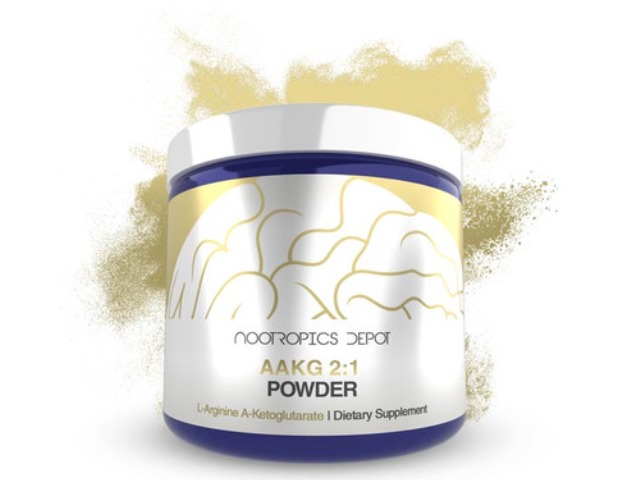
The evidence here is genuinely mixed. Some studies using AAKG (arginine alpha-ketoglutarate) found significant improvements in bench press strength, Wingate peak power, and training volume. Others found nothing. The discrepancy may come down to dosing protocol — chronic supplementation seems to work better than single acute doses before a workout.
Insider Tip: If you’re after athletic performance, AAKG is the form designed for that — the arginine component supports nitric oxide production for better blood flow. But if longevity is your goal, Ca-AKG is the right choice. Different forms, different purposes. Don’t mix them up.
How to Take Alpha-Ketoglutarate
Dosage by Goal
For longevity and general health (Ca-AKG):
- Start at 400–500mg daily for the first two weeks
- Work up to 500–1,000mg daily
- Bryan Johnson’s Blueprint protocol uses 2,000mg/day, but that’s on the aggressive end
For athletic performance (AAKG):
- 3–6g taken 30–60 minutes before training
- Effects seem to build over weeks of consistent use rather than from single doses
For bone health:
- Studies used 6g/day in split doses — this is a high dose best discussed with your doctor
Timing and Absorption
Take Ca-AKG in the morning on an empty stomach — at least 30 minutes before food — for best absorption. If your stomach objects (and some people’s will), take it with a small amount of food. Splitting the dose into two servings, morning and afternoon, can reduce GI issues while maintaining more consistent levels.
Choosing Your Form
Ca-AKG (Calcium Alpha-Ketoglutarate): The longevity form. Most studied for aging. The calcium salt stabilizes the molecule and appears to extend its otherwise extremely short half-life.
AAKG (Arginine Alpha-Ketoglutarate): The performance form. The arginine boosts nitric oxide for vascularity and blood flow. Not interchangeable with Ca-AKG for longevity purposes.
Liposomal Ca-AKG: The premium option. Liposomal encapsulation may dramatically improve bioavailability and provide slow release over 24 hours. More expensive, and the bioavailability claims haven’t been verified in rigorous head-to-head comparisons.
Plain AKG (free acid): Budget option. Less stable, less bioavailable. You get what you pay for.
Pro Tip: If you’re already taking a calcium supplement, account for the calcium content in Ca-AKG to avoid overshooting your daily calcium intake. A typical Ca-AKG dose provides roughly 200mg of elemental calcium.
What to Expect
Don’t expect to “feel” AKG the way you feel caffeine or phenylpiracetam. This isn’t a stimulant or an acute cognitive enhancer. It works at the metabolic and epigenetic level — the kind of changes that show up on blood panels and biological age tests over months, not in your subjective experience over hours. Some users report improved recovery from workouts and a subtle sense of cleaner energy, but many report nothing perceptible at all. That’s normal. The absence of a noticeable effect doesn’t mean it isn’t working.
Side Effects and Safety
AKG is generally well-tolerated, which makes sense — it’s a molecule your body produces in large quantities already. But supplemental doses can still cause problems, especially when you’re ramping up.
Common: GI distress is the main complaint — nausea, bloating, diarrhea, or stomach cramps, particularly at higher doses or on an empty stomach. Starting low and increasing gradually is the standard fix.
Less common (primarily AAKG): Lightheadedness, a “jelly-legged” feeling, or feeling spaced out for several hours. The arginine component in AAKG can lower blood pressure, which accounts for most of these.
Rare (case reports only): Palpitations and syncope have been reported with AAKG, but these aren’t from systematic data.
Important: Avoid AKG during pregnancy and nursing — there’s simply not enough safety data. People with kidney disease should consult their doctor, as high doses may stress renal function. If you’re on diabetes medications, be aware that AKG may lower blood glucose, creating additive hypoglycemia risk. And if you’re taking blood pressure medication, the AAKG form could push your BP too low.
One study worth mentioning: a 2025 paper found AKG promoted anxiety-like behavior and suppressed antioxidant enzymes in female mice fed a high-fat, high-sugar “cafeteria diet.” The relevance to humans eating a reasonable diet is unclear, but it’s a reminder that metabolic context matters. AKG isn’t operating in a vacuum — it’s interacting with everything else going on in your body.
Long-term, AKG is rated “possibly safe” for up to three years of oral use. Beyond that, we’re in uncharted territory.
Stacking Alpha-Ketoglutarate
AKG plays well with other longevity and mitochondrial compounds because it operates on pathways that complement — rather than overlap with — most popular supplements.
Strong Pairings
AKG + NMN (250–500mg): AKG optimizes the Krebs cycle while NMN fuels NAD+ production — two different but deeply connected mitochondrial support pathways. This is one of the most popular longevity stacks for good reason.
AKG + Resveratrol (500–1,000mg): Resveratrol activates sirtuins, which depend on the NAD+ and metabolic infrastructure that AKG helps maintain. Complementary, not redundant.
AKG + Spermidine (1mg): Both promote autophagy but through different mechanisms. AKG works through AMPK/mTOR, spermidine through acetyltransferase inhibition. Together, they hit cellular cleanup from two angles.
AKG + Vitamin C: Both are required cofactors for prolyl hydroxylase, the enzyme that builds stable collagen. If you’re interested in AKG’s connective tissue benefits, don’t skip the C.
AKG + Glycine (2,000mg): Complementary support for both longevity pathways and collagen synthesis. Glycine also supports glutathione production, giving you antioxidant coverage alongside AKG’s metabolic support.
What to Avoid
Don’t stack Ca-AKG with excessive calcium supplements — you’ll overshoot your calcium intake. Don’t combine AAKG with high-dose standalone L-arginine — redundant and increases the risk of blood pressure drops and GI issues. And be cautious about stacking multiple Krebs cycle intermediates at high doses without guidance — more isn’t always better when you’re tinkering with fundamental metabolic pathways.
My Take
I’ll level with you — AKG is one of those compounds where the science is more exciting than the subjective experience. You’re not going to take 500mg of Ca-AKG and feel like you unlocked a new gear. It’s not that kind of supplement. If you need something you can feel working, look at creatine for energy or L-theanine for calm focus.
But if you’re playing the long game — if you’re interested in longevity, cellular health, and keeping your biological machinery running clean as you age — AKG is one of the more scientifically grounded options available. The animal data is strong and consistent across multiple species. The mechanisms are well-understood and hit pathways that every aging researcher agrees matter. And the safety profile is solid for something you’d take daily for years.
What gives me pause is the gap between the animal data and the human evidence. That Rejuvant study gets cited constantly, but it wasn’t controlled, and 42 people isn’t a sample — it’s a dinner party. I’m genuinely waiting on the ABLE Trial results before I’d call this a must-take.
Who it’s best for: People over 35 who are building a longevity stack and have their foundations — sleep, diet, exercise, stress management — already solid. AKG isn’t a shortcut around those. It’s what you add after the basics are dialed in.
Who should probably try something else: If you’re looking for noticeable cognitive enhancement, there are better starting points. Bacopa Monnieri, Lion’s Mane, or even creatine will give you more perceptible results for brain function. AKG’s cognitive benefits, while mechanistically plausible, are still backed only by animal data.
If you do try it, go with Ca-AKG from a reputable brand with third-party testing — Toniiq, Double Wood, or Renue by Science are solid choices. Start at 500mg in the morning, give it at least three months, and track something measurable if you can — bloodwork, a biological age test, or at minimum your recovery and energy patterns over time. This isn’t the kind of supplement you evaluate after a week.
Recommended Alpha-Ketoglutarate Products
I know how frustrating it is to sort through dozens of brands making the same claims. These are the ones I've personally vetted — because quality is the difference between results and wasted money.
Disclosure: These are affiliate links. I earn a small commission if you purchase — at no extra cost to you. I only recommend products I personally use or have thoroughly researched.
Research & Studies
This section includes 9 peer-reviewed studies referenced in our analysis.