
- Increases cerebral blood flow via nitric oxide production
- Elevates BDNF and supports neurotrophic signaling
- Improves endothelial function and cardiovascular health
- Modulates myostatin/follistatin ratio for muscle growth
- Promotes mitochondrial biogenesis
- Supports memory and executive function in older adults
I used to think dark chocolate was just a guilty pleasure I could justify because “antioxidants.” Turns out, I was accidentally stumbling onto one of the most well-researched flavonoids in nutritional science — and barely scratching the surface of what it could do.
The compound I’m talking about is epicatechin, the primary flavanol in cocoa that researchers have been obsessing over for the last two decades. It’s the reason the Kuna people of Panama — who drink cocoa like most of us drink water — have virtually no age-related cognitive decline or hypertension. And it’s the reason Mars, Inc. poured millions into flavanol research (yes, the candy company — I know).
The Short Version: (−)-Epicatechin is a cocoa-derived flavanol that increases blood flow to your brain, elevates BDNF, and supports mitochondrial function. It’s best for people over 30 looking for a well-tolerated, long-term compound to support cognitive sharpness, cardiovascular health, and even exercise performance. Take 100–200 mg/day with piperine for best absorption.
What Is Epicatechin?
(−)-Epicatechin is a monomeric flavanol — a subclass of the flavonoid family of polyphenols. If that sounds like a word salad, here’s the simple version: it’s a plant compound found in cocoa, green tea, apples, berries, and red wine that your body can actually absorb and use remarkably well.
That last part is critical. The supplement world is full of compounds that look amazing in a test tube but can’t survive your digestive system. Epicatechin is different — it has roughly 82% bioavailability and readily crosses the blood-brain barrier. That’s exceptionally rare for a polyphenol, and it’s why researchers keep coming back to it.
The scientific focus on epicatechin really accelerated in the 2000s, when epidemiologists started connecting the dots between cocoa consumption and cardiovascular health. A landmark 2007 study at the Salk Institute by van Praag et al. showed that epicatechin enhanced spatial memory and grew new blood vessels in the hippocampus of mice — and the research snowballed from there.
Most people get about 15 mg of epicatechin through their diet. That’s not nothing, but it’s well below the threshold where studies start showing meaningful cognitive and vascular benefits. Which is why supplementation becomes interesting.
Reality Check: Epicatechin is not going to make you “limitless.” It’s a foundational compound — one that works quietly in the background, optimizing blood flow, supporting your neurons, and helping your mitochondria do their job. If your sleep is wrecked, your gut is inflamed, and you’re living on processed food, fix those first. Epicatechin amplifies a healthy foundation; it doesn’t replace one.
How Does Epicatechin Work?
Think of epicatechin as a multi-tool for your vascular system. Its primary job is keeping the highways to your brain wide open — and once it gets there, it starts upgrading the infrastructure.
The blood flow engine. Epicatechin’s most established mechanism is activating an enzyme called endothelial nitric oxide synthase (eNOS) in your blood vessel walls. This enzyme produces nitric oxide (NO), which signals your blood vessels to relax and widen. More nitric oxide means better blood flow everywhere — including your brain. Brossette et al. (2011) demonstrated in European Journal of Nutrition that epicatechin directly boosts NO production in human endothelial cells at physiologically relevant concentrations. It also inhibits NADPH oxidase, an enzyme that produces damaging free radicals in your vessel walls. So it’s simultaneously opening the pipes and keeping them clean.
In practical terms, that means more oxygen and glucose reaching your neurons — which is the most basic requirement for clear thinking.
The BDNF connection. Once epicatechin crosses the blood-brain barrier, it elevates brain-derived neurotrophic factor (BDNF) — often called “Miracle-Gro for the brain.” BDNF supports the survival of existing neurons and encourages the growth of new synaptic connections. It does this partly through activating the Akt signaling pathway and partly by increasing hippocampal monoamines like serotonin and norepinephrine, which themselves drive BDNF production.
Rebuilding the wiring. The 2007 van Praag study found something fascinating: epicatechin increased angiogenesis (new blood vessel growth) and dendritic spine density in the hippocampus — the brain’s memory center. Dendritic spines are the tiny protrusions on neurons where synapses physically form. More spines, more connection points, better signal transmission. Interestingly, it didn’t increase the survival of newborn neurons — it was strengthening and expanding the existing network rather than building from scratch.
The mitochondrial play. Here’s where it gets interesting for the biohacker crowd. Epicatechin activates Sirt1, a longevity-associated enzyme that triggers mitochondrial biogenesis — literally the creation of new mitochondria. Your neurons are among the most energy-hungry cells in your body, each relying on up to 2 million mitochondria. More mitochondria means more cellular energy, which means your brain has a bigger energy budget for demanding cognitive tasks.
The muscle angle. Epicatechin also modulates the myostatin/follistatin ratio. Myostatin is a protein that limits muscle growth; follistatin counteracts it. Gutierrez-Salmean et al. (2013) showed in the Journal of Nutritional Biochemistry that epicatechin decreased myostatin and increased follistatin within just 7 days. This makes it one of the few compounds that genuinely supports both brain and body performance through distinct, evidence-based mechanisms.
Benefits of Epicatechin
Cardiovascular & Vascular Health — Strong Evidence
This is epicatechin’s home turf. A major Dutch epidemiological study following 774 men over 25 years found that adequate epicatechin intake correlated with a 46% reduction in cardiovascular mortality risk. Multiple human trials confirm that it lowers blood pressure and improves endothelial function through the NO mechanism described above.
If you have a family history of cardiovascular issues, this is one of the more evidence-backed natural compounds worth considering.
Cognitive Function — Moderate Evidence
Haskell-Ramsay et al. (2018) reviewed the intervention literature in Nutrients and found that cocoa flavanol supplementation positively modulated memory, executive function, and processing speed in adults over 50 — particularly at doses exceeding 50 mg of epicatechin per day for 28 or more days.
Here’s where I have to be straight with you: no human trial has tested isolated epicatechin for cognitive outcomes. Every cognitive study used cocoa flavanol formulations that included epicatechin alongside other compounds. So we can’t say with certainty that epicatechin alone is responsible — though mechanistic evidence strongly suggests it’s the primary driver.
Muscle Performance — Moderate Evidence
Mafi et al. (2019) ran an 8-week randomized controlled trial with 62 sarcopenic older men and found that combining resistance training with epicatechin supplementation produced significantly greater improvements in leg press and chest press strength, plus a better follistatin/myostatin ratio, compared to either intervention alone. If you’re training, epicatechin appears to give your muscles a real edge.
Neuroprotection — Preliminary but Promising
A 2025 systematic review and meta-analysis of 12 animal studies found that epicatechin significantly improved cognitive performance in rodent models of oxidative stress-induced cognitive impairment. This is preliminary — we need human data — but the direction is consistent with what we’d expect from a compound that boosts BDNF, fights neuroinflammation, and builds mitochondria.
Insider Tip: The cognitive benefits of epicatechin are cumulative, not acute. Don’t expect to feel anything the first week. Commit to 8–12 weeks of consistent daily dosing before you assess whether it’s working. The vascular effects start within hours, but the neurotrophic remodeling takes time.
How to Take Epicatechin
Dosage: 50–200 mg/day of isolated (−)-epicatechin. I recommend starting at 100 mg/day and moving to 200 mg if you tolerate it well and want stronger effects. For muscle-specific goals, the research points to 1–2 mg/kg of body weight — roughly 70–140 mg for most adults.
Timing: Take it with food. Dietary carbohydrates improve absorption, and taking it on an empty stomach is the most common cause of the mild GI discomfort some people report. No strong evidence favors morning vs. evening — pick a time you’ll remember and stay consistent.
Form matters — a lot. Look for (−)-epicatechin at 90% purity or higher with piperine (5–6 mg) included. This is non-negotiable for supplementation. Piperine inhibits p-glycoprotein — a transporter protein that would otherwise pump epicatechin right back out of your intestinal cells — and it reduces glucuronidation, a liver process that deactivates flavonoids. Without piperine, you’re leaving a significant portion of each dose on the table.
You could also try to get epicatechin from raw cocoa powder, but the content is wildly variable depending on how it was processed. Fermentation, roasting, and alkalization (the “Dutch process” that makes cocoa smoother) destroy epicatechin or convert it to the less active (+)-catechin form. So that fancy alkalized cocoa powder? Almost useless for this purpose.
Cycling: No established cycling protocol exists. Long-term daily use appears safe based on available data, and the benefits are cumulative — so consistent dosing is the play.
Pro Tip: Moderate caffeine consumption (a cup of coffee or green tea) can boost epicatechin bioavailability by around 30%. But don’t go overboard — high-dose caffeine may amplify cardiovascular effects like blood pressure changes, especially if you’re sensitive.
Side Effects & Safety
Epicatechin has one of the cleaner safety profiles in the nootropic world. Research has found no observed adverse effects at doses of 50–200 mg/day.
What some people experience:
- Mild GI discomfort, nausea, or loose stools — usually from taking it on an empty stomach or at higher doses
- Occasional headache or light dizziness, particularly in the first few days
Who should be cautious:
Important: Epicatechin has demonstrated anti-platelet activity. If you have a bleeding disorder, are taking blood thinners like warfarin, or have surgery scheduled, talk to your doctor before supplementing. Discontinue use at least 2 weeks before any surgical procedure.
- On blood pressure medication — epicatechin lowers BP through NO production, which could cause excessive drops when combined with antihypertensives
- On diabetes medications — potential for additive blood sugar lowering
- On CYP3A4-metabolized drugs — epicatechin may inhibit this liver enzyme, which processes a wide range of pharmaceuticals including many statins and calcium channel blockers. If you take prescription medications, check with your pharmacist
- Pregnant or nursing — insufficient safety data; skip the supplement and enjoy some (moderate) dark chocolate instead
Stacking Epicatechin
Epicatechin plays well with others, partly because its mechanisms are distinct enough to complement rather than duplicate.
The foundational pair — Epicatechin + Piperine. Already covered this, but it bears repeating: this isn’t optional for supplementation. Piperine meaningfully enhances absorption. Most quality products include it.
The exercise stack — Epicatechin + Creatine. If you’re training, this combination covers both the vascular/myostatin angle (epicatechin) and cellular energy/strength (creatine). The van Praag study also showed epicatechin + exercise was superior to either alone for spatial memory — so there’s a cognitive bonus to pairing your supplement with movement.
The cognitive stack — Epicatechin + Triacetyluridine. Uridine supports synaptic membrane synthesis — building new connection points — while epicatechin ensures those connection points get adequate blood flow and BDNF support. Different mechanisms, complementary outcomes.
The mitochondrial stack — Epicatechin + PQQ + CoQ10. Three compounds that all support mitochondrial function through different pathways: Sirt1 (epicatechin), PGC-1α (PQQ), and the electron transport chain (CoQ10). This is a solid longevity-oriented combination.
The focus stack — Epicatechin + Alpha-GPC + L-Theanine. Vascular support meets cholinergic drive meets calm alertness. This mirrors the natural synergy found in green tea but with more targeted dosing.
Use caution combining with:
- High-dose fish oil, Ginkgo biloba, or garlic supplements — all have blood-thinning properties, and the effects stack
- High-dose EGCG supplements — potential for excessive CYP enzyme inhibition
- Stimulant-heavy stacks — epicatechin’s cardiovascular effects could be amplified
My Take
I’ll be honest — epicatechin wasn’t the flashiest addition to my routine. There was no “wow, I can feel it” moment like you might get with modafinil or even a strong dose of Alpha-GPC. And for a while, that made me wonder if it was doing anything at all.
But here’s what I noticed after about six weeks of consistent 200 mg daily dosing: my afternoon brain fog just… stopped showing up. My recovery between workouts shortened. My blood pressure numbers at my annual physical were the best they’d been in years. It was the kind of improvement you only notice in retrospect, which is actually a hallmark of compounds that are doing real work rather than just tweaking neurotransmitter levels.
Who this is best for:
- Adults over 30 who want a well-tolerated, evidence-backed compound for long-term brain and cardiovascular health
- People who train regularly and want a natural edge on muscle performance and recovery
- Anyone with a family history of cardiovascular disease looking for evidence-based nutritional support
- Stackers who want a solid “base layer” compound that plays well with almost everything
Who should look elsewhere:
- If you want an acute cognitive boost you can feel within an hour, this isn’t it — try L-Theanine + caffeine
- If you’re under 25 with no health concerns and just want better focus for studying, Bacopa or Lion’s Mane are better starting points
- If budget is tight and you can only pick one supplement, creatine gives you more bang for your buck
Epicatechin is the kind of compound I wish I’d started earlier. It’s not dramatic. It’s not exciting. But it’s doing something real — and the science keeps getting stronger. For me, that’s worth 200 mg a day and a little patience.
Recommended Epicatechin Products
I know how frustrating it is to sort through dozens of brands making the same claims. These are the ones I've personally vetted — because quality is the difference between results and wasted money.
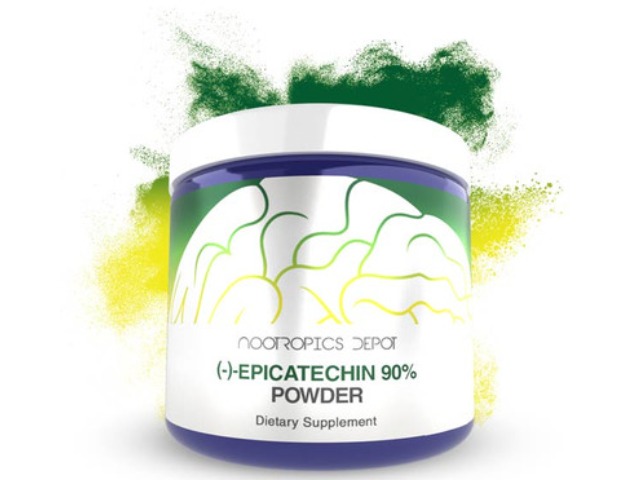
Nootropics Depot Buy Epicatechin Powder | Epicatechin Benefits and Reviews
Shop Now →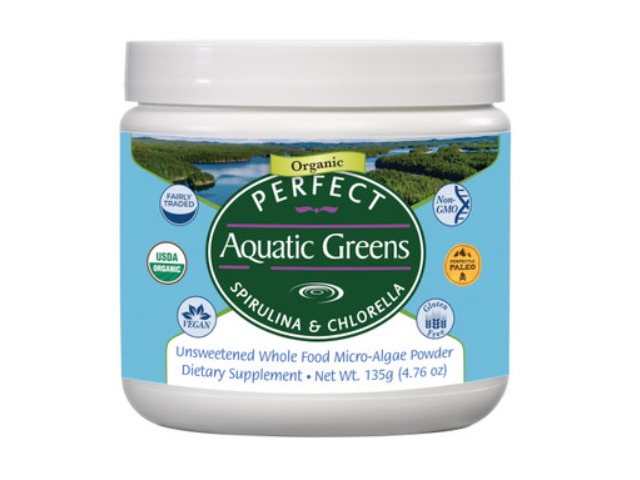
Aquatic Greens by Perfect Supplements
Shop Now →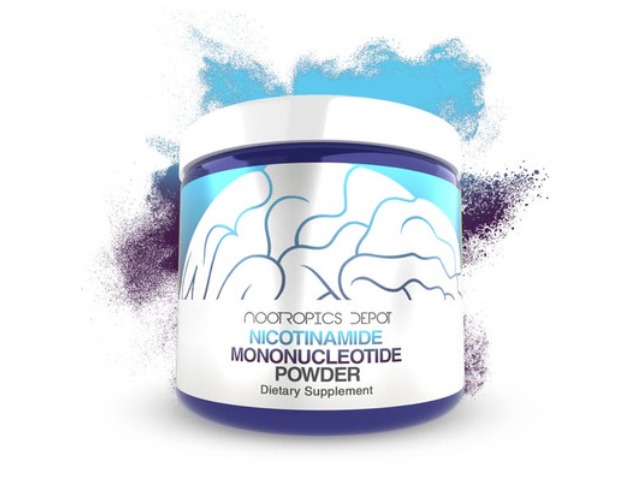
Buy Nicotinamide Mononucleotide Powder | Nad+ Precursor by Nootropics Depot
Shop Now →Disclosure: These are affiliate links. I earn a small commission if you purchase — at no extra cost to you. I only recommend products I personally use or have thoroughly researched.
Research & Studies
This section includes 3 peer-reviewed studies referenced in our analysis.