
- Sustained wakefulness and alertness
- Enhanced focus and mental clarity
- Improved motivation and task engagement
- Potential anti-aggressive properties
I’ll be straight with you — fladrafinil is one of those compounds where the gap between what people claim online and what science has actually verified is wider than the Grand Canyon.
I’ve spent years navigating the murky waters of research chemicals, and fladrafinil sits right in that tricky territory: a compound with a plausible mechanism of action, a real pharmaceutical pedigree, and absolutely zero published human studies to back up the hype. That doesn’t mean it’s useless. It means you need to go in with your eyes wide open.
The Short Version: Fladrafinil is a fluorinated version of adrafinil that converts to modafinil in your body. It’s reportedly 3–4x more potent than adrafinil on a per-milligram basis and may have unique anti-aggressive properties. However, there are zero published human clinical trials — everything we know is extrapolated from modafinil research and user reports. Proceed with informed caution.
What Is Fladrafinil?
Fladrafinil (developmental code CRL-40,941) is a synthetic wakefulness-promoting compound created in the early 1980s by researchers at Laboratoire L. Lafon — the same French pharmaceutical company that gave us adrafinil and modafinil. The research was spearheaded by Dr. Michel Jouvet, a legendary figure in sleep science.
Chemically, fladrafinil is adrafinil with two fluorine atoms bolted onto its phenyl rings. That might sound like a minor tweak, but in pharmacology, small structural changes can dramatically alter how a compound behaves in your body. Those fluorine atoms appear to enhance bioavailability and potency, which is why fladrafinil reportedly delivers modafinil-like effects at a fraction of adrafinil’s dose.
The compound was patented in the United States in 1984 (US Patent 4489095), which specifically highlighted its anti-aggressive and stimulant properties observed in animal models. Despite the patent, Lafon never commercially developed fladrafinil as a pharmaceutical. It was overshadowed by modafinil, which went on to become a blockbuster prescription drug. Today, fladrafinil exists in a regulatory gray zone — sold online as a “research chemical” with no FDA approval, no pharmaceutical-grade manufacturing standards, and no clinical data of its own.
One important clarification: Fladrafinil (CRL-40,941) is often confused with flmodafinil (CRL-40,940, also called lauflumide). They’re cousins, not twins. Fladrafinil is fluorinated adrafinil — a prodrug. Flmodafinil is fluorinated modafinil — the active compound. Fladrafinil likely converts to flmodafinil as an intermediate step on its way to becoming modafinil. Getting these two mixed up is shockingly common, even among vendors.
How Does Fladrafinil Work?
Think of fladrafinil as a delivery vehicle. You swallow it, your liver processes it, and out comes modafinil — the actual compound doing the heavy lifting in your brain. It’s a prodrug, much like adrafinil, but the fluorine atoms make it a faster, more efficient delivery vehicle.
Once modafinil is circulating, it works through several brain systems simultaneously. It weakly blocks the dopamine transporter (DAT), which means more dopamine hangs around in the spaces between neurons — contributing to that sense of wakefulness, motivation, and “locked in” focus that users describe. It also bumps up norepinephrine levels, which sharpens alertness and arousal.
There’s a histamine component too. Modafinil increases histamine activity in the tuberomammillary nucleus — a key node in your brain’s wakefulness circuitry. This is fundamentally different from how traditional stimulants like amphetamines work, which is why the subjective experience feels “cleaner” to most people. No jitters. No crash. Just sustained wakefulness.
What makes fladrafinil potentially more interesting than plain adrafinil is the anti-aggressive effect documented in the original patent data. The researchers observed that fladrafinil reduced aggression in mice — something adrafinil and modafinil didn’t do. This suggests fladrafinil may modulate GABA activity in ways its parent compound doesn’t, though this has never been formally investigated beyond those initial animal experiments.
Reality Check: The mechanism of action I just described is largely borrowed from modafinil research. Fladrafinil itself has never been the direct subject of a published pharmacology study. We’re assuming it works like modafinil because it converts to modafinil — a reasonable assumption, but an assumption nonetheless.
Benefits of Fladrafinil
Here’s where I need to be brutally honest. When I searched the scientific literature for human trials on fladrafinil, I found exactly zero results. Not “a few small studies.” Zero. Every claimed benefit is extrapolated from one of three sources:
- Modafinil research (solid, since fladrafinil converts to modafinil)
- The 1984 Lafon patent (animal data only)
- Anecdotal user reports (inherently unreliable)
With that caveat firmly in place, here’s what the evidence supports:
Sustained Wakefulness and Alertness. This is the benefit with the strongest foundation, because modafinil is literally FDA-approved for narcolepsy, shift work sleep disorder, and obstructive sleep apnea. If fladrafinil reliably converts to modafinil — and the pharmacological logic says it should — then wakefulness promotion is its most credible benefit.
Enhanced Focus and Cognitive Performance. Modafinil has shown improvements in attention, working memory, and executive function in sleep-deprived individuals across multiple human trials. In well-rested, healthy people, the cognitive benefits are more modest and inconsistent. Don’t expect Limitless-level results.
Anti-Aggressive Properties. This is fladrafinil’s unique claim to fame. The original patent demonstrated a reduction in aggression in animal models — an effect not seen with adrafinil or modafinil. If this translates to humans (a big “if”), it could make fladrafinil particularly interesting for people dealing with irritability or stress-related agitation.
Improved Motivation and Task Engagement. Users consistently report a pronounced increase in the desire to actually do things — especially boring, tedious tasks. This tracks with modafinil’s dopaminergic effects.
Insider Tip: The people who seem to get the most from eugeroics like fladrafinil aren’t using them to become superhuman. They’re using them strategically — on days when sleep debt, demanding projects, or cognitive fatigue would otherwise tank their productivity. That occasional, targeted use pattern also minimizes tolerance buildup.
How to Take Fladrafinil
There are no clinically established doses for fladrafinil. Full stop. Everything below comes from anecdotal reports and vendor recommendations. Treat these as starting points, not medical advice.
Starting Dose: 30–50 mg per day. This is where I’d recommend anyone begin. You can always go up. You can’t un-take a dose that’s too high.
Common Effective Range: 50–150 mg per day. Most experienced users settle somewhere in this window.
Upper Range: 150–200 mg per day. Some users go higher, but diminishing returns and increased side effects become more likely.
Timing: Take it in the morning, ideally on an empty stomach for faster absorption. Fladrafinil’s active metabolite (modafinil) has a half-life of 12–15 hours. If you take it after noon, expect to be staring at your ceiling at midnight.
Forms: Fladrafinil comes as powder (cheapest, requires a milligram scale), capsules (more convenient, slight markup), or sublingual solution (faster onset, less common). If you’re using the powder form, invest in a proper milligram scale — eyeballing doses of a potent research chemical is asking for trouble.
Cycling: The most common protocol is 5 days on, 2 days off. This helps manage tolerance, gives your liver a break, and maintains the compound’s effectiveness over time.
Pro Tip: If you see dosing recommendations online in the 200–300 mg range, they may be confusing fladrafinil with adrafinil dosing. Fladrafinil is reported to be 3–4x more potent than adrafinil. Taking adrafinil-level doses of fladrafinil is a recipe for overstimulation, anxiety, and a terrible night’s sleep.
Side Effects and Safety
Common Side Effects
- Headaches — The most frequently reported issue. Citicoline or Alpha-GPC supplementation (250–600 mg) may help, as eugeroics can increase choline demand in the brain.
- Insomnia — Almost always a timing issue. Dose early.
- Nausea — Usually dose-dependent. More common at higher doses or on a completely empty stomach.
- Mild anxiety or restlessness — Particularly at the upper end of the dosing range.
- Appetite suppression — Consistent across user reports. Some consider this a feature, not a bug.
- Increased heart rate — More likely at higher doses or when stacked with other stimulants.
Serious Concerns
Liver stress. This is the big one. As a prodrug that gets extensively processed by the liver, fladrafinil has the same theoretical hepatotoxicity concern as adrafinil — which is known to elevate liver enzymes with prolonged use. The key word is “theoretical” because fladrafinil’s hepatic safety profile has never been formally studied. If you’re using this compound regularly, periodic liver function tests are a smart precaution.
Skin reactions. Modafinil (the metabolite) has been associated in rare cases with Stevens-Johnson syndrome — a serious and potentially life-threatening skin condition. While extremely rare, this risk technically applies to any compound that generates modafinil in the body.
Important: Do NOT use fladrafinil if you have liver disease, a history of hypersensitivity to modafinil or adrafinil, cardiovascular conditions, or if you are pregnant or nursing. Modafinil is associated with increased risk of congenital malformations including heart defects and orofacial clefts. Consider fladrafinil equally dangerous during pregnancy.
Drug Interactions
Fladrafinil/modafinil can induce CYP3A4, a major liver enzyme. This means it may reduce the effectiveness of:
- Hormonal contraceptives (use backup contraception)
- Certain benzodiazepines
- Some antidepressants
Avoid combining with MAO inhibitors, other eugeroics (adrafinil, modafinil — redundant and risky), or heavy stimulant stacks. Alcohol is also worth skipping on fladrafinil days — both compounds tax the liver.
Stacking Fladrafinil
Since fladrafinil is already a potent eugeroic, the goal of stacking is to smooth out the experience, fill in gaps, or reduce side effects — not to pile on more stimulation.
Fladrafinil + Citicoline (250–500 mg) or Alpha-GPC (300–600 mg): This is the most commonly recommended combination. Choline sources may enhance the cognitive effects while reducing the headaches that plague many eugeroic users. If you’re only going to add one thing, make it a choline source.
Fladrafinil + L-Theanine (100–200 mg): L-Theanine takes the sharp edge off stimulants without dulling wakefulness. It promotes alpha brain wave activity, which translates to calm focus. A solid choice if fladrafinil makes you feel wired or anxious.
Fladrafinil + Low-Dose Caffeine (50–100 mg): Some users find that a small amount of caffeine synergizes well with fladrafinil’s wakefulness effects. Emphasis on low dose — your usual triple espresso on top of a eugeroic is going to feel like too much for most people.
What to avoid combining:
- Other eugeroics (adrafinil, modafinil, armodafinil) — you’re doubling up on the same mechanism
- High-dose stimulants or amphetamines — additive cardiovascular strain
- MAO inhibitors — potentially dangerous
- Alcohol — compounded liver stress
My Take
I’ll be real — fladrafinil makes me uneasy in a way that most nootropics don’t. Not because it doesn’t work. If it reliably converts to modafinil (and it almost certainly does), then the wakefulness and focus benefits are about as close to guaranteed as anything in the nootropic world gets.
What makes me uneasy is the gap between what this compound probably does and what we actually know about it. Zero published human studies. Unknown purity standards across vendors. No established safety profile for the fladrafinil molecule itself — just assumptions based on its metabolite. You’re essentially self-experimenting with a compound that a pharmaceutical company invented, patented, and then decided wasn’t worth developing further.
Who might consider it: If you live somewhere that modafinil requires a prescription you can’t access, and you’ve already optimized your sleep, diet, and stress management — fladrafinil might fill a specific gap. Strategic, occasional use for high-demand cognitive days is the most defensible approach.
Who should look elsewhere: If you’re new to nootropics, start with compounds that have actual human research behind them. L-Theanine, Bacopa Monnieri, Lion’s Mane — these aren’t as flashy, but they have real data and established safety profiles. If you’re looking for a well-studied eugeroic, talk to your doctor about modafinil. It’s the same end product with pharmaceutical-grade quality control.
If you do try fladrafinil, start low (30–50 mg), use it infrequently, get your liver enzymes checked periodically, and source from vendors who provide third-party certificates of analysis. This is not a compound where cutting corners on quality makes any sense.
The anti-aggressive angle from the original patent data is genuinely intriguing and I’d love to see it explored properly. But “intriguing 1984 mouse data” is not a foundation I’d build a daily supplement routine on.
Recommended Fladrafinil Products
I know how frustrating it is to sort through dozens of brands making the same claims. These are the ones I've personally vetted — because quality is the difference between results and wasted money.
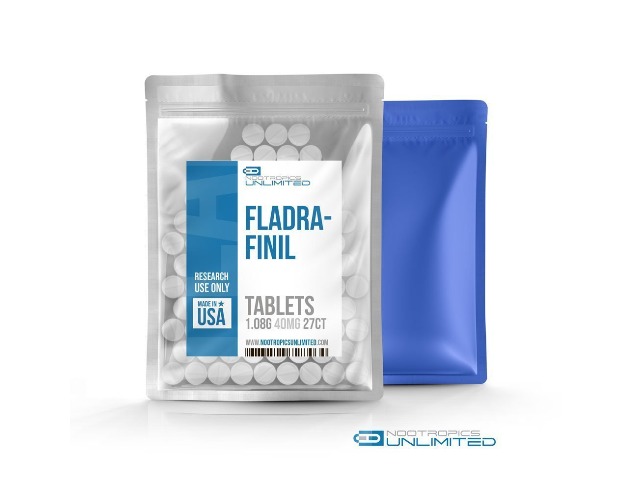

Disclosure: These are affiliate links. I earn a small commission if you purchase — at no extra cost to you. I only recommend products I personally use or have thoroughly researched.