
- Supports healthy NMDA receptor function and neuroprotection
- May reduce anxiety and promote relaxation
- Supports sleep quality and muscle recovery
- Highly bioavailable form of essential magnesium
Here’s a number that still catches me off guard: roughly half of Americans aren’t getting enough magnesium from their diet. Half. And this one mineral is a cofactor in over 300 enzymatic reactions — including the ones that keep your neurotransmitters firing properly, your mitochondria producing energy, and your stress response from going haywire.
I’ll be honest — when I first started down the nootropics rabbit hole, I completely overlooked magnesium. I was too busy chasing the flashy stuff. Racetams, peptides, exotic mushroom extracts. Meanwhile, the most fundamental mineral my brain needed to function was quietly depleted. Once I finally addressed that gap, everything else I was taking started working better. Funny how that works.
The Short Version: Magnesium chloride is a highly bioavailable, well-absorbed form of supplemental magnesium — especially effective in liquid and topical forms. It’s best for correcting deficiency (which is shockingly common), supporting relaxation, and providing the foundational magnesium your brain and body need. For targeted cognitive enhancement specifically, magnesium L-threonate has stronger evidence, but magnesium chloride is an excellent general-purpose option.
What Is Magnesium Chloride?
Magnesium chloride (MgCl₂) is an inorganic salt made of magnesium and chlorine ions. It’s one of the most soluble forms of magnesium available, which is a big part of why it absorbs so well. It contains roughly 12% elemental magnesium by weight — so a 500 mg capsule delivers about 60 mg of actual magnesium. That distinction matters more than most people realize.
It occurs naturally in seawater and underground brine deposits. The gold standard source is the Zechstein seabed in Northern Europe — an ancient deposit that’s been sealed off from modern pollution for approximately 250 million years. That’s not marketing fluff. When you’re putting a mineral into your body daily, the purity of the source actually matters.
The medicinal history is fascinating. French surgeon Pierre Delbet discovered during World War I that magnesium chloride solutions had antiseptic properties without the tissue damage caused by the harsh disinfectants of that era. He went on to research its immune-stimulating effects extensively. So this isn’t some trendy new supplement — it’s been studied therapeutically for over a century.
People reach for magnesium chloride for a few key reasons: it’s among the most bioavailable oral forms (right up there with citrate and glycinate), it works exceptionally well as a topical application (“magnesium oil”), and it tends to cause fewer GI issues than forms like magnesium citrate or oxide. If you’re looking for a reliable way to get your magnesium levels where they need to be, this is one of the better vehicles.
How Does Magnesium Chloride Work in Your Brain?
Think of magnesium as the bouncer at the door of your brain’s most important receptor. The NMDA receptor is critical for learning, memory formation, and neuroplasticity — but it needs to be carefully controlled. Too much activity and you get excitotoxicity. Too little and cognition suffers.
Magnesium ions sit inside the NMDA receptor channel at resting state, physically blocking it. When a neuron fires with enough intensity — meaning there’s a real signal worth transmitting — the magnesium block lifts and lets calcium and sodium flow through. This makes NMDA receptors act as coincidence detectors: they only fully activate when the conditions are right. Recent cryo-EM structural research has actually identified three distinct Mg²⁺-binding sites on NMDA receptor subunits, revealing just how sophisticated this regulatory system is.
Here’s why that matters practically: when you’re magnesium-deficient, that bouncer isn’t doing its job. Calcium floods in uncontrolled, triggering oxidative stress, inflammation, and eventually neuronal damage. This is excitotoxicity, and it’s one of the mechanisms behind brain fog, cognitive decline, and neurodegeneration.
Beyond NMDA regulation, magnesium works through several other pathways:
- Anti-neuroinflammatory action — Inhibits the NF-κB signaling cascade, reducing production of inflammatory cytokines like TNF-α and IL-1β
- Mitochondrial stabilization — Prevents opening of the mitochondrial permeability transition pore, keeping ATP production humming and reducing reactive oxygen species
- CREB signaling activation — Supports the molecular pathways fundamental to long-term memory formation
- Cholinergic modulation — May enhance acetylcholine availability by inhibiting the enzyme that breaks it down
In plain English: magnesium keeps your brain’s signaling clean, your energy production stable, and your inflammatory response in check. It’s not a stimulant. It’s not a cognitive enhancer in the traditional sense. It’s the infrastructure that makes everything else possible.
Benefits of Magnesium Chloride
Let me be straight with you about the evidence here. Magnesium chloride has real, meaningful benefits — but they’re mostly about fixing what’s broken, not supercharging what’s already working. And that distinction matters.
Correcting Deficiency — The Biggest Win
An estimated 14.5% of the general population and 35–50% of older adults are magnesium-deficient. If you’re in that group, supplementing will likely produce noticeable improvements in cognition, mood, energy, and sleep. Animal studies consistently show that magnesium-deficient diets impair contextual, social recognition, and spatial memory — and that correcting the deficiency reverses these effects.
This is the strongest case for magnesium chloride: it’s one of the most bioavailable forms available, meaning it actually gets into your system efficiently.
Anxiety Reduction
A 2024 systematic review found that 5 out of 7 studies measuring anxiety outcomes reported improvements with magnesium supplementation. The mechanism makes sense — NMDA receptor regulation and HPA axis modulation directly influence your stress response. However, most studies used mixed magnesium forms or combination supplements, making it hard to isolate magnesium chloride specifically.
Sleep Quality
The same review found 5 out of 8 sleep studies reported improvements. One study specifically using magnesium chloride (100 mg elemental) in fibromyalgia patients found no significant sleep benefits — but that dose was notably the lowest across all studies. Higher doses in broader populations may tell a different story.
Neuroprotection
A 2024 review in Frontiers in Endocrinology documented magnesium’s protective effects against neuroinflammation and cognitive decline. Lower serum magnesium consistently correlates with higher rates of Alzheimer’s disease and mild cognitive impairment. A NHANES analysis (2011–2014) found associations between higher magnesium intake and better cognitive scores in older adults.
Reality Check: These are observational studies — they show correlation, not causation. And most clinical trials demonstrating direct cognitive enhancement have used magnesium L-threonate, not magnesium chloride. A landmark 2010 study in Neuron showed that elevating brain magnesium enhanced learning and memory, but it specifically used L-threonate because it crosses the blood-brain barrier more effectively. Magnesium chloride’s nootropic value is primarily about laying the foundation, not providing the fireworks.
| Benefit | Evidence Level | Key Findings |
|---|---|---|
| Correcting deficiency | Strong | 35–50% of older adults are deficient; correction reliably improves markers |
| Anxiety reduction | Moderate | 5/7 studies showed improvement; mixed forms studied |
| Sleep quality | Mixed | 5/8 studies positive; one MgCl₂-specific study showed no effect at low dose |
| Neuroprotection | Preliminary | Observational data links higher Mg to lower cognitive decline |
| Direct cognitive enhancement | Limited for MgCl₂ | Stronger evidence exists for Mg L-threonate specifically |
How to Take Magnesium Chloride Without Wasting Your Money
Getting the dosing and timing right with magnesium makes a bigger difference than most people expect. Taking a large dose all at once is one of the most common — and most wasteful — mistakes.
Dosage
- Start: 100–200 mg elemental magnesium daily for the first week
- Standard maintenance: 200–400 mg elemental magnesium daily
- Upper limit: The NIH sets the tolerable upper intake for supplemental magnesium at 350 mg/day (the EFSA recommends 250 mg/day for readily dissociable salts like MgCl₂)
- No cycling required — magnesium is an essential mineral your body needs continuously
Timing and Absorption
- Always split your dose. Two doses of 100–200 mg absorb significantly better than one dose of 400 mg. Taking 1,000 mg at once means a lot of expensive magnesium going straight through you
- Take with food — enhances absorption, reduces the chance of GI upset
- Evening dosing works well if you’re using it for sleep or relaxation, but there’s no strict requirement
Pro Tip: If you’re confirmed deficient, consider a 2–4 week “catch-up” period at the higher end (350–400 mg elemental) before dropping to maintenance. Your body has a lot of replenishing to do, and it won’t happen overnight.
Forms — This Matters More Than You Think
| Form | Bioavailability | Best For | Notes |
|---|---|---|---|
| Liquid/solution | Excellent | Daily oral supplementation | Most recommended form for MgCl₂; highly soluble |
| Tablets/capsules | Good | Convenience | Less common; MgCl₂ can be less stable in solid form |
| Topical (magnesium oil) | Debated | Muscle recovery, avoiding GI effects | Evidence for systemic absorption through skin is mixed but some data supports it |
| Use Case | Daily Elemental Mg | Timing | Notes |
|---|---|---|---|
| General wellness | 200 mg | Split AM/PM | Good starting point for most adults |
| Deficiency correction | 350–400 mg | Split into 2–3 doses | For 2–4 weeks, then reduce |
| Sleep & relaxation | 200–300 mg | Evening, with dinner | Pair with L-theanine for enhanced effect |
| Topical muscle support | Apply to skin as needed | Post-exercise or before bed | Expect mild tingling on sensitive skin |
The Side Effects Nobody Warns You About
Magnesium chloride is one of the gentler magnesium forms on your gut, but “gentler” doesn’t mean side-effect-free. Here’s what to actually expect.
Common Side Effects
- Diarrhea — the most frequent complaint, especially at higher doses or on an empty stomach. MgCl₂ causes noticeably less of this than citrate or oxide
- Nausea and stomach cramps — usually mild, dose-dependent, and resolve by splitting doses and eating first
- Topical tingling or stinging — magnesium oil can irritate freshly shaved or sensitive skin; this is normal and temporary
Serious Concerns (Rare but Real)
Important: The primary risk is hypermagnesemia (dangerously elevated blood magnesium). This is extremely rare in healthy people — your kidneys efficiently clear excess magnesium. But if you have kidney disease or impaired renal function, supplemental magnesium can accumulate to dangerous levels, causing hypotension, respiratory depression, cardiac arrhythmia, and in extreme cases, cardiac arrest. If you have any kidney issues, do not supplement without medical supervision.
Who Should Avoid Magnesium Chloride
- People with kidney disease or renal impairment
- Those with heart block or severe bradycardia
- People with myasthenia gravis
- Pregnant women should consult their provider (magnesium crosses the placenta)
Drug Interactions to Watch
There are 69 known drug interactions — here are the ones that matter most:
- Antibiotics (tetracyclines, fluoroquinolones) — magnesium binds to these in your gut, drastically reducing absorption. Separate by 2–4 hours minimum
- Bisphosphonates — same absorption issue. Separate dosing
- Levodopa — potential absorption interference
- Digoxin — may affect drug levels
- Loop diuretics — can increase magnesium excretion, potentially worsening deficiency
- Iron supplements — compete for absorption. Take at least 2 hours apart
Stacking Magnesium Chloride
Magnesium plays well with others. In fact, some of the most important nutrient synergies in supplementation involve magnesium.
High-Value Combinations
- Vitamin D₃ — This is the big one. Magnesium is required to convert vitamin D into its active form. Supplementing one without the other significantly reduces the effectiveness of both. If you’re taking vitamin D and not taking magnesium, you’re leaving results on the table
- Vitamin B₆ (Pyridoxine) — Enhances intracellular magnesium uptake and is a cofactor in neurotransmitter synthesis. The classic ZMA stack (Zinc + Magnesium + B₆) leverages this synergy
- Zinc — Complementary effects on immune function, neurotransmission, and sleep. Works through independent but synergistic pathways
- L-Theanine — Both promote relaxation and GABA activity. Combining them creates a calm-but-alert state without sedation
- Taurine — Adds its own GABA-ergic and neuroprotective effects. Magnesium taurate exists as a combined form, but stacking taurine with MgCl₂ achieves a similar result
The Strategic Stack for Brain + Body
If your primary goal is cognitive support, consider running magnesium chloride for systemic magnesium alongside magnesium L-threonate for brain-specific delivery. This way you’re covering whole-body magnesium needs (energy, muscle, sleep, immune) while also getting the form shown to actually cross the blood-brain barrier and elevate brain magnesium.
What to Separate or Avoid
- Antibiotics — 2–4 hour gap, no exceptions
- High-dose calcium — competes for absorption pathways. Different times of day
- Iron supplements — separate by 2+ hours
- Omega-3s (DHA/EPA) can be taken alongside for complementary anti-inflammatory benefits — no separation needed
Insider Tip: Don’t overthink the stacking. The single most impactful combination for most people is simply magnesium + vitamin D₃ + K₂. Get those three dialed in before adding complexity. I’ve watched people build elaborate 15-supplement stacks while being deficient in the basics. Fix the foundation first.
My Take
Magnesium chloride isn’t the sexiest supplement in the nootropics world. It won’t give you laser focus in 30 minutes or make you feel like you’re in a movie montage. But after years of experimenting with every nootropic I could get my hands on, I keep coming back to the same conclusion: getting your magnesium right changes everything else.
When I finally took magnesium status seriously, my sleep improved within the first week. The low-grade anxiety I’d written off as “just how I am” dropped noticeably. My other supplements seemed to work better. It was like I’d been trying to tune a guitar with a broken tuning peg — fixing the basic hardware made everything else sound right.
Who magnesium chloride is BEST for:
- Anyone who suspects they’re deficient (statistically, you probably are)
- People who prefer liquid supplementation or topical application
- Those looking for a well-absorbed, gentle-on-the-gut magnesium form
- Athletes or anyone dealing with muscle tension and cramps
Who should consider a different form:
- If your primary goal is cognitive enhancement specifically, magnesium L-threonate has better evidence for that
- If you want maximum calming effect with minimal GI risk, magnesium glycinate is worth a look
- If budget is your top concern, magnesium citrate offers more elemental magnesium per dollar (at the cost of more bathroom trips)
My honest recommendation? Start with magnesium chloride in liquid form, 200 mg elemental, split into two daily doses. Give it 4–6 weeks. Pay attention to your sleep, your stress levels, and your muscle tension. If you want to layer in brain-specific benefits after that, add L-threonate. But don’t skip the foundation. That’s the mistake I made for years, and it’s the one I see almost everyone making.
Recommended Magnesium Chloride Products
I know how frustrating it is to sort through dozens of brands making the same claims. These are the ones I've personally vetted — because quality is the difference between results and wasted money.
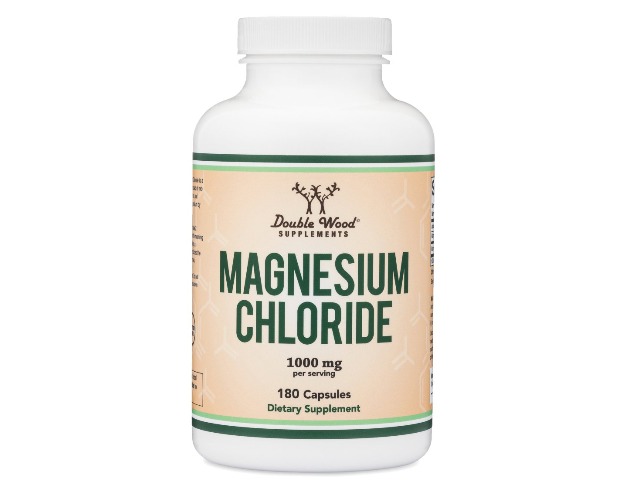
Disclosure: These are affiliate links. I earn a small commission if you purchase — at no extra cost to you. I only recommend products I personally use or have thoroughly researched.
Research & Studies
This section includes 1 peer-reviewed study referenced in our analysis.